
This post may contain affiliate links or sponsored content. That means if you click on my link and buy something, I will earn a small commission from the advertiser at no additional cost to you. For more information, see our disclosure policy.
These Mussels in White Wine Sauce are tender, briny and swimming in a deliciously garlicky, creamy white wine broth that’s just begging for some crusty bread! Inspired by the French classic moules marinière, with an Italian-American twist, this easy one-pot seafood dish is elegant, surprisingly inexpensive and restaurant-quality—without leaving home!
And, unlike my Mussels Marinara, there’s not a tomato in sight!
Keep In Mind Before You Start . . .
- Mussels are easier to prepare than you think! Most commercially sold mussels are farm-raised, fairly clean and don’t need to be purged like clams. A quick inspection, rinse and occasional debearding is usually all that’s necessary.
- Slowly soften the aromatics. Cook the garlic and shallots gently without browning them. This brings out their natural sweetness and gives the sauce a wonderful flavor.
- Cook the mussels just until done. Remove them from the pan as they open so they stay tender while the remaining mussels finish cooking.
- Don’t forget the bread! I intentionally make lots of sauce for dipping, soaking and slurping. Trust me, you’ll be sad if you forget it!
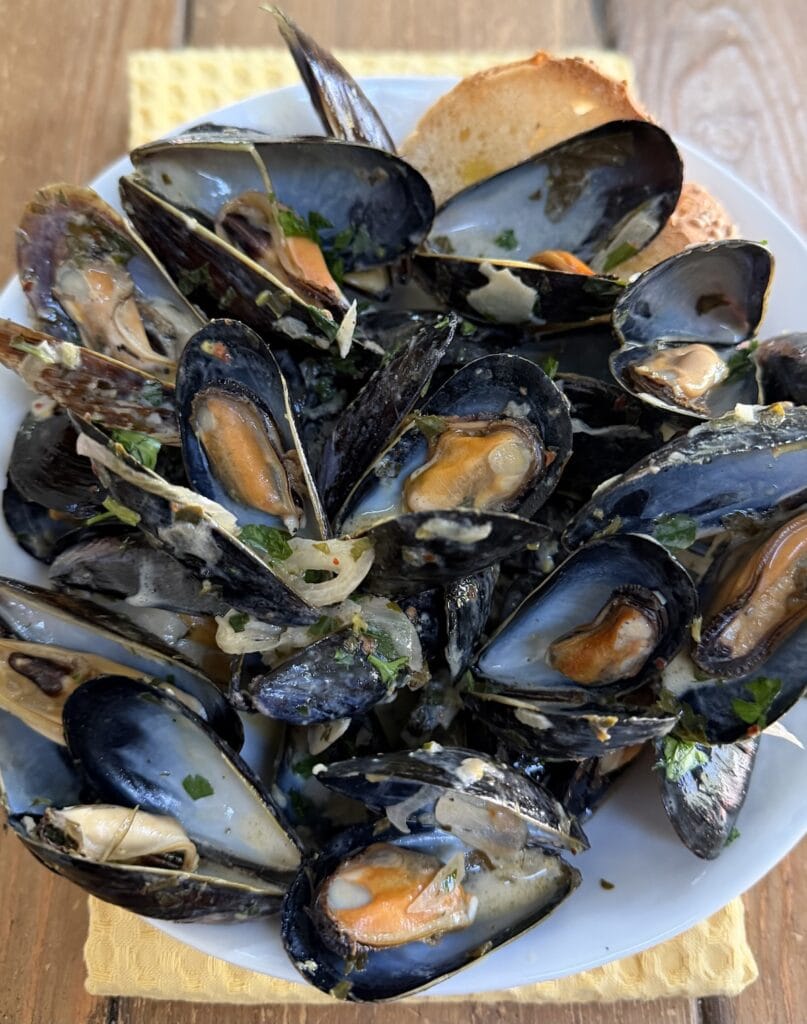
A Little French Inspiration with an Italian-American Twist
You may not know this about me, but early in my career, long before I was working professionally with food, I lived as an expat in Geneva, Switzerland.
Geneva is in the French-speaking part of Switzerland, just a few miles from the French border. In fact, we regularly drove into France to do our grocery shopping!
And, whenever I had the chance, I’d hop on the TGV (France’s high-speed train) for a weekend in Paris.
It was during one of those trips that I had my very first proper moules frites—a big pot of mussels served with French fries. What a revelation!
Those years living in Switzerland, along with my many travels throughout France and my classical culinary training, had a huge influence on the way I cook.
This recipe is inspired by the French classic moules à la marinière, which translates to sailor-style mussels. Traditionally, the mussels are steamed in a fragrant broth of white wine, shallots, butter and herbs.
But, being Italian-American, I couldn’t resist making a few adjustments!
I use more garlic than a classic French chef might approve of, a dry Italian white wine and a splash of heavy cream to finish the sauce.
The cream is a nod to my French culinary training and the way I learned to prepare mussels in cooking school. It adds just enough richness to create a smooth, savory sauce that lightly coats the mussels without overpowering their delicate, briny flavor.
And, while I still think traditional moules frites is one of life’s greatest pleasures, when I’m enjoying mussels at home, I usually skip the fries and go straight for the crusty bread!
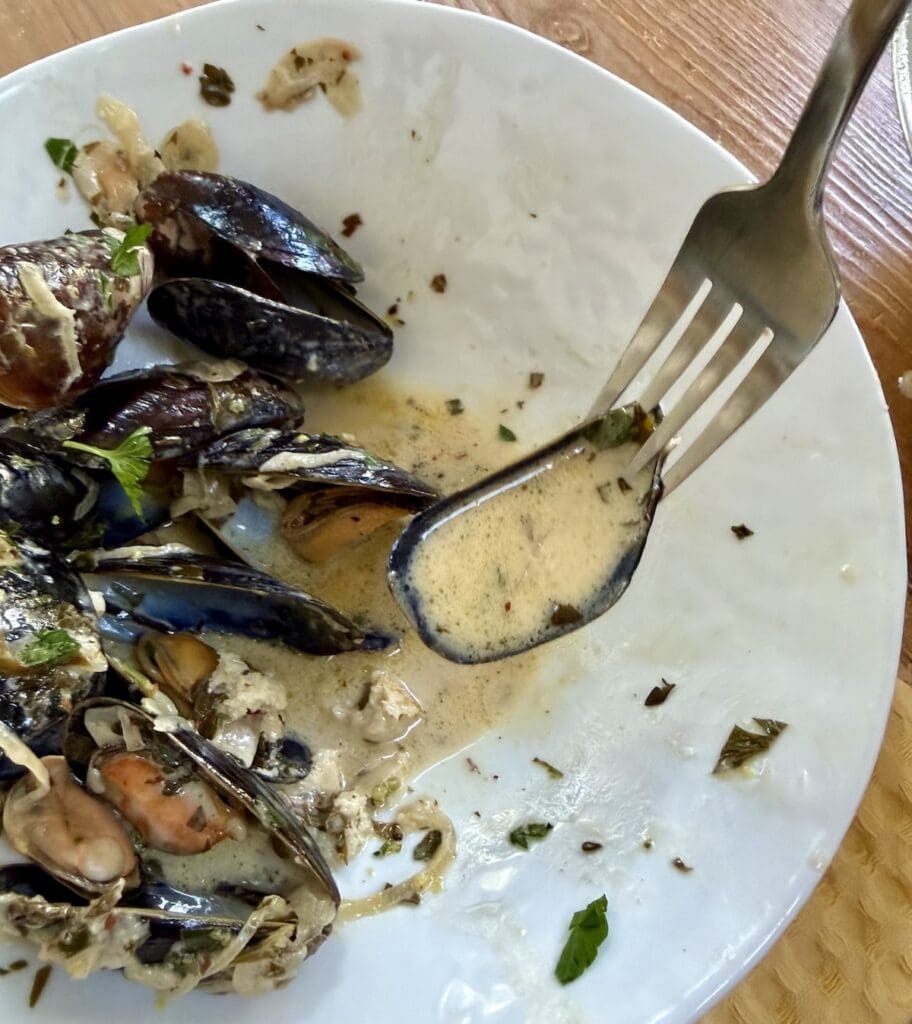
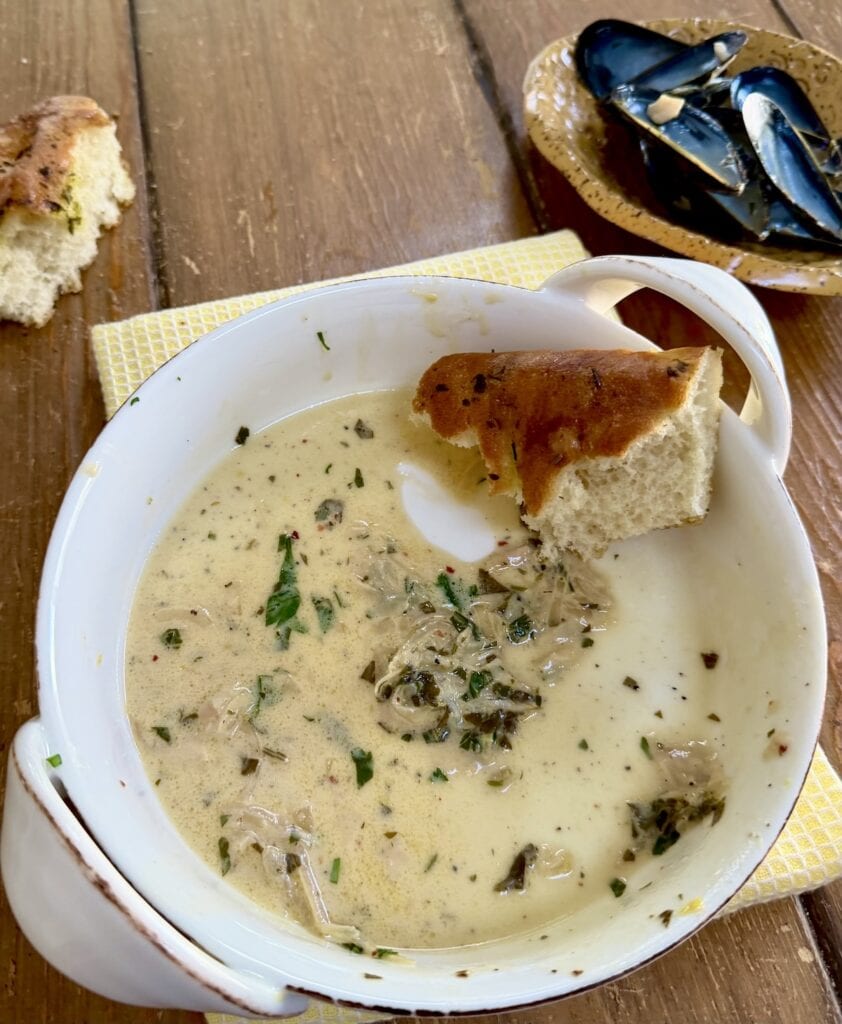
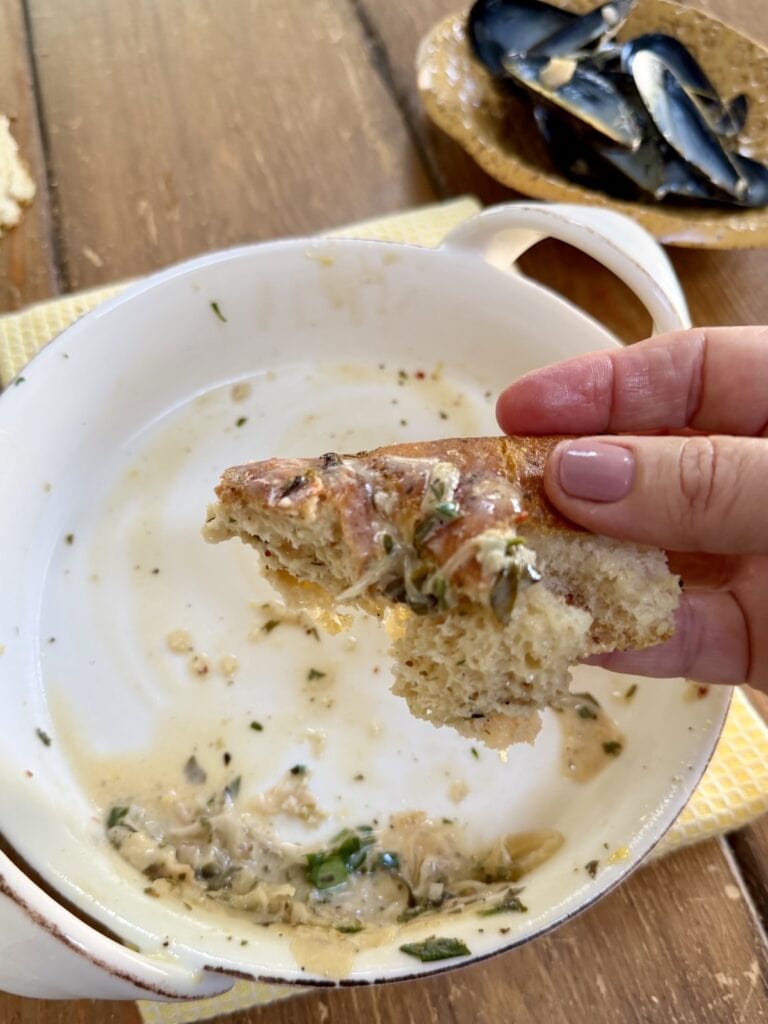
In fact, I intentionally designed this recipe with more sauce than is actually necessary. Because, for me, half the fun of eating mussels is dipping, soaking and slurping up every last drop of that delicious broth.
It’s the Italian concept of fare la scarpetta—using a piece of bread to mop up all the wonderful sauce left on your plate.
And this recipe is practically made for it!
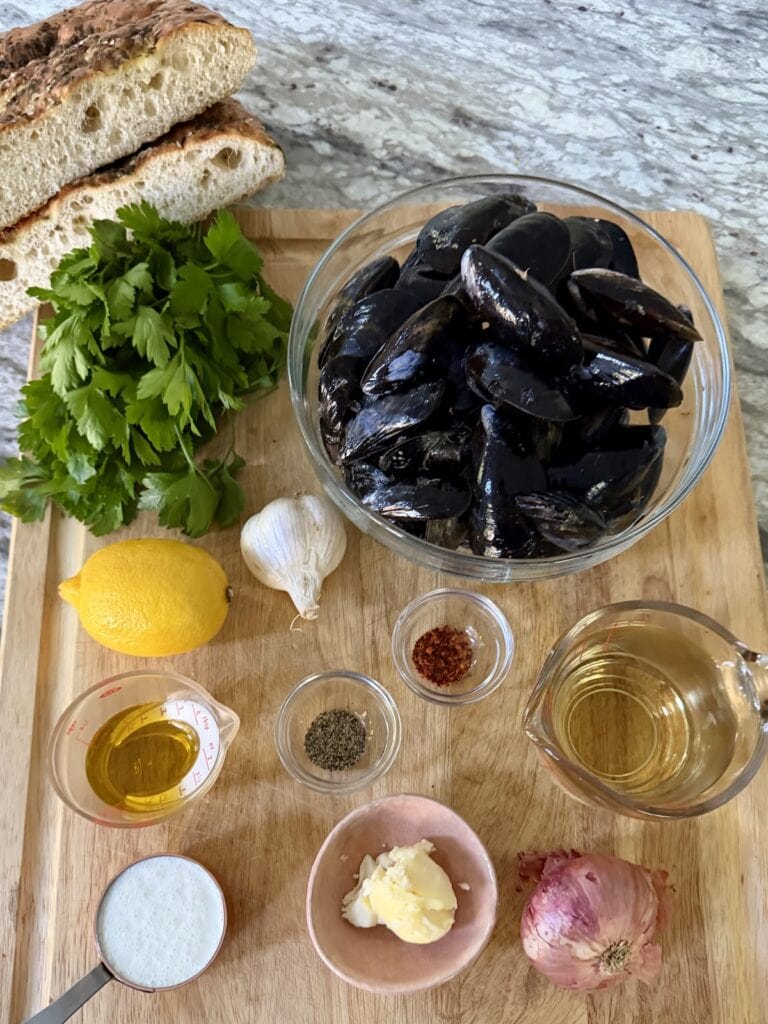
Ingredients and Substitutions
This recipe uses a handful of simple ingredients to create a surprisingly flavorful sauce.
- Mussels: Use fresh, live black mussels with intact shells. Most mussels sold at grocery stores and fish markets are cultivated, often from Prince Edward Island (PEI), and are much easier to clean than you might expect. See my tips below for buying, cleaning and storing them.
- Butter and Olive Oil: I use both for a rich, flavorful base. The butter adds a little French influence, while the olive oil brings in my Italian-American side.
- Garlic and Shallots: There’s plenty of garlic in this recipe! I slowly cook it with thinly sliced shallots until both are very soft and sweet, rather than browned. You can also use thinly sliced leeks in place of, or along with, the shallots.
- Crushed Red Pepper: Optional, but I love a little heat to balance the richness of the sauce. Use as much or as little as you’d like.
- Fresh Parsley: Adds freshness and color. I add some while the aromatics cook and the rest at the end.
- Dry White Wine: Choose a light, dry wine such as Italian Pinot Grigio. You don’t need an expensive bottle but use something you’d enjoy drinking. A flavorful beer can also be used in place of the wine for a different twist.
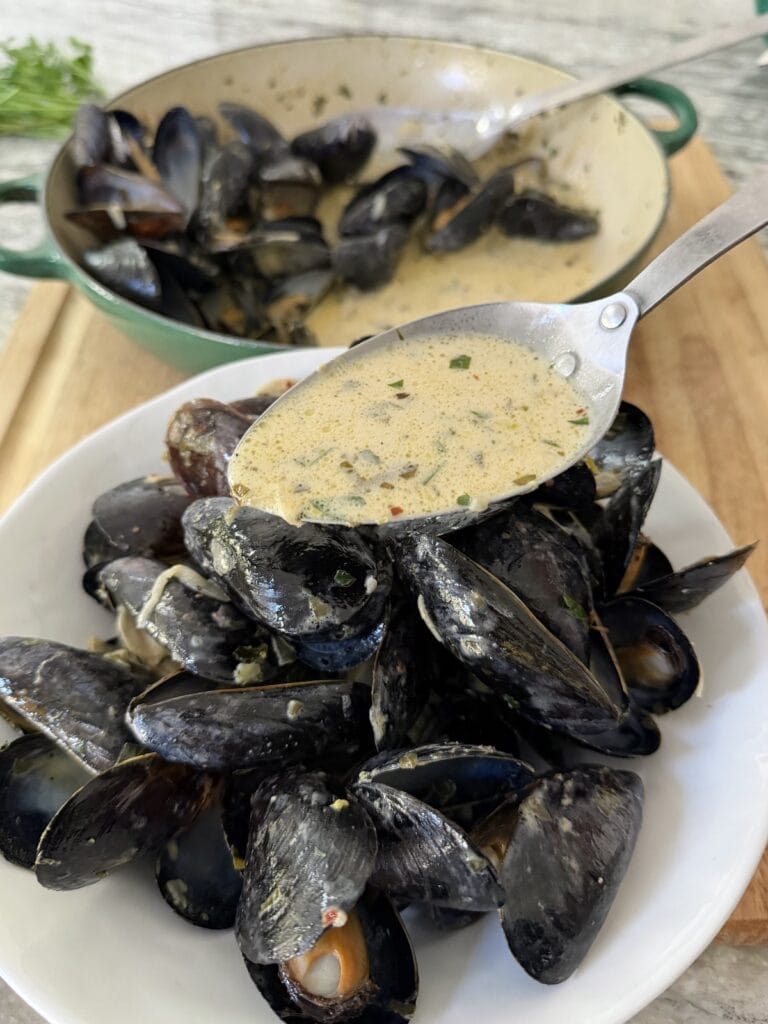
- Heavy Cream: Just a little cream gives the white wine broth a rich, silky finish. I add it after the mussels have cooked, then let the sauce reduce slightly so it lightly coats the mussels while still leaving plenty of delicious broth for dipping bread.
- Lemon Juice and Zest: Brighten the finished sauce and balance the butter and cream. Be sure to zest the lemon before juicing it!
- Black Pepper and Salt: Season the sauce at the end, after tasting it. Mussels release naturally salty juices as they cook, so you may not need much additional salt.
How to Make Mussels in White Wine Sauce
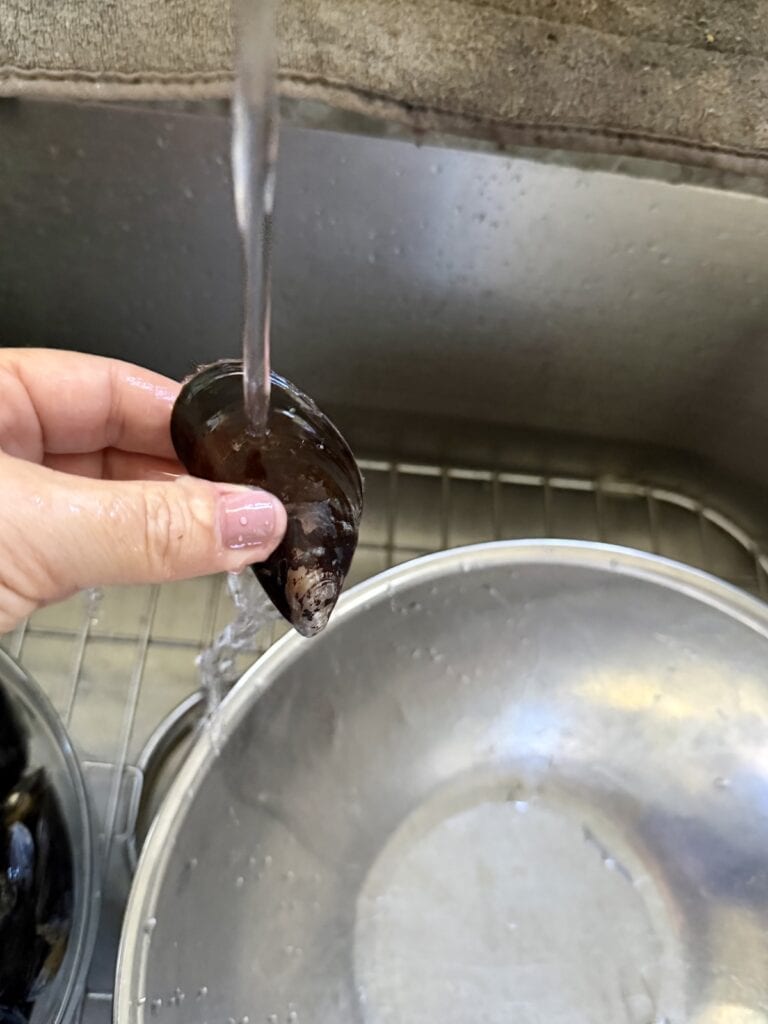
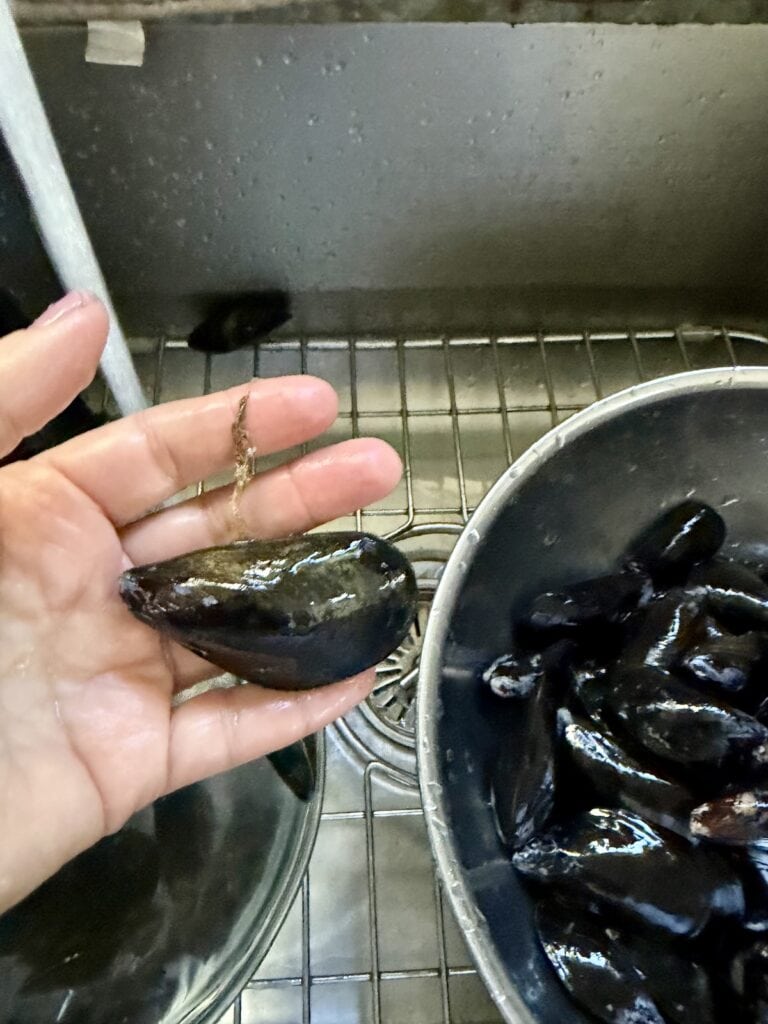
- Clean mussels. Inspect the shells, remove any debris or beards and rinse under cold water. Discard cracked mussels and those that remain open when tapped.
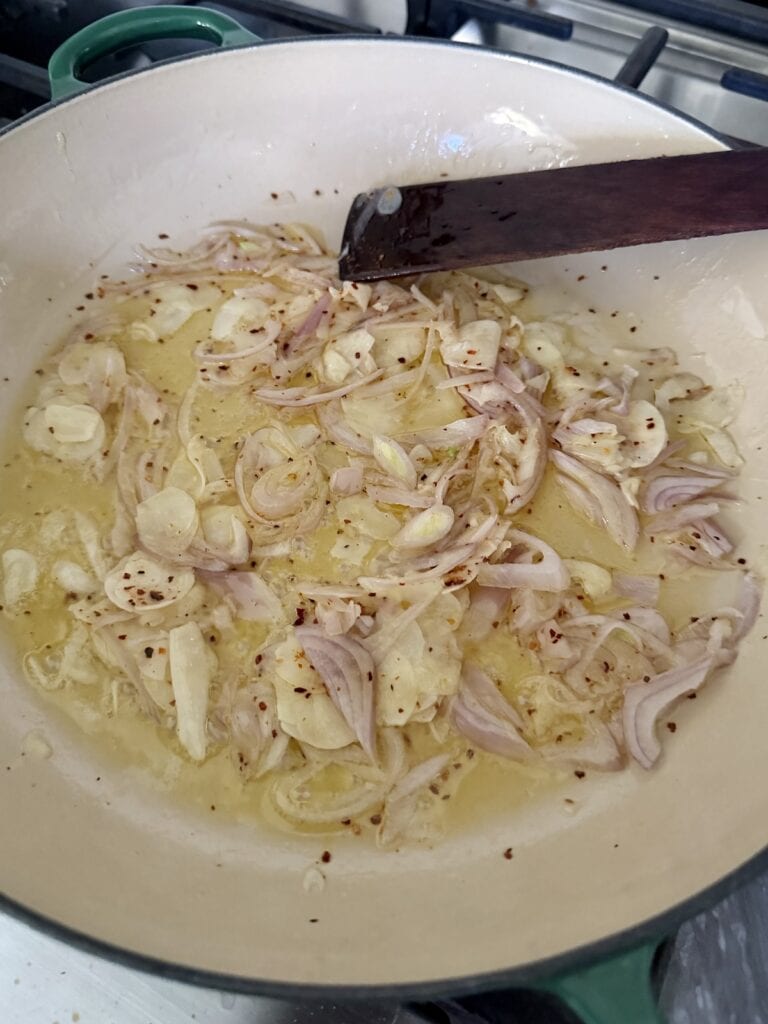
- Slowly cook aromatics. Melt the butter with the olive oil in a large, deep skillet or Dutch oven over medium-low heat. Add the shallots, garlic and crushed red pepper and cook gently until very soft, about 8–10 minutes, stirring occasionally. Add half the parsley after the first couple of minutes. Don’t let the garlic or shallots brown.
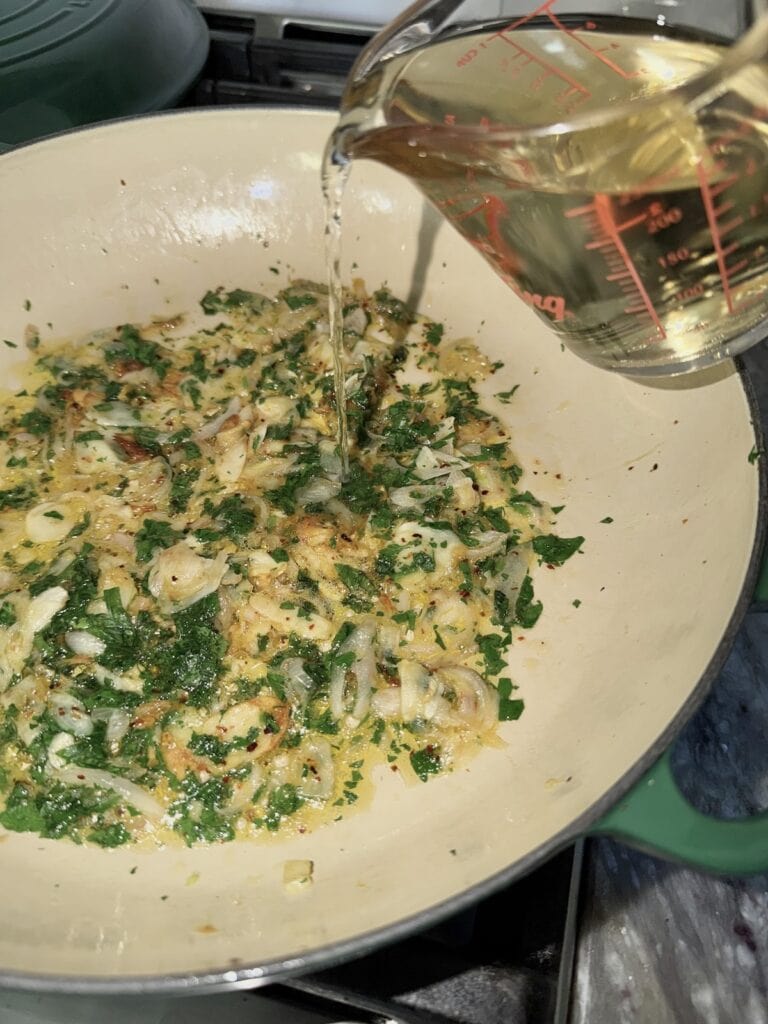
- Add wine. Pour in the white wine, increase the heat to medium or medium-high and bring to a steady simmer. Cook uncovered until the wine has reduced by about one-third and its sharp, raw alcohol aroma has mellowed, approximately 5–7 minutes, depending on the size of your pan.
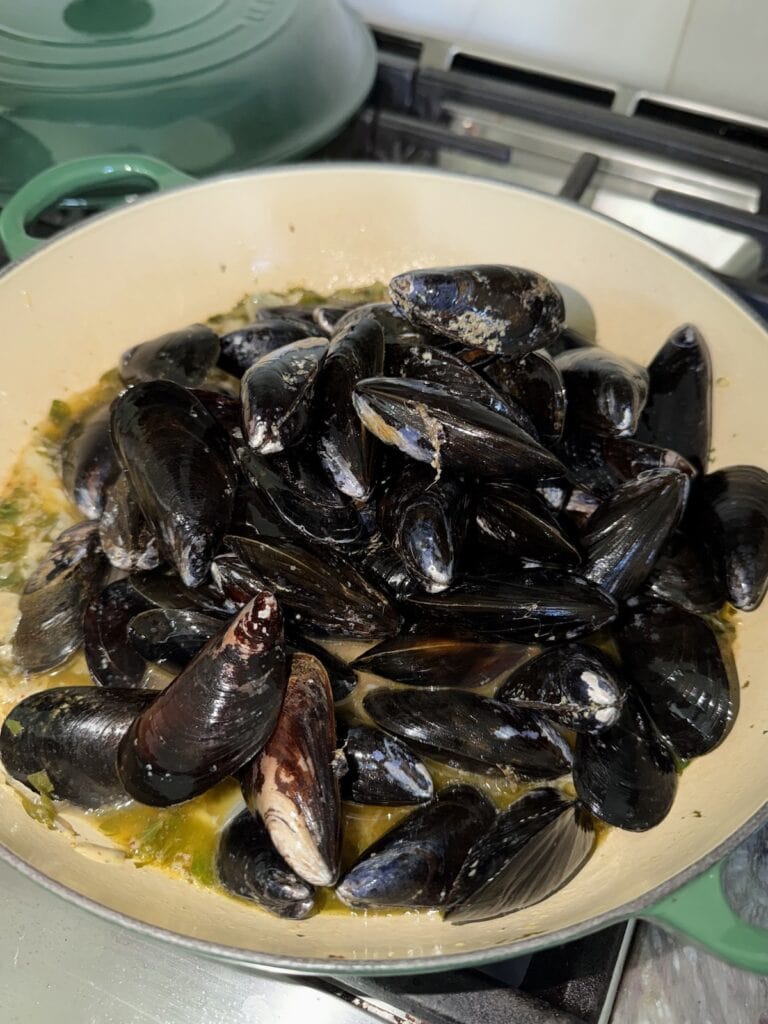
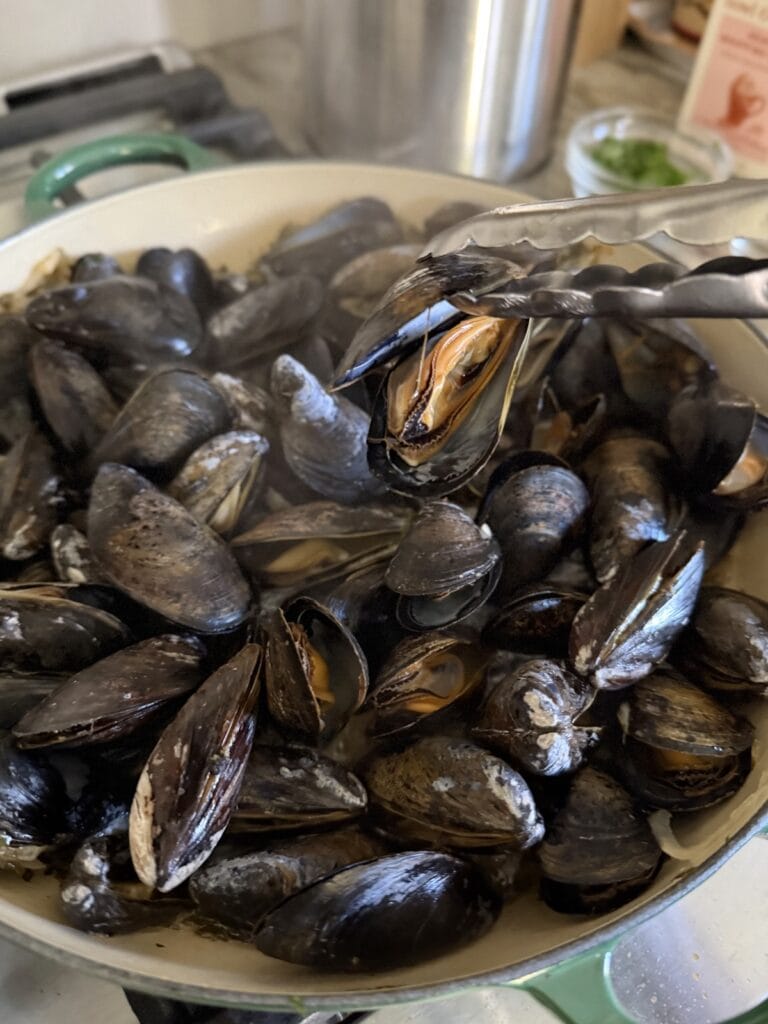
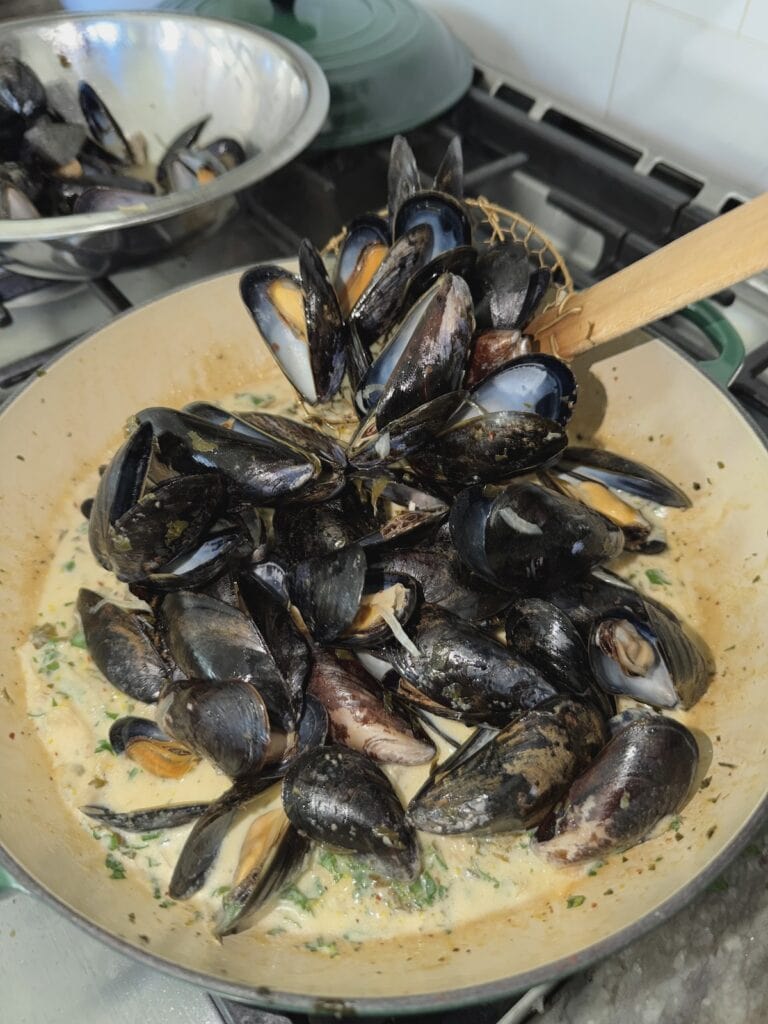
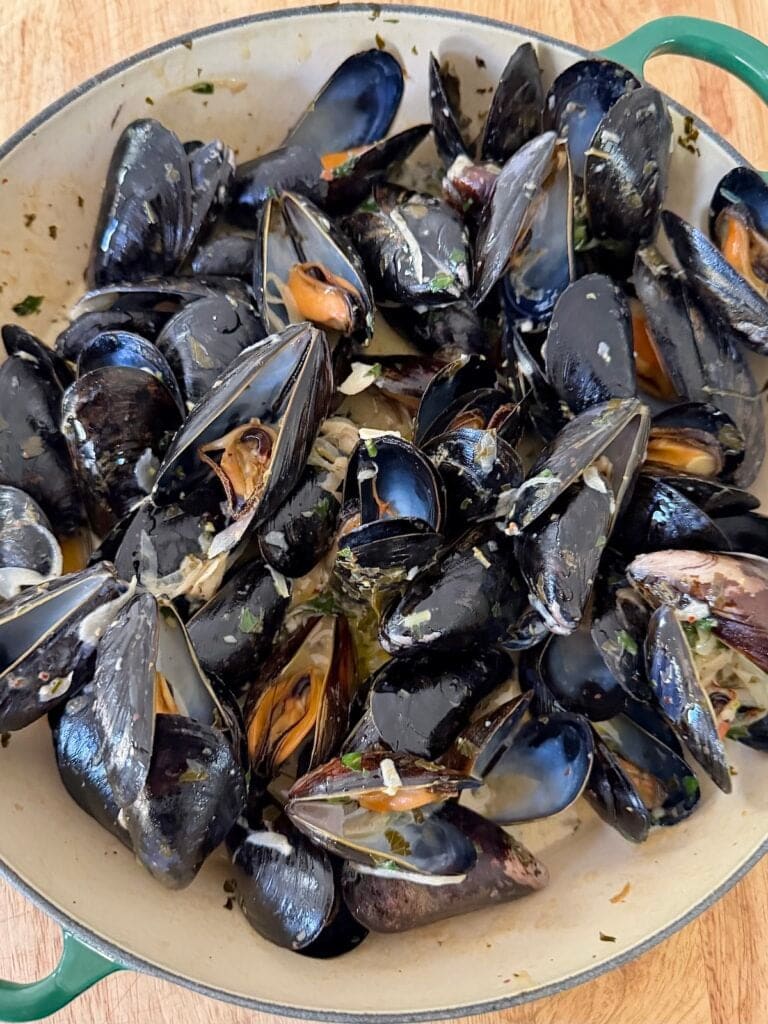
- Steam mussels. Add the cleaned mussels to the sauce, distribute them evenly and cover the pan. Steam, shaking the pan occasionally, until the shells begin to open and the meat is opaque and firm but still tender, about 5–10 minutes total. Transfer the mussels to a bowl as they finish cooking, replacing the cover so the remaining mussels can continue steaming. Discard any mussels that remain closed after cooking.
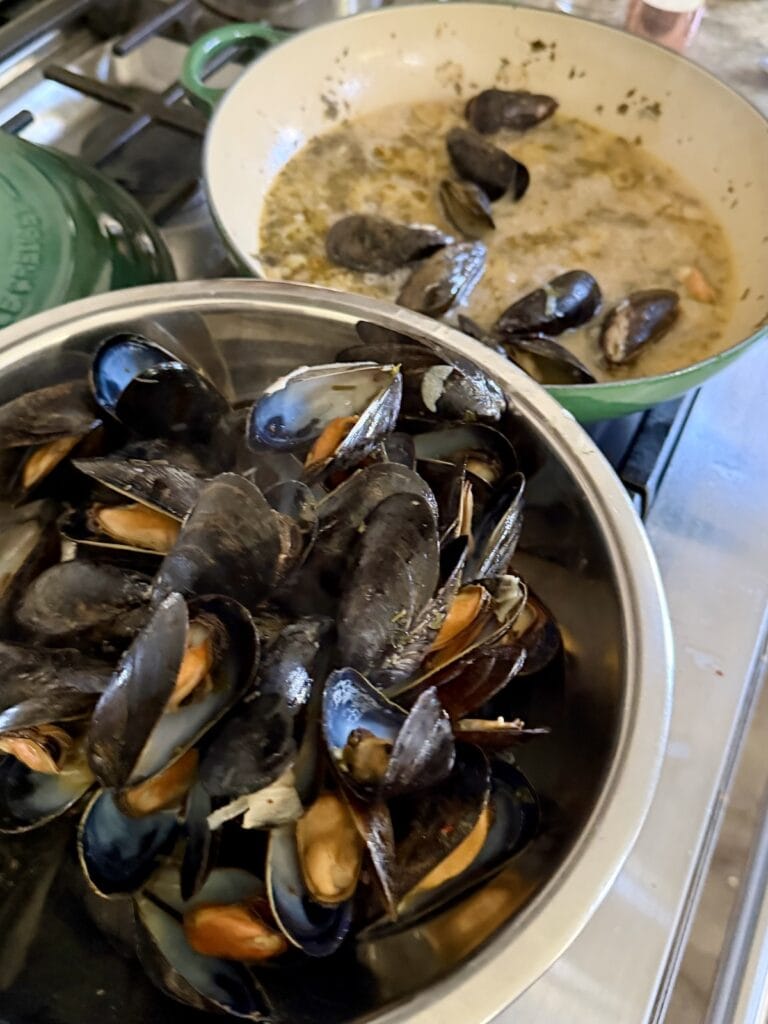
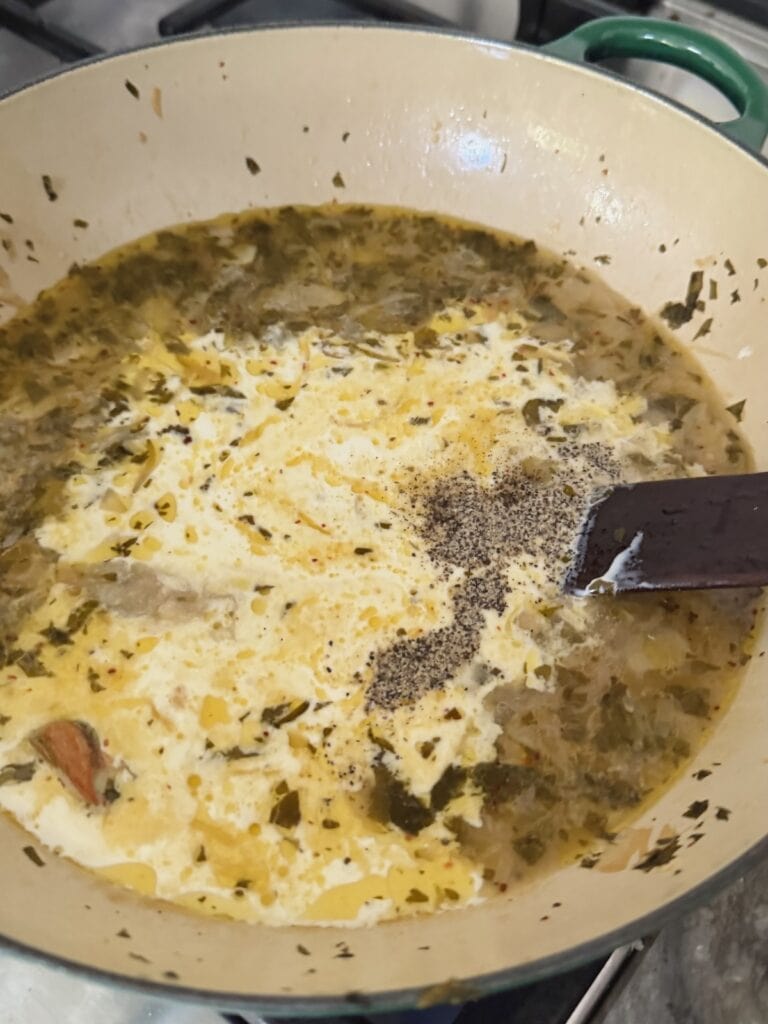
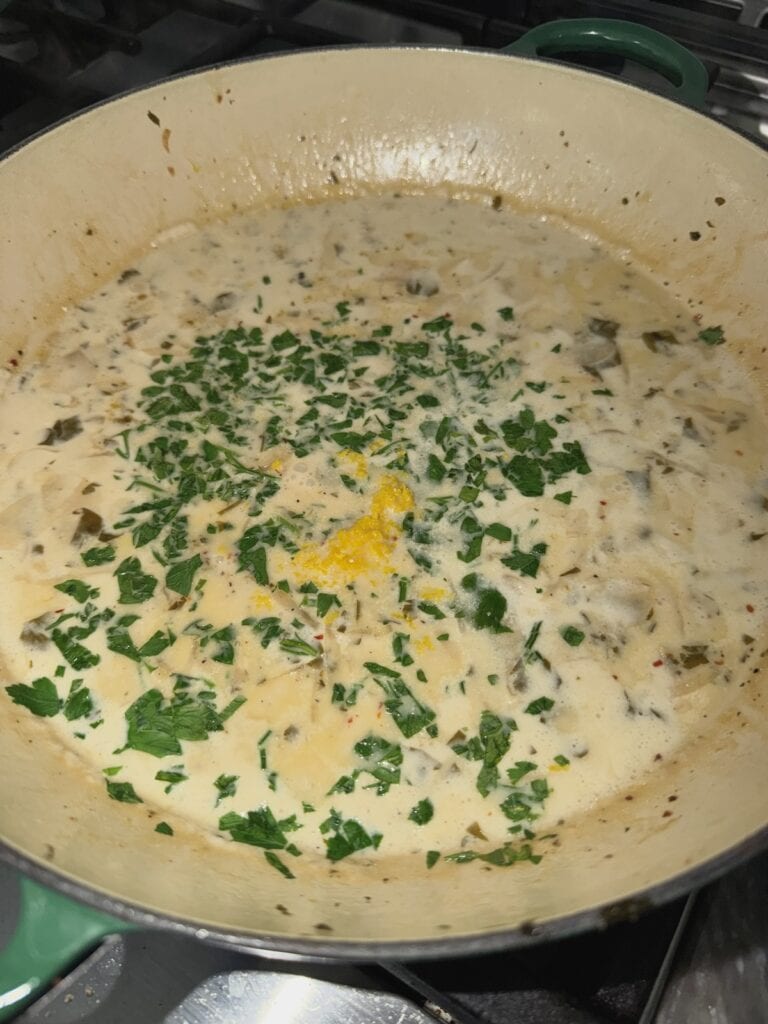
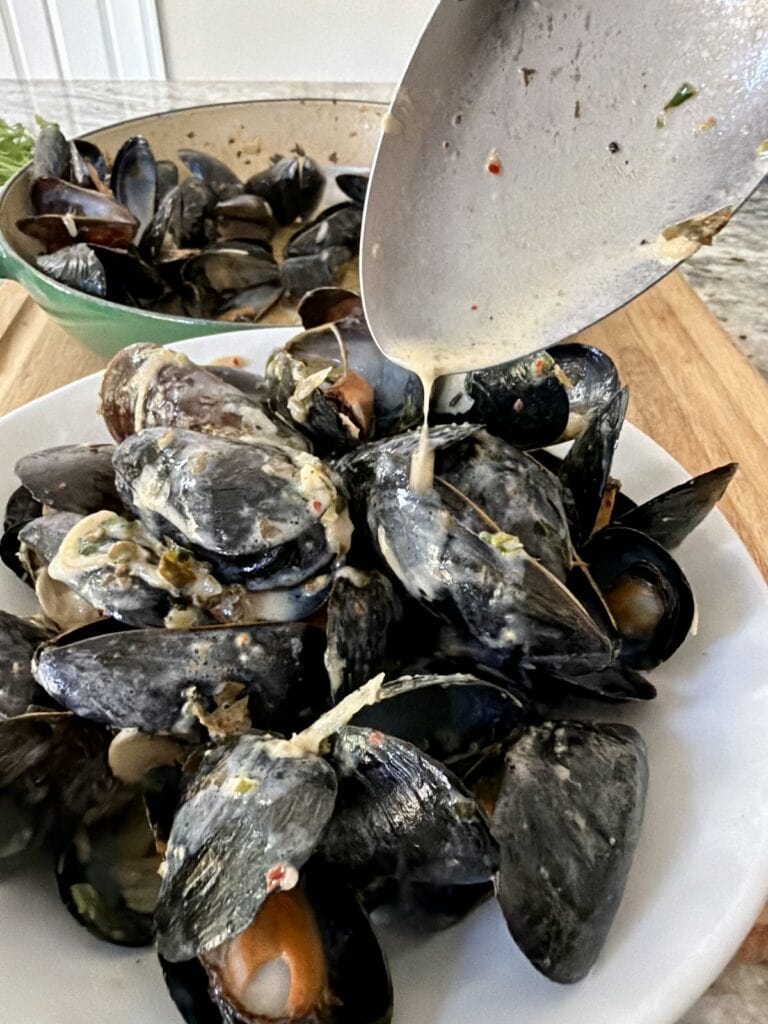
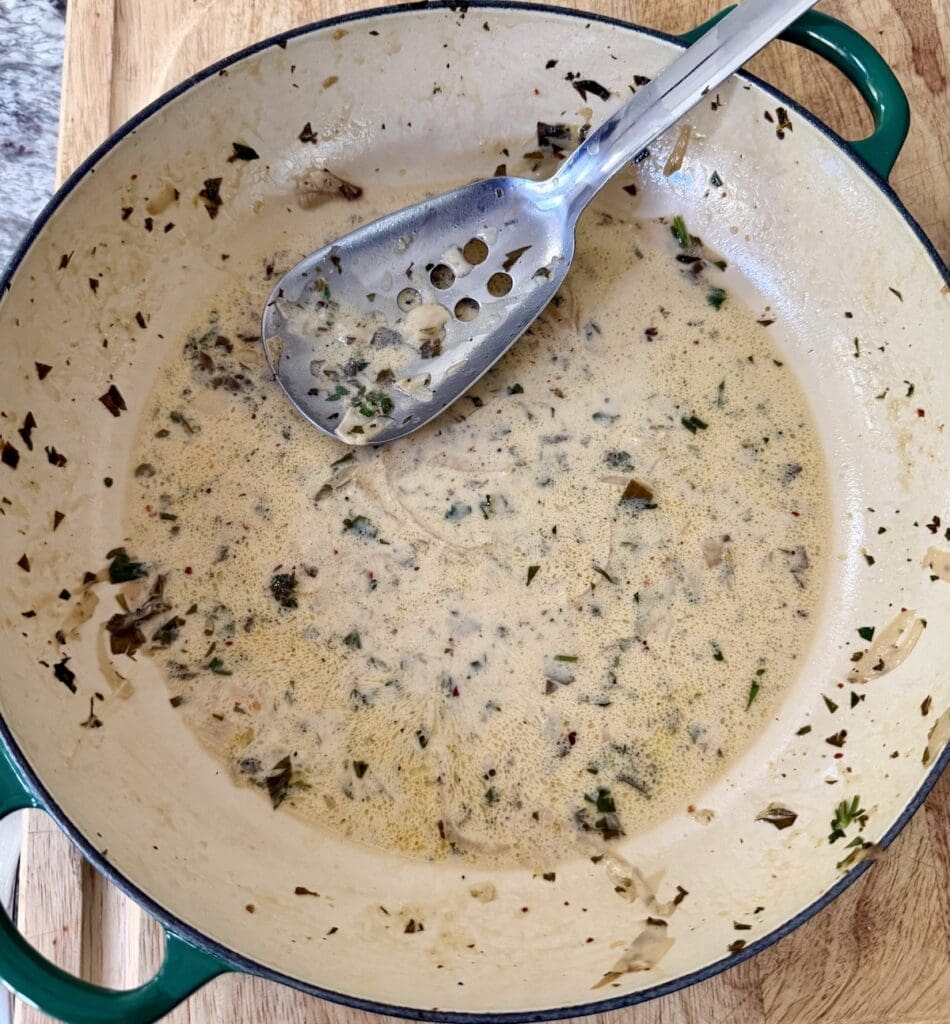
- Finish sauce. Once the mussels have been removed from the pan, stir in the heavy cream and black pepper. Simmer gently, uncovered, for about 3–5 minutes, or until the sauce has reduced slightly and has a silky consistency that lightly coats a spoon. Add the remaining parsley, lemon juice and zest, then taste and season with salt as needed.
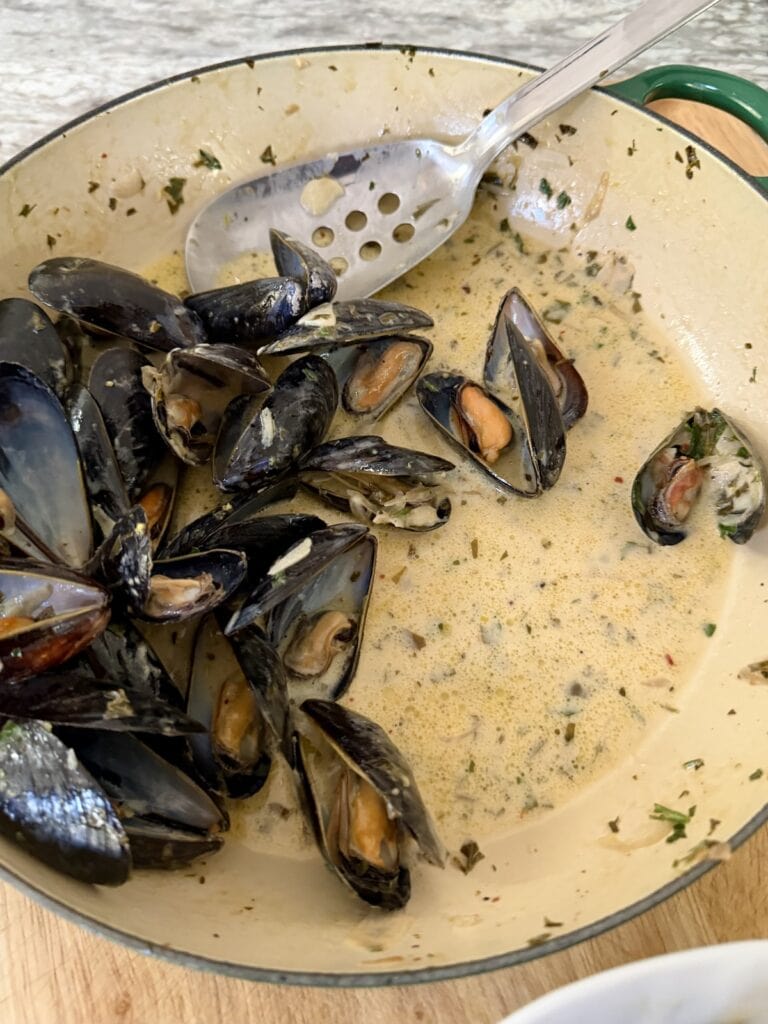
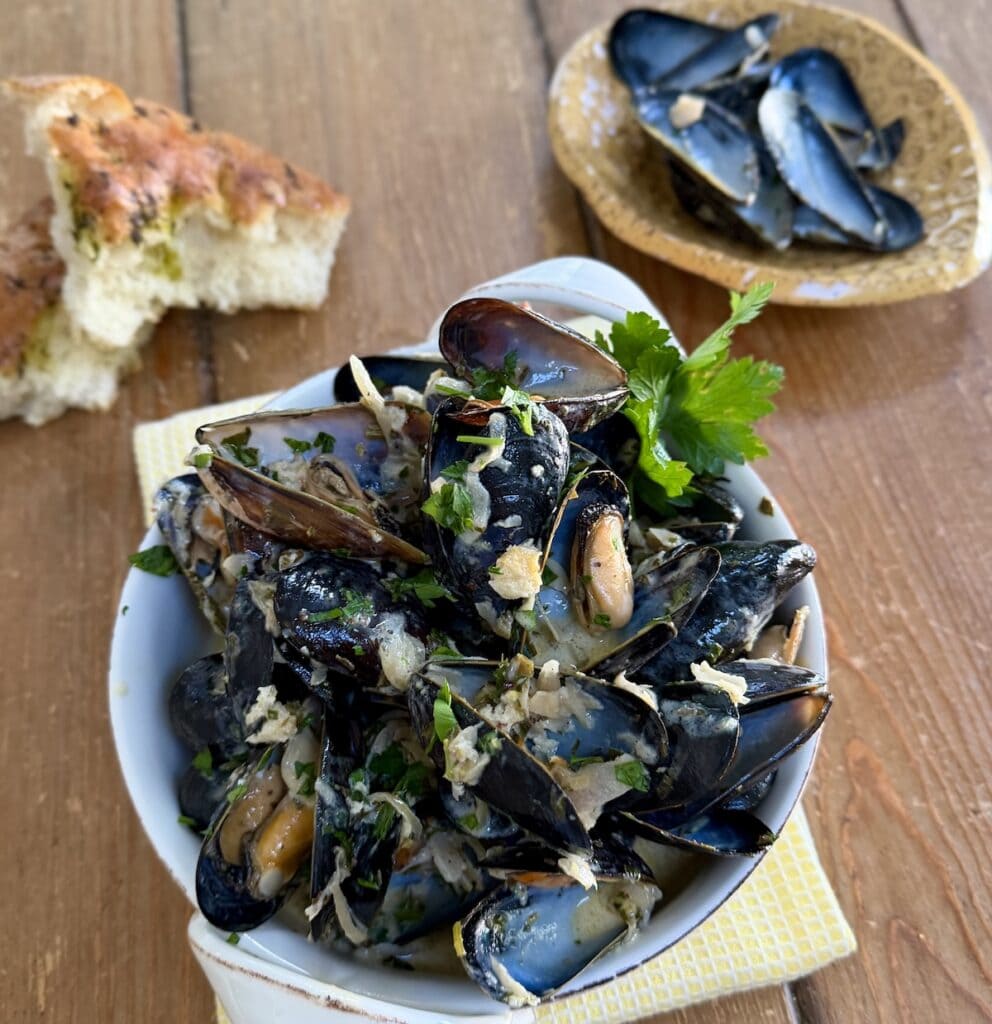
- Combine and serve. Return the cooked mussels to the pan and gently toss to coat and warm through. Serve immediately with plenty of crusty bread and separate bowls for the empty shells. Buon Appetito!
Tips for Success
- Use a large enough pan. A Dutch oven or deep sauté pan gives the mussels room to steam evenly and makes it easier to toss them with the finished sauce.
- Add the cream after cooking the mussels. This lets you gently simmer and adjust the sauce without keeping the mussels over the heat.
- Don’t over-reduce the sauce. You want a silky, lightly creamy sauce that coats the mussels, but still has plenty of liquid for dipping crusty bread. Remember that the mussels release their own flavorful juices as they cook, so the sauce will naturally become more brothy.
- Taste before adding salt. The natural juices released by the mussels contribute plenty of savory, briny flavor.
- Have everything ready before you start. Once the mussels go into the pan, the recipe moves quickly.
How to Store Live Mussels at Home
If you’ve never cooked live mussels before, don’t let the thought intimidate you! They’re much easier to work with than most people realize.
It’s best to cook mussels the day you purchase them, but they can generally be refrigerated for 1–2 days if properly stored and still fresh. Always check the use-by date on the package.
Here’s how I store them:
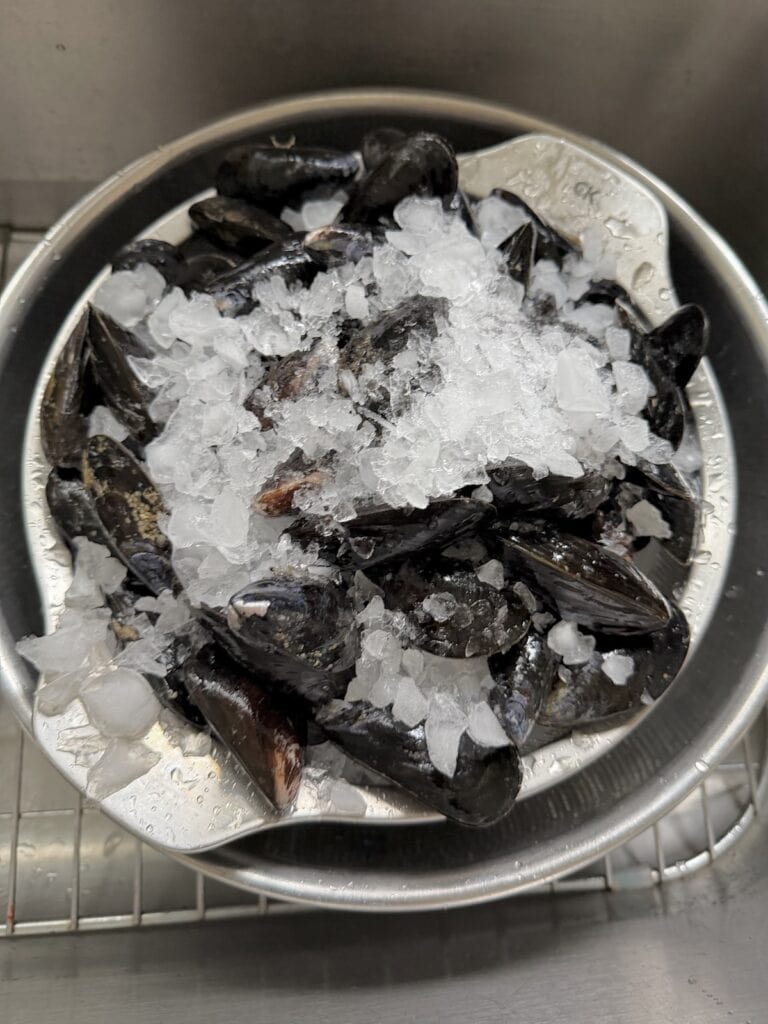
- Place the live mussels in a colander set over a bowl, with ice underneath to keep them cold.
- Cover loosely with a clean, damp kitchen towel or paper towel and refrigerate.
- Make sure the mussels aren’t sitting in melted ice water. You can also keep them in a breathable mesh bag in the refrigerator, covered loosely with a damp towel.
- Clean the mussels just before cooking.
Important!
Never store live mussels submerged in fresh water or in a sealed plastic bag or airtight container. They need to breathe!
And remember, mussels are sold live because they spoil quickly once they die.
How to Serve Mussels in White Wine Sauce
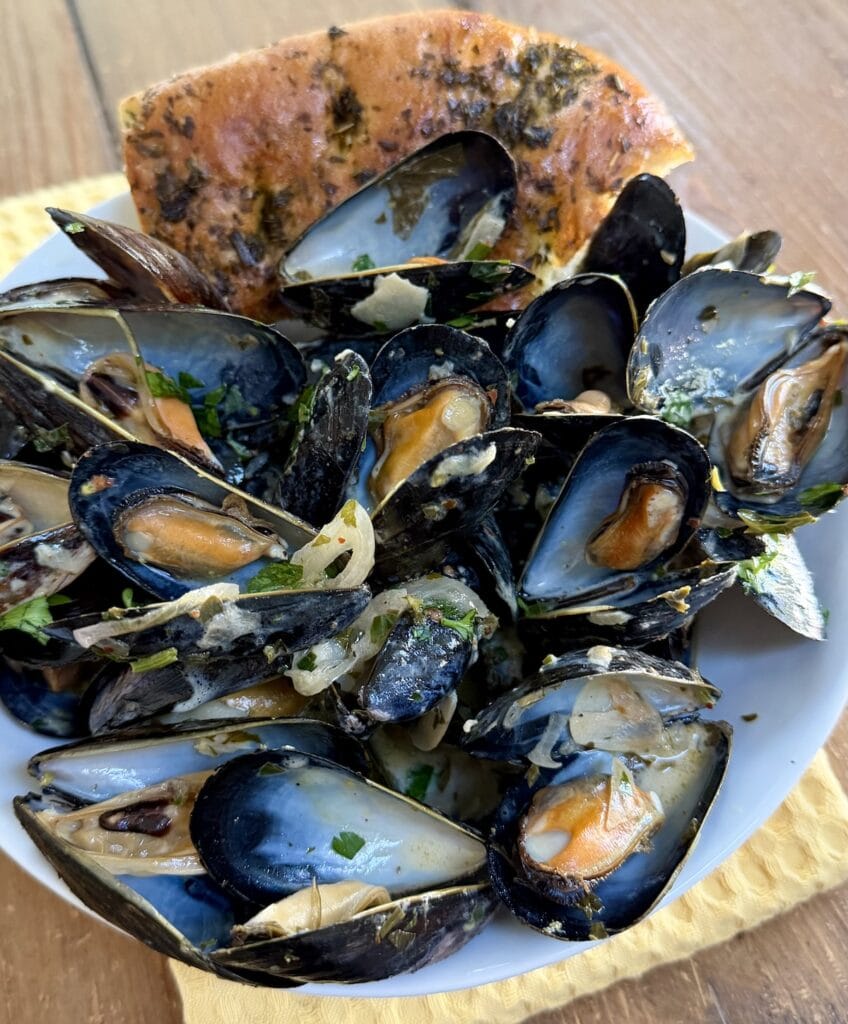
First and foremost, don’t forget the bread!
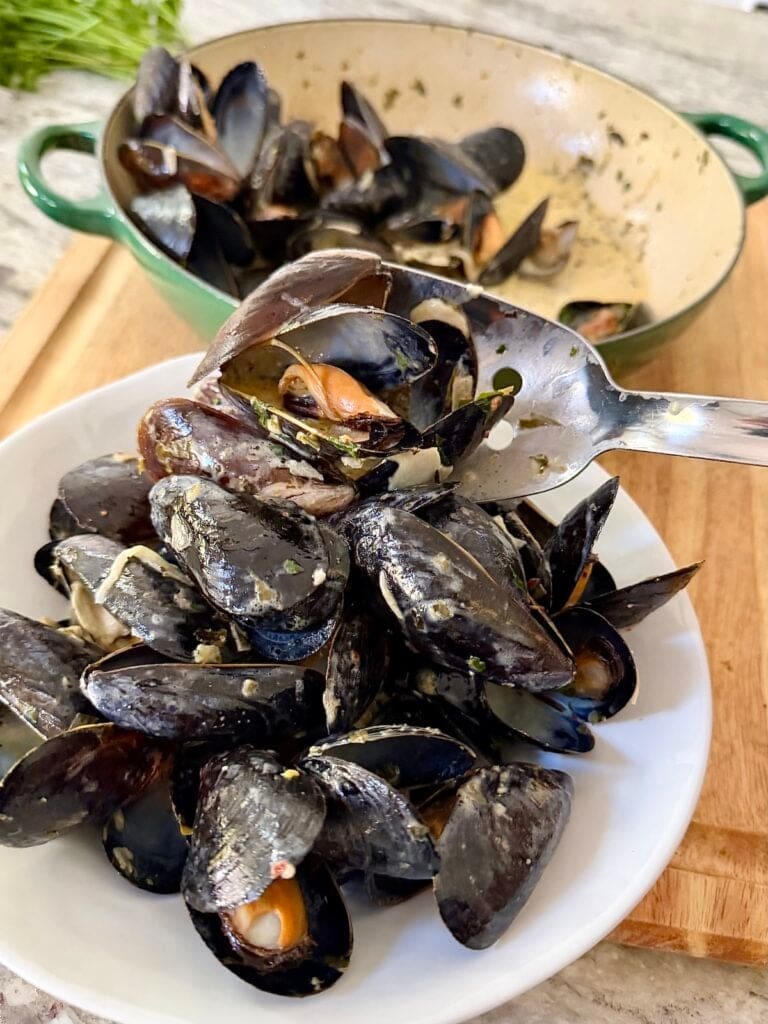
Toasted, broiled or grilled rustic Italian bread is perfect for soaking up all that garlicky white wine cream sauce. And I intentionally make plenty of it, so don’t be shy!
You can also serve these mussels French-style with crispy fries for traditional moules frites, or pair them with a simple green salad.
I love bringing the entire pot to the table and letting everyone help themselves. Mussels are such a fun, interactive meal!
Just remember to put out small empty bowls for the discarded shells. It’s one of those little details that makes eating mussels at home so much easier.
And, if you’re looking for another way to enjoy mussels, keep an eye out for my upcoming Linguine with Mussels, featuring fresh tomatoes, garlic, white wine and plenty of parsley.
Frequently Asked Questions
Most commercially sold mussels are cultivated (farm-raised), so they’re usually quite clean and often already debearded. Unlike clams, they generally don’t need to be purged to remove sand. Many are grown suspended in the water rather than buried in sand or mud.
To clean them, inspect each mussel and remove any debris with your hands or a small brush. If you see a beard (the little hairy clump of fibers hanging from the shell), grasp it with your fingers or a paper towel and pull it toward the hinge. You can also snip it off with kitchen scissors.
Discard any mussels with broken shells or those that remain open when tapped. Give them a good rinse under cold running water just before cooking.
Don’t soak live mussels in fresh water, as this can kill them.
For additional cleaning tips, see this helpful guide from Epicurious.
*Please note that wild-harvested mussels may require additional cleaning, but this recipe is intended for commercially purchased mussels.*
Live mussels should have intact shells that are closed or close when gently tapped. Discard any with cracked or broken shells, or those that remain open after tapping.
Fresh mussels should smell clean and pleasantly briny, not strongly fishy or unpleasant.
Mussels generally steam in several minutes, depending on their size, how crowded the pan is and the heat level.
Watch for the shells to open and the meat to cook through. Remove cooked mussels as they’re ready so they don’t become tough and rubbery.
Discard mussels that remain closed after cooking.
Absolutely! Simply omit the heavy cream for a lighter, more traditional moules marinière-style broth. You can finish the sauce with a little extra butter or olive oil for richness.
A light vegetable, chicken or seafood broth or clam juice can be substituted for the wine. A flavorful beer is another option.
Keep in mind that broth and clam juice may already contain salt, so taste the finished sauce before seasoning.
I remember hearing this rule during my time in France, and it has stayed with me all these years!
Traditionally, the advice was to eat mussels and other shellfish during the cooler months, when quality and seasonal conditions were often more favorable.
Today, commercially cultivated mussels are generally available year-round, thanks to modern aquaculture, refrigeration and seafood handling practices.
So, while the old saying is a fun bit of culinary history, there’s no need to limit yourself to the months ending in R when buying properly handled mussels from a reputable supplier.
Yes, but gently! Store cooked mussels with their sauce in an airtight container in the refrigerator for 1–2 days.
You can remove the meat from the shells before refrigerating to make storage easier and help keep the mussels moist.
Reheat thoroughly but gently, avoiding prolonged cooking that can make the mussels rubbery.
More Italian Seafood Recipes to Try
If you love this recipe, be sure to try the following recipes:
- Baked Stuffed Clams with Breadcrumbs
- Scungilli Salad (Italian Conch Salad)
- Sautéed Clams Posillipo in Red Sauce
- Creamy Crab Stuffed Artichoke Bottoms
- Baked Spinach and Crab Dip
- Shrimp Francese ~ Lemon Butter Shrimp with White Wine
- Pan-Fried Butterflied Shrimp, Italian-Style
A Final Thought
Every time I make these mussels, I’m reminded of those wonderful weekends in Paris and the many delicious meals I enjoyed while living in Switzerland.
And, while I still love a big pot of traditional French moules frites, this garlicky, slightly creamy Italian-American version is the one I love making at home.
Just be sure to have plenty of crusty bread on hand for soaking up every last drop of that delicious sauce. That’s half the fun!
I hope you give this recipe a try and enjoy it as much as I do.
Mangia bene!
Mussels in White Wine Sauce

Video
Equipment
- Dutch oven or large, deep skillet or sauté pan
Ingredients
- 2 Tbsp butter
- 2 Tbsp olive oil
- ½ cup thinly-sliced shallots
- 3-4 Tbsp chopped or thinly sliced garlic
- ¼ tsp crushed red pepper, (optional, use as much as you’d like!)
- ⅓ cup chopped flat-leaf parsley leaves, divided
- 1½ cups dry white wine such as Pinot Grigio
- 2 pounds mussels, cleaned; see below.
- ⅓ cup heavy cream
- ¼ tsp ground black pepper
- 1-2 Tbsp fresh lemon juice
- 1-2 tsp lemon zest, (Be sure to zest lemons first!)
- Salt to taste
Instructions
- Prep and gather all ingredients according to specifications above. Be sure to zest the lemon(s) before juicing!(Please see the section above in the blog post for Step-By-Step instructions with photos.)1-2 Tbsp fresh lemon juice, 1-2 tsp lemon zest
- Clean mussels: Inspect each mussel, remove any obvious surface debris with your hands or a potato brush, and pull out any “beards” (small hairy mass) that you see between the shells. (Use a paper towel or cloth if necessary to grab hold of the beard.) Discard any mussels that are cracked or don't close when tapped. Rinse them under cold water.(See Notes below for additional mussel info.)2 pounds mussels
- Cook aromatics. Combine the butter and olive oil in a large skillet over medium-low to low heat. Once the butter melts, add the shallots, garlic and crushed red pepper and cook until the garlic and shallots are very soft but not browned, about 8-10 minutes. Add half the chopped parsley after two minutes. Stir occasionally.NOTE: Keep the pan at a low heat as you don’t want to brown/caramelize the garlic and shallots, but rather slowly cook and soften them. Cover the pan to speed up this process, if desired.2 Tbsp butter, 2 Tbsp olive oil, ½ cup thinly-sliced shallots, 3-4 Tbsp chopped or thinly sliced garlic, ¼ tsp crushed red pepper, ⅓ cup chopped flat-leaf parsley leaves
- Add wine. Pour the wine into the pan and increase the heat to medium or medium-high. Bring to a steady simmer and cook, uncovered, until the wine has reduced by approximately one-third and its sharp, raw alcohol aroma has mellowed, about 5–7 minutes. The exact time will depend on the size of your pan.1½ cups dry white wine such as Pinot Grigio
- Cook mussels. Carefully add the cleaned mussels to the simmering sauce and distribute them evenly across the pan. Cover, lower the heat to medium-low and let them steam, shaking the pan occasionally and gently stirring as needed.NOTE: Be sure to have a bowl nearby for the cooked mussels.
- As the mussels open, check that the meat is opaque and firm but still tender, then transfer them to a bowl with tongs one-by-one. Replace the cover and continue cooking the remaining mussels until done, about 5–10 minutes total, depending on their size and the heat level. Discard any mussels that remain closed after cooking.
- Cover the bowl of cooked mussels loosely to keep them warm while you finish the sauce.
- Add cream. Once all the mussels have cooked and have been removed from the pan, add the heavy cream and black pepper and stir. Bring to a gentle simmer and cook, uncovered, for about 3–5 minutes, or until the sauce has reduced slightly and is silky and lightly coats the back of a spoon. It should still be loose enough for dipping bread.⅓ cup heavy cream, ¼ tsp ground black pepper
- Finish sauce. Then, stir in the remaining parsley along with 1 Tbsp lemon juice and 1 tsp lemon zest. Add salt and additional lemon juice and zest to taste.
- Combine mussels and sauce. Return all the cooked mussels to the pan and gently stir a few times to disperse the sauce throughout and reheat the mussels.
- Serve immediately with some crusty bread to sop up all the wonderful sauce and juices! As mussels are a fun interactive meal, consider serving them family-style right in the pot or pan in which they were cooked. Don’t forget to serve with a small bowl for discarded shells. Buon Appetito!
Notes
- Use black mussels without any cracks in the shell.
- Most mussels that are sold commercially are cultivated/farmed and therefore are much easier to clean.
- Mussels are sold live because once they die, they spoil very quickly.
- At the grocery store or fish market, look for mussels that are sold on ice and that have wet-looking, shiny shells.
- Storing Live Mussels:
- It’s best to cook live mussels the day you purchase them, but they can generally be refrigerated for 1–2 days if properly stored and still fresh.
- I like to place them in a colander set over a bowl with ice underneath to keep them cold. Cover the mussels loosely with a clean, damp kitchen towel and refrigerate.
- Make sure the mussels don’t sit in melted ice water, and never store them submerged in fresh water or in an airtight container, as they need to breathe.
- Always follow the package’s use-by date, and clean the mussels just before cooking.
- If you prefer not to use alcohol, substitute a light vegetable, chicken or seafood broth or clam juice for the wine. Keep in mind that broth and clam juice may already contain salt, so taste before seasoning. A little extra fresh lemon juice at the end can help replace some of the acidity you’d otherwise get from the wine.

love soup?
Get My Cookbook!
Ditch the dish and embrace the bowl with Soupified: Soups Inspired by Your Favorite Dishes!
Available in ebook, paperback and hardcover.

So easy and amazing flavor!