
This post may contain affiliate links or sponsored content. That means if you click on my link and buy something, I will earn a small commission from the advertiser at no additional cost to you. For more information, see our disclosure policy.
Slowly simmered with beef and pork, red wine and tomatoes, this Italian American Sunday Gravy is rich, hearty and full of deep, meaty flavor. Serve the thick red gravy with pasta and the tender braised meats on the side for the ultimate old-school Italian American Sunday dinner.
Keep In Mind Before You Start . . .
- Brown the meats well! This is one of the most important steps for building deep, rich flavor in the gravy.
- Use a combination of beef and pork. The different meats–and especially bone-in cuts–each contribute flavor and richness as they slowly braise.
- Don’t overcrowd the pot when browning the meat. Work in batches so the meat sears rather than steams.
- Don’t rush the process. Sunday gravy is meant to simmer slowly for hours. Enjoy the ritual and the incredible aromas coming from the kitchen!
- Keep the gravy at a gentle simmer. Low and slow is the name of the game here. Stir periodically to make sure nothing sticks or burns on the bottom.
- This recipe is flexible. Think of it more as a technique than a rigid formula. Use your favorite combination of braising meats and adjust the quantities to suit your family.
- Quality matters. There really aren’t that many ingredients here, so use good tomatoes, meat, wine and cheese.
- Make the full batch! Sunday gravy freezes beautifully, so you’ll have another Sunday dinner waiting for you in the freezer.
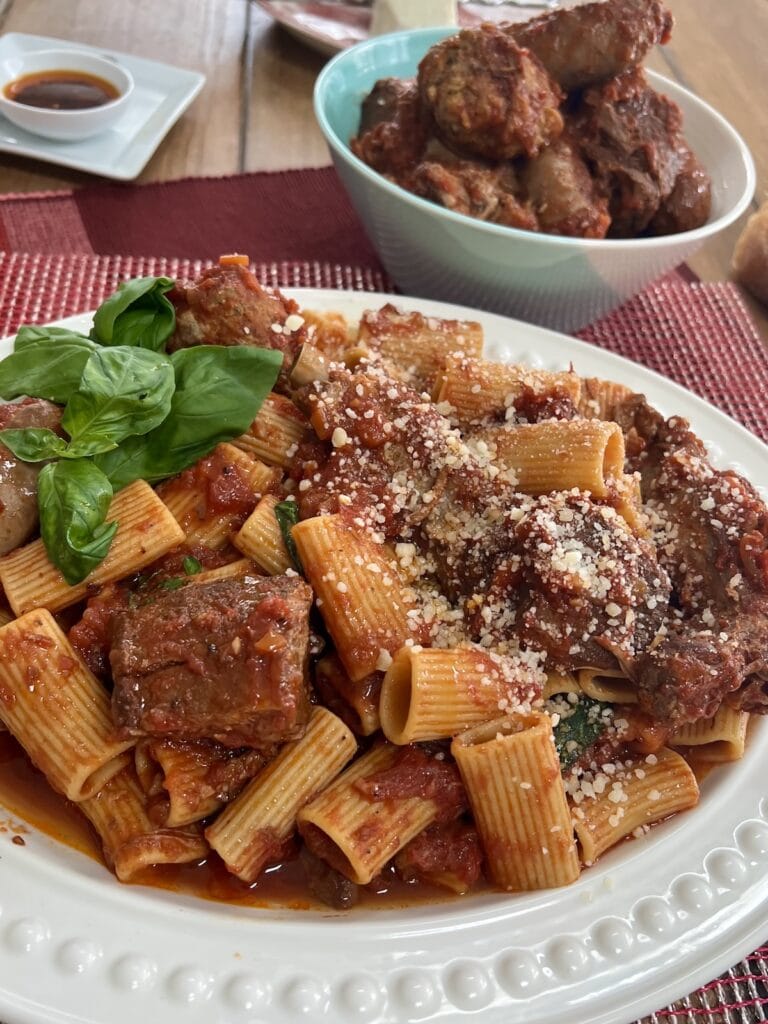
Table of Contents
- Keep In Mind Before You Start . . .
- Italian American Sunday Gravy: More Than Just Dinner
- What is Sunday Gravy?
- GRAVY OR SAUCE???
- Sunday Gravy vs. Ragù Napoletano
- Ingredients
- How to Make Italian American Sunday Gravy
- Recipe Yield, Timing, Make-Ahead & Storage
- Common Mistakes to Avoid
- How to Serve Sunday Gravy
- Frequently Asked Questions
- More Italian Sunday Dinner Recipes
- Ready to Make this Italian American Sunday Gravy?
- Italian American Sunday Gravy (Mom’s Sunday Sauce) Recipe
Italian American Sunday Gravy: More Than Just Dinner
Some recipes are so intertwined with your life that it’s hard to remember a time when they weren’t there. Sunday Gravy is one of those recipes for me.
I’ve been eating–and eventually making–some version of this sauce my entire life.
Our Sundays had a rhythm. We’d go to Mass, come home and have breakfast, and then the gravy would go on the stove. Dinner wasn’t until around 3pm, so it had hours to slowly simmer while that unmistakable aroma of tomatoes and meat filled the house.
At some point, my mom would call out to all of us and ask what kind of “macaroni” we wanted that day: short or long?
Short might mean rigatoni, penne, shells or fusilli. Long could be spaghetti, linguine, fettuccine or perciatelli. We didn’t call it pasta. It was macaroni. And Sunday dinner was essentially macaroni and gravy.
Of course, no one actually waited until 3pm to taste it.
There was always “bread and gravy” first–pieces of Italian bread dipped right into the pot so we could “test” the gravy while it cooked. You know, strictly for quality-control purposes. 😉
That pot bubbling away on the stove, my mom asking “short or long?”, everyone sneaking bread and gravy before dinner–that is Sunday to me.
This isn’t the kind of food that’s meant to be rushed. Put the pot on early, let it slowly simmer and enjoy the process.
Because Sunday Gravy isn’t just a sauce. It’s a ritual. 💚🤍❤️
For a few other hearty, slow-cooked pasta ragus, check out Beef Brisket Ragu, Pork Country Rib Ragu and Wild Boar Bolognese Ragu.
What is Sunday Gravy?
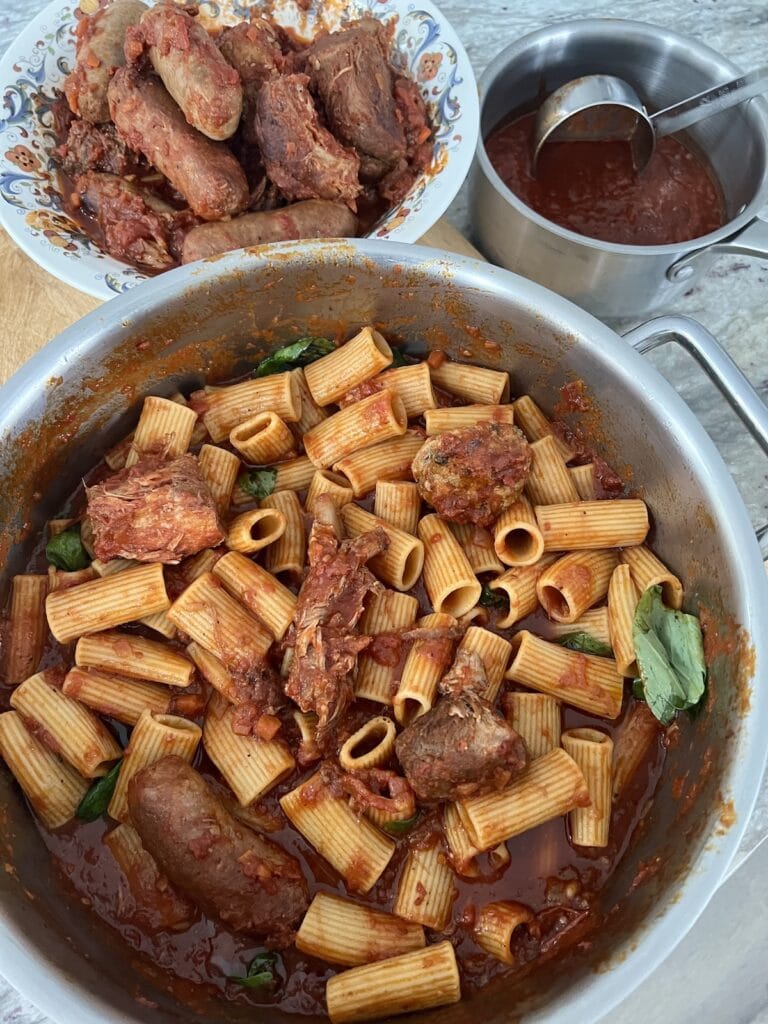
Sunday Gravy–also called Sunday Sauce, Italian gravy or red gravy in many Italian-American families–is a rich tomato sauce in which several cuts of meat are slowly braised for hours.
The meat does double duty: as it becomes fall-apart tender, it also flavors the tomatoes, transforming a relatively simple sauce into something deeply savory, rich and complex.
The Italian-American tradition has strong roots in Southern Italian cooking, particularly the long-simmered ragù napoletano of Naples. Traditional Neapolitan ragù is made by slowly cooking large pieces of beef and pork in a tomato-based sauce until the meat is tender and the sauce is dark, thick and intensely flavored.
As with so many traditional dishes, however, there isn’t one definitive recipe. Every family seems to have its own combination of meats, tomatoes, aromatics and method–and usually a very strong opinion about it!
GRAVY OR SAUCE???
Oh boy. If you want to start an argument among Italian-Americans, just ask whether the red stuff that goes on the macaroni is called “gravy” or “sauce.”
People have very strong feelings about this!
We always called it gravy in my family. And, contrary to one common explanation you’ll hear, it wasn’t only called gravy when there was meat in the pot. Meat or no meat, it was gravy. Period.
Later, when I went out into the world, went to culinary school and worked professionally in the food business, I naturally started using the more universally understood word “sauce.” But “gravy” is still the word that takes me back to my childhood kitchen.
Interestingly, the term gravy for tomato sauce is particularly associated with some Italian American families in the Northeast, including New Jersey, Philadelphia and New York.
I’ve always wondered whether when and where our families arrived in America also played a role. All four of my grandparents came to the United States from Italy in the early 1900s (the first Italian diaspora) and settled in the South Jersey/Philadelphia area.
Over the years, I’ve noticed that many people I meet who also grew up saying gravy have similar family immigration histories, while those I’ve met whose families immigrated later don’t seem to use the term at all.
That’s my observation rather than a hard-and-fast historical rule–and there are plenty of Italian-American families who will passionately tell you otherwise!
So, which is correct?
Both. Call it gravy. Call it sauce. Call it sugo.
Just don’t forget the bread.
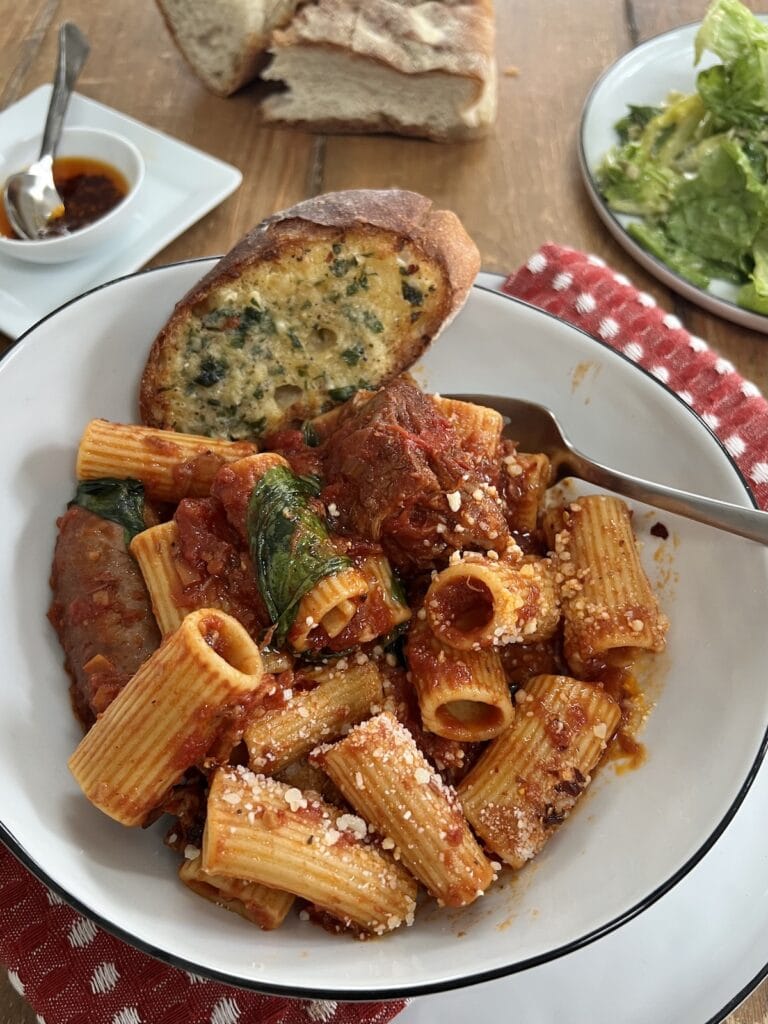
Sunday Gravy vs. Ragù Napoletano
Italian American Sunday Gravy is closely related to ragù napoletano, but I wouldn’t say they’re exactly the same thing.
Traditional Neapolitan ragù (‘o rraù) is made with large pieces of meat–typically beef and pork–slowly cooked for hours in tomato, onion and wine. The sauce is used to dress pasta for the primo, while the braised meats are traditionally served separately as the secondo.
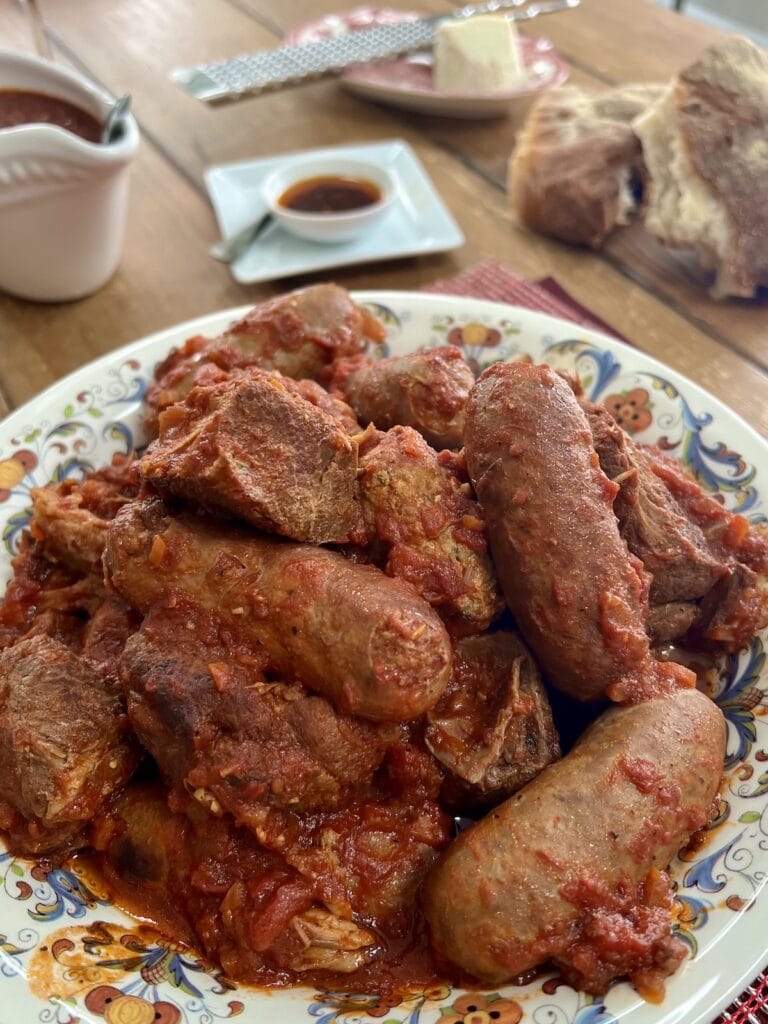
Italian American families adapted this general tradition over generations, often adding their own combination of pork ribs, beef, sausage, meatballs and braciole. The result became what many families know simply as Sunday Sauce or Sunday Gravy.
My version reflects both traditions: large pieces of beef and pork slowly braised in tomato and wine, with optional Italian sausage, then pasta finished directly in that deeply flavored gravy.
Is Sunday Ragu the Same as Bolognese?
No. Although both are ragù, they’re very different sauces.
A ragù, broadly speaking, is an Italian meat sauce cooked slowly and generally served with pasta. But there are many regional versions throughout Italy.
Ragù alla Bolognese, from Bologna in northern Italy, is traditionally made primarily with finely ground meat and relatively little tomato and is commonly finished with milk.
Ragù Napoletano, on the other hand, is a tomato-forward Southern Italian ragù traditionally made with large pieces of meat that slowly braise in the sauce for hours.
So while both are ragù, Bolognese and Neapolitan ragù are not interchangeable.
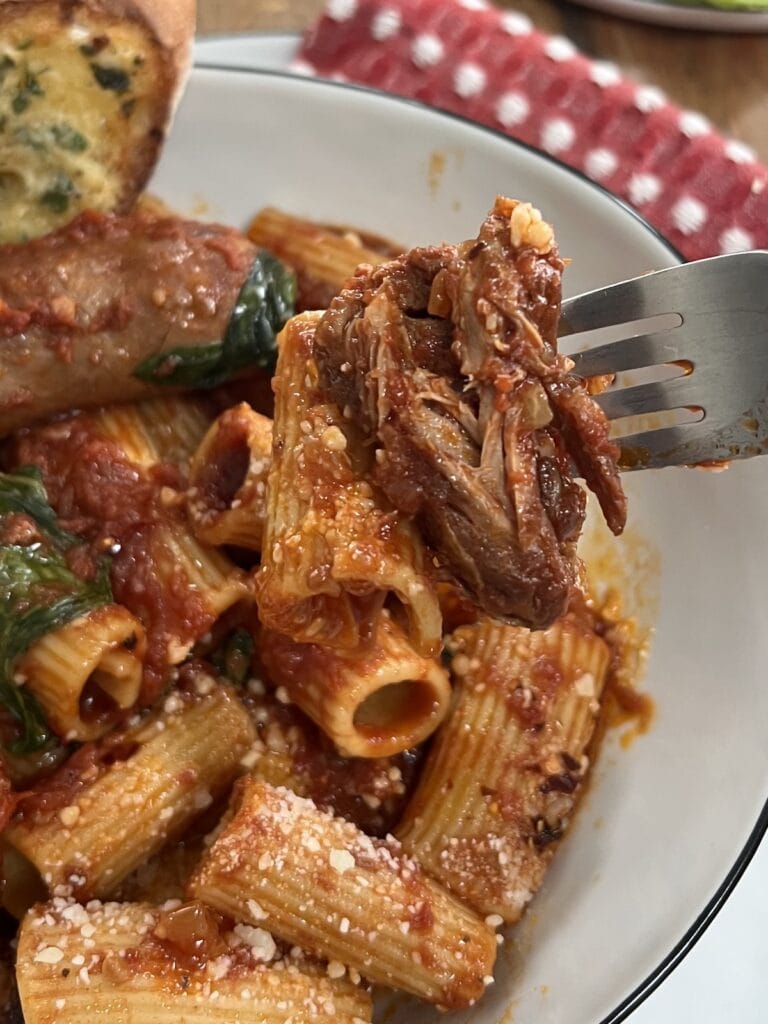
Ingredients
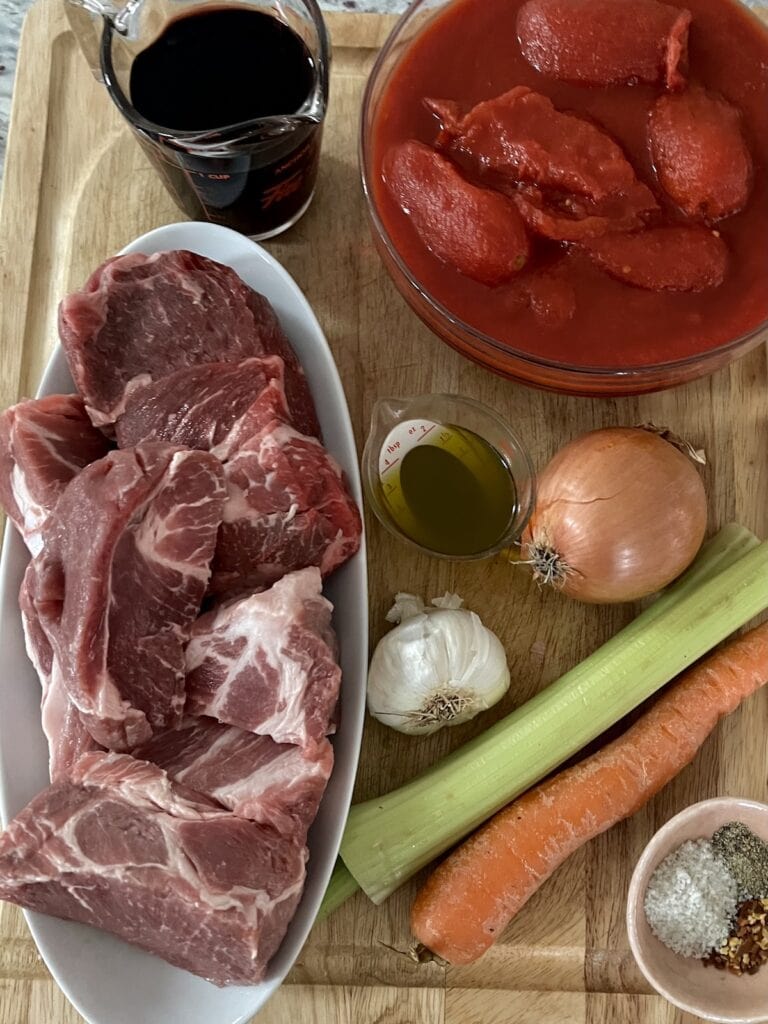
Here’s what you’ll need to make my Italian American Sunday Gravy:
- Beef: Use a flavorful braising cut such as beef short ribs, rump roast, shoulder or another tougher cut that becomes tender during the long simmer. Trim away silver skin and large areas of hard fat, but don’t remove every bit of fat–it contributes flavor. Bone-in or boneless both work.
- Pork: Pork shoulder (or butt), spare ribs and country-style ribs are all great choices for slow cooking and add richness and wonderful pork flavor to the gravy. Both bone-in and boneless cuts work well; bones add even more meaty flavor to the sauce as everything slowly simmers.
- Italian Sausage: Optional, but definitely a crowd favorite! Use sweet or hot Italian sausage–or a combination of both.
- Onion, Celery, Carrot and Garlic: These aromatics form an important flavor base for my Sunday gravy. Chop them finely so they essentially melt into the finished sauce.
- Crushed Red Pepper: Just enough for a little background heat. Add more if you like things piccante!
- Dry Red Wine: Use a dry red such as Chianti, Merlot or Cabernet Sauvignon. The wine deglazes all those flavorful browned bits from the pot while adding acidity and complexity to the sauce. If you prefer not to use alcohol, substitute beef broth.
- Tomatoes: The base for the gravy. Whole canned tomatoes should be hand-crushed before adding, or use good-quality crushed tomatoes.
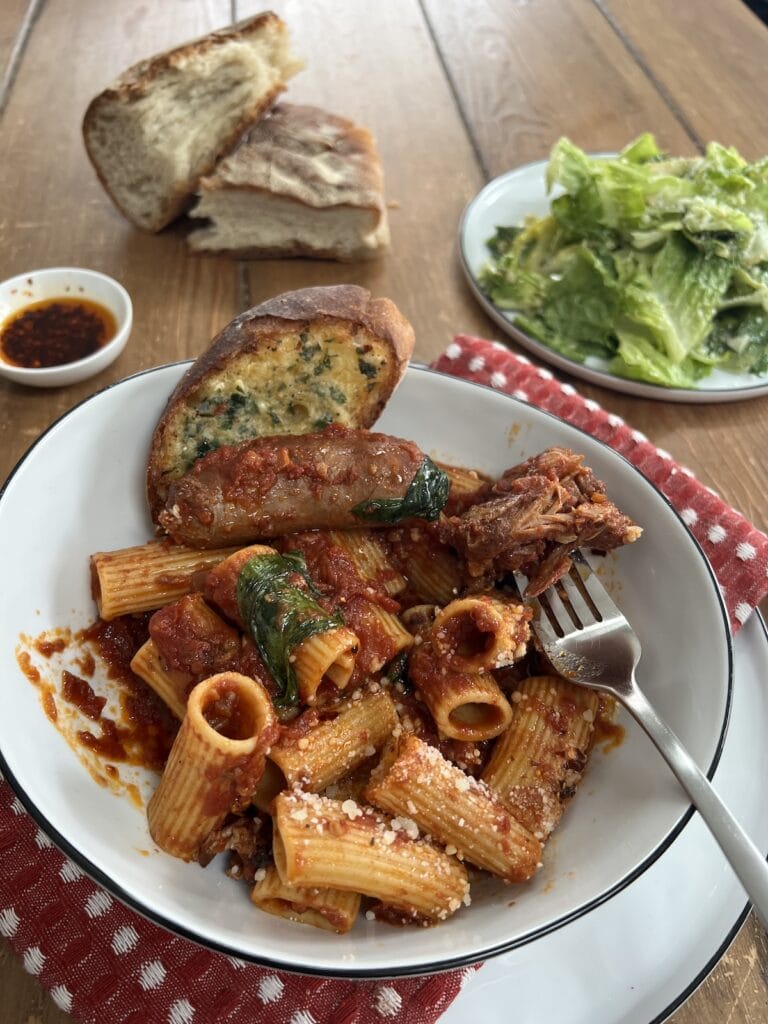
- Pasta: Choose a hearty pasta shape that can stand up to this substantial sauce. I used rigatoni here, but ziti, paccheri, pappardelle, fettuccine and spaghetti are all delicious choices.
- Fresh Basil: Stirred into the finished pasta for freshness and that unmistakable Italian flavor.
- Pecorino Romano: Its sharp, salty flavor is perfect with this rich sauce. Parmigiano-Reggiano is also delicious.
- Extra Virgin Olive Oil: Finish the pasta with a generous drizzle of good-quality EVOO for extra richness and flavor.
How to Make Italian American Sunday Gravy
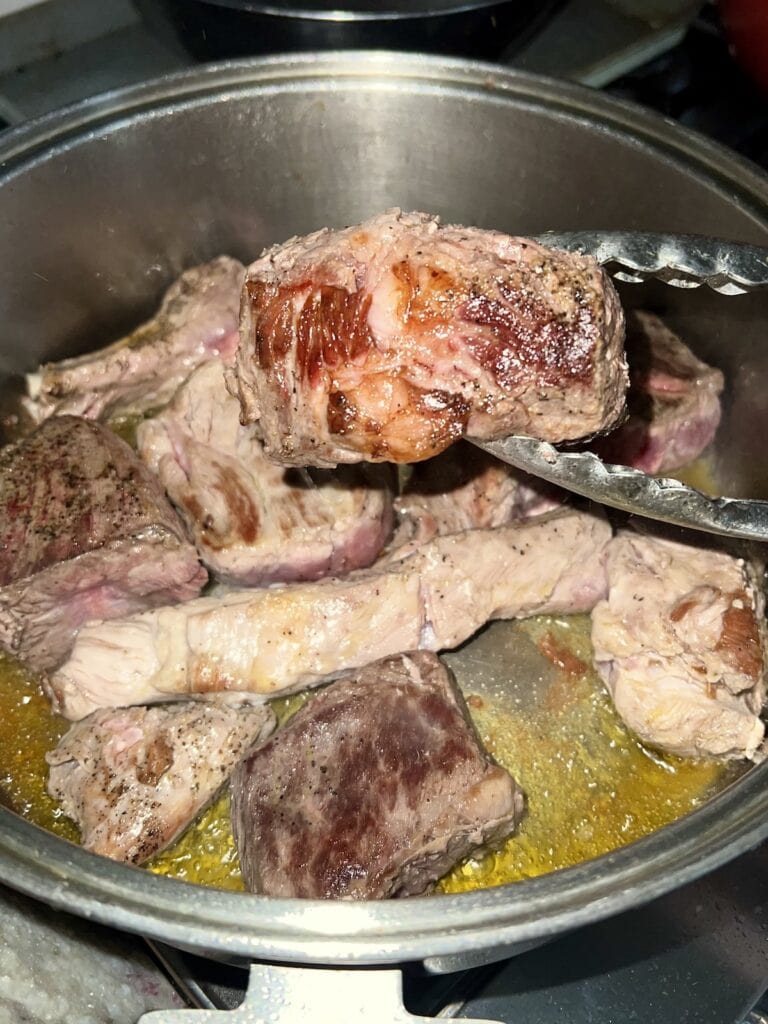
Brown the Meats
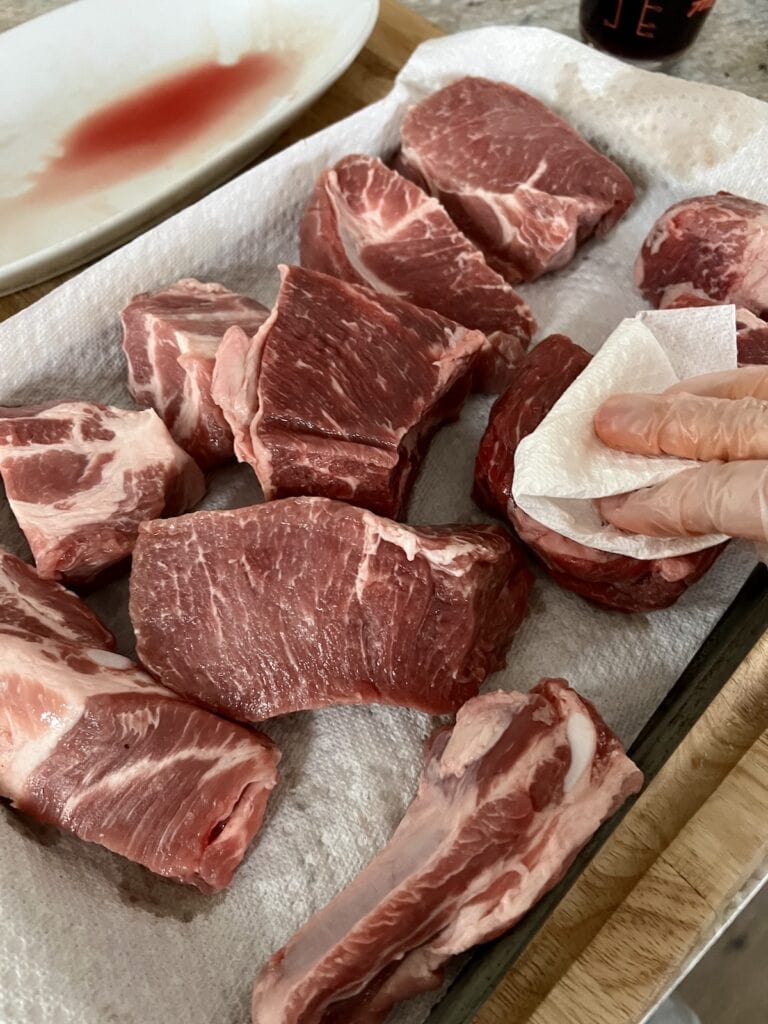
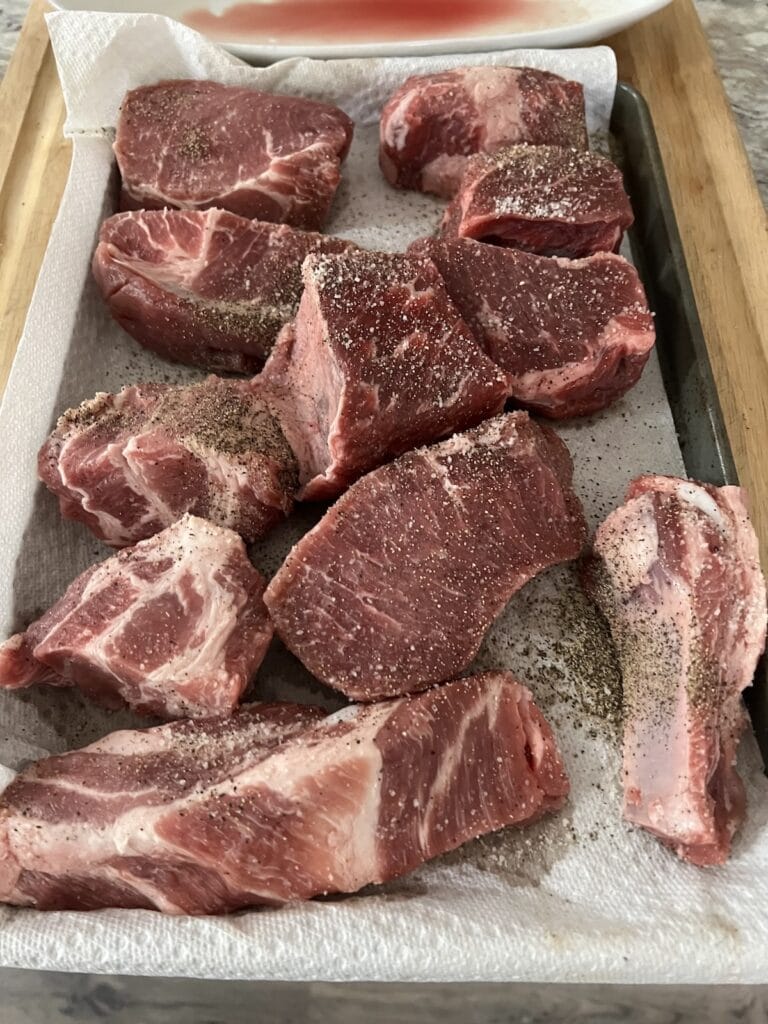
- Pat the prepared pieces of beef and pork dry and season them with salt and black pepper.
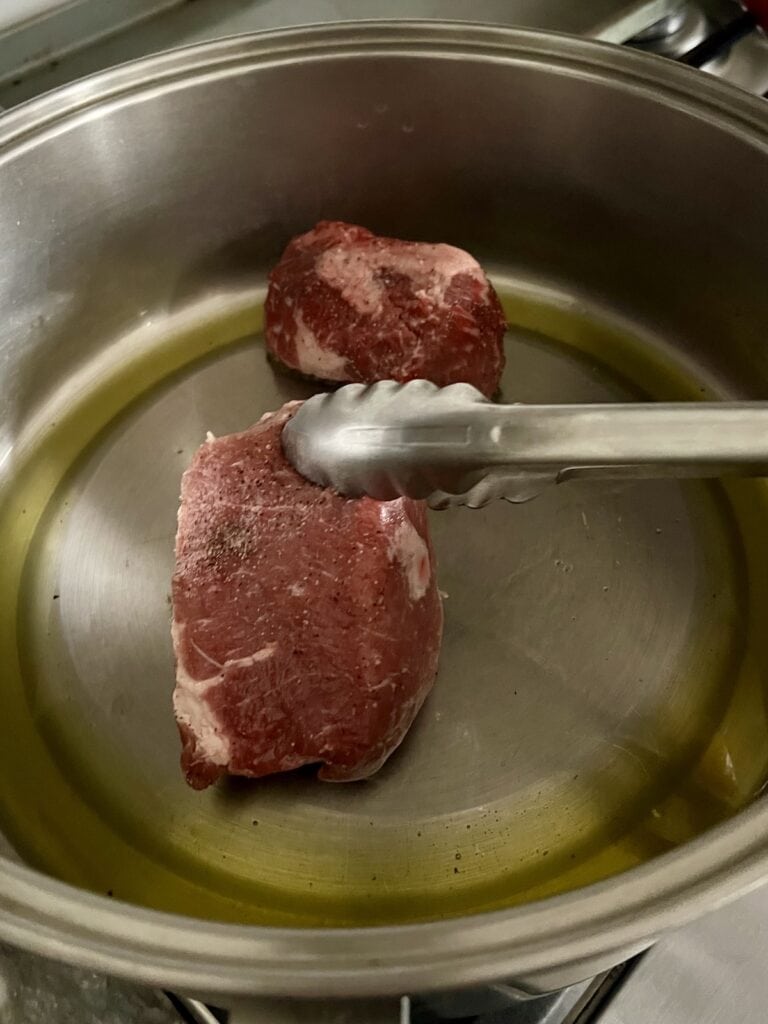
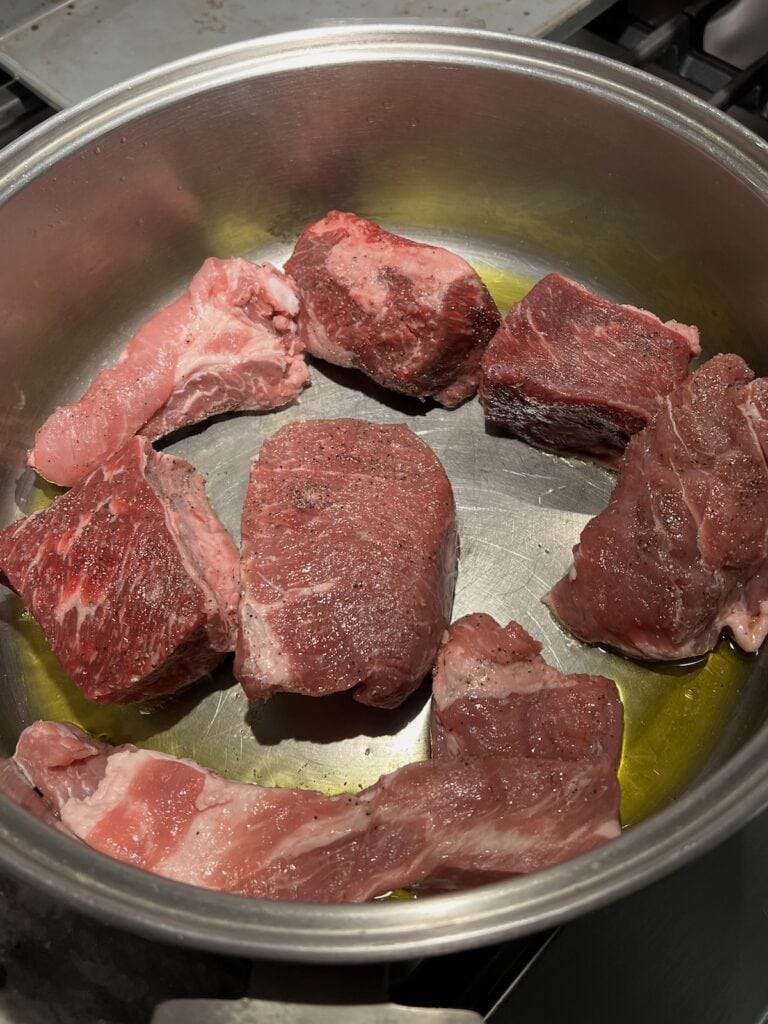
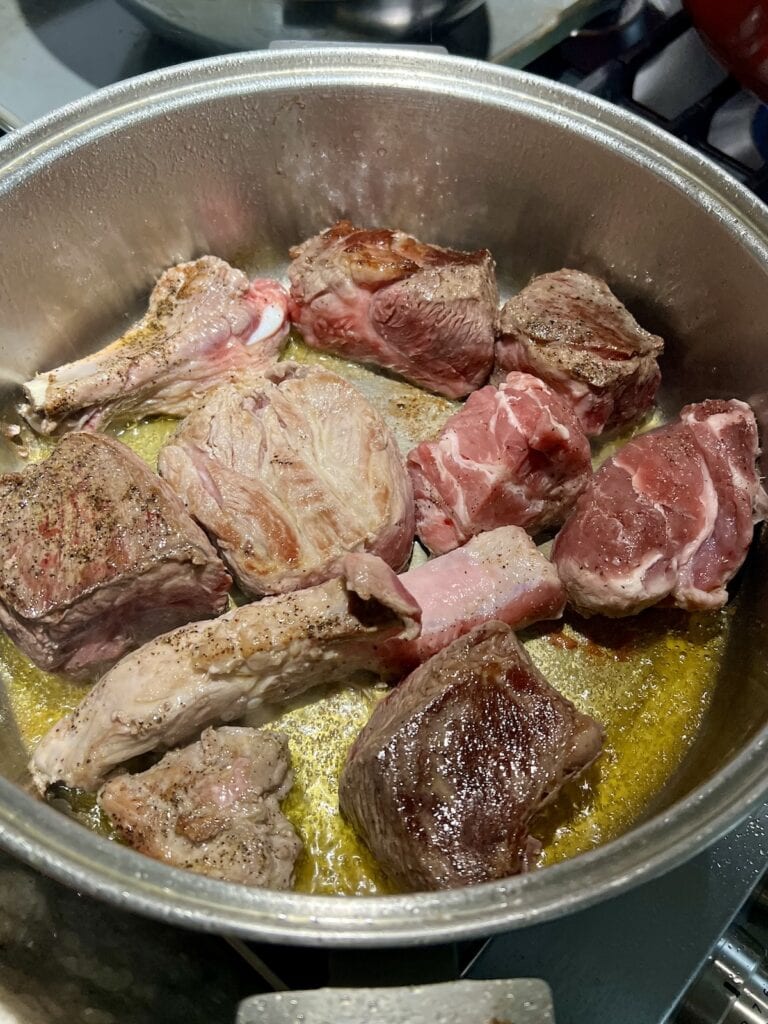
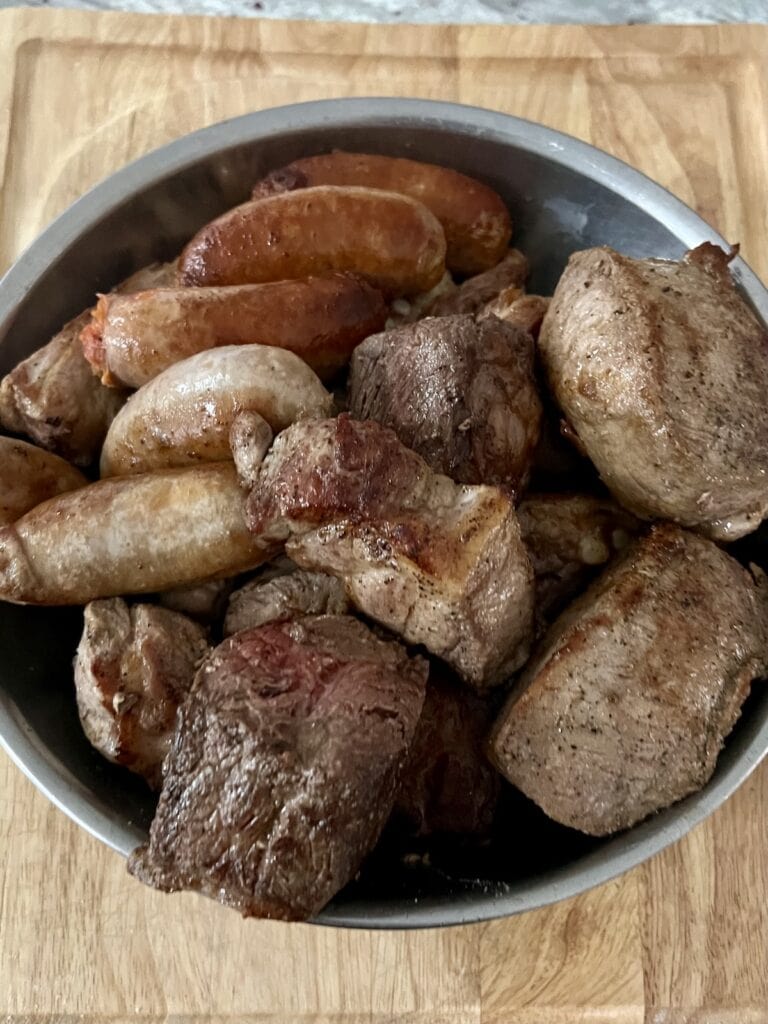
- Heat oil in a large, heavy-bottomed pot or Dutch oven and brown the meat well on multiple sides. Work in batches and don’t overcrowd the pot.
- Brown the sausage as well, if using, then transfer all the meat to a plate.
Pro Tip
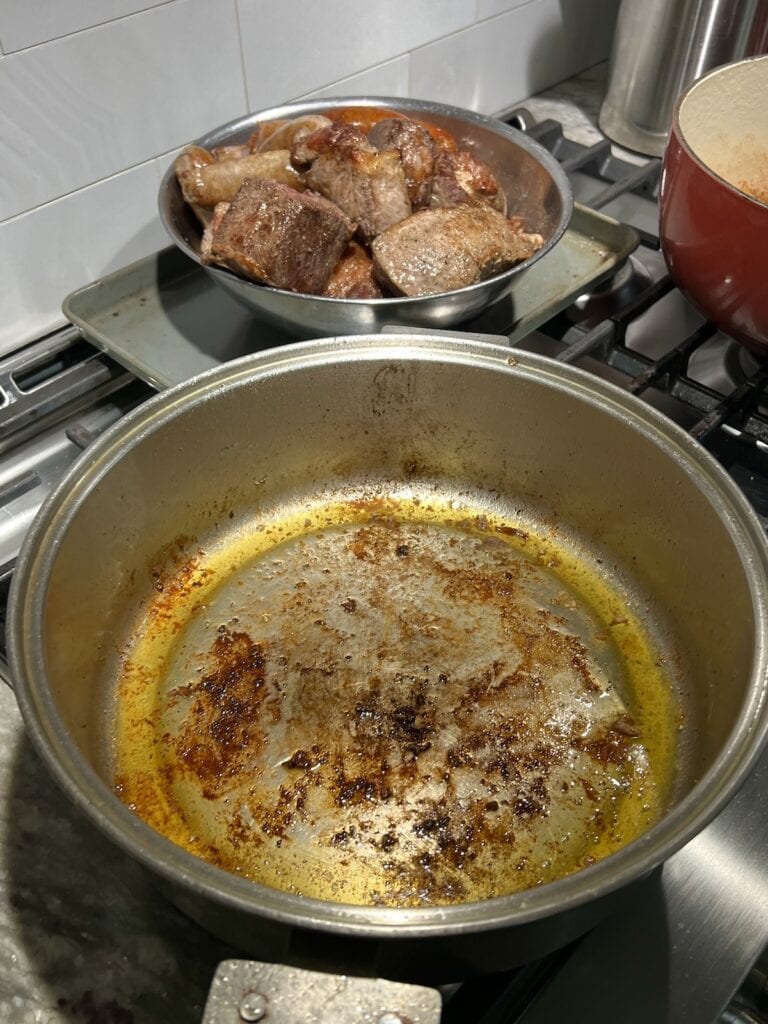
Don’t rush this step! The brown crust on the meat—and the browned bits left behind in the pot—are the foundation of a deeply flavorful Sunday gravy.
Sauté the Aromatics, Deglaze
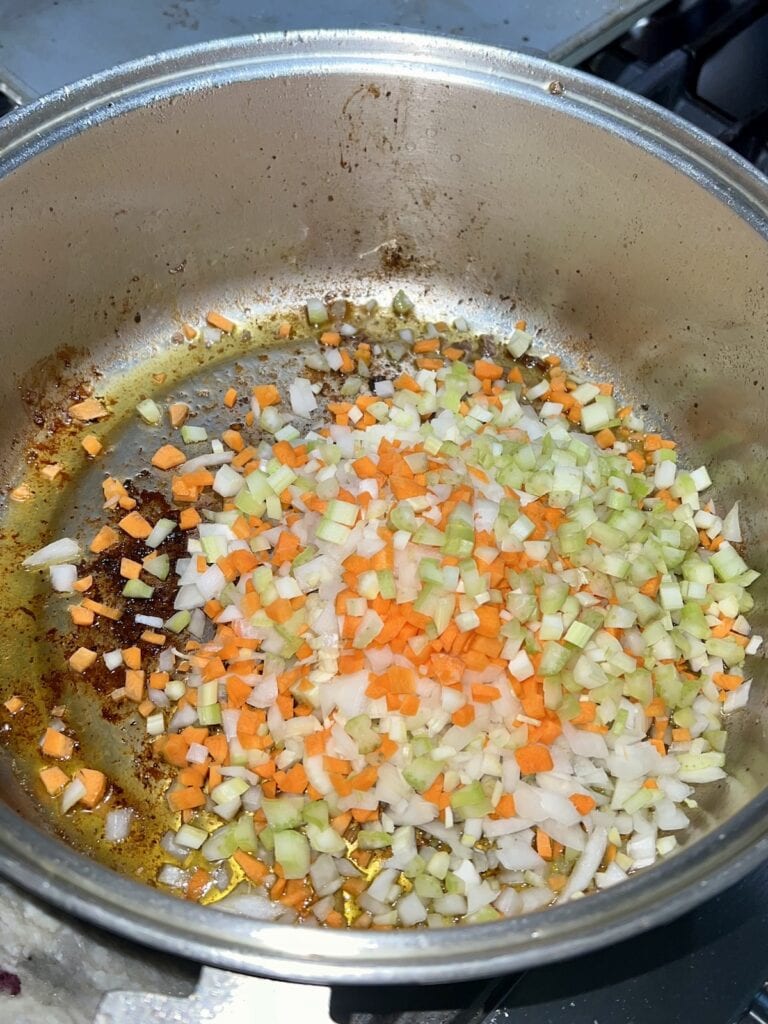
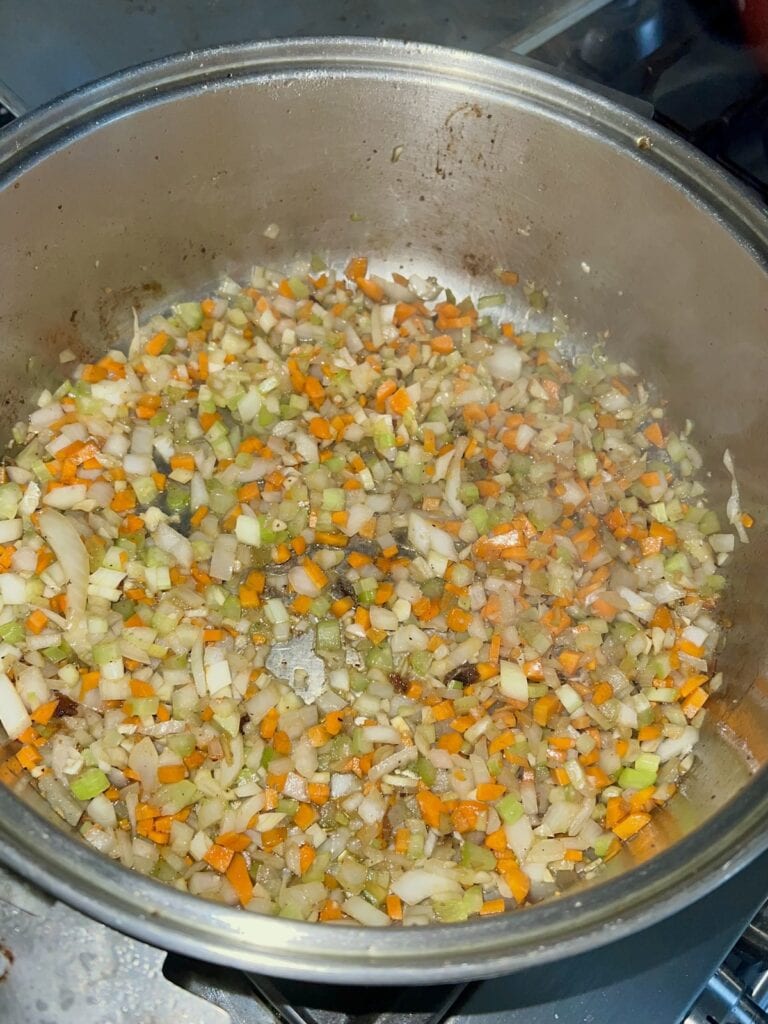
- Add the onion, celery, carrot, garlic and crushed red pepper to the pot and cook over medium-low heat until softened.
- As the vegetables release moisture, begin scraping up some of the flavorful browned bits from the bottom of the pot.
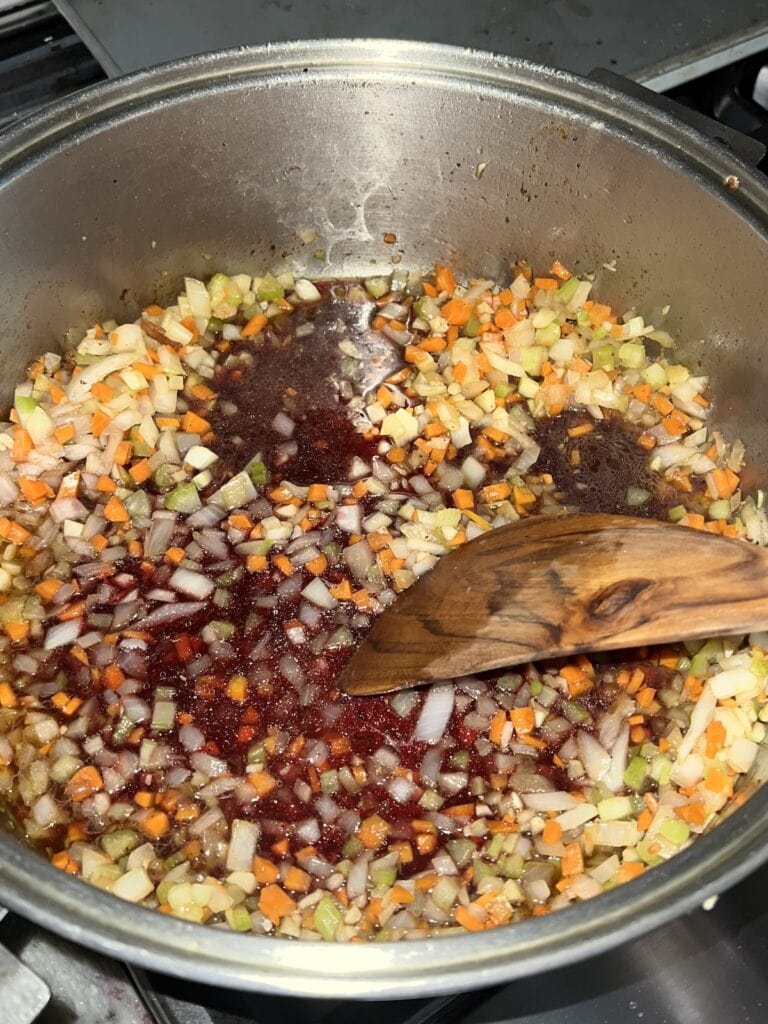
- Pour in the red wine and thoroughly scrape the bottom of the pot to release the remaining fond.
Add Tomatoes, Add Back Meat
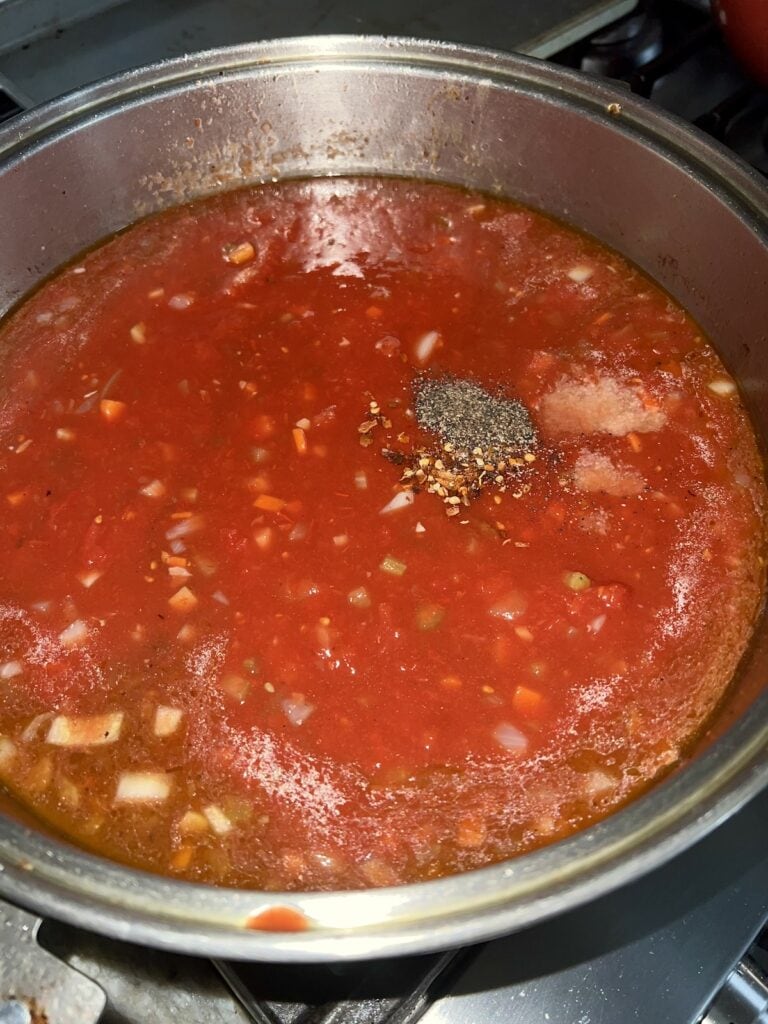
- Add the tomatoes, water, salt and black pepper and stir well.
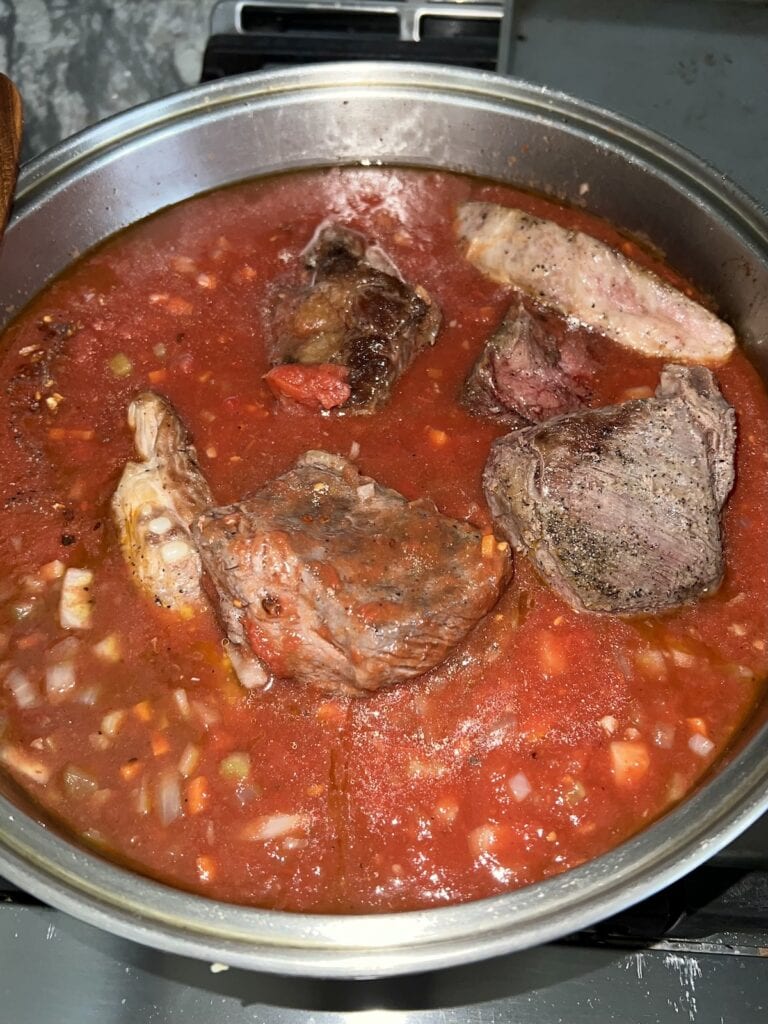
- Return the browned beef and pork to the pot along with any accumulated juices.
- If using sausage, you can hold it back and add it later in the cooking process so it doesn’t overcook.
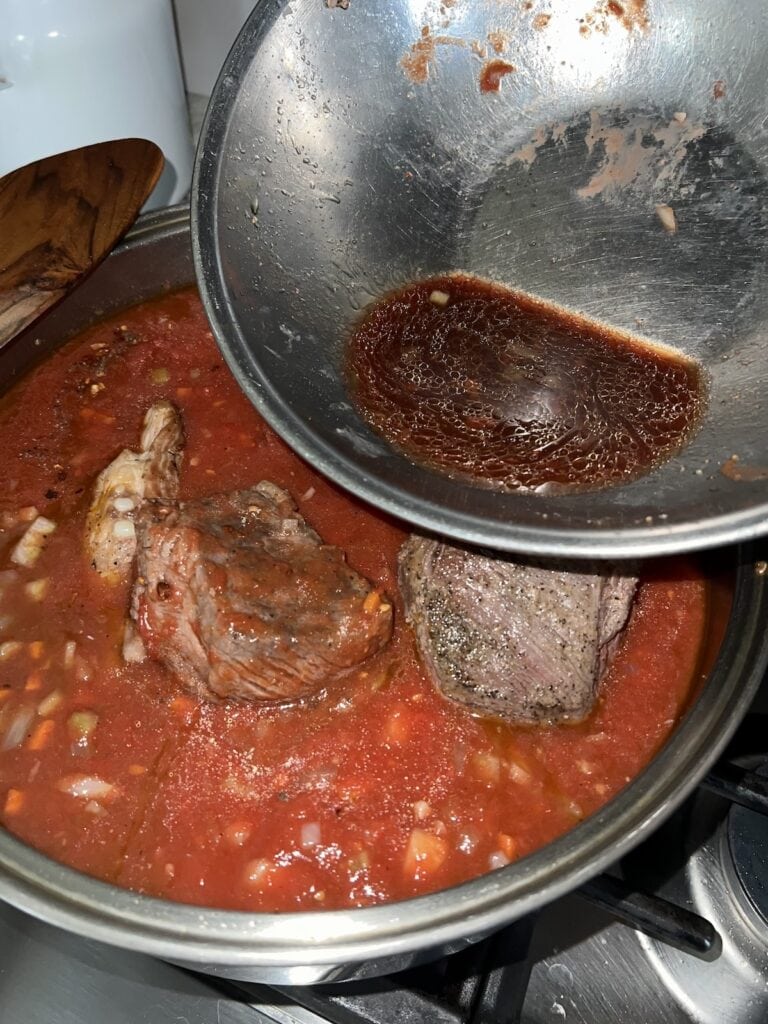
Simmer Low and Slow
- Bring the mixture to a simmer, then immediately reduce the heat to maintain a low, gentle simmer.
- Cook for about 2½ to 3 hours—or until the meats are fork-tender—stirring periodically and turning the meat pieces occasionally.
- About halfway through cooking, leave the lid slightly ajar to allow the gravy to slowly reduce and thicken.
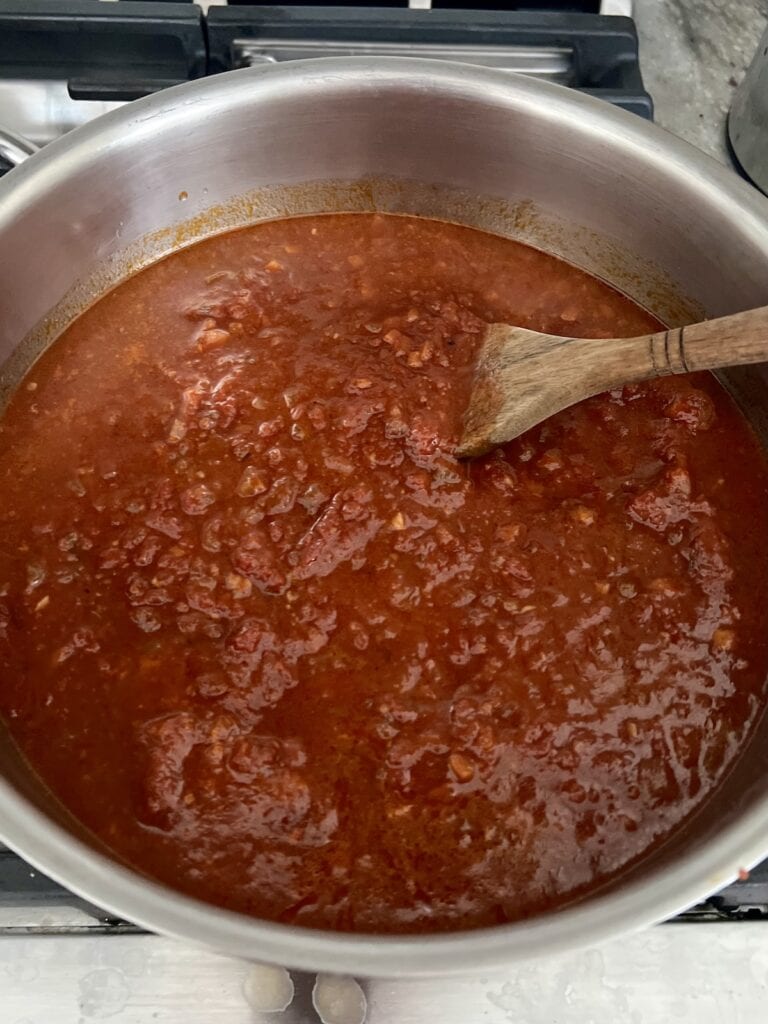
- When finished, you should have tender meats surrounded by a thick, deep-red, richly flavored gravy.
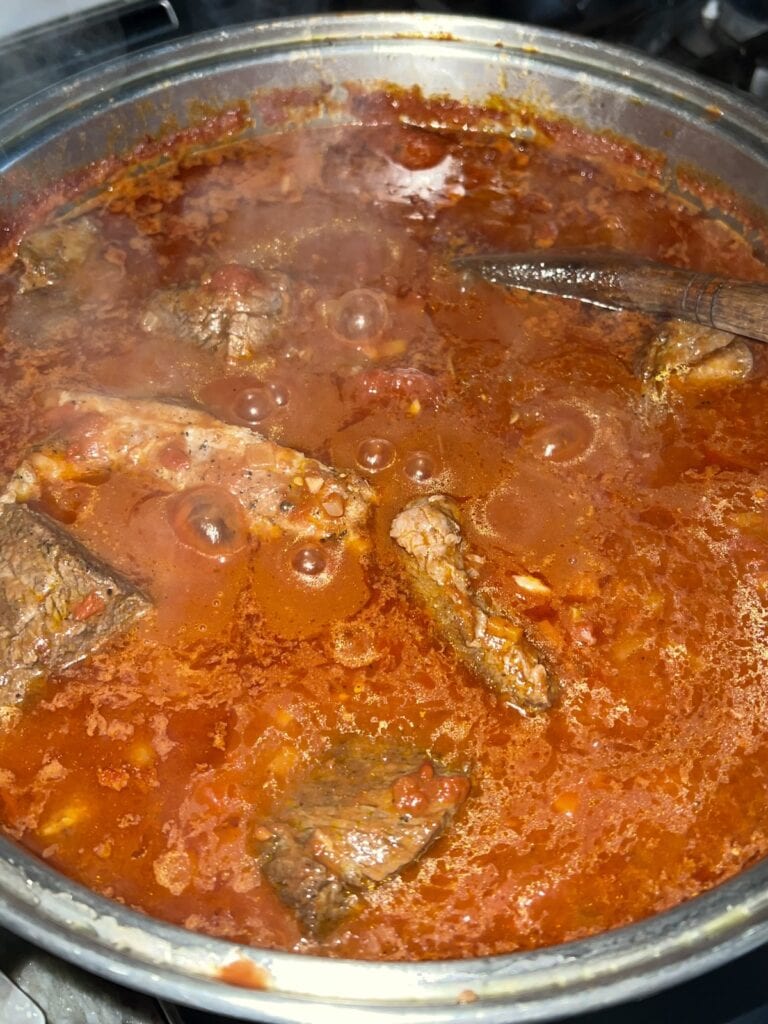
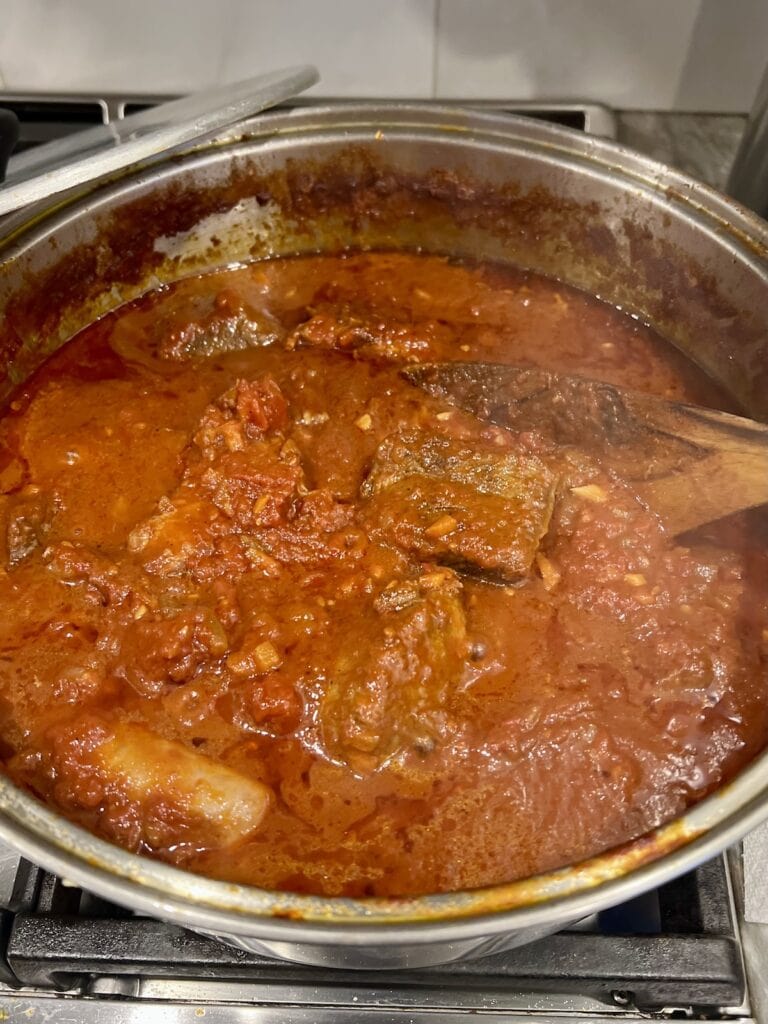
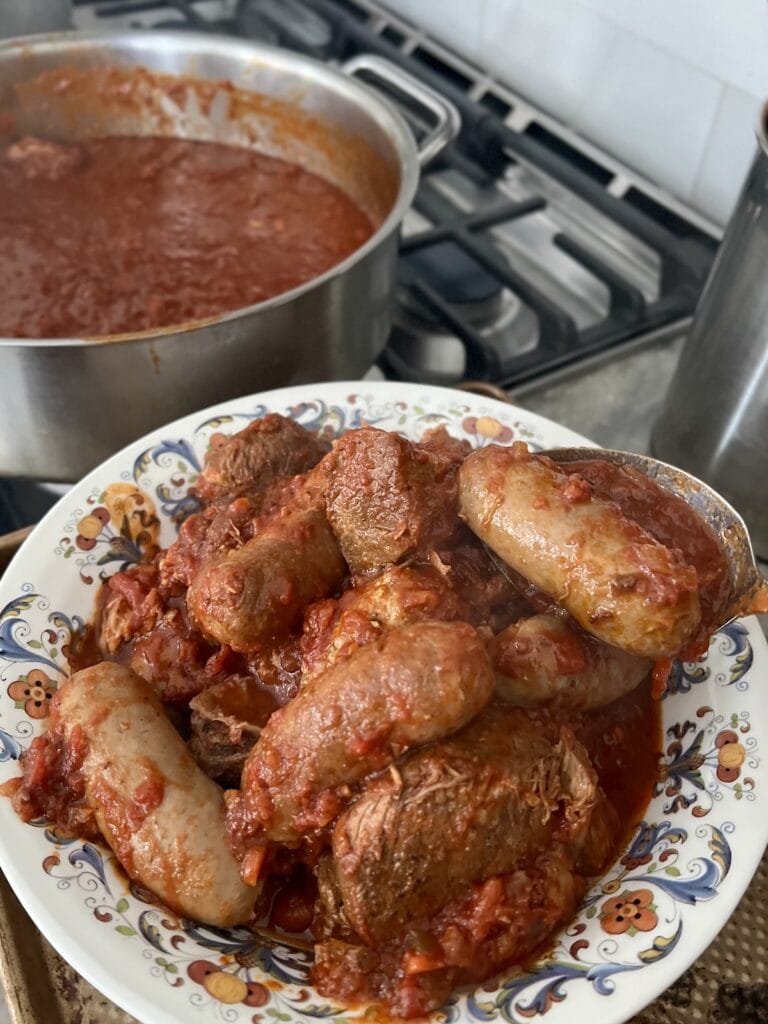
Cook and Sauce the Pasta
- When you’re ready to eat, heat the amount of Sunday gravy you need in a large skillet while cooking your pasta in well-salted water.
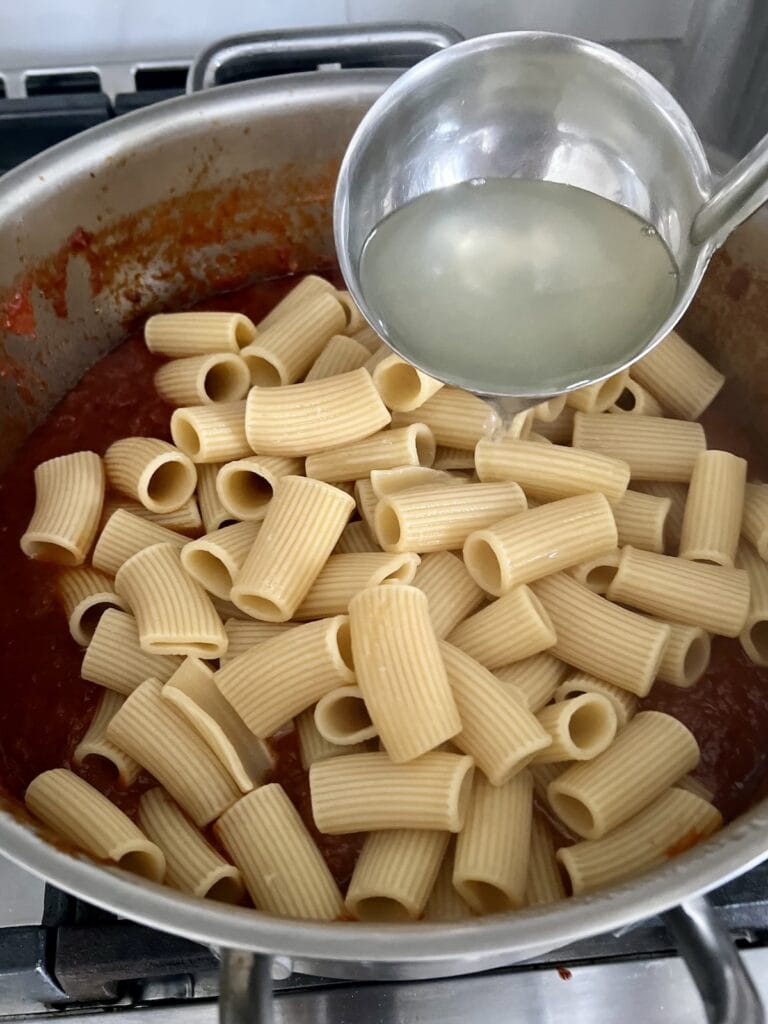
- Cook the pasta about 2 minutes shy of al dente, reserving at least 1 cup of starchy pasta water.
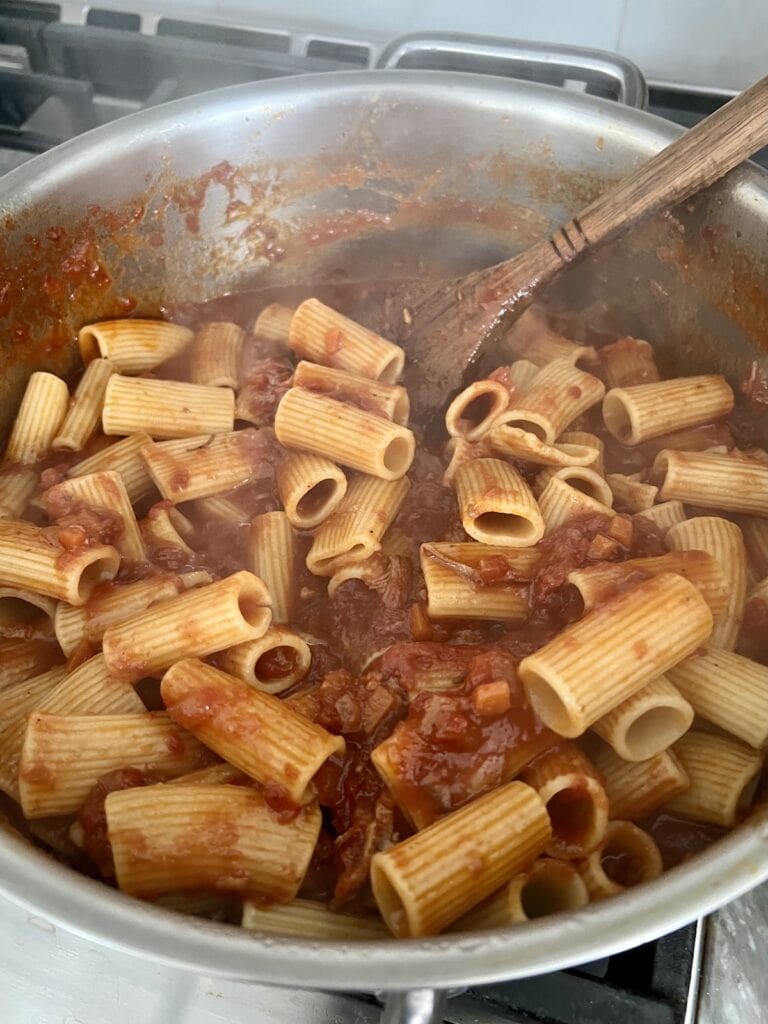
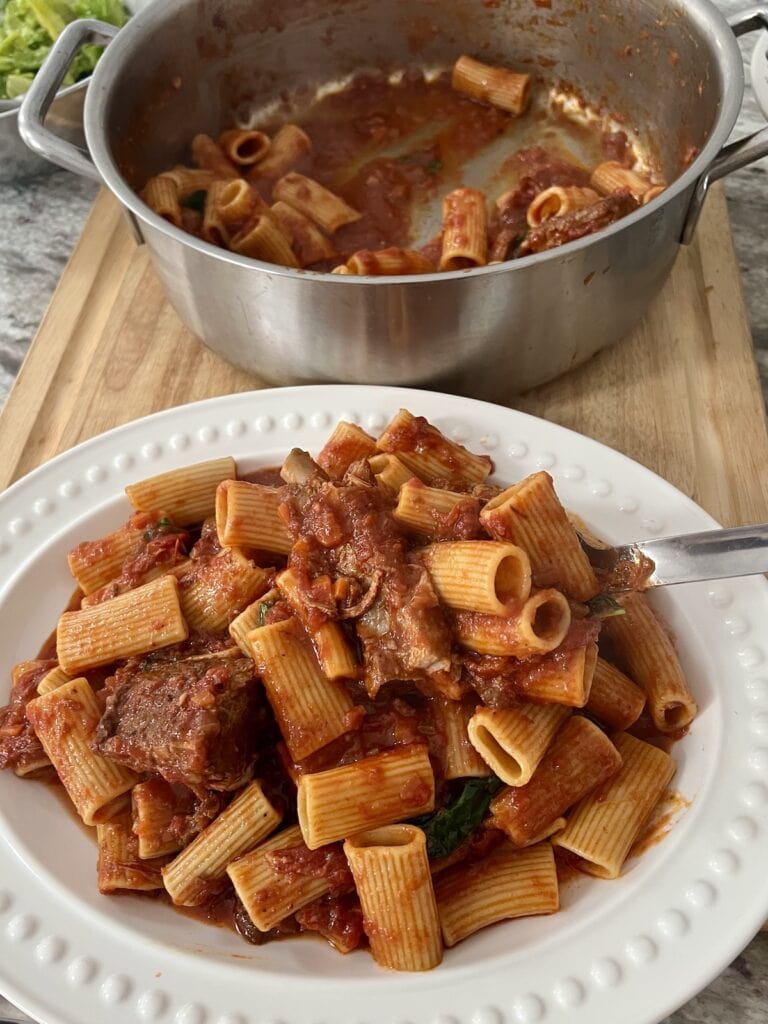
- Transfer the pasta directly to the hot gravy and let it finish cooking there, adding pasta water as needed.
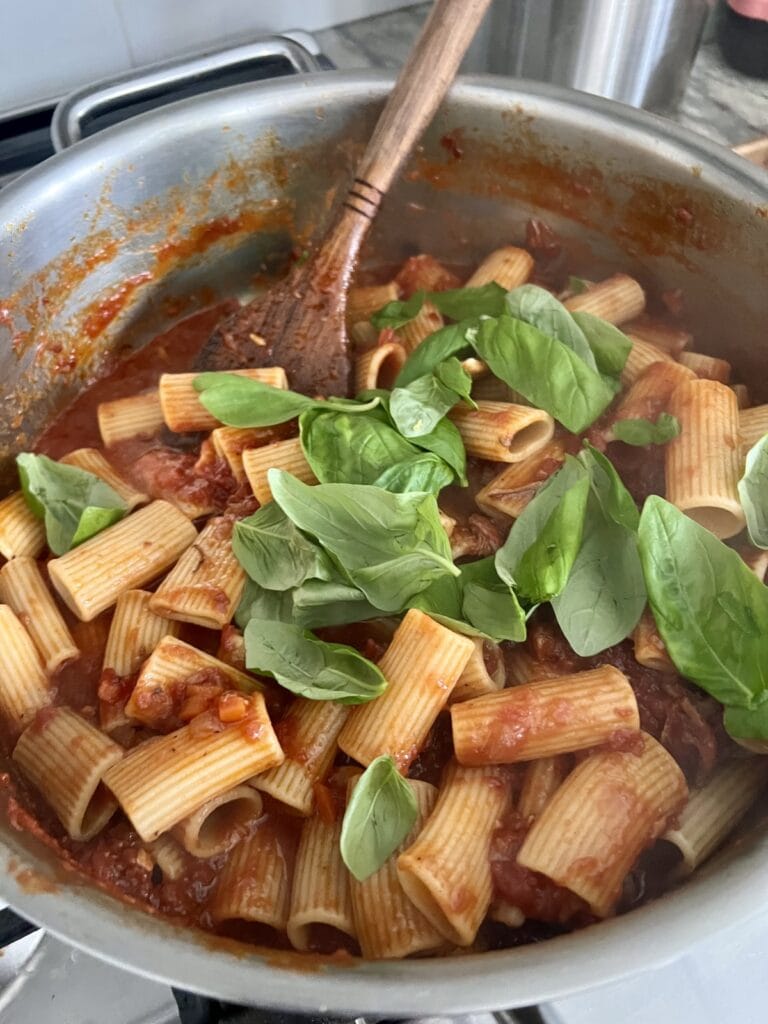
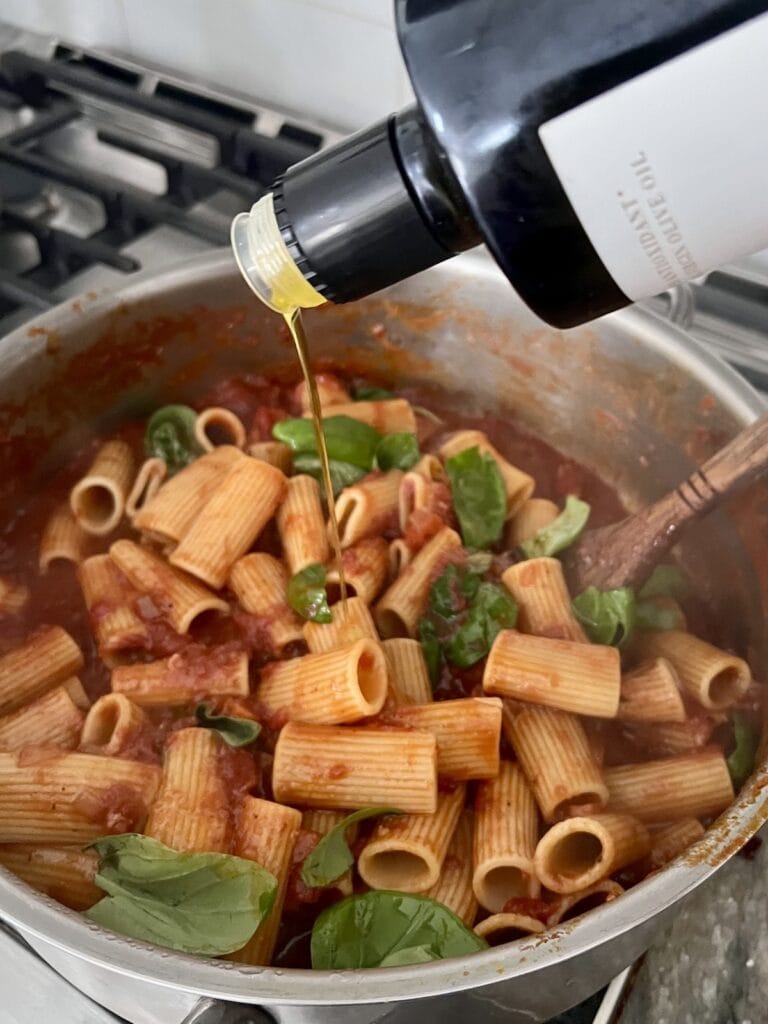
- Once al dente, remove the pan from the heat and gently stir in fresh basil and grated Pecorino Romano. Finish with a good drizzle of extra virgin olive oil and enjoy!
Recipe Yield, Timing, Make-Ahead & Storage
- YIELD: This is intentionally a big-batch recipe. It makes approximately 9 to 12 cups of Sunday gravy with the meats, enough to dress roughly 2 to 3 pounds of pasta, depending on how saucy you like it.
- TIMING: Plan on about 4 hours from start to finish, including approximately 30 minutes of prep and 3½ hours of cooking. Most of that time is hands-off simmering.
- MAKE AHEAD: Sunday Gravy is perfect for making ahead–and may taste even better the next day! Cool completely and refrigerate in an airtight container for up to 5 days. Gently reheat when ready to serve.
- FREEZING: Freeze the cooled gravy and meats together in an airtight freezer-safe container for up to 3 months. Thaw overnight in the refrigerator and reheat gently, adding a little water if needed to loosen the sauce.
Looking for a more simple tomato basil sauce without meat? Check out my tomato sugo recipe–a true winner!
Common Mistakes to Avoid
Sunday Gravy is very forgiving, but a few things make a big difference:
- Not browning the meat properly. Pale meat means leaving flavor behind. Give the meat space and let it develop a good brown crust.
- Rushing the simmer. This isn’t a sauce to boil aggressively. A slow, gentle simmer tenderizes the meat while gradually concentrating the gravy.
- Not scraping up the fond. Those browned bits on the bottom of the pot are pure flavor. Deglaze thoroughly with the wine.
- Letting the gravy scorch. A thick tomato sauce can stick as it reduces. Stir regularly, especially toward the end of cooking.
- Using very lean meat. Tougher, well-marbled braising cuts are exactly what you want here. They become tender during the long cook and contribute richness to the gravy.
- Overcooking the pasta before adding it to the sauce. Finish it directly in the gravy so the pasta absorbs its flavor rather than simply having sauce spooned on top.
How to Serve Sunday Gravy
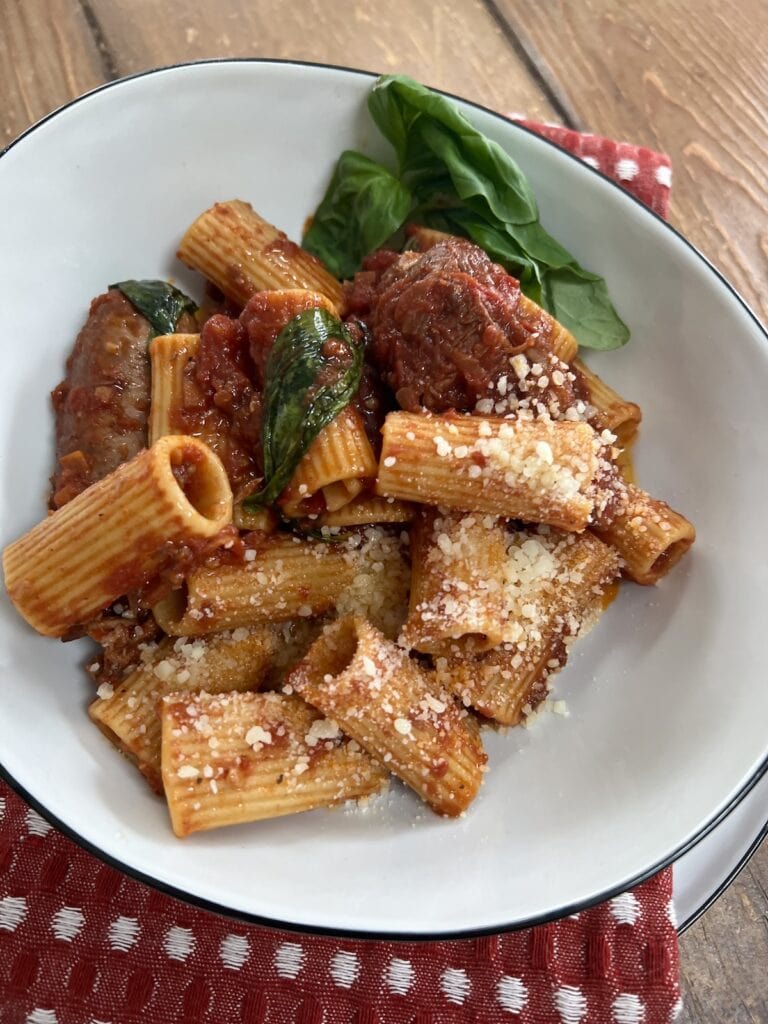
Traditionally, the pasta is served first dressed with the gravy, followed by the braised meats as a separate course. But this is your Sunday dinner. Serve everything together on a big platter if that’s how your family likes it!
At our table, there would absolutely be grated Pecorino Romano along with a hunk of ricotta salata and a flat grater on a small plate, so everyone could grate some directly over their pasta. That second cheese on the table is one of those little details I associate with my mother’s Sicilian influence.
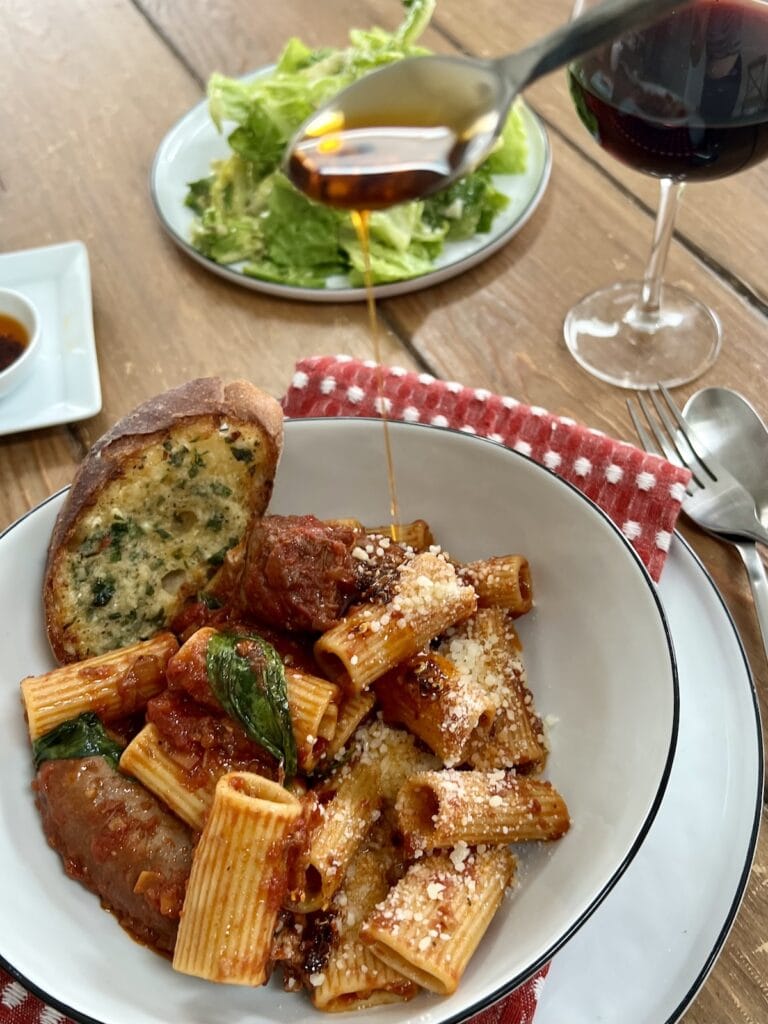
And don’t forget the piccante! I love drizzling some of my homemade olio santo (Italian chili oil) over my pasta for a spicy finish and always have a small jar of it on the table.
For something extra rich, add a dollop of creamy ricotta to your plate and let it mingle with the hot gravy. It’s absolutely delicious.
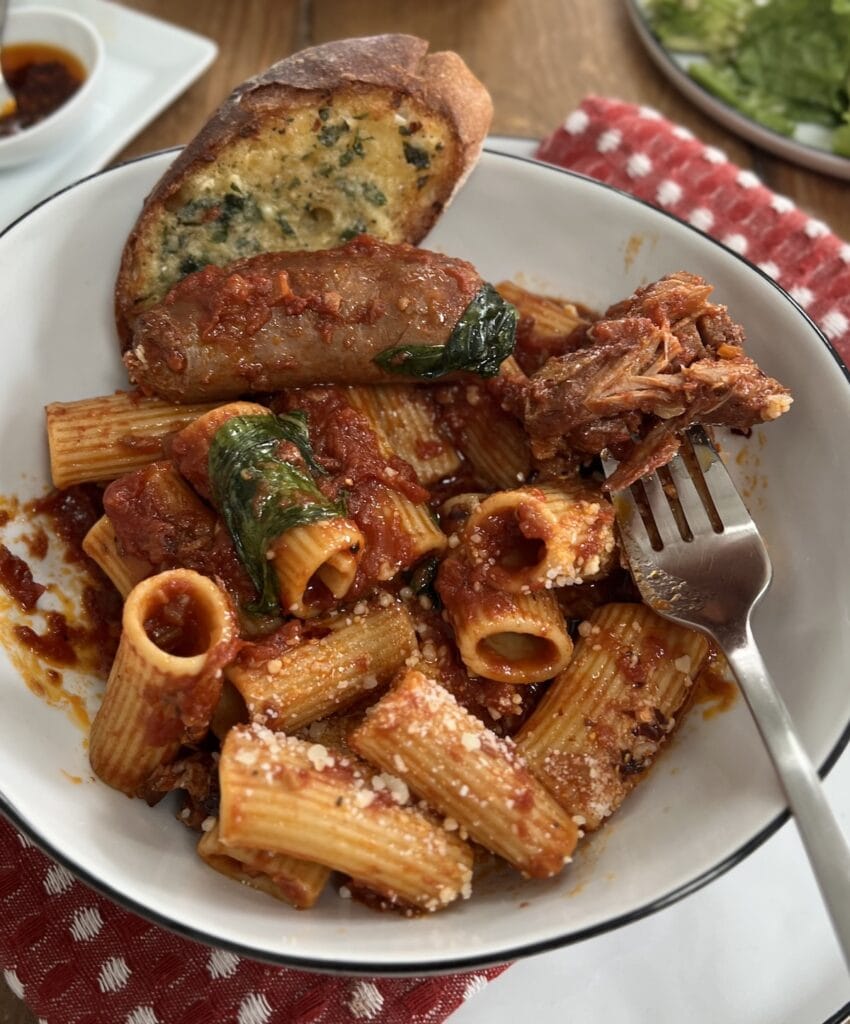
Complete the meal with a simple green salad, garlic bread and plenty of rustic Italian bread for soaking up the gravy and, ideally, a bold bottle of red wine. (My all-time favorite wine for this meal is Brunello di Montalcino!)
Frequently Asked Questions
Absolutely. Sunday Gravy is more about the braising technique than one mandatory combination of meats.
I generally use both beef and pork, but beef short ribs, rump roast, pork shoulder, spare ribs and country-style ribs are all great choices. Both bone-in and boneless meats work.
You can also include Italian sausage, meatballs and braciole. If adding meatballs, add them later in the cooking process so they don’t fall apart.
Yes. I strongly recommend it and the gravy will not taste as savory if you skip this step. (Trust me–I’ve tested this!). Browning the meat creates a flavorful crust through the Maillard reaction and leaves behind fond—those wonderful browned bits stuck to the bottom of the pot that are full of umami (savory flavor)!
When the pot is deglazed with wine, all of that concentrated flavor becomes part of the gravy. It’s an extra step that is absolutely worth the effort.
Yes. Substitute an equal amount of beef broth or stock for the red wine. Chicken broth can also be used, but beef is my preference here.
Use a pasta sturdy enough to stand up to the thick, hearty sauce.
Rigatoni is one of my favorites and what I’ve used here, but ziti, paccheri, penne rigate, pappardelle, fettuccine, spaghetti and even gnocchi all work well.
Yes. Brown the meats first in a hot skillet–don’t skip this step–then remove them and deglaze the pan with wine or broth to capture all of the flavorful browned bits.
Transfer everything to the slow cooker with the aromatics, wine, tomatoes and seasonings.
Cover and cook on LOW for 6 to 7 hours or HIGH for 3 to 4 hours, or until the meats are fork-tender.
Cook the pasta separately when you’re ready to serve.
More Italian Sunday Dinner Recipes
Ready to Make this Italian American Sunday Gravy?
For me, Sunday Gravy will always be about much more than what’s in the pot.
It’s the smell of tomatoes and meat simmering away early in the day. It’s dinner at 3pm. It’s a loaf of Italian bread on the counter and someone inevitably tearing off a piece to dip into the pot for a little “bread and gravy” before dinner.
And it’s the kind of meal that reminds me why some recipes are worth taking your time with.
So, put the pot on early, let it simmer and fill the house with those incredible aromas. Put the grated cheese, ricotta salata and olio santo on the table, open a bottle of red wine and gather everyone around.
That’s Sunday dinner.
Mangia bene!
Italian American Sunday Gravy (Mom’s Sunday Sauce)
Video
Equipment
- Frying Pan OR
- Splatter Screen (optional)
- Cheese grater (optional)
Ingredients
For the Gravy:
- 2½-3 pounds assorted beef and pork braising meats, such as beef short ribs, pork shoulder and/or pork ribs (See NOTES for options and more details.)
- ½ pound Italian sausage, sweet or hot (optional)
- Pinch salt and black pepper
- 3-4 Tbsp olive oil or other neutral oil, for searing the meats
- 1 cup finely chopped yellow onions, about ½ large onion; see NOTES.
- ¾ cup finely chopped celery, about 3 stalks; see NOTES.
- ¾ cup finely chopped carrot, 1 medium carrot; see NOTES.
- 3-4 Tbsp minced garlic
- ¼ tsp crushed red pepper, or more if you prefer
- 1 cup dry red wine , such as Chianti, merlot or cabernet sauvignon
- 3 (28-ounces) cans whole or crushed tomatoes + ½ can water
- ¾ tsp salt
- ¼ tsp ground black pepper
For the Pasta:
- 1 pound pasta + salt for pasta water, See Notes.
- 3-4 cups Sunday gravy/sauce
- 1 cup fresh basil leaves, whole or roughly torn
- 1/3 cup grated Pecorino Romano cheese
- Extra virgin olive oil, for finishing
Instructions
- Note About Recipe Yield: This recipe makes a large pot of gravy–enough for about 2–3 pounds of pasta.The pasta instructions below are for cooking and saucing one pound of pasta at a time. If you're only making one pound, freeze the remaining gravy for another meal.
Prep Ingredients:
- Gather and prep all ingredients as noted above. Trim the beef and pork of big pieces of fat and silver skin, leaving some fat on the meat. Cut them into large chunks, about 3” square-ish. Pat all meat pieces dry with a paper towel, then sprinkle all sides of them with salt and black pepper.2½-3 pounds assorted beef and pork braising meats
- If using canned whole tomatoes, hand-crush them.(Please see the section above in the blog post for Step-By-Step instructions with photos.)3 (28-ounces) cans whole or crushed tomatoes + ½ can water
Sear/BrownMeats:
- Heat the oil in a large, heavy-bottomed pot, such as a Dutch oven, over medium/medium-high heat. When the oil is very hot, carefully add as many pieces of meat as will fit on the surface of the pot. Sear them on multiple sides until brown, about 3 minutes per side. (All sides of the meats will not brown evenly and that is okay.)3-4 Tbsp olive oil or other neutral oil
- Then, sear the sausage links as well (if including). The sausage does not need to be cooked through.½ pound Italian sausage
- Do this in batches and do not overcrowd the pot. Remove the meats to a plate once seared and set aside.
Sauté Aromatics:
- Add onions, celery, carrot, garlic and crushed red pepper to the pot and stir to coat with the fat. Reduce the heat to medium-low and cook until the vegetables have softened a bit, about 6 to 8 minutes, stirring occasionally.NOTE: As the veggies are cooking and releasing a bit of liquid, it’s a good idea to begin to scrape up the brown bits left on the bottom of the pot from the meats.1 cup finely chopped yellow onions, ¾ cup finely chopped celery, ¾ cup finely chopped carrot, 3-4 Tbsp minced garlic, ¼ tsp crushed red pepper
Deglaze & Add Tomatoes:
- Pour the wine in and deglaze the pan, scraping up all the browned bits.1 cup dry red wine
- Add the tomatoes + ½ can (about 2 cups) water, salt and black pepper to the pot and stir until all ingredients are well-combined.3 (28-ounces) cans whole or crushed tomatoes + ½ can water, ¾ tsp salt, ¼ tsp ground black pepper
- Carefully return the browned meat pieces (but NOT the sausage yet, if you’re including it) to the pot, along with any accumulated juices, nestling the pieces in the tomato mixture.(NOTE: You can hold back the sausage (if including) and add it to the sauce after about 2 hours as it will not take that long to finish cooking. Feel free to store it in the refrigerator until ready to add to the sauce.)
- Increase the heat to medium, cover and bring the mixture to a simmer, stirring occasionally.
Simmer Low & Slow:
- Then, immediately turn the heat down to low/medium-low to maintain a low simmer. Let the mixture simmer 2½ to 3 hours or as long as is needed to get the meats fork tender. Stir the mixture every 20 minutes or so, turning the meat pieces over and making sure the sauce doesn’t burn/stick to the bottom of the pot. (The gravy is ready when the meats are fork-tender and the sauce is thick, rich and noticeably reduced.)
- About halfway through the cooking process, adjust the lid so that it’s just slightly ajar. The sauce will reduce and thicken as it cooks.NOTE: Different batches of meat (pork shoulder/ribs, beef, sausage, etc.) may render considerably more fat than others. So, feel free to skim excess fat from the gravy’s surface as it simmers.
- If the sauce becomes too thick, add additional water about 1/3 cup at a time. If it's thinner than you'd like, leave the lid more ajar (or remove it completely toward the end) and continue simmering until it reaches your desired consistency.NOTE: Don’t forget to add in the browned sausage (if including) about 2 hours or so into the cooking process.)
- When finished, you should have a thick, deep red sauce and tender meats. Adjust the sauce’s seasonings with additional salt, black pepper and chili flakes to taste, if necessary.
- At this point, you can either use the ragu immediately or store it in an airtight container in the refrigerator for up to five days or in the freezer for up to three months.
- If refrigerating the sauce, the fat will rise to the top and can be skimmed/discarded before proceeding, if desired.
Cook & Sauce Pasta:
- When ready to serve, bring a large pot of water to a boil and reheat 3-4 cups gravy in a large skillet over medium-low heat.
- Also, heat up as many of the meats in sauce as you want.NOTE: I suggest heating/holding the big pieces of meat in sauce in a separate pan/pot as you will want to easily combine and stir the cooked pasta into the hot gravy to let it finish cooking in the sauce.
- Alternatively, heat sauce for pasta + all the meats in one large pot, remove meats to a serving bowl just before adding cooked pasta to pot (as I did in photo above).
- When the water comes to a boil, add salt, then the pasta, stirring frequently. Cook pasta for 2 minutes less than the package directions, or about 2 minutes before you think it is al dente. Be sure to reserve at least 1 cup of the starchy pasta water.1 pound pasta + salt for pasta water
- Transfer the cooked pasta to the pan with the ragu, increase the heat to medium and toss well. Allow the pasta to finish cooking in the wonderful flavors of the sauce. Add pasta water for additional moisture, about ½ cup at a time. (You can also add some pasta water to the sauce before the pasta is added, if moisture is needed.)
- Once the pasta is al dente, remove the pan from the heat. Then gently stir in the fresh basil and pecorino cheese and drizzle with a good glug of extra virgin olive oil. (You can leave out the cheese if you prefer.)1 cup fresh basil leaves, 1/3 cup grated Pecorino Romano cheese
- Transfer pasta to a serving platter and sprinkle with a bit more sauce and grated cheese. The sauced meats are often served in a separate bowl as a second dish, but you can certainly serve them in the same bowl or platter as the pasta if you prefer. I also like to offer some additional gravy/sauce on the side for those that want it. Buon Appetito!
Notes
- The above recipe makes a large pot of gravy–approximately 9 to 12 cups of sauce including the meats. It’s enough to dress 2 to 3 pounds of pasta (or more, depending on how saucy you like it), which would feed about 10-12 people.
- Use what is needed to dress your favorite pasta, then freeze the rest for another time.
- That is, if you’re only making one pound of pasta, I suggest freezing the remaining gravy (meats + sauce) in an airtight container for up to three months. (The sauce freezes very well.) This way, you can have a delicious Sunday gravy when desired any night of the week! Thaw the gravy in the refrigerator when ready to enjoy. Then, reheat it in a covered skillet, thinned with a little bit of water as needed to reach desired consistency.
- You can halve the above recipe for a smaller yield.
- You can also increase the amount of meats in the recipe if you’d like to have more meats on the side.
- Like many classic dishes, this recipe is more about technique (searing then slow-cooking with aromatics) than a strict list of measured ingredients.
- 1½ pounds beef short ribs with bone
- 1 pound boneless pork shoulder
- About ¾ pound pork spare ribs (bone-in)
- Good beef options are short ribs, rump roast, shoulder or other braising cuts.
- Good pork options are pork shoulder or butt, spare ribs and country ribs.
- Either bone-in or boneless works. The bones will generally fall off during the cooking process and then can be discarded. Bone-in meats may take a bit longer to cook, but the bone definitely adds additional meatiness to the gravy’s flavor.
- The sausage is optional, but a crowd favorite. Of course, you can also add in meatballs which I would do towards the end so they don’t fall apart.
- If including braciole, treat it the same as the other pieces of meat (sear/brown, then simmer in sauce until tender).
- Silver skin is a thin membrane of connective tissue on tough cuts of meat that gets tough and chewy when cooked, and it should be removed.
- You can pulse the onions, celery, carrots and garlic in a food processor until roughly chopped instead of dicing them for convenience. Just don’t “puree” them or make them too finely chopped. They should still have a bit of character.
- Use a large pot with 5 to 6 quarts water for 1 pound of pasta. Bring the water to a boil before adding the salt. Use 1½-2 Tbsp salt.
- The pasta water is key! Add it to the sauce along with the pasta for the additional moisture needed to finish cooking the pasta.
- Turn heat off before adding grated cheese so that the cheese does not clump.
- Before adding the ingredients to the slow cooker, sear the meat pieces in a separate hot skillet. Searing develops a ton of delicious flavor and creates a flavorful browned crust on the outside.
- Be sure to also deglaze the pan to capture the flavor from the brown bits left by the seared meat. Add these brown bits to the slow cooker as well. Use water or wine to deglaze.
- Then, mix the meat and aromatics together and add them to the slow cooker with the wine, tomatoes and seasonings.
- Cover and set on low for 6 to 7 hours or high for 3 to 4 hours or until the meat is fork-tender.
- Note that the pasta itself should be cooked separately in a pot of salted boiling water.
- The gravy itself can be stored in the freezer for up to 3 months.

love soup?
Get My Cookbook!
Ditch the dish and embrace the bowl with Soupified: Soups Inspired by Your Favorite Dishes!
Available in ebook, paperback and hardcover.

I want this Sunday gravy ALL THE TIME. Not joking. It is seriously one of life’s greatest pleasures,