
This post may contain affiliate links or sponsored content. That means if you click on my link and buy something, I will earn a small commission from the advertiser at no additional cost to you. For more information, see our disclosure policy.
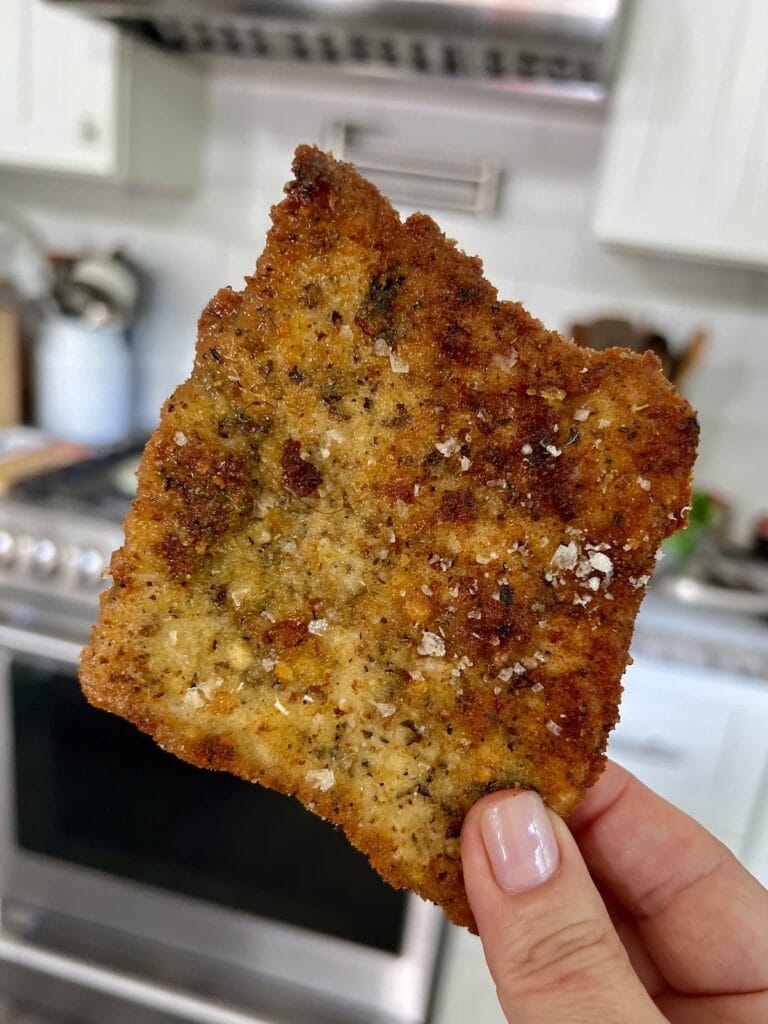
Crispy on the outside, tender and juicy on the inside and full of flavor, these Italian-style Pork Cutlets are a classic family favorite. Thin slices of pork loin are dipped in an egg, cheese and herb mixture, coated in homemade seasoned breadcrumbs, then pan-fried or baked until golden and crunchy.
Serve them simply with lemon, Milanese-style with a light arugula salad, alongside pasta for Sunday dinner–or turn the leftovers into one heck of a sandwich!
Keep In Mind Before You Start . . .
- Keep the pork thin and even. Aim for about ½” thick, at most, so the pork cooks quickly and evenly without the breading burning.
- Season your own breadcrumbs. This is one of the biggest flavor differences in this recipe and well worth the few extra minutes.
- Pat the pork dry first. Excess moisture can prevent the coating from adhering properly.
- Press the breadcrumbs onto the pork. Don’t just dip and go—gently pat the coating onto both sides.
- Pay attention to the oil temperature. It should be hot before adding the pork, but not so hot that the breading burns before the pork cooks.
- Don’t overcrowd the pan. Work in batches so the cutlets fry rather than steam.
- Drain on a rack, not paper towels. Air circulating underneath helps keep that beautiful crust crispy.
- Make extra! Cold leftover pork cutlets straight from the refrigerator are one of life’s little pleasures. (Not that I’ve ever stood in front of the refrigerator eating one…)
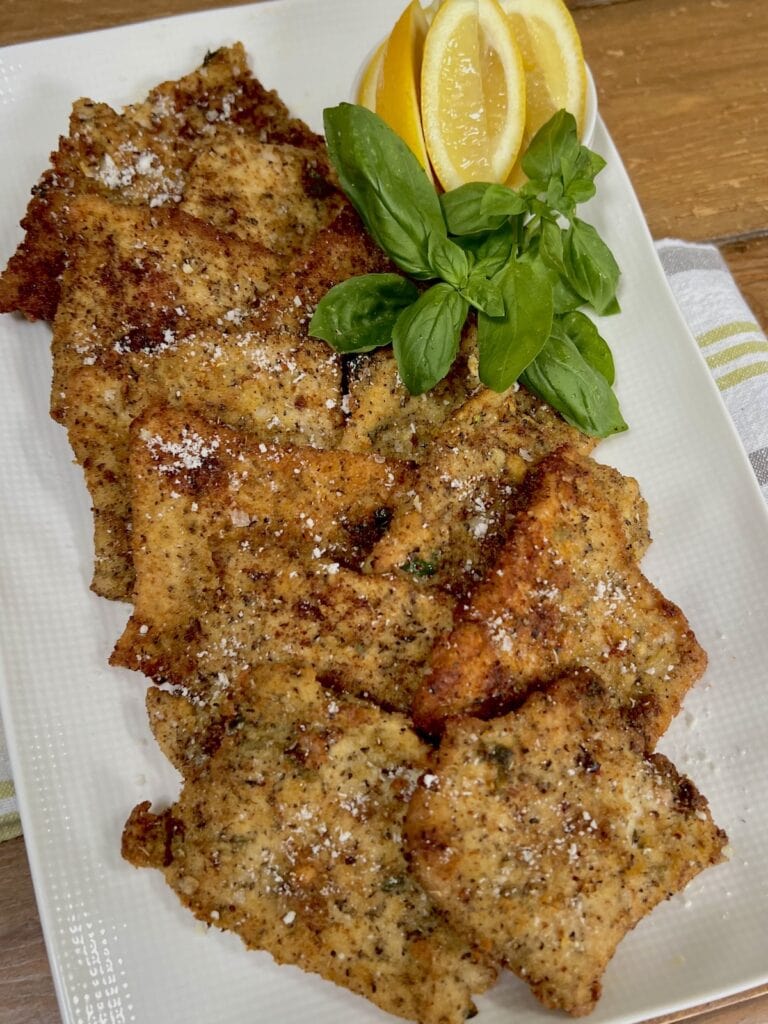
An Italian American Sunday Dinner Classic
I’ve been eating and making these crispy pork cutlets most of my life. They’re one of those recipes that immediately takes me back to our family table.
Chicken cutlets were actually much more common in our house—and generally more of a middle-of-the-week meal. Pork cutlets, on the other hand, felt more like Sunday dinner.
We’d have them alongside macaroni and gravy or pasta with a simple tomato sauce, and they were always one of my favorite additions to the meal. Crispy, savory and cheesy on the outside with tender, juicy pork inside—what’s not to love?
The technique is very similar to the one I use for my Italian Chicken Cutlets and Baked Chicken Cutlets, and many of the same rules apply: start with thin, evenly sized pieces, season them well, use flavorful breadcrumbs and don’t rush the cooking.
What Are Pork Cutlets? And What Is Pork Milanese?
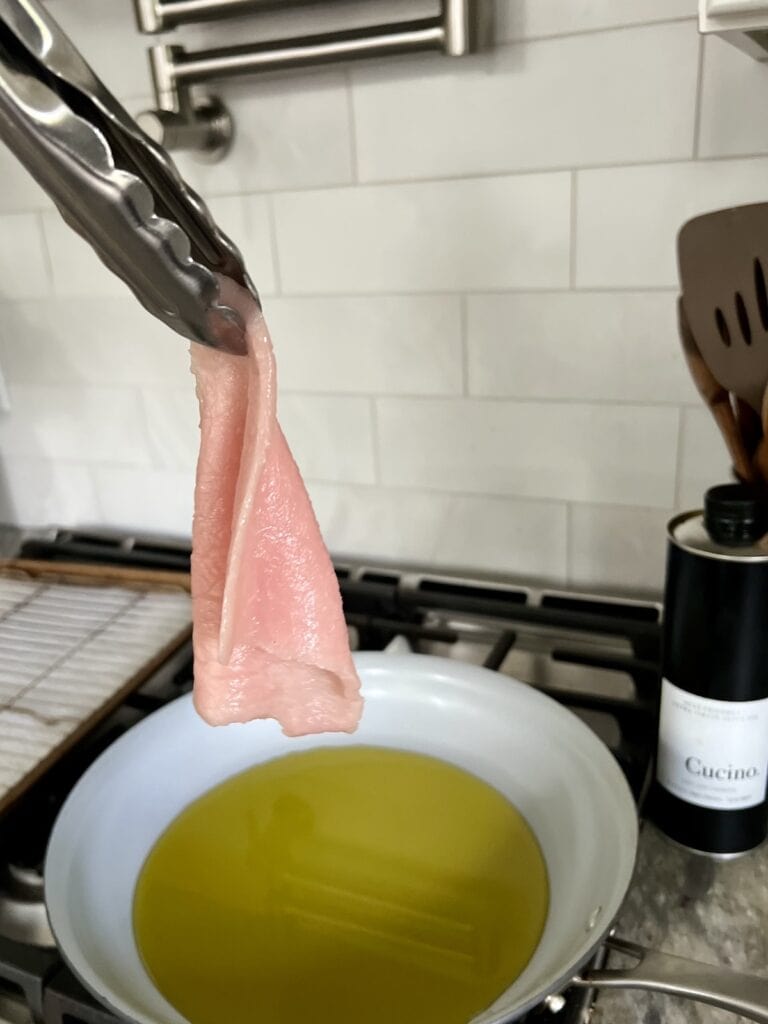
Pork cutlets are thin slices of boneless pork, most commonly cut from the pork loin. You may find them already sliced and labeled “pork cutlets” at the grocery store or butcher. Pork tenderloin can also be sliced and pounded into cutlets.
If you can’t find them already prepped, buy boneless pork loin chops and butterfly and/or gently pound them to an even thickness.
The key is thin and even so the pork cooks quickly while the breadcrumb coating becomes crisp and golden without burning.
So, where does Pork Milanese come in?
Milanese refers to a style of breaded cutlet associated with Milan in northern Italy. Today, you’ll see the term used for thin breaded cutlets made with different meats, including pork, that are cooked until beautifully golden and crisp.
My family’s Italian-American pork cutlets aren’t meant to be a strict reproduction of the traditional Milanese dish. But the similarities are obvious: thin meat, a flavorful breadcrumb coating and a crisp, golden finish.
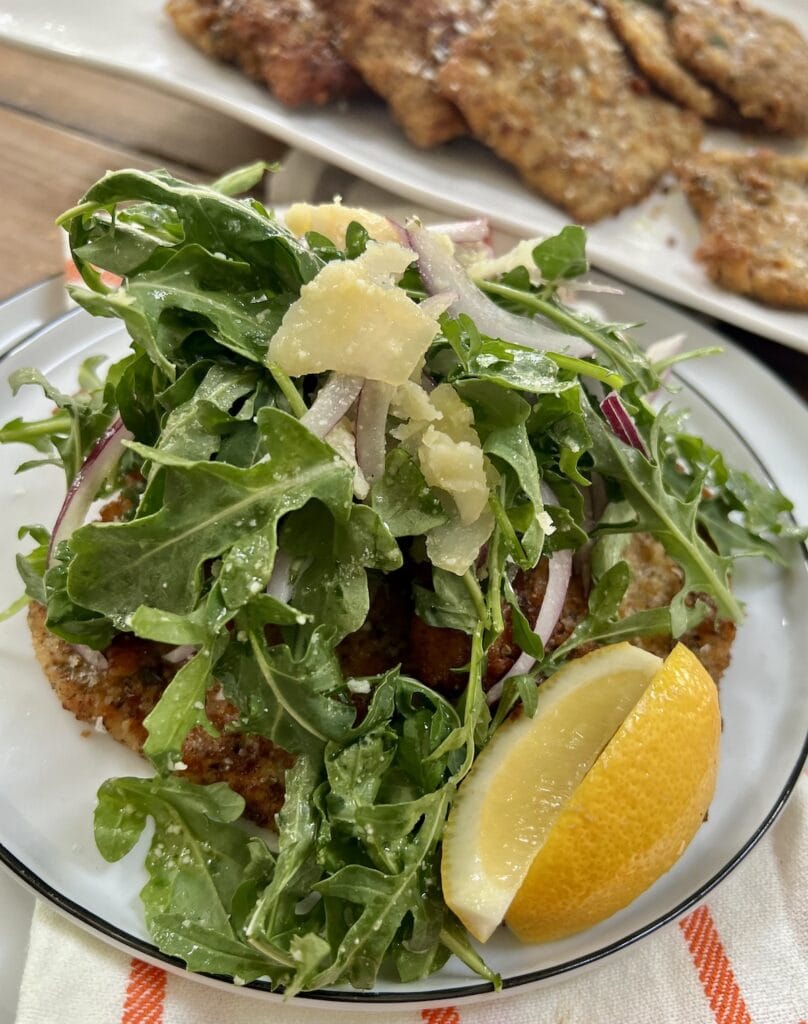
And one of my favorite ways to serve them is Milanese-style, topped with a simple arugula salad dressed with extra-virgin olive oil and fresh lemon juice and finished with shaved Parmigiano-Reggiano. It’s fresh, peppery and bright against the rich, crunchy pork.
Ingredients
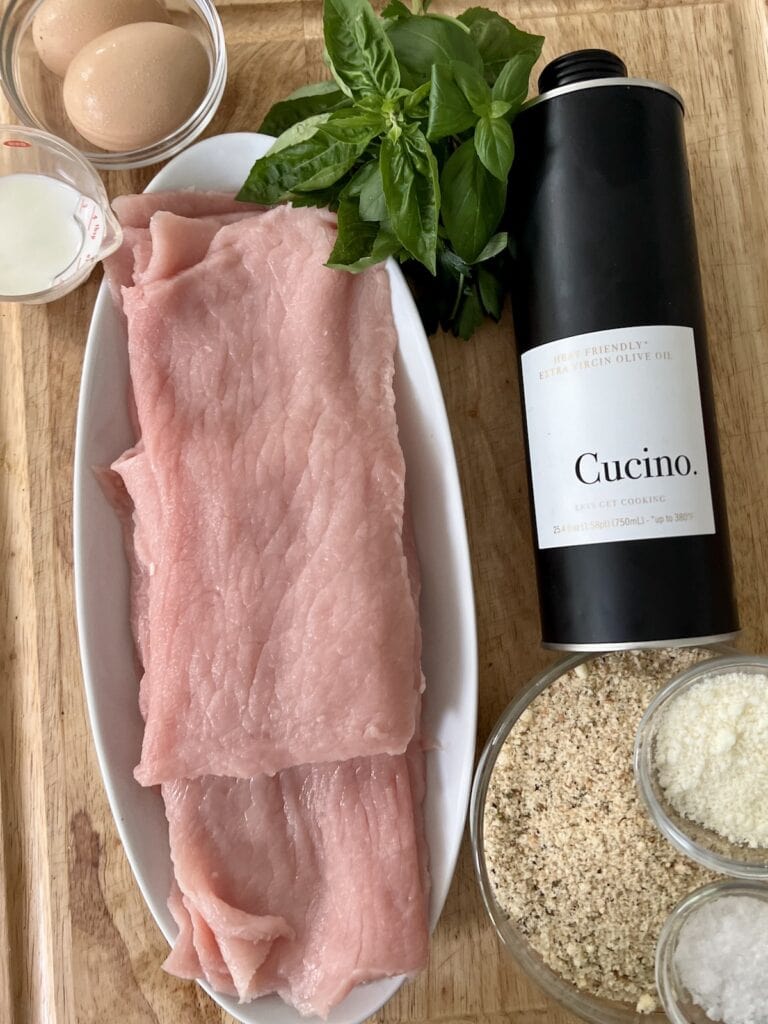
Here’s what you’ll need to make my Italian Pork Cutlets:
- Pork: Pork cutlets are very thin (about ½” thick) slices of boneless pork loin. Sometimes, tenderloin is used.
- If you’re not able to find already thin/prepped pork cutlets, buy boneless, thin-cut pork chops and either butterfly them and/or gently pound them between two pieces of plastic wrap to approximately ½” thickness. See details in Recipe Notes below.
- Breadcrumbs, Pecorino Cheese, Dried Herbs and Spices: Homemade seasoned breadcrumbs are one of the main reasons these crispy pork cutlets are so delicious. And the cheese makes the breading even crunchier and tastier!
- Try not to be tempted to purchase already seasoned breadcrumbs that have been sitting on a grocery shelf for who knows how long.
- I almost always purchase fine breadcrumbs from a local bakery and then turn them into seasoned breadcrumbs myself. It’s so easy and can be made with ingredients that you probably already have on hand.
- My main advice—use good-quality spices and dried herbs. If they’ve been in your cupboard for several years and look sketchy—replace them!
- Having said all this, you can, of course, use store-bought seasoned Italian bread crumbs rather than make them from scratch, but the taste will not be the same.
- Eggs and Milk: The role of eggs in this recipe is to act as a binder during the breading process and give the breadcrumbs something to hold onto. The milk adds moisture and a bit of richness.
- I also add Pecorino Romano cheese and fresh basil and/or parsley directly to the egg mixture, adding another layer of flavor. Grated Parmesan cheese can be used as well.
- Oil: I use a heat-friendly extra-virgin olive oil to pan-fry the pork cutlets. Use either an olive oil or a neutral oil with a high smoke point, such as avocado oil, or a combination of the two for pan-frying.
How to Make Crispy Pork Cutlets
Prep
- Make seasoned breadcrumbs by mixing all breadcrumb ingredients together until well-combined.
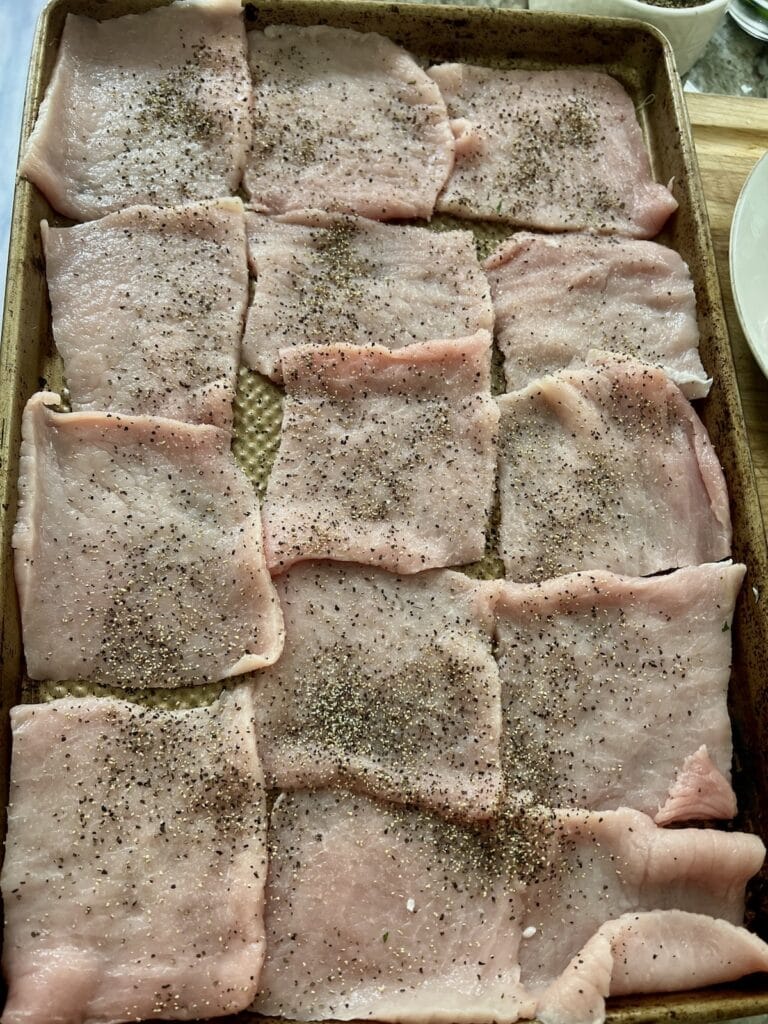
- If you’re not able to find already thin/prepped pork cutlets, slice and/or pound them to 1/2″ thickness at most.
- Once the pork pieces are at the appropriate thickness, pat both sides dry with a paper towel and sprinkle both sides lightly with salt and black pepper.
Pro Tip
Seasoned breadcrumbs can be made several hours or days in advance and held in the refrigerator in an airtight bag or container.

Coat Pork in Egg Mixture
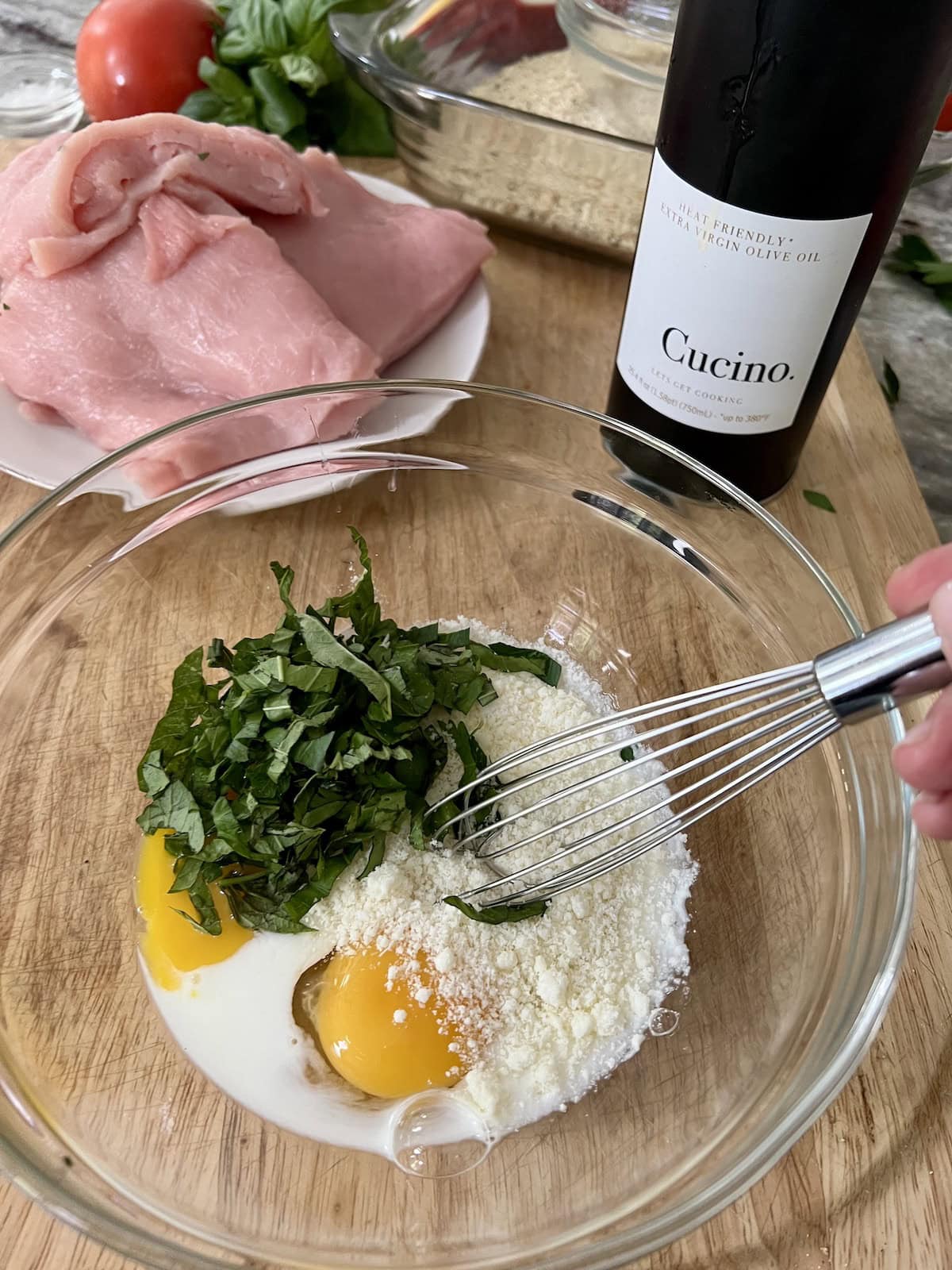
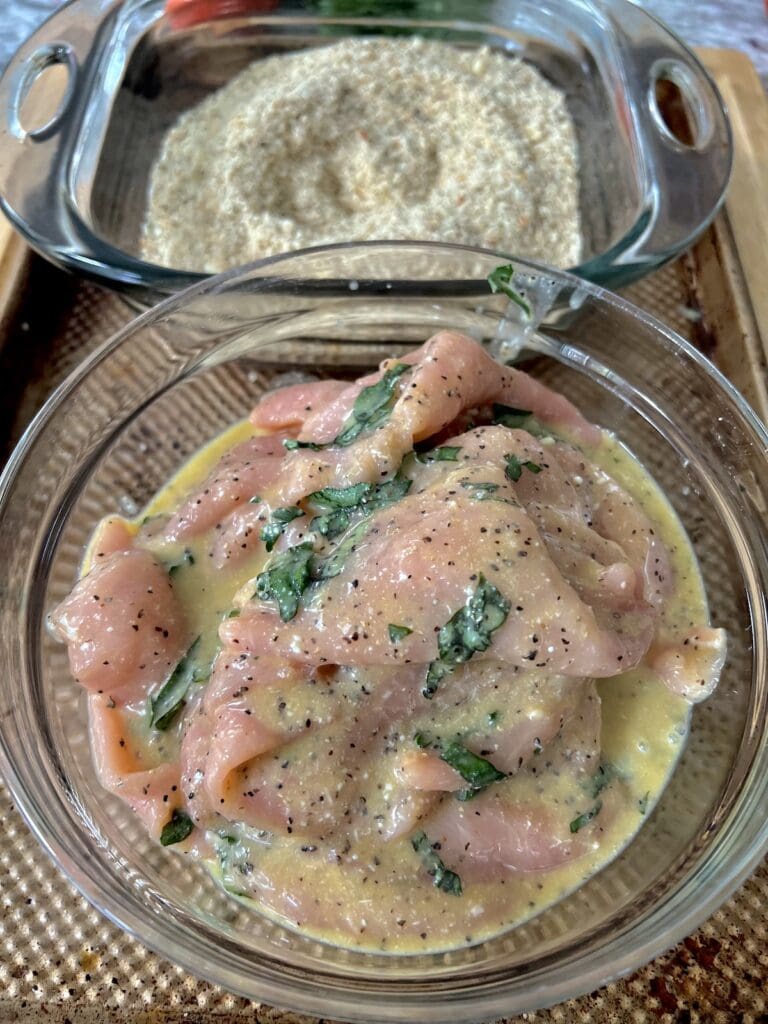
- Whisk the eggs, milk, cheese and fresh herbs together in a large bowl until well-combined.
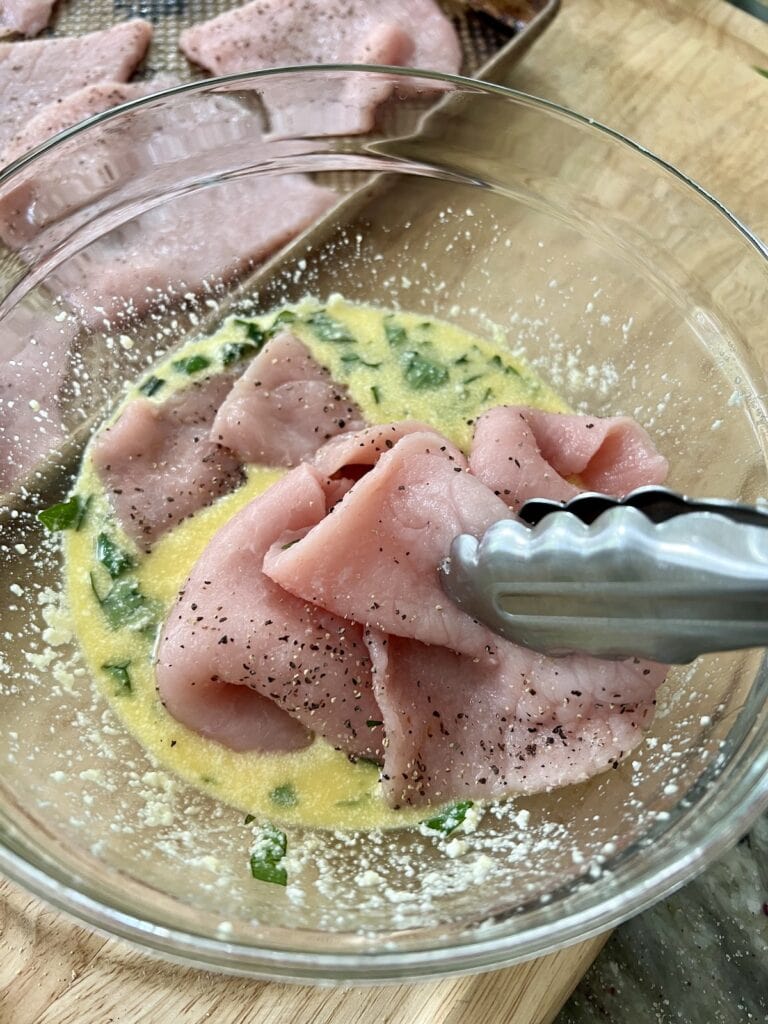
- Place the thin, seasoned pork cutlet pieces in the reserved egg mixture, ensuring that both sides of each piece are thoroughly coated.
Bread the Pork
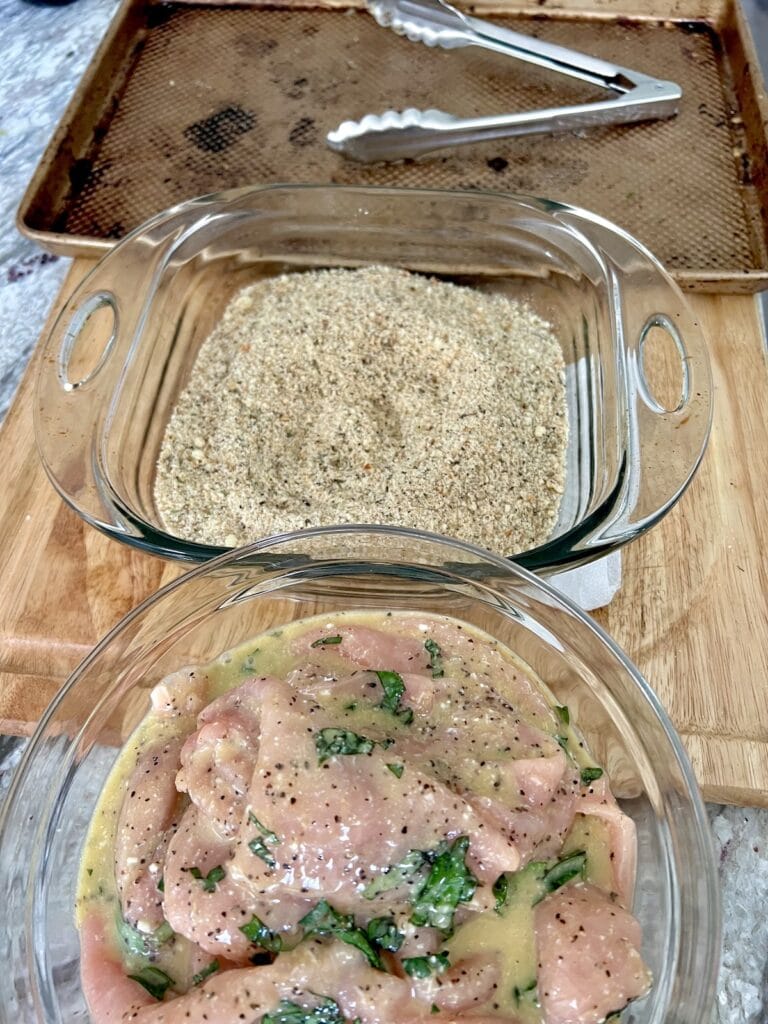
- Then, set up a breading station by arranging the following: bowl of pork in egg mixture, then shallow bowl (or sheet pan) of seasoned breadcrumbs, then a sheet pan.
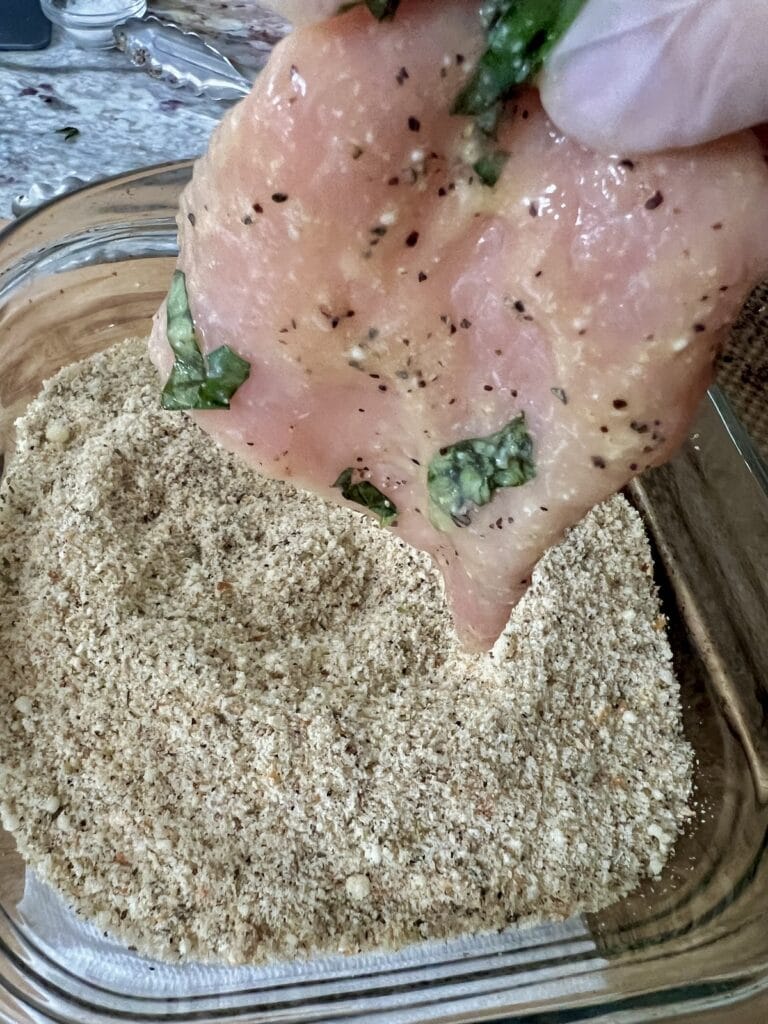
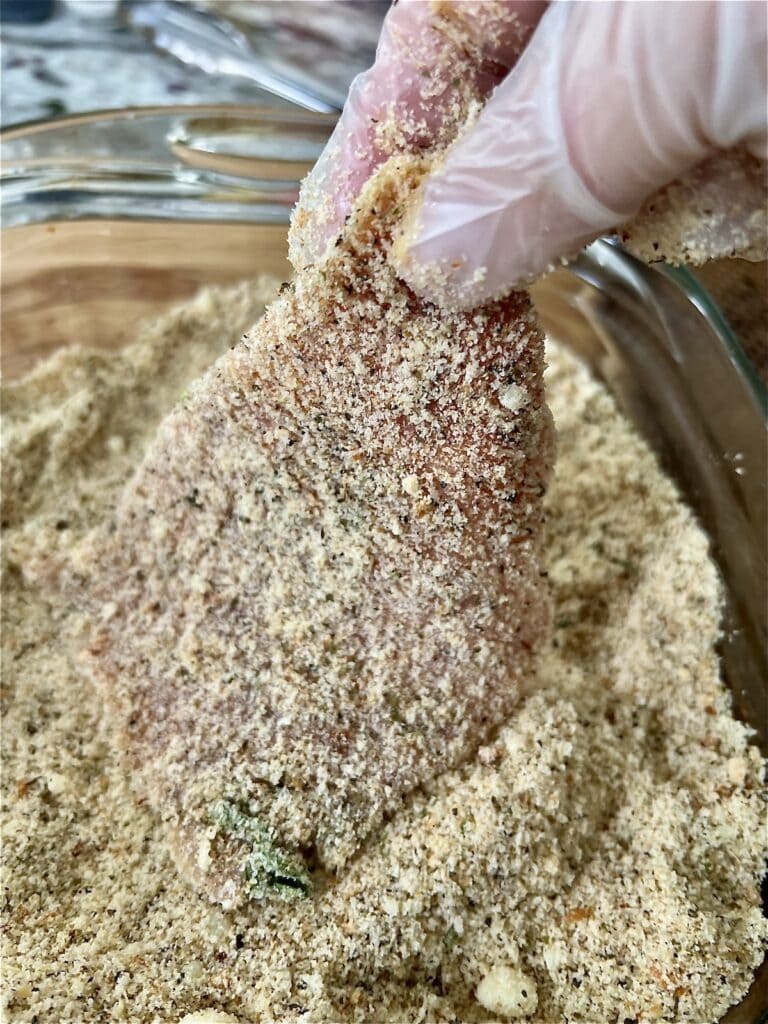
- Using either your hand or a fork/tongs, transfer each piece of pork from the egg mixture, one-by-one, to the breadcrumbs and thoroughly coat both sides, patting it down to ensure that the breadcrumbs adhere.
- Then place the breaded pork on a sheet pan. Continue doing this for all the pork pieces.
Pro Tip
If you’re using your hands for the breading, use one hand for the wet egg mixture and the other for the dry breadcrumb mixture to keep things neater and more streamlined.
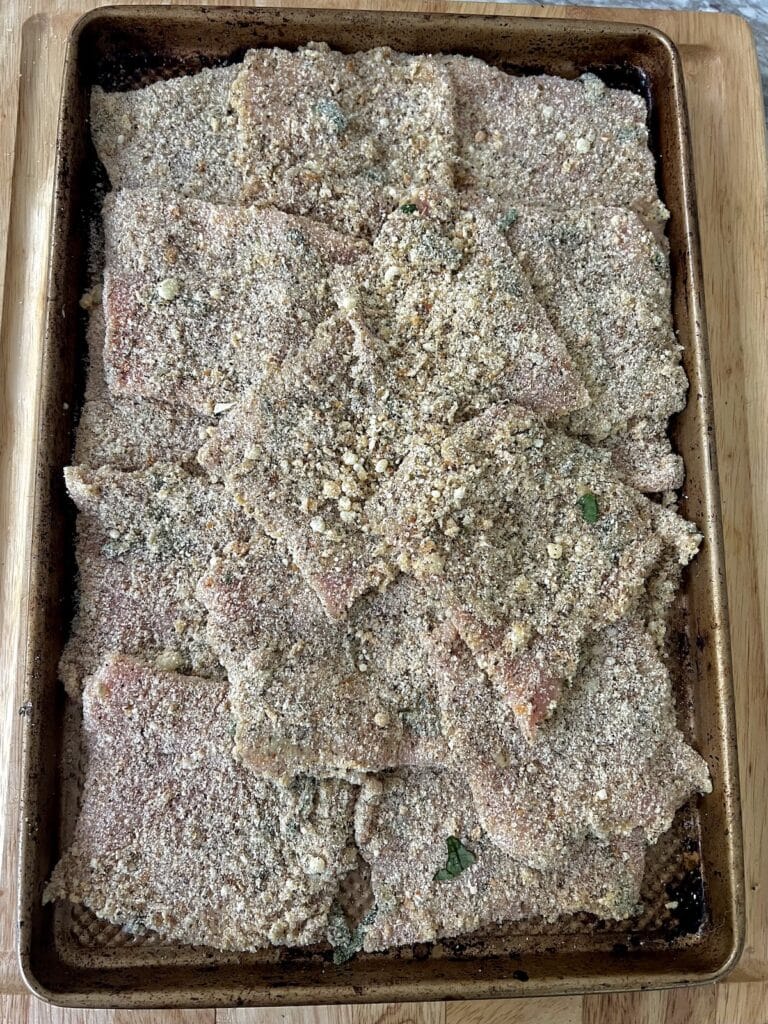
From here, you have two options:
Option 1: Pan-Fried Pork Cutlets
- Add enough oil to a large skillet to cover the bottom by about ½” and heat it over medium heat. You’ll know it’s ready when bubbles form around a wooden spoon inserted into the oil.
- Working in batches, fry the pork in a single layer without crowding the pan. Cook until golden brown on the first side, then turn and cook the other side until equally golden and the pork is cooked through.
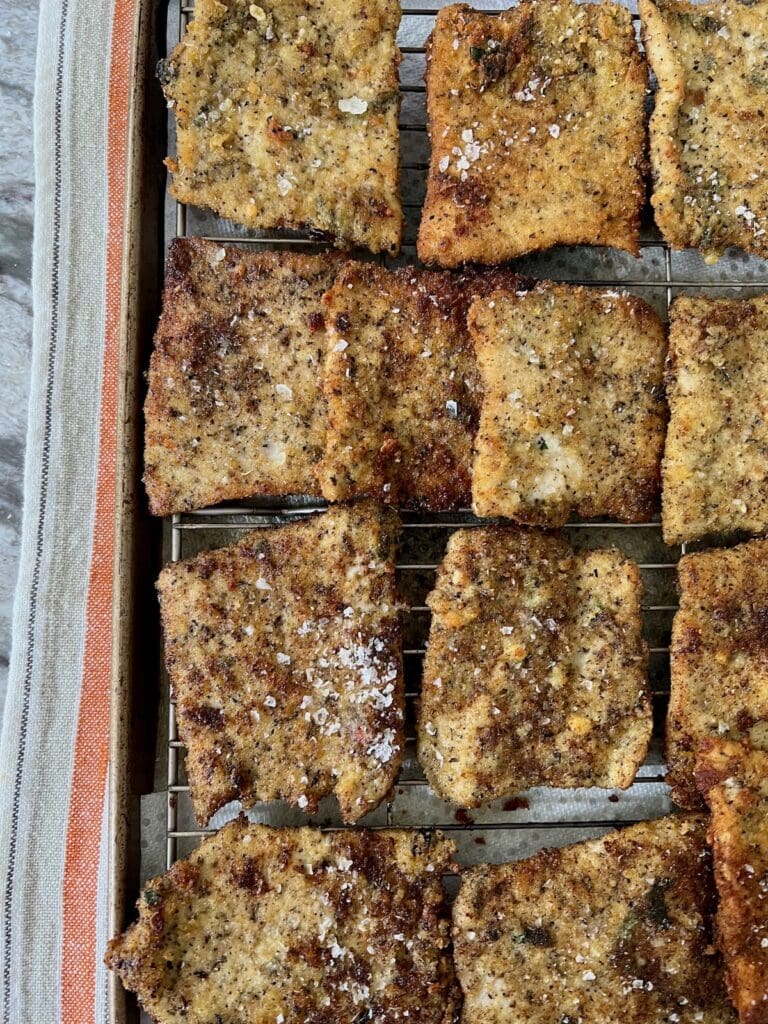
- Transfer the finished fried pork cutlets to a rack set over a sheet pan rather than directly onto paper towels. Sprinkle lightly with flaky salt while they’re still hot, if you’d like.
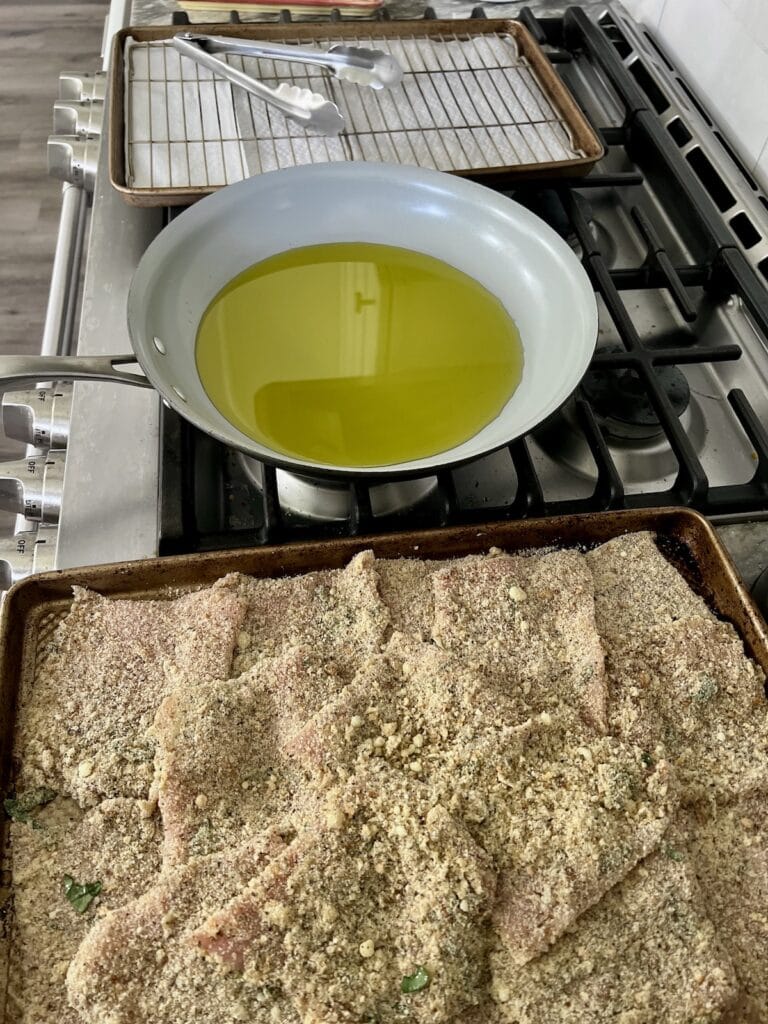
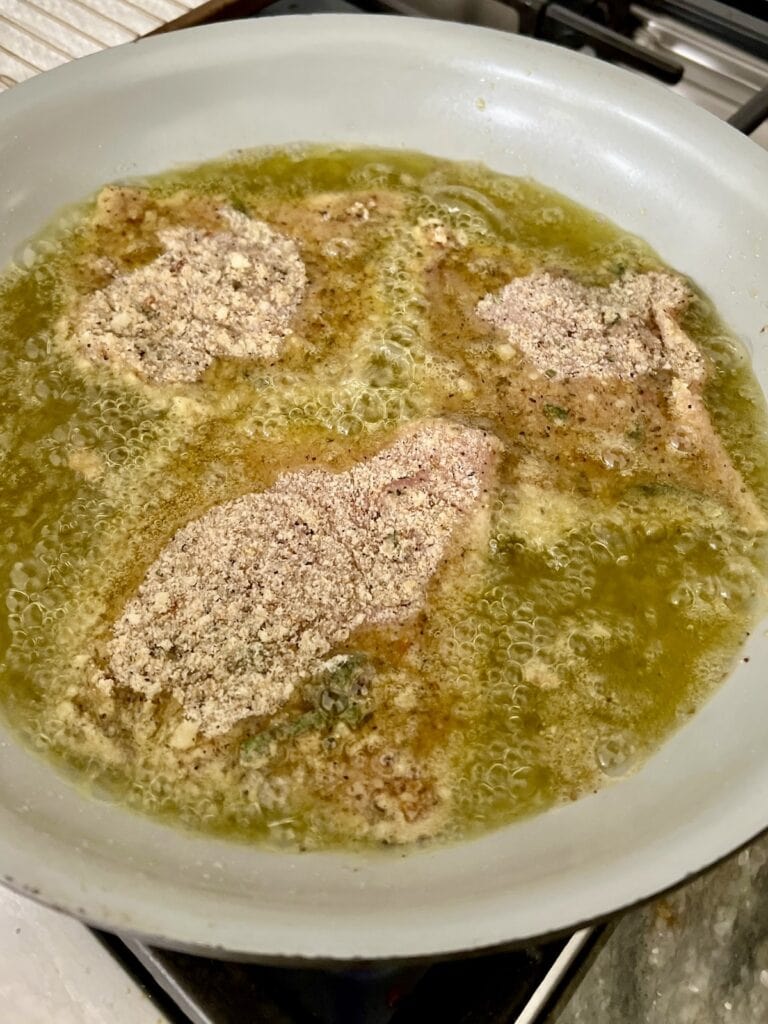
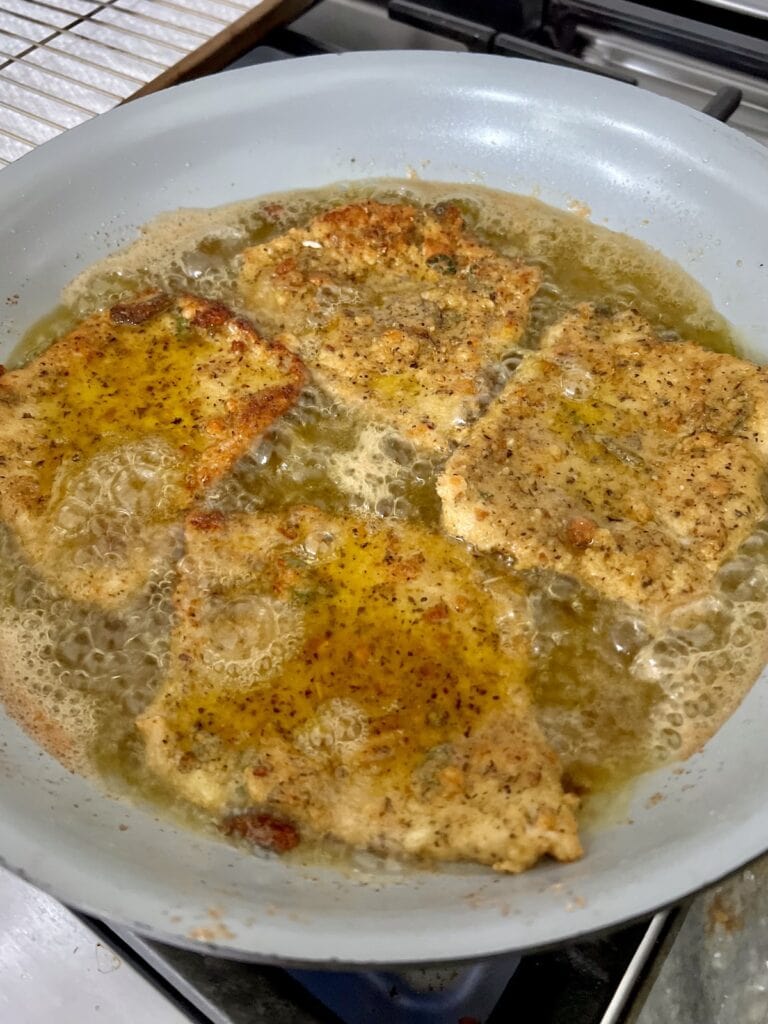
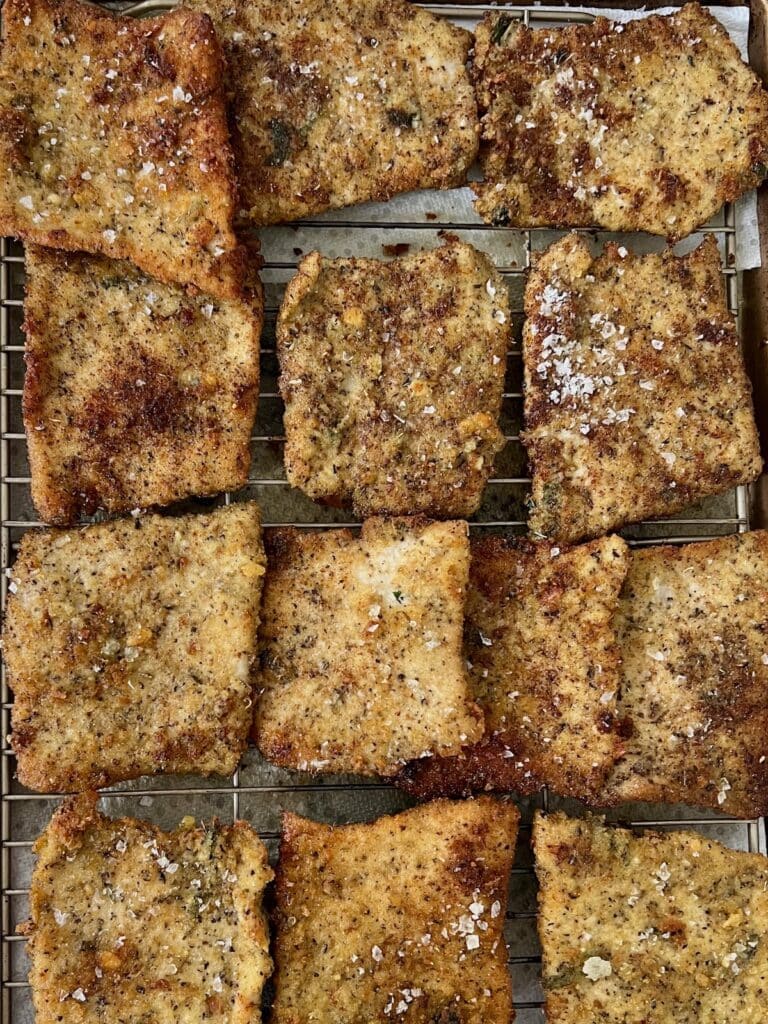
Option 2: Baked Pork Cutlets
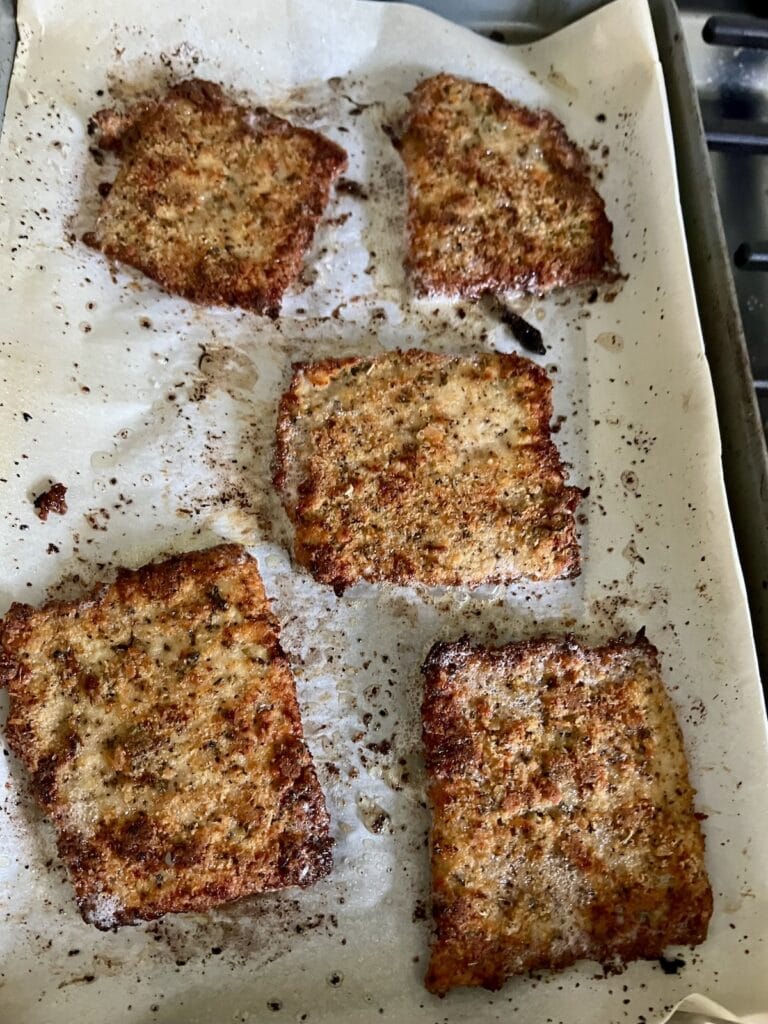
- For an alternative to frying, cutlets can also be baked.
- Rub or spray a parchment-lined sheet pan thoroughly with olive oil. Arrange the breaded pork in a single layer, then thoroughly spray or drizzle the tops with olive oil as well.
- Bake at 425°F, turning the cutlets once, until both sides are golden and crispy and the pork is cooked through.
Pro Tip
Whichever method you choose (frying or baking), use an instant-read thermometer to check for doneness. Pork loin and other whole cuts of pork should reach 145°F at the thickest part, followed by a 3-minute rest.
How to Serve Crispy Pork Cutlets
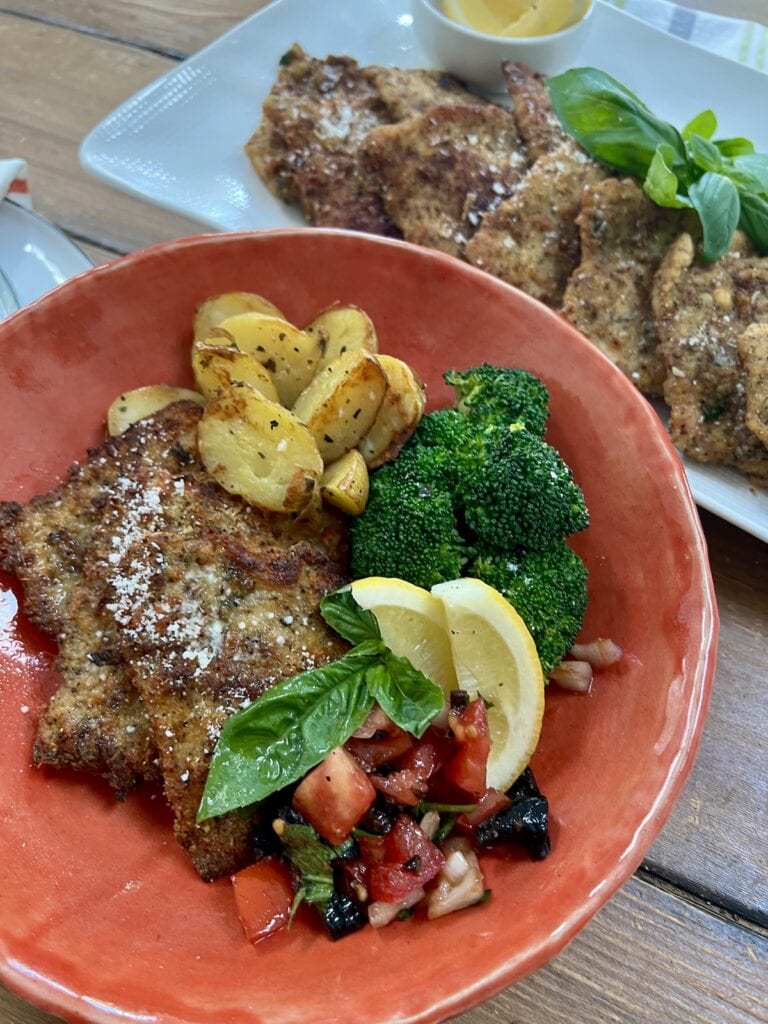
Honestly, give me a hot pork cutlet and a squeeze of lemon and I’m happy.
But there are so many ways to serve these! A simple applesauce is always delicious with pork, as is cranberry sauce. And, especially in the fall, I love these crispy cutlets with my Cranberry Apple Sauce with Marsala—the sweet-tart fruit and Marsala wine pair beautifully with the savory pork.
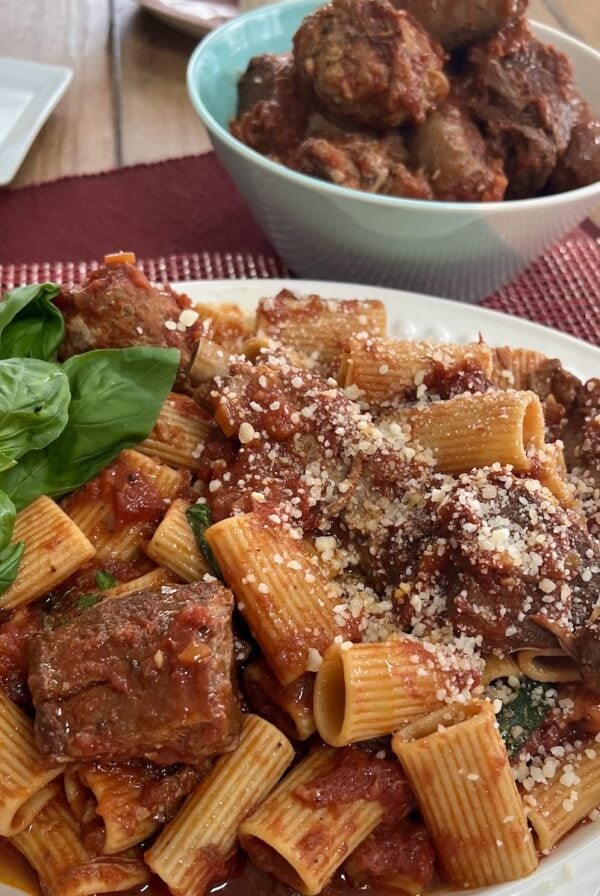
For an old-school Italian American Sunday dinner, serve the cutlets alongside macaroni and Sunday gravy or pasta tossed with my tomato basil sauce. A perfect side is sautéed broccoli rabe, roasted zucchini, roasted potatoes or grilled eggplant.
For a Milanese-style presentation, make a quick arugula salad with fresh arugula, extra-virgin olive oil, fresh lemon juice, salt and black pepper. Pile it right on top of the crispy pork and finish with shaved Parmigiano-Reggiano.
The peppery arugula and bright lemon cut through the richness of the breaded pork beautifully—and it’s one of my favorite ways to serve these cutlets.
And pretty much anything you can do with a chicken cutlet, you can do with a pork cutlet!
- Turn one into a Pork Cutlet Sandwich using the ideas in my Chicken Cutlet Sandwich.
- Or turn them into Pork Parmigiana with my tomato sugo—or your favorite jarred tomato sauce—along with mozzarella and Parmigiano cheese. Use the same general idea as my Chicken Parm or Zucchini Parmigiana and make it your own.
And leftovers? Eat one cold, standing in front of the refrigerator. Not that I’ve ever done that…
Love pork? Try my Slow-Roasted Pork Shoulder and Pork Rib Ragu recipes–both are crowd favorites!
Frequently Asked Questions
Pork cutlets and pork chops can come from the same part of the pig, but the main difference for this recipe is thickness.
Pork cutlets are thin, boneless slices of pork, usually cut from the loin, while pork chops are generally thicker and may be boneless or bone-in.
If you can’t find pork labeled specifically as “cutlets,” buy boneless, thin-cut pork chops and either butterfly them and/or gently pound them to about ½” thick. Pork tenderloin can also be sliced and pounded into cutlets.
See the Recipe Notes below for detailed instructions on prepping the pork. And check out this guide to pork cuts if you’d like more information in general about the different parts of the pig!
Yes, but recognize that the result will be a bit different.
Panko is made from crustless white bread that’s processed into flakes and dried. It has a drier, flakier consistency than regular breadcrumbs and produces a lighter, crunchier coating.
Regular breadcrumbs are processed into a finer crumb and create the more traditional, even breading that I prefer for these Italian pork cutlets.
If you’d like to substitute panko for the regular fine breadcrumbs, a 1:1 substitution generally does the trick. Just don’t forget to season them!
In my experience, salt added to either the egg mixture or breadcrumb mixture when frying cutlets tends to sink to the bottom rather than season the meat evenly.
Instead, I lightly season the pork itself with salt and black pepper before breading it, then sprinkle the hot cutlets with a little flaky salt as soon as they come out of the frying pan. Much better!
I use a heat-friendly extra-virgin olive oil to pan-fry the pork cutlets.
You can use olive oil, a neutral oil with a high smoke point such as avocado oil, or a combination of the two.
Whatever you use, make sure the oil is properly heated before adding the pork. If it isn’t hot enough, the breading can absorb too much oil, become soggy and be more likely to fall off.
Absolutely—that’s why I’m giving you two ways to make them!
Rub or spray a parchment-lined sheet pan thoroughly with olive oil. Arrange the breaded pork in a single layer and spray or drizzle the tops thoroughly with olive oil as well.
Bake at 425°F, turning once, until the cutlets are golden and crispy on both sides and the pork is cooked through.
It can happen for several reasons: starting with pork that’s too wet, not pressing the breadcrumbs firmly enough onto the meat, putting the pork into oil that isn’t hot enough, or moving and turning the cutlets too much before the crust has had a chance to set.
Pat the pork dry, press the breadcrumbs on well, make sure the oil is hot and let the first side become nicely golden before turning it.
Also, this recipe intentionally does not use flour. I’ve made cutlets this way for years and find that the egg mixture and breadcrumbs adhere beautifully when the pork is properly prepped and breaded.
More Italian Sunday Dinner Recipes
Make Ahead, Storage & Reheating
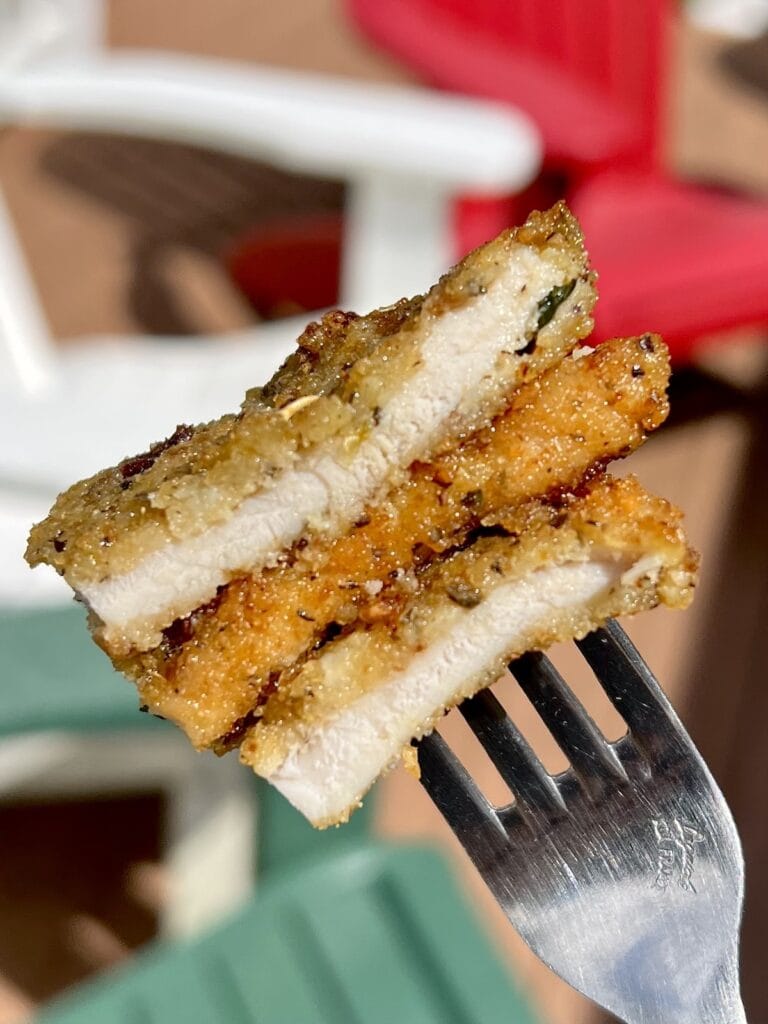
You can prep the pork and place it in the egg mixture a few hours in advance, then keep it covered and refrigerated until you’re ready to bread and cook the cutlets. You can also bread all the cutlets before you begin frying to make the cooking process much less stressful.
Store leftover cooked pork cutlets in an airtight container in the refrigerator for up to 3 to 4 days.
To reheat and crisp them up, place the cutlets on a sheet pan or in an oven-proof baking dish and bake at 350°F for about 10 to 12 minutes, or until heated through and crispy.
You can also freeze them in an airtight freezer container for up to 3 months, although I find that freezing tends to dry out the pork.
Frankly, one of my favorite ways to eat a leftover cutlet requires no reheating at all—cold, straight out of the refrigerator. Yum!
Love cutlets of all types? Try Italian American fried eggplant milanese and panko-crusted zucchini – both have major cutlet vibes!
A Family Favorite Worth Making Extra
I’ve made and eaten these crispy pork cutlets for as long as I can remember, and they’re still one of those foods I never get tired of.
Maybe it’s the homemade seasoned breadcrumbs, the sharp Pecorino or that first bite while the breading is still hot and crunchy. Or maybe it’s because they’ll always remind me of Sunday dinners growing up.
Whatever the reason, my advice is simple: make more than you think you’ll need. Between dinner, sandwiches the next day and those inevitable trips to the refrigerator for a cold cutlet, they have a way of disappearing quickly.
Mangia bene!
Crispy Pork Cutlets (Pork Milanese) ~ Fried or Baked
Video
Equipment
- Cut Resistant Glove (optional)
- Meat Tenderizer (optional)
- Splatter Screen (optional)
- Oil Spray Bottle (optional, if baking)
Ingredients
- About 2 pounds thinly sliced pork cutlets, about ½” thick at most; see Notes.
- Salt and black pepper
- 3 large eggs
- 3 Tbsp whole milk
- 3 Tbsp grated Pecorino Romano cheese
- 3 Tbsp chopped fresh basil and/or parsley
- About 3 cups Seasoned Breadcrumbs, (See recipe below.)
- Olive oil, as needed for frying
- Flaky salt, for finishing (optional)
For the Seasoned Breadcrumbs:
- 2 cups plain breadcrumbs, fine texture
- 1 cup grated Pecorino Romano cheese
- 2 Tbsp dried oregano
- 2 Tbsp dried basil
- 2 Tbsp garlic powder
- 2 Tbsp onion powder
- 2 tsp ground black pepper
Instructions
- Prep and gather all ingredients according to specifications above. Then, make the seasoned breadcrumbs by mixing all the breadcrumb ingredients together in a large bowl until well-combined. These can be made several hours or days in advance and held in the refrigerator in an airtight bag or container.(Please see the section above in the blog post for Step-By-Step instructions with photos.)2 cups plain breadcrumbs, 2 Tbsp dried oregano, 2 Tbsp dried basil, 2 Tbsp garlic powder, 2 Tbsp onion powder, 2 tsp ground black pepper, 1 cup grated Pecorino Romano cheese
- See Notes below about prepping the pork if you’re not able to find already thin/prepped pork cutlets.About 2 pounds thinly sliced pork cutlets
- Whisk the eggs, milk, cheese and fresh herbs together in a large bowl until well-combined. Set this aside.3 large eggs, 3 Tbsp whole milk, 3 Tbsp grated Pecorino Romano cheese, 3 Tbsp chopped fresh basil and/or parsley
- Once the pork pieces are at the appropriate thickness, pat both sides dry with a paper towel and sprinkle both sides lightly with salt and black pepper.
- Place the thin, seasoned pork cutlet pieces in the reserved egg mixture, ensuring that both sides of each piece are thoroughly coated. This can be done a few hours in advance of frying; cover and refrigerate until ready to continue.
- Then, set up a breading station by arranging the following: bowl of pork in egg mixture, then shallow bowl (or sheet pan) of seasoned breadcrumbs, then a sheet pan.
- Using either your hand or a fork/tongs, transfer each piece of pork from the egg mixture, one-by-one, to the breadcrumbs and thoroughly coat both sides, patting it down to ensure that the breadcrumbs adhere.
- Then place the breaded pork on a sheet pan. Continue doing this for all the pork pieces.NOTE: If you are using your hands for this, use one hand for the wet egg mixture and the other for the dry breadcrumb mixture to keep things neater and more streamlined.
- Meanwhile, add enough oil to a large nonstick or stainless-steel skillet to cover the bottom of the pan by about ½”. Heat the oil over medium heat until it reaches approximately 350°F. You can test this by inserting the handle end of a wooden spoon into the oil. If bubbles form around it, then the oil is hot enough.NOTE: If the breaded pork is placed in the pan before the oil is hot enough, it will absorb too much oil, become soggy and the breading may fall off.
- Gently shake off any excess breadcrumbs from each piece of breaded pork. Then transfer each piece to the hot oil, one at a time, making sure not to crowd the pan or pile the pork on.
- Fry a few pieces at a time–only as many as will fit in one layer. Fry until the pork is golden brown on one side, then turn it over and do the same on the other side. This will take about 3 to 4 minutes per side. You will need to work in batches and may need to add additional oil during the frying process.
- Once the pork cutlets reach 145°F at their thickest part, they are done. Let them rest for at least 3 minutes before serving.
- Once browned and finished, transfer the fried pork cutlets to a rack placed over a sheet pan. This helps the cutlets maintain their crispiness better than placing them directly on paper towels.
- Sprinkle the hot cutlets very lightly with some salt as soon as they are out of the frying pan, if desired. Then, they’re ready to eat! In fact, I would be surprised if you didn’t try the first one that was ready–they are so good! Serve them as is with lemon wedges or use them in any number of ways. See Serving Suggestions above for some great ideas. Buon Appetito!
Notes
- I like to make the pork cutlets very thin slices (about ½” thick at most) of boneless pork loin. Sometimes, tenderloin is used. I’ll usually buy the cutlets already prepared and sliced thin at the supermarket.
- If you’re not able to find thin pork cutlets, buy boneless, thin-cut pork chops and either butterfly them and/or gently pound them out in between a layer of plastic wrap to approximately ½” thickness.
- To Butterfly Pork Cutlets:
- Remove and discard all large pieces of fat from the boneless pork chops.
- Then, carefully slice each thin pork chop in half horizontally, through the center, using a sharp knife. You want to create two thinner pieces of pork–the knife should be parallel to the cutting board.
- If you’re nervous about slicing the pork, consider wearing a cut-resistant glove (linked above) covered by a latex glove.
- If you freeze pork loin or tenderloin for 20 minutes or so before slicing it, it will firm up and be easier to slice (or chop, dice, etc. for any recipe!)
- To Pound Pork into a Thin Cutlet:
- Place the pieces of pork in between plastic wrap and use either a meat tenderizer/mallet or a rolling pin to carefully pound the pork thinner–to approximately ½” thickness, at most.
- The cutlets should have relatively the same thickness all around.
- Don’t be too aggressive during this step, as it is easy to tear the pork into an unrecognizable mush.
- If the pork pieces are too large for you after being pounded, cut them down into smaller pieces, as desired.
- To Butterfly Pork Cutlets:
- If you use seasoned breadcrumbs frequently, I suggest making a double or triple batch and then you’ll have them whenever you need (Again, since the breadcrumbs contain cheese, be sure to store them in the refrigerator.)

love soup?
Get My Cookbook!
Ditch the dish and embrace the bowl with Soupified: Soups Inspired by Your Favorite Dishes!
Available in ebook, paperback and hardcover.

Always a hit with the family and great the next day as well!