
This post may contain affiliate links or sponsored content. That means if you click on my link and buy something, I will earn a small commission from the advertiser at no additional cost to you. For more information, see our disclosure policy.
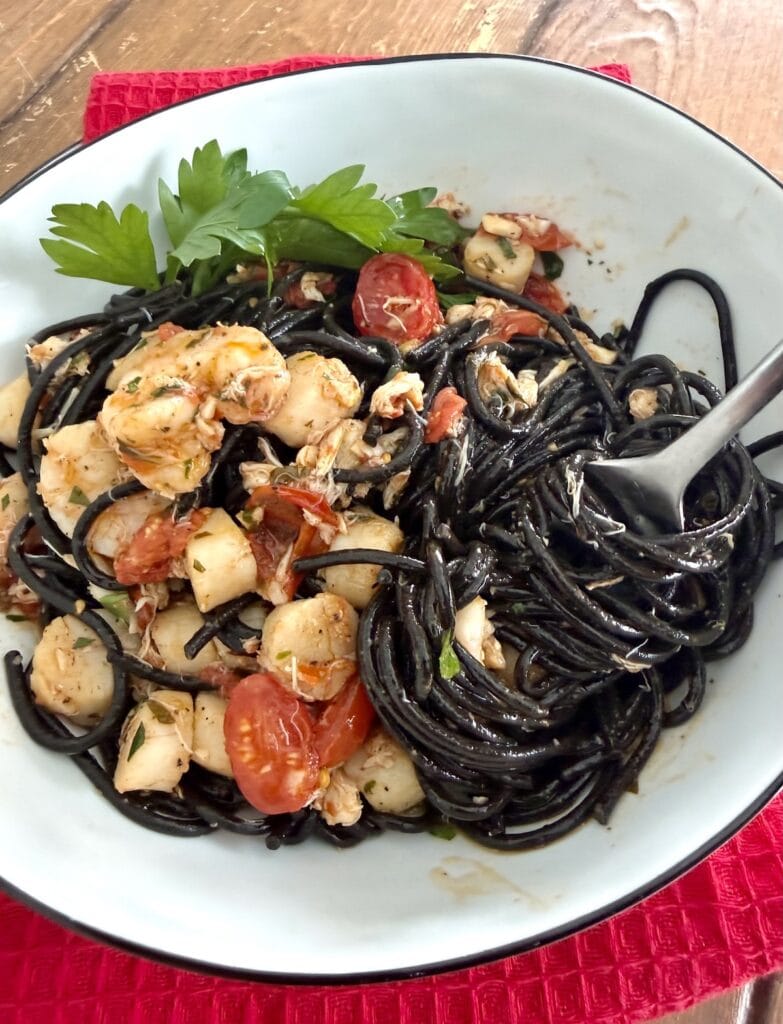
Squid Ink Pasta with Seafood is pure Italian coastal seduction! Briny and savory shrimp, scallops and crab are twirled with glossy, jet-black spaghetti in a light tomato and white wine sauce with fresh herbs and garlic. If you’ve ever dreamed of dining along the Amalfi Coast, consider this your one-way ticket (no passport required)!
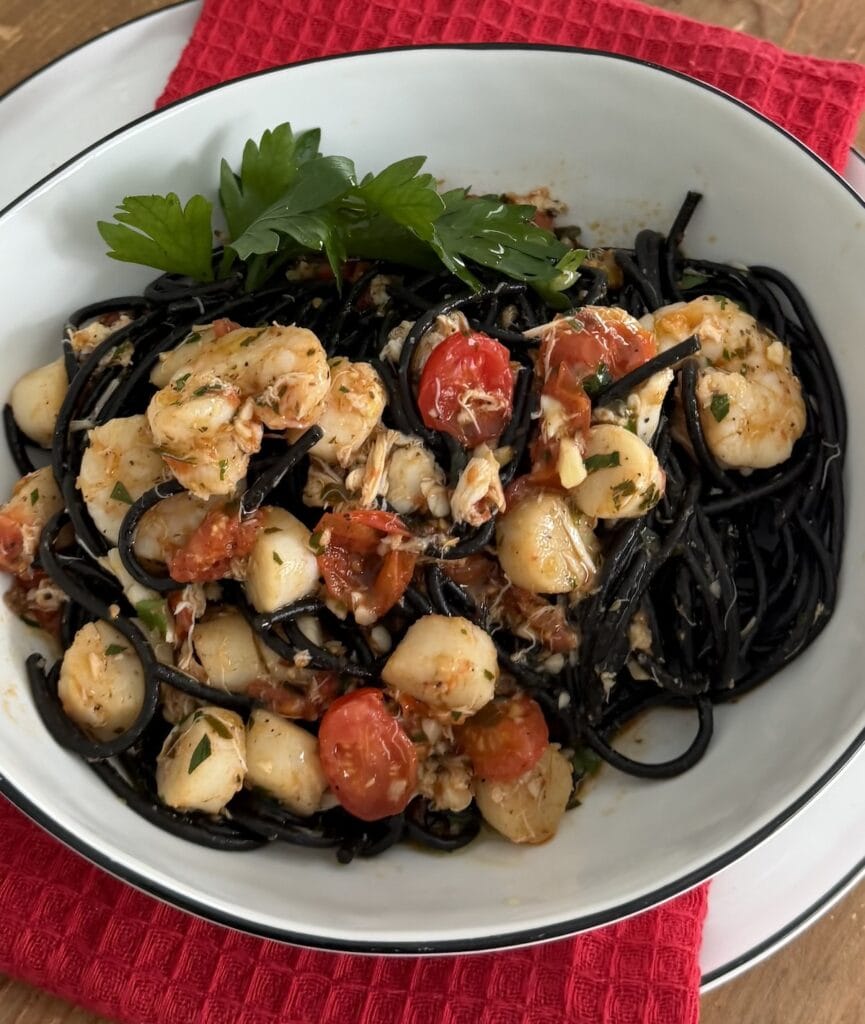
The first time I ever ate squid ink pasta (in my 20s), I almost didn’t order it. The menu described it simply as spaghetti al nero di seppia and I remember hesitating, unsure about committing to a plate of jet-black pasta.
But curiosity won. As it usually does with me when it comes to food…
When the squid ink pasta arrived, it was glossy and dramatic–tangled with bits of seafood, tomato and garlic. One bite in, and I understood. It wasn’t aggressively “fishy” or overpowering as I had imagined. Instead, it was subtly briny, deeply savory and impossibly silky, and it also looked really, really good!
Since then, I’ve been making this dish whenever I can find quality squid ink pasta. I keep the sauce light with fresh grape or cherry tomatoes, dry white wine and extra-virgin olive oil to let the seafood shine and treat the ink as an enhancer rather than the star.
But this recipe is just as delicious without the ink–it’s a perfect Italian pasta with mixed seafood, a.k.a., spaghetti ai frutti di mare and spaghetti allo scoglio in Italy. The kind of dish you’d order at a seaside trattoria and immediately try to recreate at home. (Don’t worry, I’ve done the testing for you!)
Squid ink seafood pasta is an impressive dish for a dinner party, romantic meal, Christmas Eve’s Feast of the Seven Fishes or anytime you have a serious seafood hankering. It’s easier than you may think. Mangia bene!
More Recipes with Shrimp: Shrimp Oreganata, Shrimp Francese, Spicy Garlic Shrimp, Shrimp Fra Diavolo, Crispy Butterflied Shrimp.
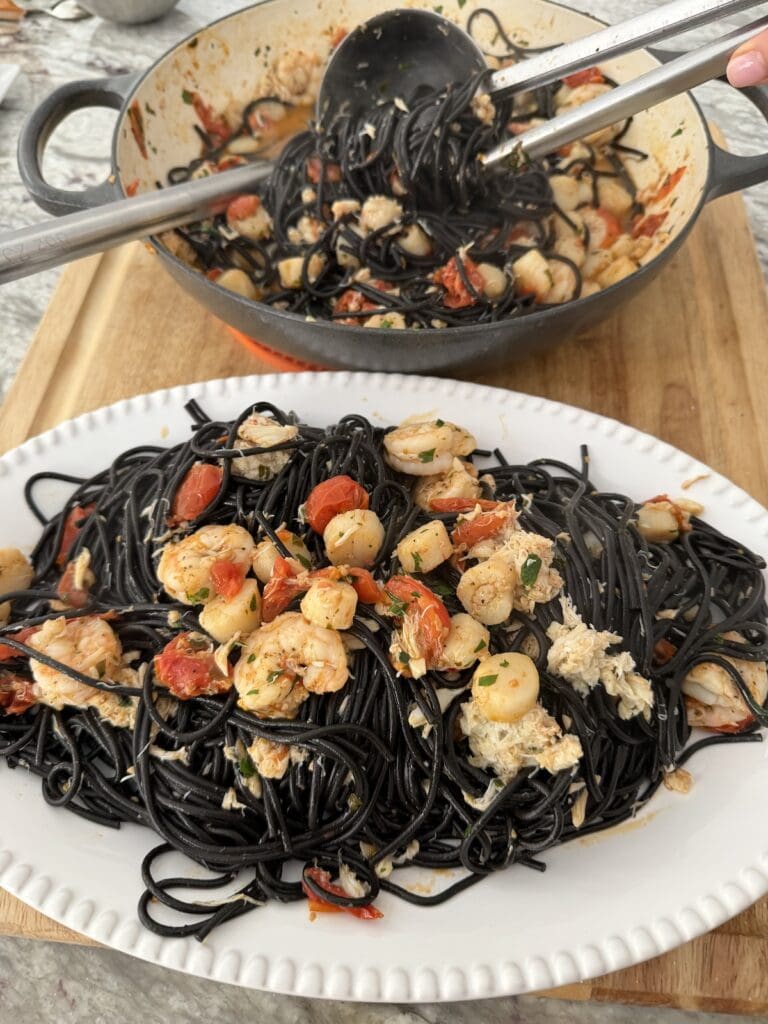
Table of Contents
- Squid Ink vs. Cuttlefish Ink vs. Nero di Seppia
- Main Ingredient Notes
- How to Make Squid Ink Pasta with Seafood
- FUN FACT
- More Italian Pasta Recipes with Seafood
- Frequently Asked Questions
- Recipe Substitutions and Variations
- TOP TIPS for Squid Ink Seafood Pasta
- Squid Ink Pasta With Seafood (Shrimp, Scallops, Crab) Recipe
Squid Ink vs. Cuttlefish Ink vs. Nero di Seppia
Although this recipe is titled Squid Ink Pasta with Seafood, most black pasta–both in the U.S. and in Italy–is actually made with cuttlefish ink “nero di sepia” in Italian. Technically, squid ink and cuttlefish ink come from different cephalopods, but the terms are often used synonymously here in the States.
In fact, much of the “squid ink” sold commercially is actually cuttlefish ink, which is generally preferred for its smoother, more rounded flavor. (True squid ink can taste slightly metallic.) For this dish, I’m using dried spaghetti made with cuttlefish ink which gives it that dramatic, jet-black color.
Using nero di seppia in seafood-based dishes and pastas is a staple in coastal Italian cooking, especially in Sicily, where it most likely originated. In Italy, it’s prized for its deep black hue and delicate, briny umami flavor.
Main Ingredient Notes
- Seafood:
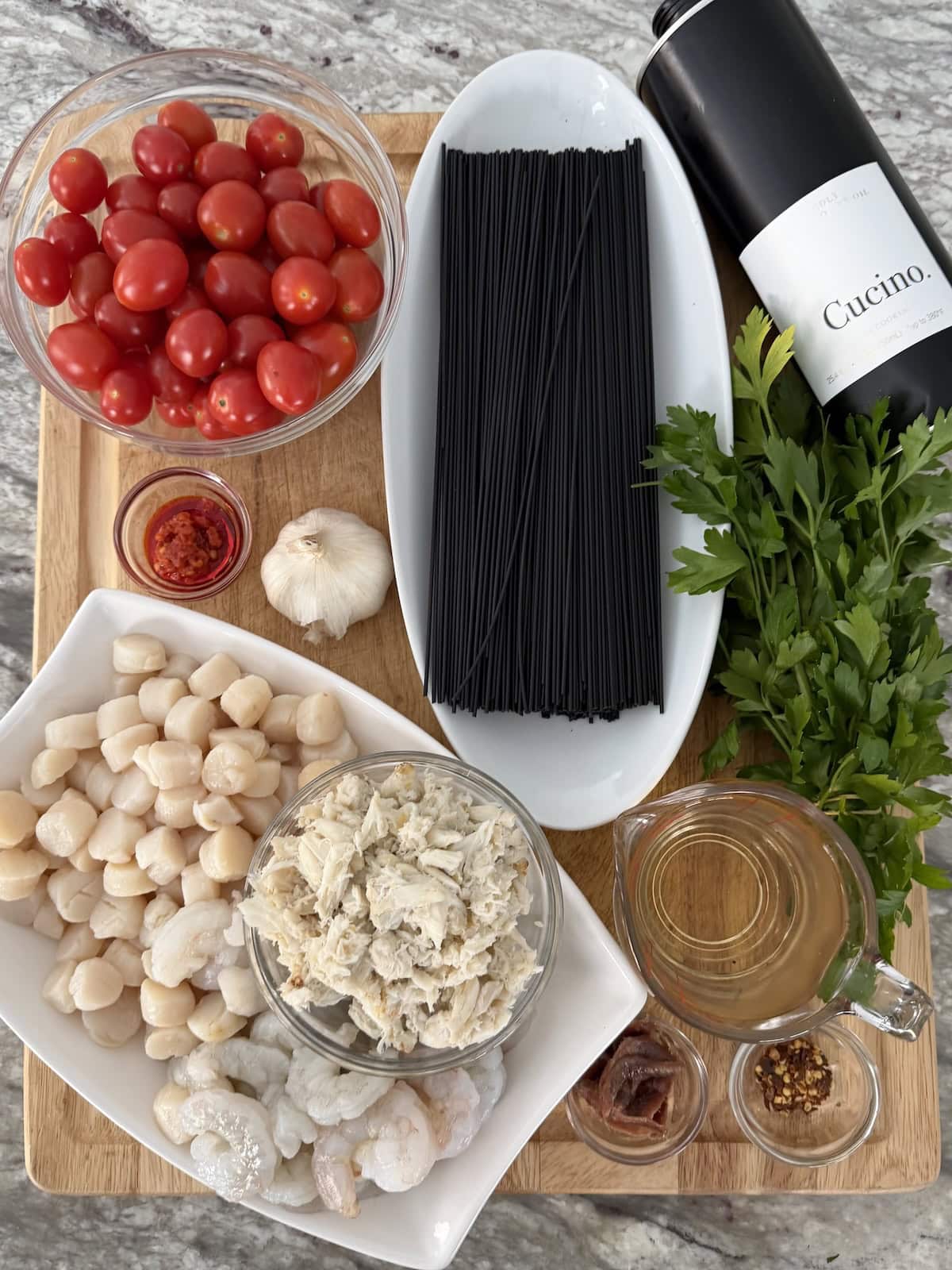
- I used a large “26/30” shrimp in this recipe, which means there are approximately 26 to 30 shrimp in one pound. A medium-sized shrimp, such as a “31 to 36”, also works perfectly in this recipe.
- The shrimp must be 100% cleaned (i.e., deveined and peeled) with the tail removed.
- Use small bay scallops, not large sea scallops. If you do want to splurge and use the larger and more expensive sea scallops, you may want to cut them down into bite-sized pieces first.
- Almost any grade of crabmeat, such as lump, claw, backfin, special or jumbo lump (or any combination thereof), can be used here with great results. Purchase picked and pasteurized crabmeat, which is located in the refrigerated seafood section of most major grocery store, for ease and convenience. Imitation crabmeat should not be used in this recipe.
- Tomatoes: I used grape tomatoes here that were cut in half and broke down nicely in the sauce. Cherry and pear tomatoes also work! If you prefer to use canned tomatoes, that works too!, Use one (28-ounces) can whole tomatoes, hand-crush them and let them simmer for about 10 minutes.
- Pasta: I used black, nero di seppia spaghetti here but you can use any long pasta in this recipe. Some other favorites are linguine, bucatini, cappellini, spaghettone and spaghetti alla chitarra.
- Garlic and Fresh Parsley: Both are important aromatics in the recipe. If you don’t have any fresh parsley, I recommend just omitting it and not substituting dried parsley.
- Anchovies: Anchovies add lots of umami (savoriness) and saltiness to this spaghetti frutti di mare. They are meant to enhance the overall flavor of the sauce in a subtle way and to not overpower it.
- Wine: Choose a light and dry white wine for this recipe, such as a Pinot Grigio or Sauvignon Blanc. The wine adds an extra layer of depth and complexity, adds acidity and rounds out the overall flavor of the sauce. If you prefer to not use alcohol, though, you can leave it out and perhaps add a splash of fresh lemon juice at the end.
- Olive Oil: We use olive oil at the beginning of this recipe to sear the shrimp and sauté the scallops and aromatics. And, we also use a high quality, extra virgin olive oil to finish the pasta as one of the last steps in the recipe.
🍅 From quick weeknight pastas to vibrant salads and homemade sauces, explore my complete guide to cooking with fresh tomatoes.
How to Make Squid Ink Pasta with Seafood
- Prep ingredients: Chop garlic and parsley, slice tomatoes, clean and shell shrimp, if necessary.
- Pat shrimp dry with a paper towel, then season both sides with salt and black pepper. Separately, do the same with the scallops.
- Sear the shrimps in hot oil over medium-high heat, then cook the scallops and set both aside.


- Add garlic, anchovies crushed red pepper, chopped parsley and Calabrian chile paste to hot pan. Cook until the garlic starts to soften and the anchovies have dissolved.
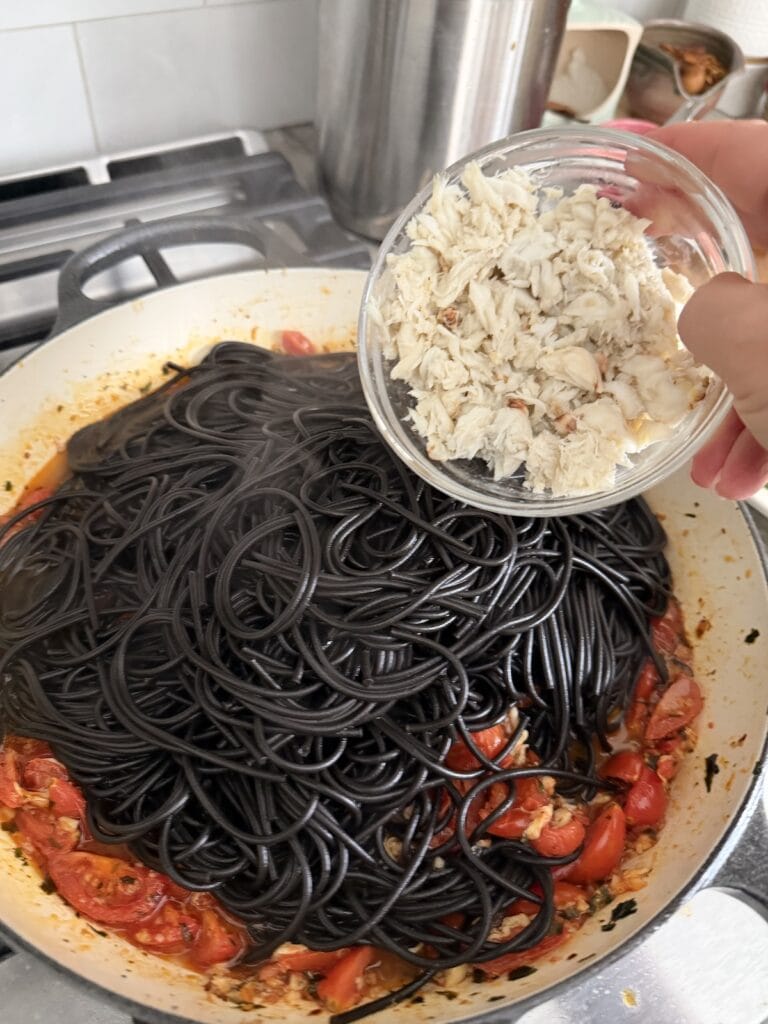
- Stir in half the crabmeat and stir until it’s coated. Sauté another 1-2 minutes.
- Pour wine in the pan and scrape up any brown bits/deglaze.
- Add tomatoes, salt and black pepper and stir. Simmer tomato mixture 8 to 10 minutes to break the tomatoes down a bit and thicken the sauce.


- Cook pasta for 2 minutes before you think it is al dente.
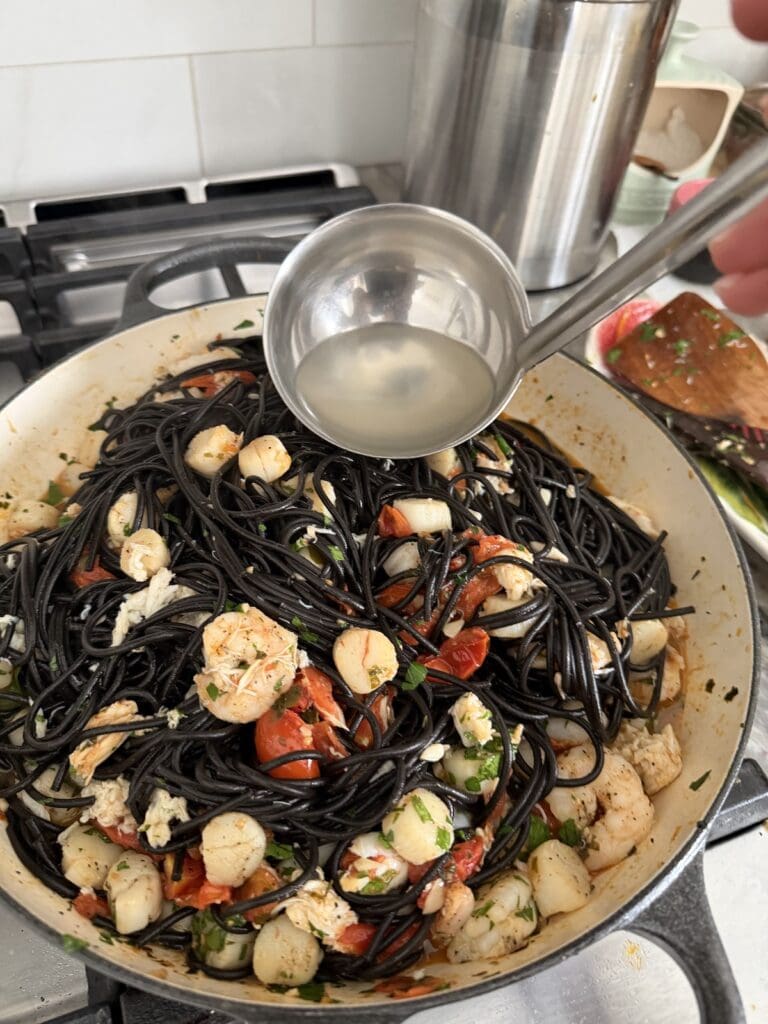
- Transfer cooked pasta and some pasta water to sauce with remaining crabmeat and chopped parsley and the reserved shrimp and scallops.
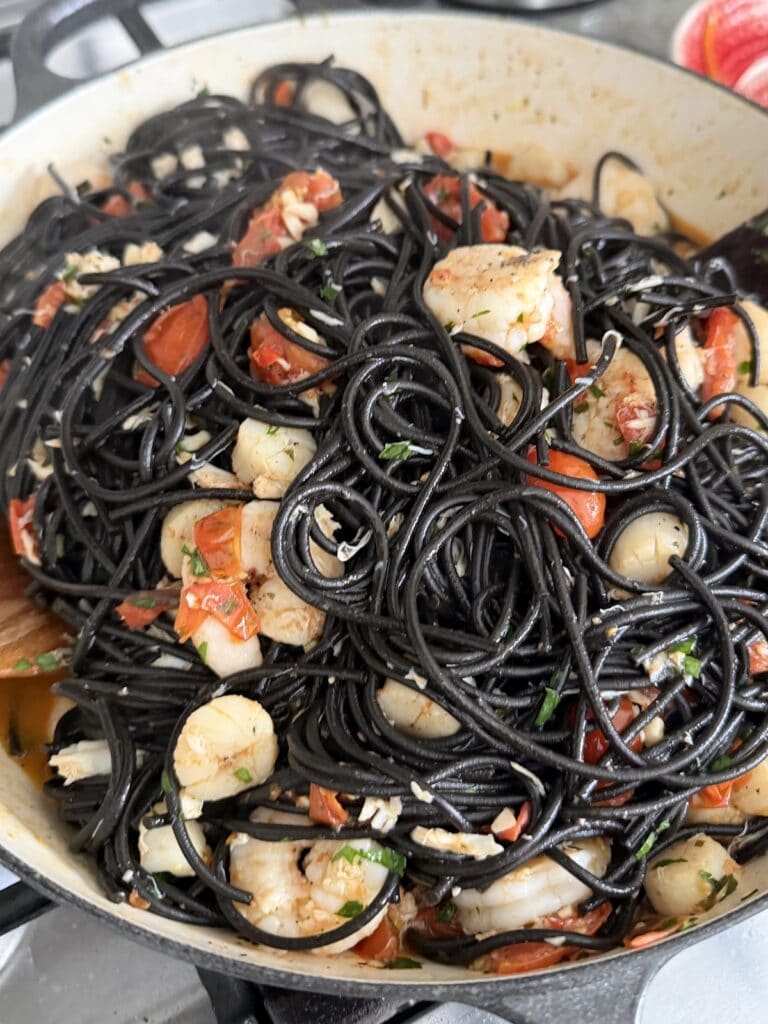
- Toss well, allowing the pasta to finish cooking in the delicious flavors of the sauce.
- Add additional pasta water if more moisture is needed.
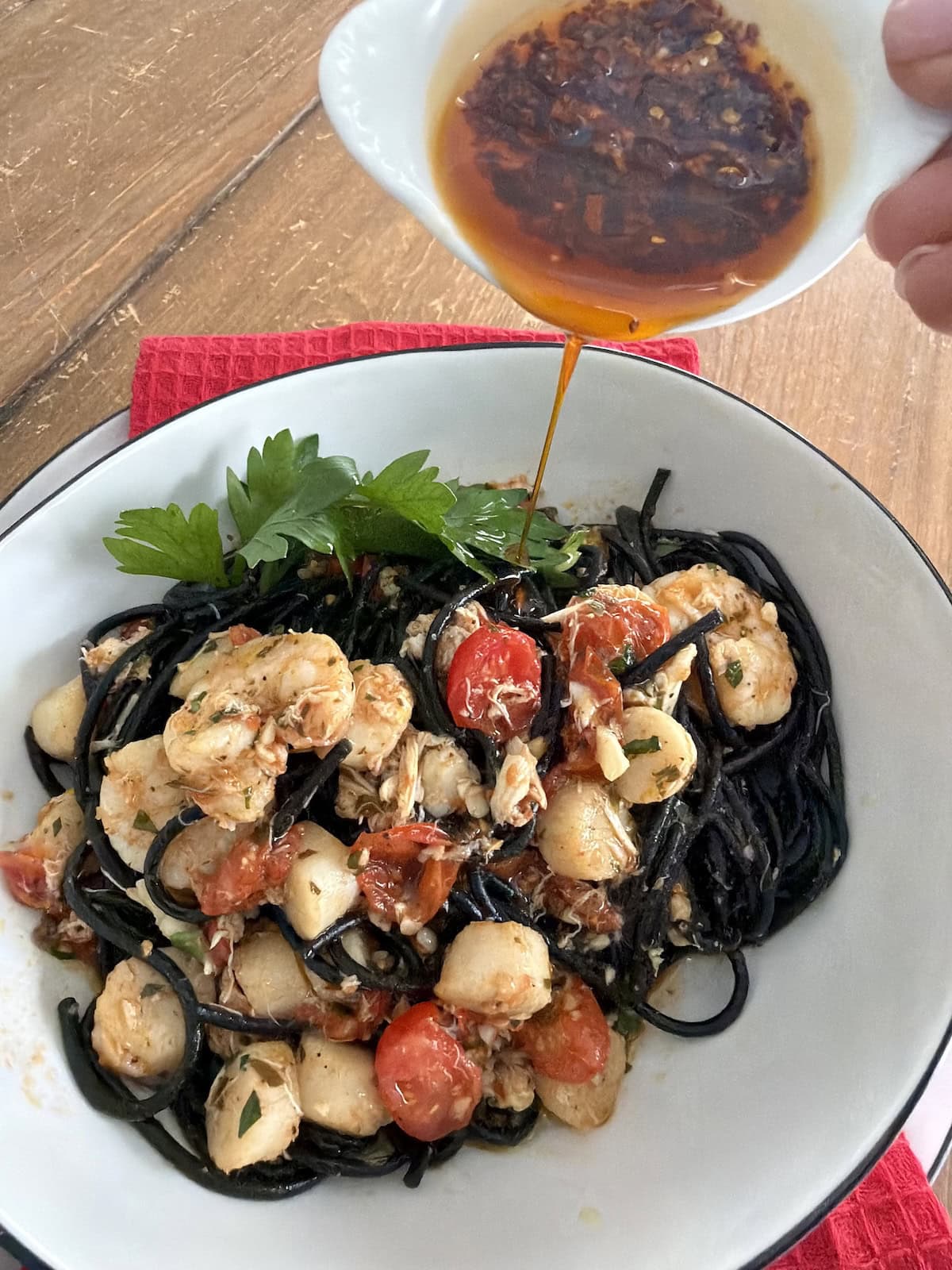
- Drizzle with a little extra-virgin olive oil and enjoy!


If you are looking for a recipe that calls for whole crabs simmered in sauce, check out this Spaghetti and Crabs recipe.
FUN FACT
- In Sicily, believe it or not, the ink is stirred directly into the sauce in many traditional dishes, not mixed into the pasta dough. It’s often cooked with ingredients like garlic, peperoncino and white wine, creating a glossy, inky sauce with a naturally viscous texture and briny, slightly mineral flavor.
- Fair Warning: When enjoyed this way, your teeth are almost guaranteed to turn black! But don’t worry–it wipes away easily (and makes a really funny photo!) I can attest to this from personal experience!
- By contrast, when using dried pasta with cuttlefish ink, a.k.a., squid ink, like I do here, the impact is largely aesthetic. The black pasta delivers a stunning visual contrast against the lighter-colored shrimp, scallops and crab. But the actual ink flavor remains subtle and blends in with the seafood sauce.
More Italian Pasta Recipes with Seafood
If you like this spaghetti allo scoglio with squid ink pasta, check out these recipes:
- Shrimp Arrabbiata Pasta
- Calamari Sauce Fra Diavolo
- Spaghetti and Crabs
- Shrimp Scampi Pasta
- Scungilii Marinara (Very Easy)
- Easy Spaghetti with Lump Crabmeat
- Linguine with Red Clam Sauce
- Pasta with Canned Clams, Artichokes and Pancetta

Frequently Asked Questions
Not really. Both squid and cuttlefish ink have a subtle, yet distinctive, umami flavor that complements pasta with a mild seafood note. Once it’s cooked, it does not really have a strong flavor and is mostly aesthetic. Nero di seppia pasta generally takes on flavors of the (almost always) seafood sauce with which it’s paired.
Bay scallops are small, sweet and delicate in both texture and taste. Larger sea scallops are firm and meaty with a rich and slightly briny flavor.
Sea scallops, which tend to be significantly more expensive, are ideal for pan-searing grilling and broiling as a main course, whereas bay scallops are best suited for quick-cooking techniques like sautéing for pastas, soups and stir-fries.
Small bay scallops are used here in this squid ink seafood pasta and are only cooked briefly to keep them tender.
For sure! By simply omitting the tomatoes, you will have a beautiful white wine and garlic-based pasta dish. You may need to add additional pasta water during the last step to create a bit more sauce.
Yes. If you are using already cooked shrimp in this recipe, skip the first step of cooking the shrimp in the olive oil. Just add the shrimp to the pan along with the pasta at the end. Since the shrimp are already cooked, you simply need to reheat them. If you “cook” already cooked shrimp for too long, they will get tough and rubbery.
Deveining shrimp means removing the digestive tract/intestine of the shrimp. It’s the brownish/black vein that runs along the back of the shrimp. While it won’t hurt to eat it, it’s a bit unpleasant to think about.
Recipe Substitutions and Variations
- Other Seafood: You definitely have other options in terms of seafood here. Clams, mussels, calamari and lobster are all great options.
- Add Greens: Fold in some baby spinach or arugula leaves when combining the hot pasta with the sauce for extra nutrition and color, similar to what I do in my shrimp scampi pasta recipe.
- Make it Spicy! Turn this mixed seafood pasta into more of a seafood pasta fra diavolo by amping up the heat factor! My favorite way to do this is to add 1 to 2 teaspoons Calabrian chile paste to the pan along with some chopped pickled hot cherry peppers, but you can also just use extra chile flakes. See my shrimp arrabbiata recipe for some inspiration.
- Use Canned Tomatoes: I used grape tomatoes here that were cut in half and broke down nicely in the sauce. If you prefer to use canned tomatoes, that works too! Use one (28-ounces) can whole tomatoes, hand-crush them and let them simmer for about 10 minutes.
- Ditch the Carbs! If you are not feeling the carbs in this dish, increase the seafood and omit the pasta and enjoy a truly, sop-worthy sauce worthy of the best pane di casa available!
TOP TIPS for Squid Ink Seafood Pasta
- Seafood: If starting with frozen shrimp or scallops, be sure to fully defrost them in the refrigerator before using. Try to avoid defrosting them in cold water as they will get water-logged.
- Pasta Water is key! Add it to the sauce along with the pasta for the additional moisture needed to finish cooking the pasta.
- Pasta: I used black, cuttlefish ink spaghetti here but you can use any long pasta in this recipe. Some other favorites are linguine, bucatini, tagliatelle and cappellini.
- Serving Suggestions: Squid Ink Pasta with Seafood is a hearty, main course pasta, complete with lots of protein.
- I suggest a light antipasti of prosciutto di parma with melon or assorted salumi.
- Then, follow the meal with a light green salad with red wine vinaigrette and perhaps some garlic bread.
- Dessert should be light – perhaps biscotti and coffee, mixed fruit, or lemon sorbet.
- Be sure to top the seafood pasta off with some Italian Olio Santo!
- Leftovers can be stored in an airtight container in the refrigerator for 4 to 5 days. Reheat them, covered, in a small skillet over medium low heat with a little bit of water until heated through.
Squid Ink Pasta With Seafood (Shrimp, Scallops, Crab)

Video
Equipment
- Shrimp Deveiner (optional)
Ingredients
- 1 pound medium or large shrimp, peeled and deveined, tail off (See Notes.)
- 1 pound bay scallops
- Pinch salt and black pepper
- 6 Tbsp olive oil, divided in half (can use some anchovy oil)
- 3 Tbsp chopped garlic
- 4 anchovy filets
- ¼ tsp crushed red pepper
- ⅓ cup chopped flat-leaf parsley, divided in half
- 1-2 tsp Calabrian chile paste , (optional)
- 8 ounces crabmeat, divided in ½ (See Notes.)
- 1 cup dry white wine, such as Pinot Grigio
- 2 pints grape or cherry tomatoes, sliced in ¼ (about 2½ pounds
- ½ tsp salt, or to taste at end
- ¼ tsp ground black pepper
- 1 pound squid ink spaghetti, or other long pasta spaghetti + salt for pasta water
- Extra virgin olive oil, for finishing
Instructions
- Gather and prep all ingredients according to specifications above. Put a large pot of water on to boil.(Please see the section above in the blog post for Step-By-Step instructions with photos.)
- Pat the shrimp dry with a paper towel, then season both sides of the shrimp with salt and black pepper.1 pound medium or large shrimp
- Separately, do the same with the scallops.1 pound bay scallops
- Heat half the olive oil in a large skillet or Dutch oven over medium-high heat. Once oil is heated, place the shrimp in a single layer in the hot pan and sear both sides of the shrimp until pink and cooked through (about 2 minutes per side). Work in batches, if necessary, and do not overcrowd the pan. Transfer the shrimp to a plate.
- Then, add the scallops to the pan in a single layer. Add more oil if necessary. The scallops are small and will only take about 2 to 3 minutes to cook through. Stir a few times while cooking, then add to the shrimp once cooked through.
- Reduce heat to medium-low and add the remaining olive oil, garlic, anchovies crushed red pepper, half the chopped parsley and the Calabrian chile paste (if including) to the pan. Cook until the garlic starts to soften and the anchovies have dissolved. Stir occasionally.3 Tbsp chopped garlic, 4 anchovy filets, ¼ tsp crushed red pepper, ⅓ cup chopped flat-leaf parsley, 1-2 tsp Calabrian chile paste
- Stir in half the crabmeat and stir until it’s coated. Sauté another 1-2 minutes.
- Pour the wine in the pan and scrape up any brown bits/deglaze.1 cup dry white wine
- Bring the wine to a simmer, then add the tomatoes, salt and black pepper and stir until well-combined. Bring the tomato mixture to a simmer. Simmer, uncovered for about 8 to 10 minutes to break the tomatoes down a bit and thicken the sauce.2 pints grape or cherry tomatoes, ½ tsp salt, ¼ tsp ground black pepper
- Meanwhile, bring a large pot of water to a boil. Once the water comes to a boil, add salt, then the pasta, stirring frequently.1 pound squid ink spaghetti
- Cook the pasta for 2 minutes less than the package directions, or about 2 minutes before you think it is al dente. Be sure to reserve at least 1 cup of the starchy pasta water.
- Transfer the cooked pasta and about ½ cup pasta water to the sauce, along with the remaining crabmeat and chopped parsley and the reserved shrimp and scallops (include any accumulated juices). Toss well, allowing the pasta to finish cooking in the delicious flavors of the sauce. Add additional pasta water if more moisture is needed.
- Once the pasta is cooked (al dente), turn off the heat. Drizzle with a little extra-virgin olive oil and stir again. Taste and adjust seasonings, then transfer to serving dishes and enjoy! Buon Appetito!
Notes
- If starting with frozen shrimp or scallops, be sure to fully defrost them in the refrigerator before using. Try to avoid defrosting them in cold water as they will get water-logged.
- I used a large “26/30” shrimp in this recipe, which means there are approximately 26 to 30 shrimp in one pound. A medium-sized shrimp, such as a “31 to 36”, also works perfectly in this recipe.
- The shrimp must be 100% cleaned (i.e., deveined and peeled) with the tail removed.
- Use small bay scallops, not large sea scallops. If you do want to splurge and use the larger and more expensive sea scallops, you may want to cut them down into bite-sized pieces first.
- Almost any grade of crabmeat, such as lump, claw, backfin, special or jumbo lump (or any combination thereof), can be used here with great results. Purchase picked and pasteurized crabmeat, which is located in the refrigerated seafood section of most major grocery store, for ease and convenience. Imitation crabmeat should not be used in this recipe.
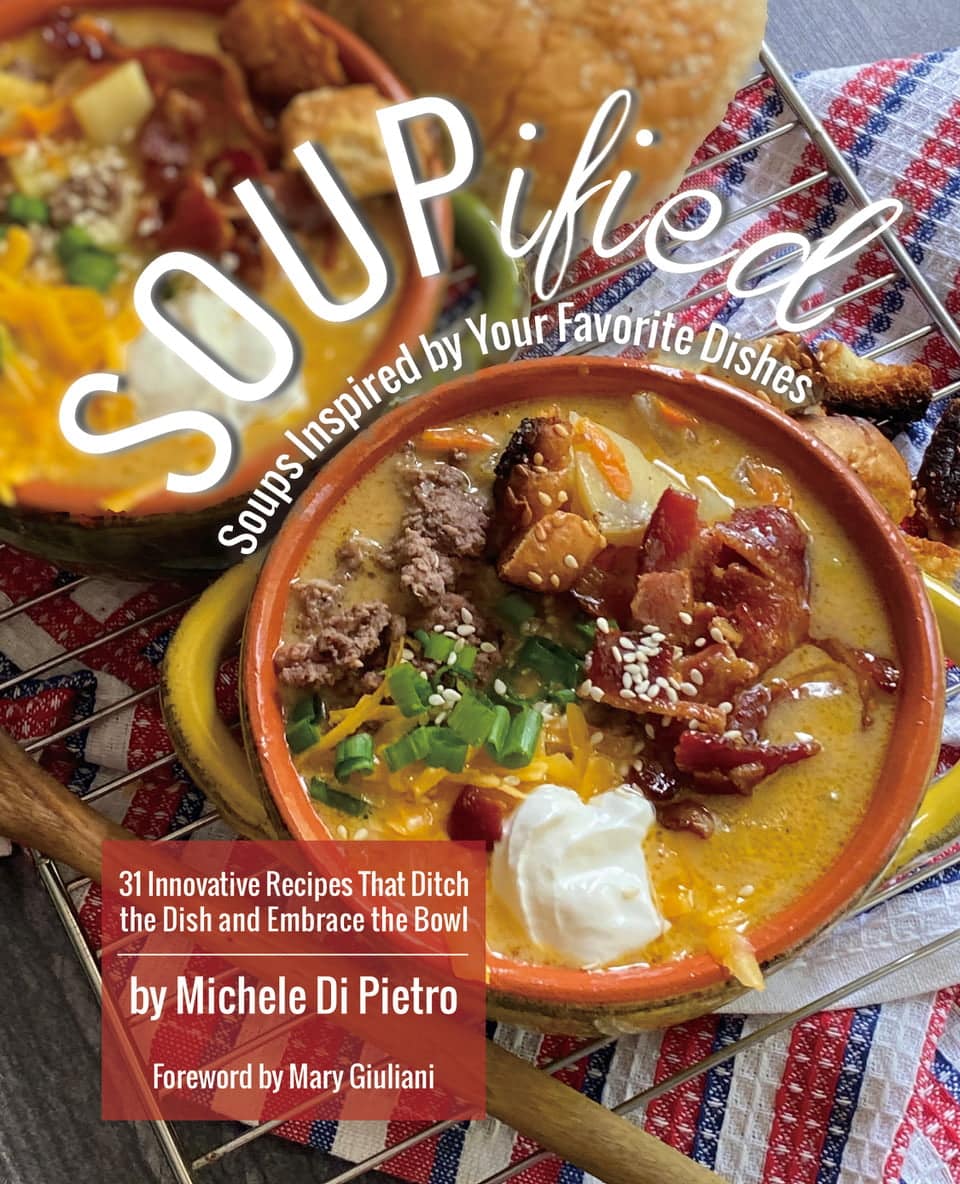
love soup?
Get My Cookbook!
Ditch the dish and embrace the bowl with Soupified: Soups Inspired by Your Favorite Dishes!
Available in ebook, paperback and hardcover.

So much flavor in this dish, not to mention it’s so beautiful!
Hi Michele,
Can I use lobster in this dish instead of crab?
definitely!