
This post may contain affiliate links or sponsored content. That means if you click on my link and buy something, I will earn a small commission from the advertiser at no additional cost to you. For more information, see our disclosure policy.
Looking for a truly authentic Italian tiramisu recipe? This classic tiramisu classico is made the traditional way–with espresso-soaked ladyfingers, a rich mascarpone custard, and no heavy cream or shortcuts. The result is a perfectly balanced dessert that’s creamy, light, and full of deep coffee flavor.
If you’ve ever had tiramisu in Italy and wondered why it tastes so much better, this is the recipe that shows you exactly how to recreate it at home, step-by-step. Read on for more!
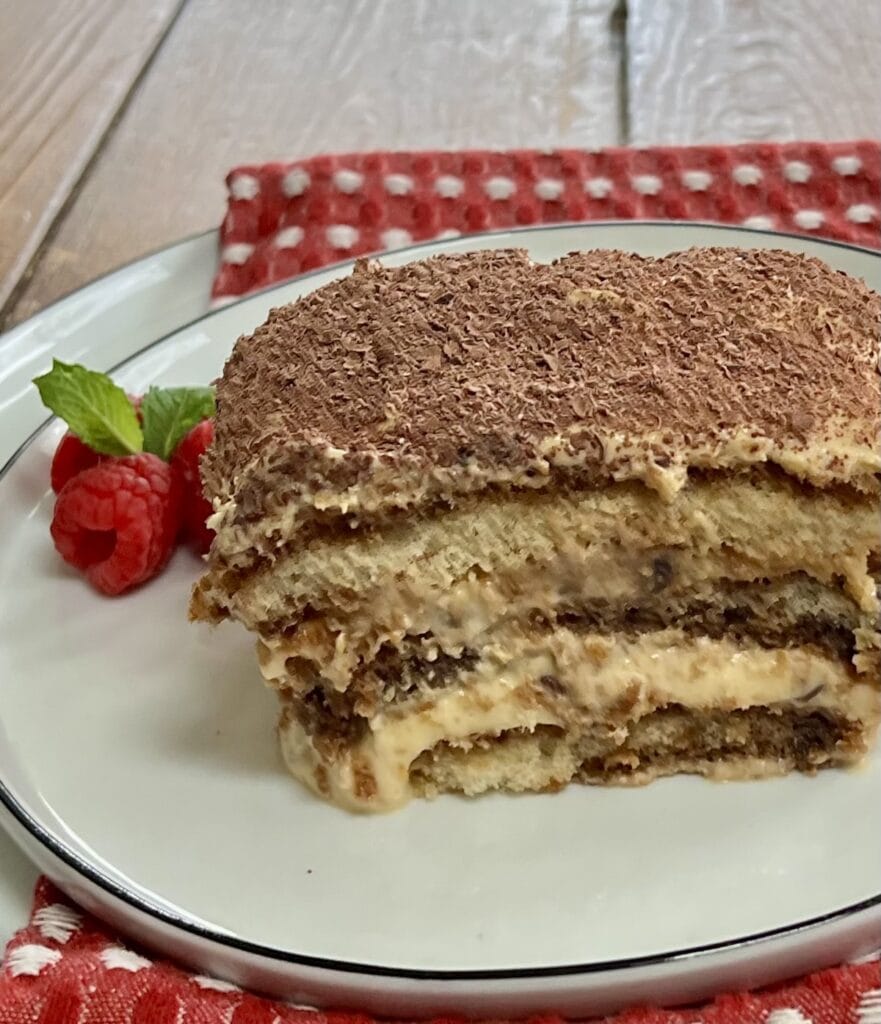
Tiramisu is known for its simplicity–just mascarpone, eggs, sugar, espresso and ladyfingers brought together strategically to create one of Italy’s most iconic desserts.
Authentic Italian tiramisu is traditionally made without heavy cream, relying instead on mascarpone, eggs, sugar, espresso, and ladyfingers to create its signature light, creamy texture–and when those simple ingredients are treated the right way, the result is something truly special.
Table of Contents
- What is Authentic Tiramisu?
- Inspiration for THIS Tiramisu Classico Recipe
- What Makes This Tiramisu Different (And Better)
- Zabaglione vs. Zabaione vs. Sabayon?
- Tiramisu Ingredients (Authentic + Substitutions)
- Key Tips Before You Start
- How to Make Authentic Italian Tiramisu Step-by-Step
- Common Tiramisu Substitutions
- Recipe Variations
- Frequently Asked Questions
- What Makes This Tiramisu Authentic?
- TOP TIPS for Italian Tiramisu
- Authentic Italian Tiramisu Recipe
What is Authentic Tiramisu?
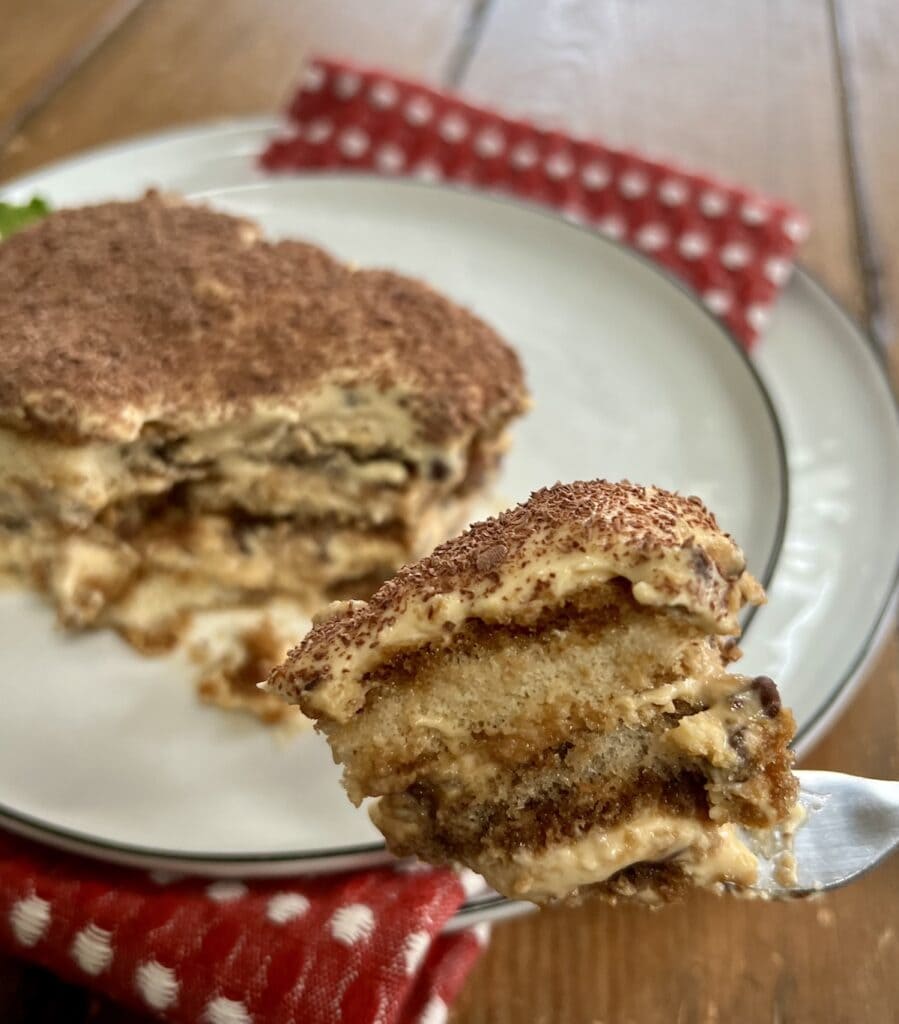
Tiramisu is one of Italy’s most famous dolci–a no-bake dessert made with savoiardi biscuits (ladyfingers) dipped in espresso, layered with a mascarpone custard of eggs and sugar and finished with cocoa or chocolate.
It’s incredibly creamy with a rich, balanced flavor made even better with its soft, layered texture.
Tiramisu literally means “pick me up” or “cheer me up” in the Italian Treviso dialect, presumably because of its energizing mix of caffeine and cocoa.
And though it became popular relatively recently in the late 1960s at an Italian restaurant called Le Beccherie, it may have an older heritage. I read an interesting story about tiramisu’s origin that goes all the way back to 1800 when it was supposedly invented by a clever “lady of the night” in the center of Treviso (outside Venice). Who knew that there would be a common thread between tiramisu and pasta puttanesca???
One thing is for sure. It’s inspired countless variations in both home and professional cooking. I don’t believe I’ve ever had the same style of tiramisu twice! And I’ve eaten a lot of tiramisu in my life.
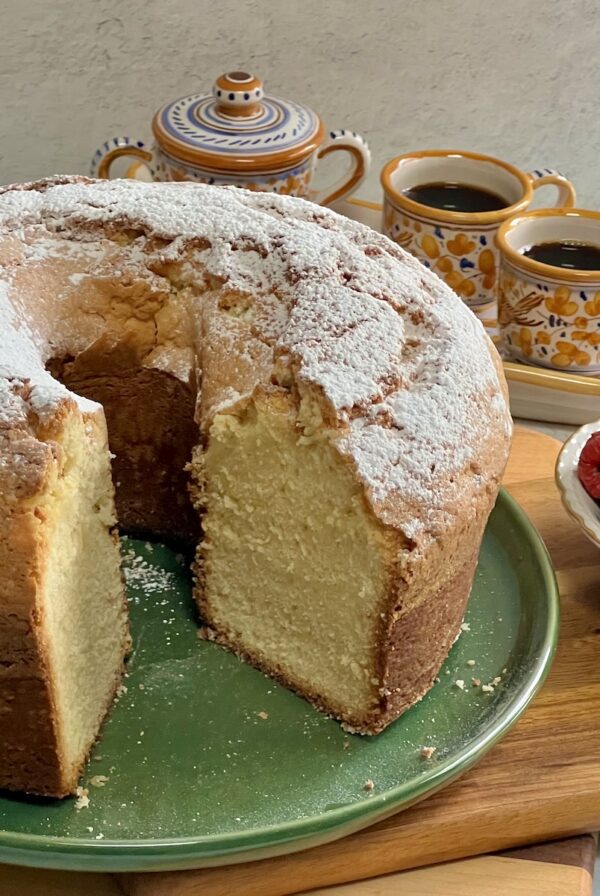
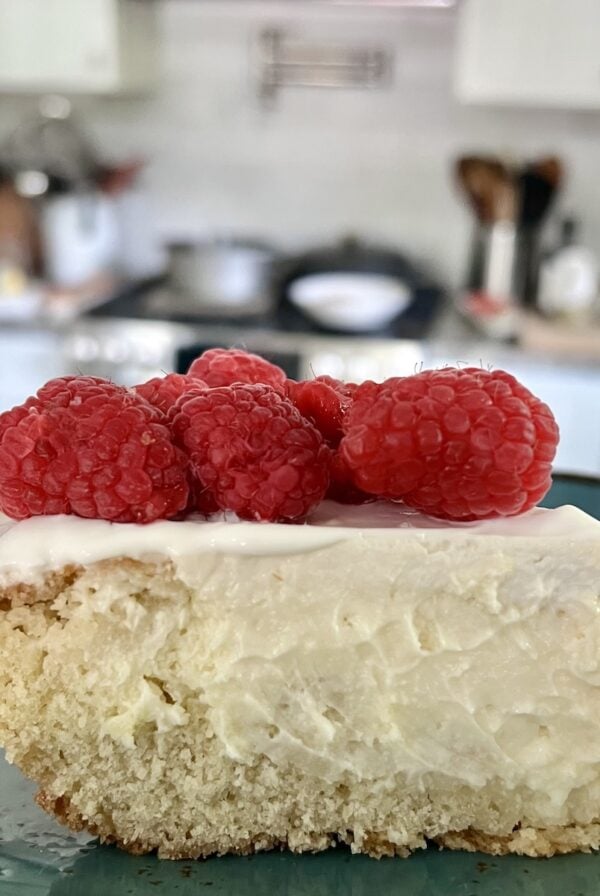
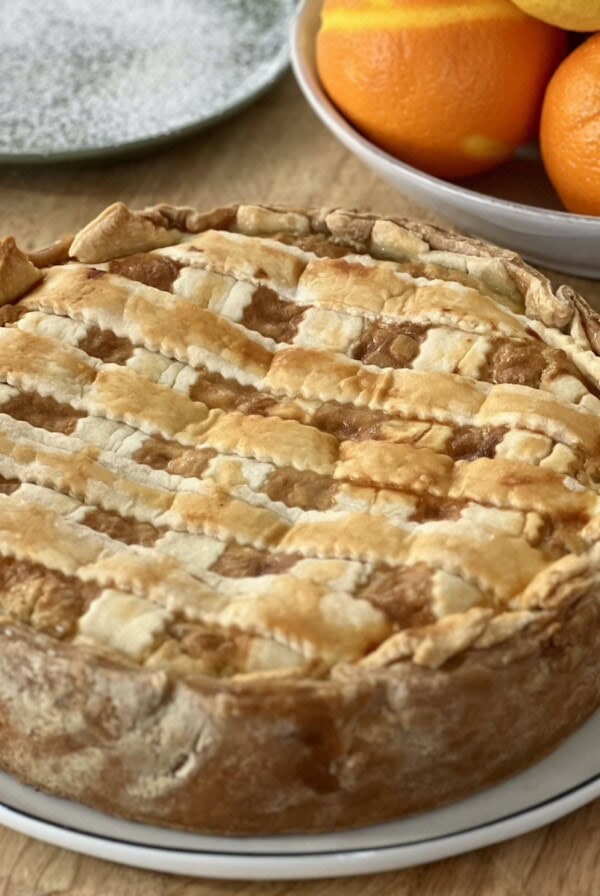
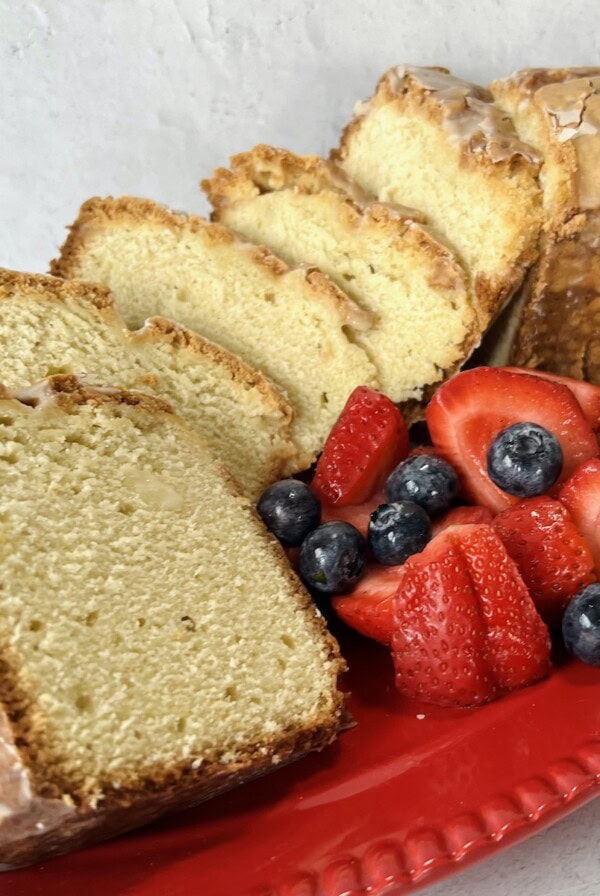
By the way, if you love desserts, check out my Sicilian ricotta cheesecake, cream cheese pound cake and sour cream cheesecake recipes-so good!
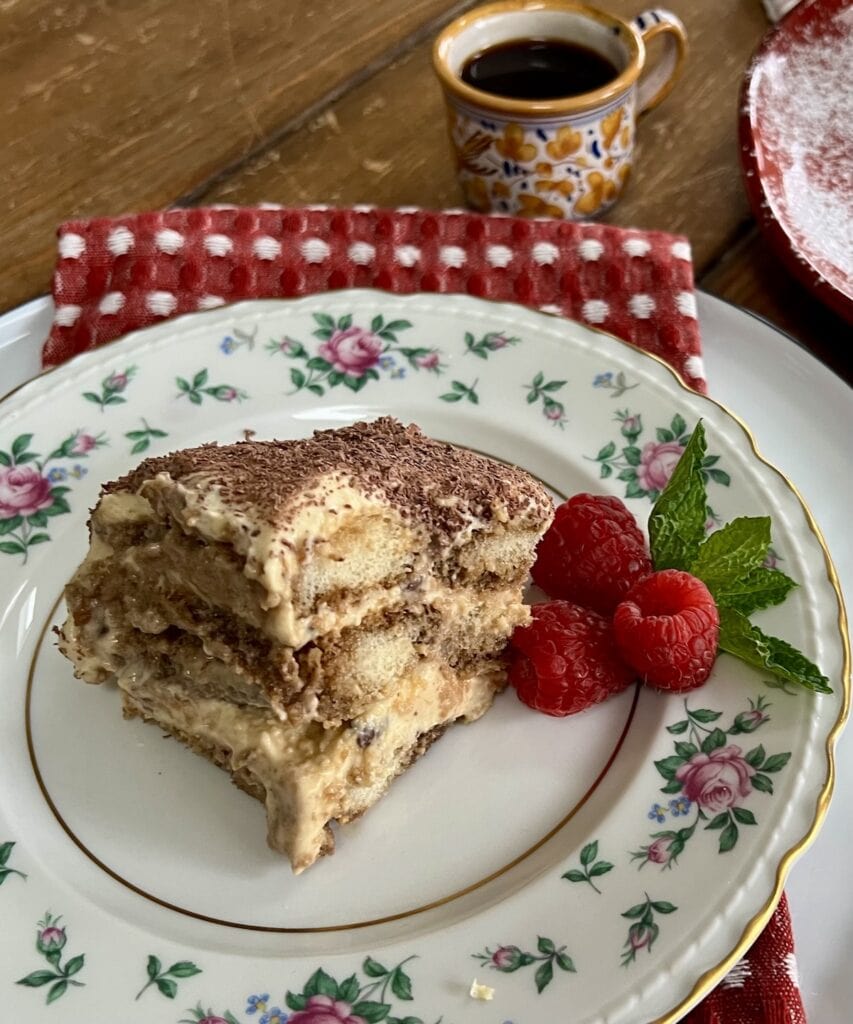
Inspiration for THIS Tiramisu Classico Recipe
This is not a dessert that I grew up eating or that I learned from my (southern Italian) family.
The first time I ever had it was in my early 20s while I was living in Manhattan after college. It was at a tiny, little pasta restaurant on the Upper East Side called Belladonna. And it was perfect.
After that first bite, I sought it out as often as I could. But I was almost always disappointed with what I found as no other restaurants could even get close to Belladonna’s version.
Then, fast forward a few years to my pre-food biz, CPA expat days in Geneva, Switzerland at a welcome dinner at one of the partners’ houses. The host, Cosimo Picci, was originally from Northern Italy and he prepared a virtual feast for all of us expatriates. Besides his vitello tonnato (which I need to recreate soon), his tiramisu was the kind of food that you never forget.
His is the tiramisu recipe that I’m sharing with you here.
This classic Italian dessert has a few simple but very intentional twists that make ALL the difference!
What Makes This Tiramisu Different (And Better)
There are a lot of tiramisu recipes out there–but most of them take shortcuts that sacrifice flavor or texture. This one doesn’t.
What makes this authentic Italian tiramisu recipe stand out comes down to a few simple but important differences:
– A Proper Zabaglione Custard (Not Just Raw Eggs)
Many traditional recipes use raw egg yolks mixed with sugar and mascarpone. And while that can work, making a true zabaglione (a gently cooked custard) creates a noticeably lighter, more stable, and more refined texture.
- I also use whole eggs in the custard instead of just the yolks–it creates a lighter texture.
- It’s still incredibly rich, but with a silky, airy quality it melts into the espresso-soaked layers instead of sitting heavy on top of them.
– A Subtle Chocolate Upgrade That Changes the Texture
This is where I take a small–but very intentional–departure from tradition in a decidely American slant.
- Instead of relying only on cocoa powder, I add mini chocolate chips within the layers and finish the tiramisu with freshly grated chocolate on top. The result is a perfect contrast of textures: creamy, soft and just a little bit of bite. It’s the detail everyone notices–but can’t quite put their finger on.
– Espresso Powder
To make this recipe a little more accessible, I also use espresso powder in place of freshly brewed espresso.
- It delivers the same bold flavor you’d expect from freshly brewed espresso.
– The Result?
A classic tiramisu classico at its core–made the traditional way–but with just enough refinement to make it unforgettable.
Once you try it this way, it’s very hard to go back. And this may just be the last tiramisu recipe that you ever make. I hope you fall in love with it like I did all those years ago as a U.S. expat working as a C.P.A. in Switzerland. Mangia bene!
Zabaglione vs. Zabaione vs. Sabayon?
Zabaglione, or its alternate spellings of zabaione or sabayon (in French) all refer to the same thing–a light, cooked custard made traditionally with three basic ingredients–egg yolks, sugar and a sweet wine like Marsala. It’s cooked gently over a water bath while whisking until it becomes a light foamy cream.
It’s actually an impressive dessert in its own right! And often paired with fresh berries, simple cakes or sliced panettone. You can also find it as an espresso topping in Italy (which is truly exceptional).
It tastes a little boozy with a rich, creamy, eggy flavor. So delicious!
For this recipe, I use whole eggs in place of just the yolks (it makes a lighter custard) and coffee liqueur in place of sweet wine (for obvious reasons…). It adds a beautiful light texture to the heavier mascarpone cheese and together they become the creamy layer between cocoa and espresso-soaked ladyfingers.
Tiramisu Ingredients (Authentic + Substitutions)
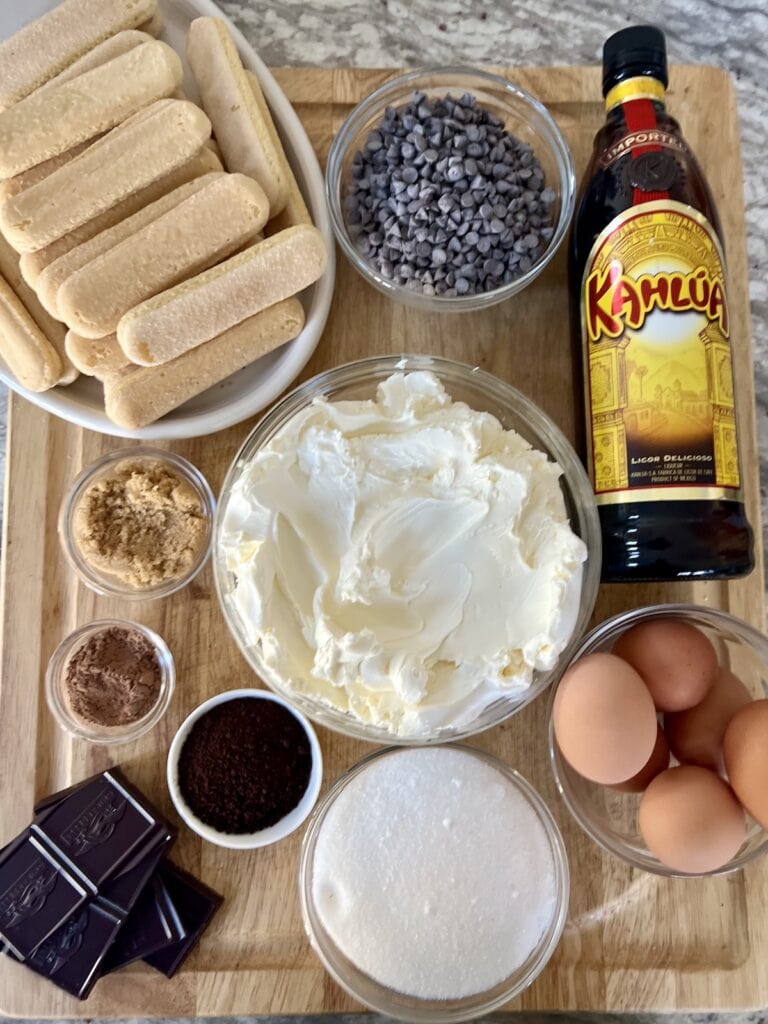
These are the building blocks of real tiramisu. Quality matters!
- Ladyfingers: Also referred to as savoiardi (in Italy) and sometimes, champagne biscuits, these are extremely light, firm and dry Italian-style biscuits that are able to absorb espresso without turning mushy. You can generally find them in Italian specialty stores, supermarkets and online. Try to find ones that do not have a very long laundry list of ingredients.
- Whole Eggs, Sugar and Coffee Liqueur: These three ingredients form the zabaglione base to which mascarpone is added creating the rich custardy tiramisu layer in between the ladyfingers.
- Most tiramisu custard recipes call for egg yolks only, but I use the whole egg here to further lighten the custard texture.
- Use granulated sugar, which also acts as a stabilizer for the custard.
- And, while coffee liqueur is my first (and obvious) choice for this recipe, you can also use hazelnut, Amaretto (almond), walnut liqueur, brandy or Marsala wine. Each will contribute its own unique flavor to the finished dish.
- For an alcohol-free version of this tiramisu, use espresso in place of the coffee liqueur.
- Mascarpone Cheese: A rich and creamy, soft cow’s milk cheese with a slightly sweet flavor, that’s originally from Northern Italy. Use quality mascarpone and do not substitute with cream cheese! I like the Galbani brand after trying several as its consistently creamy rich and smooth without being grainy.
- Espresso Powder: The defining flavor of tiramisu! For convenience and recipe consistency, I use espresso powder here in place of fresh brewed espresso. (It’s a great ingredient to have on hand, btw, for all sorts of desserts.) However, if you prefer to use freshly made espresso (or really dark, strong coffee) in place of the espresso powder, I have instructions in the Recipe Notes below.
- Mini-Chocolate Chips: My personal American twist on the classic recipe. Every time I’ve served this dessert, it has received rave reviews and callouts specifically about the chocolate chips and how they improve the texture. And I concur. Include them.
- Unsweetened Cocoa Powder: Also referred to as baking cocoa, this adds chocolatey bittersweetness to the coffee dunking liquid, creating a bit of a mocha feel IMHO.
- Brown Sugar: To sweeten the coffee dunking liquid.
- Bittersweet Chocolate: Whereas many tiramisu recipes call for a dusting of cocoa powder on the top, this recipe is unique in that I, instead, top it with freshly grated chocolate. And it makes ALL the difference! I use half of a 60%-cacao dark chocolate bar here, but you can alter the cacao level to your taste.
Key Tips Before You Start
- Use simmering, not boiling, water under the bowl when making the custard.
- Don’t overheat the custard or the eggs will scramble.
- Only lightly soak the ladyfingers.
- It’s best to grate and sprinkle the chocolate on the finished, chilled tiramisu just before serving.
- Plan for chilling time. (This is non-negotioable.)
How to Make Authentic Italian Tiramisu Step-by-Step
Making tiramisu at home is so much easier than it looks! The key is in the technique. And don’t worry if you’ve never made tiramisu before. I’ll walk you through each step so you can get it right the first time!
- Make the Zabaglione Custard:
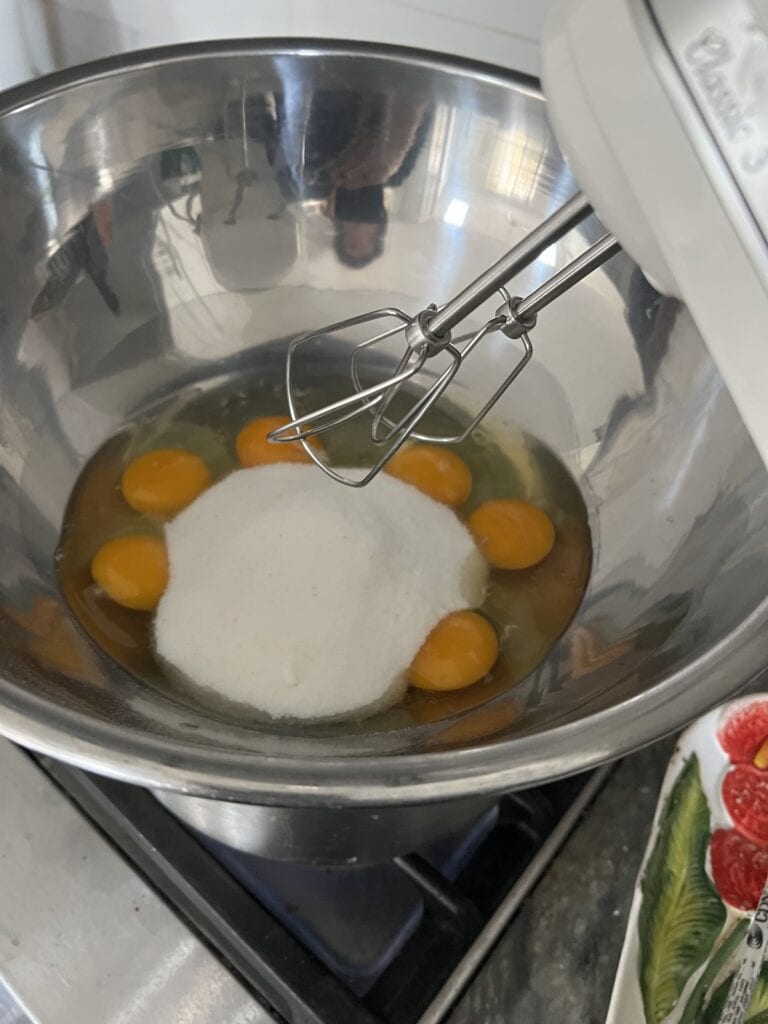
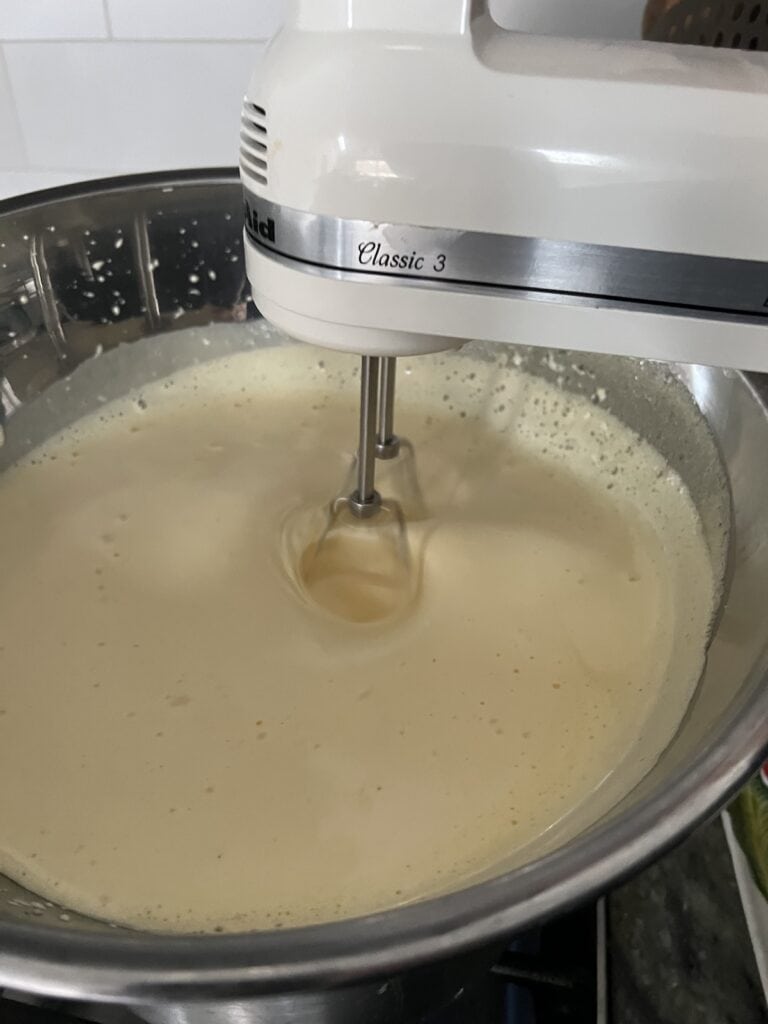
- Fill a pot about 2/3 with water and bring it to a gentle simmer. Place a heatproof bowl over the pot (making sure it doesn’t touch the water) and add eggs and sugar.
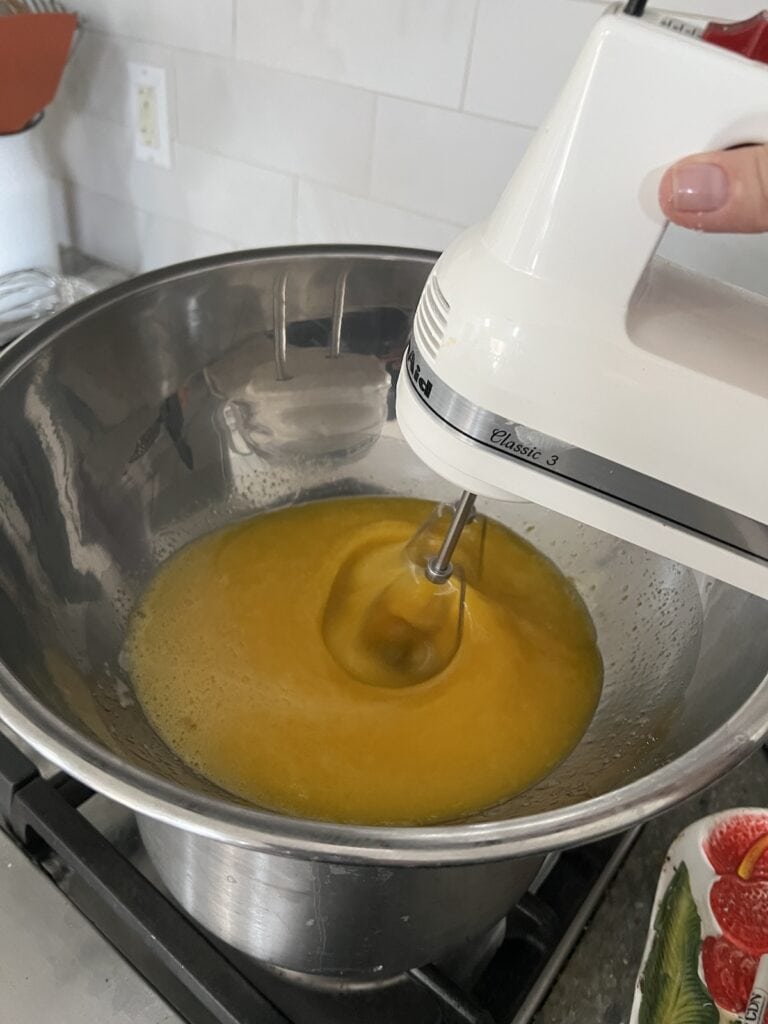
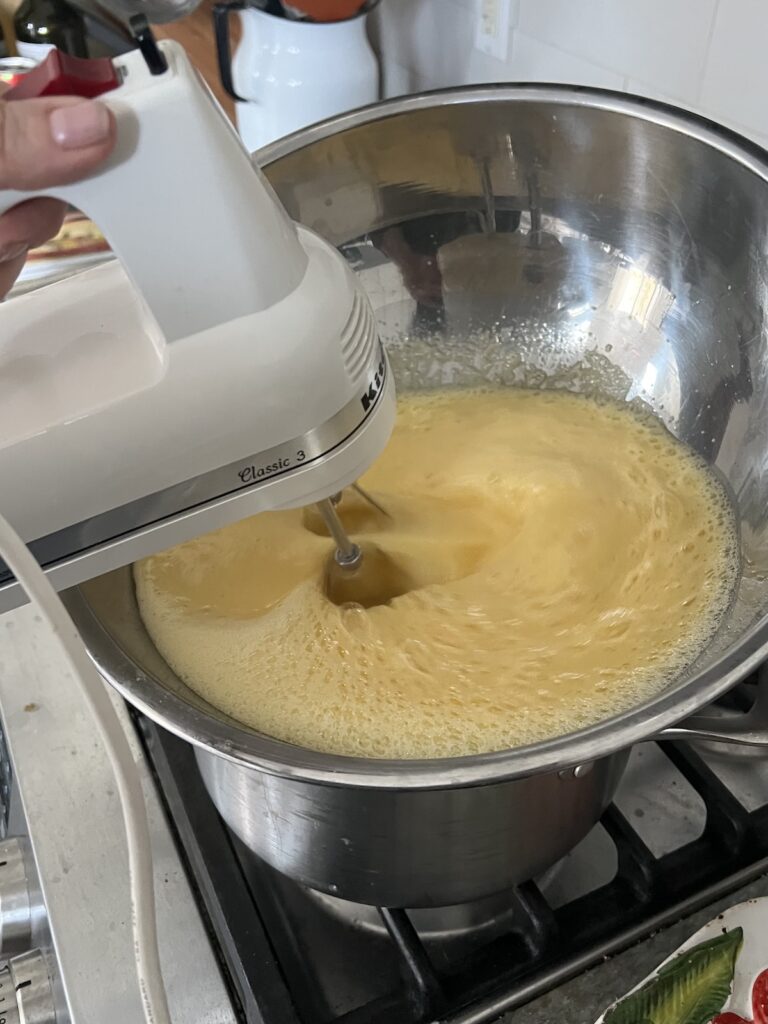
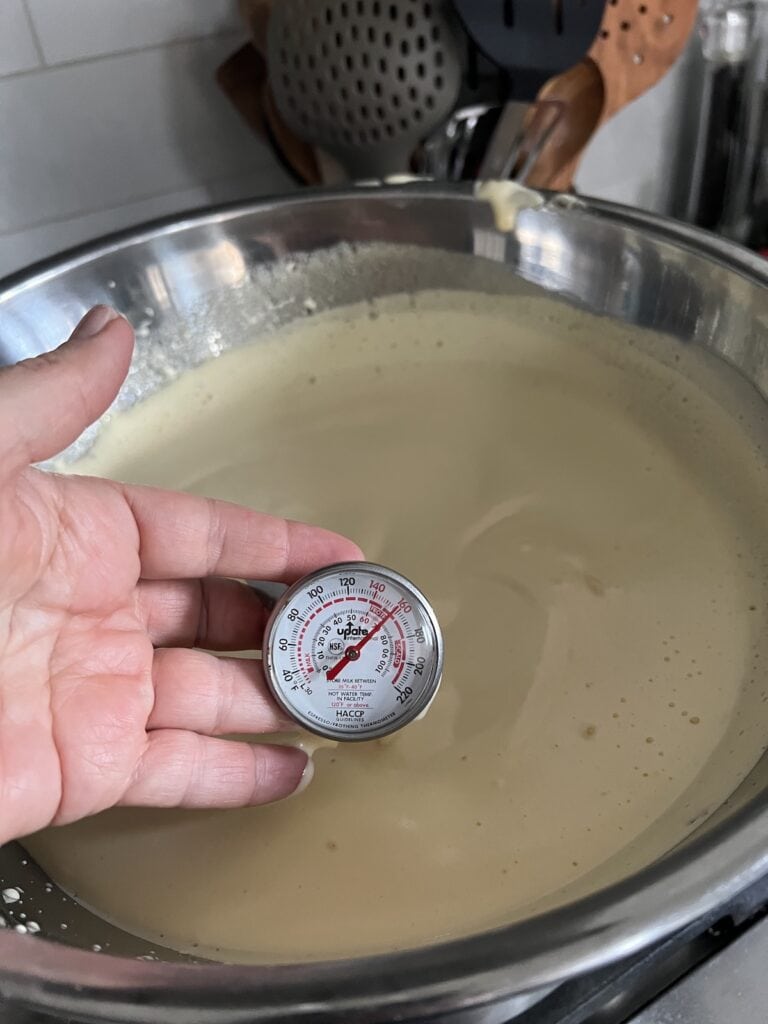
- Whisk continuously using a hand mixer or balloon whisk for about 7 minutes or until the mixture becomes pale, thick and triples in volume. It should fall back into the bowl in slow ribbons and reach about 160°F.
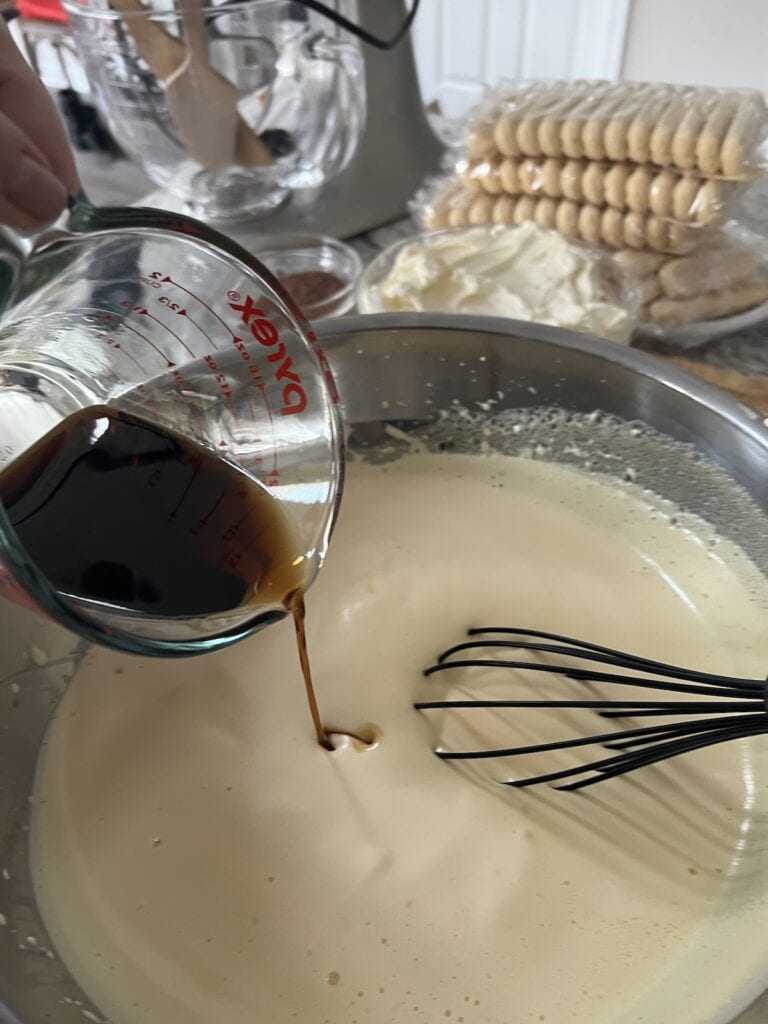
- Remove from heat and slowly whisk in the coffee liqueur, one tablespoon at a time, until smooth and slightly cooled.
Pro-Tips
- Once you add sugar to eggs, you must start whisking immediately or the sugar can harden the eggs.
- For safety, hold the rim of the bowl with a potholder or oven mitt.
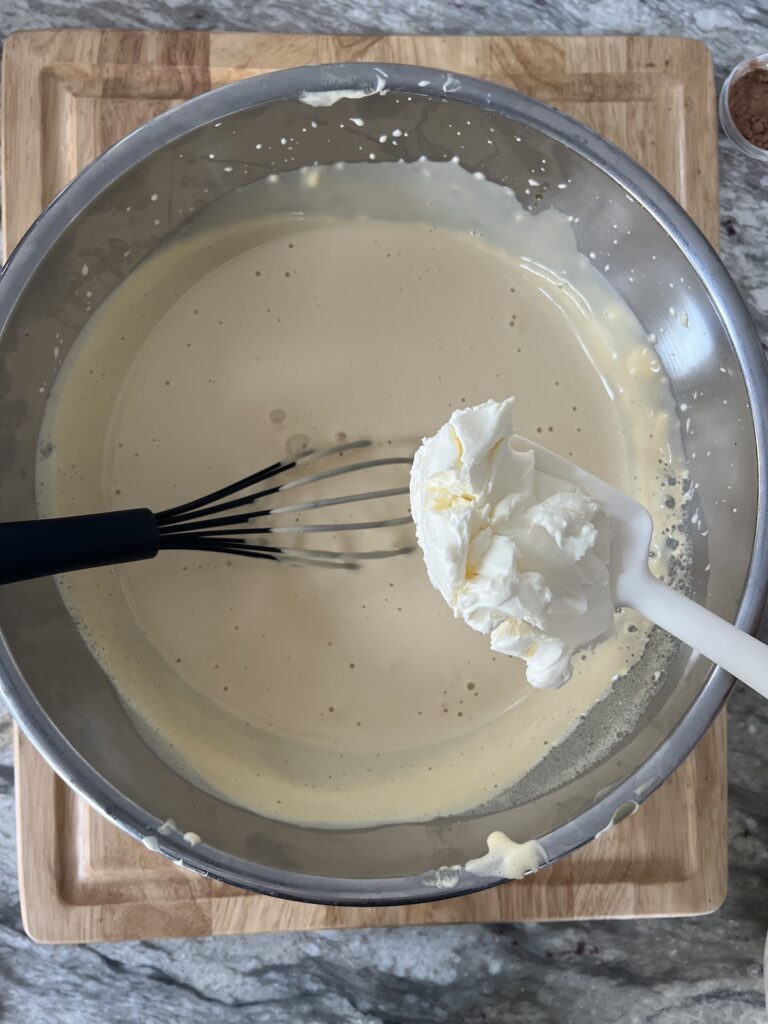
- Fold in the Mascarpone: Once the custard has cooled, gently fold in the mascarpone cream until fully incorporated and smooth.
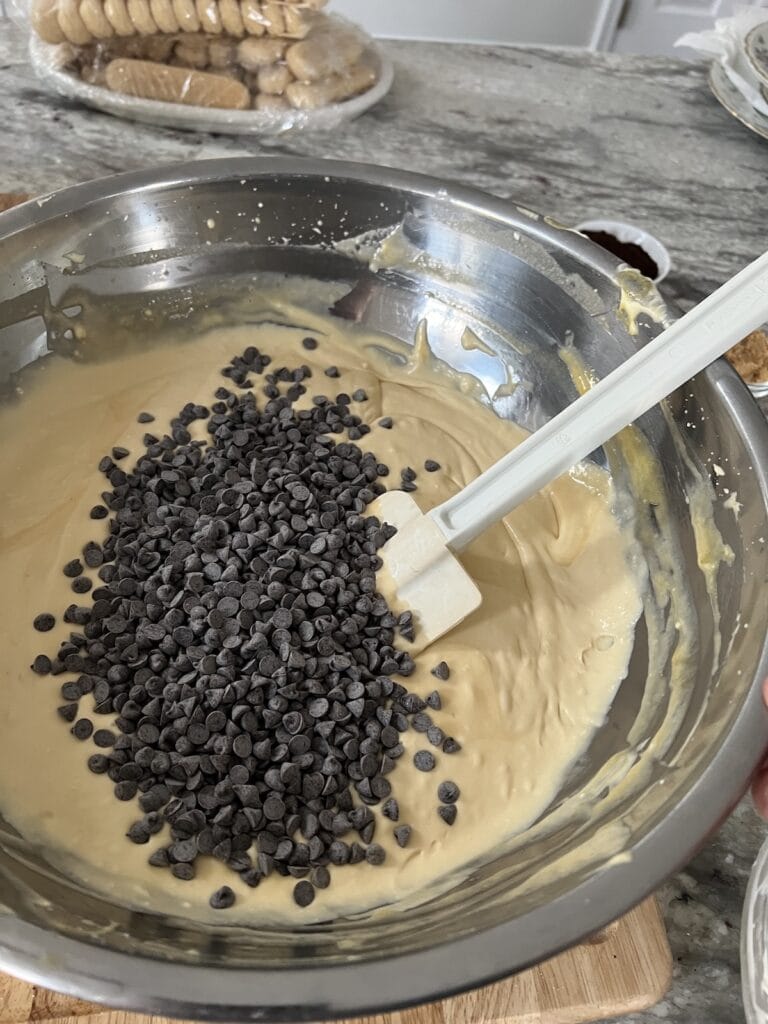
- Then stir in the chocolate chips.
- Cover and refrigerate the mixture for at least one hour or overnight until well chilled.
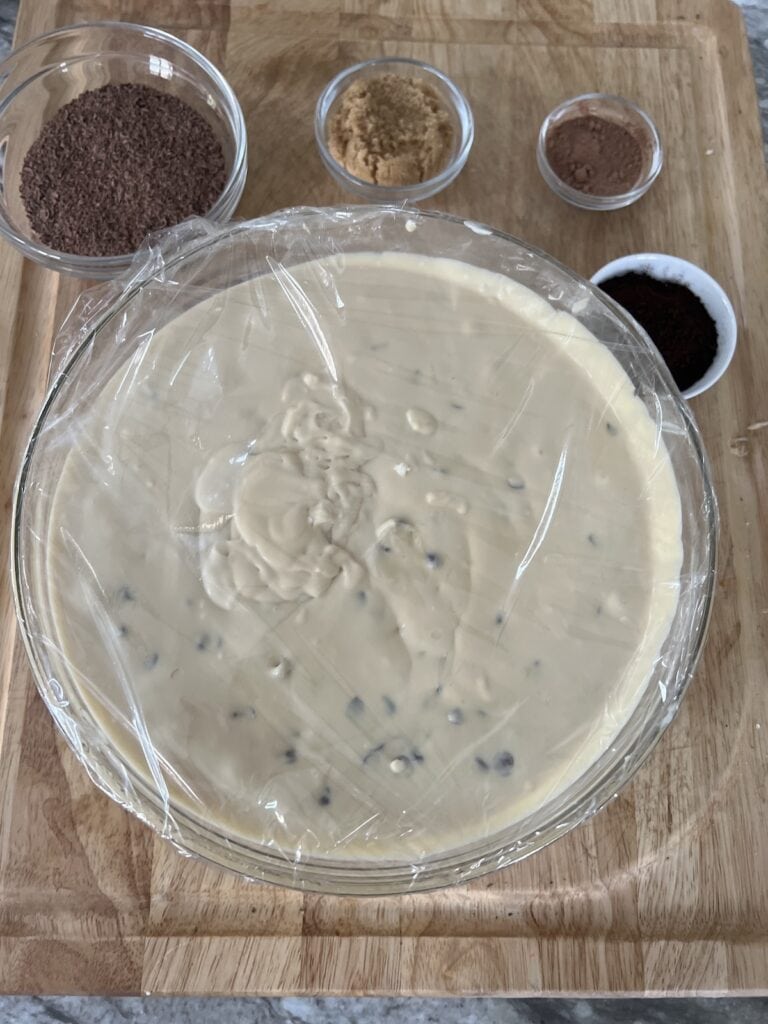
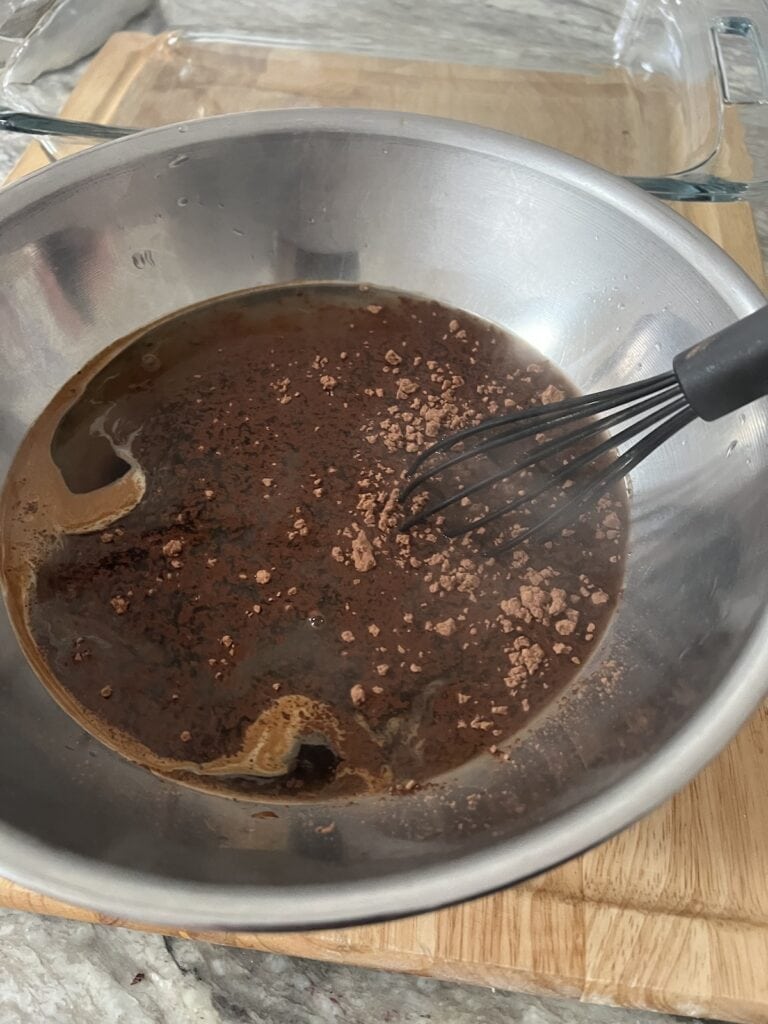
- Prepare the Espresso Mixture: In a bowl, whisk together hot water, espresso powder, brown sugar, and cocoa powder until fully dissolved. Let the mixture cool slightly before using.
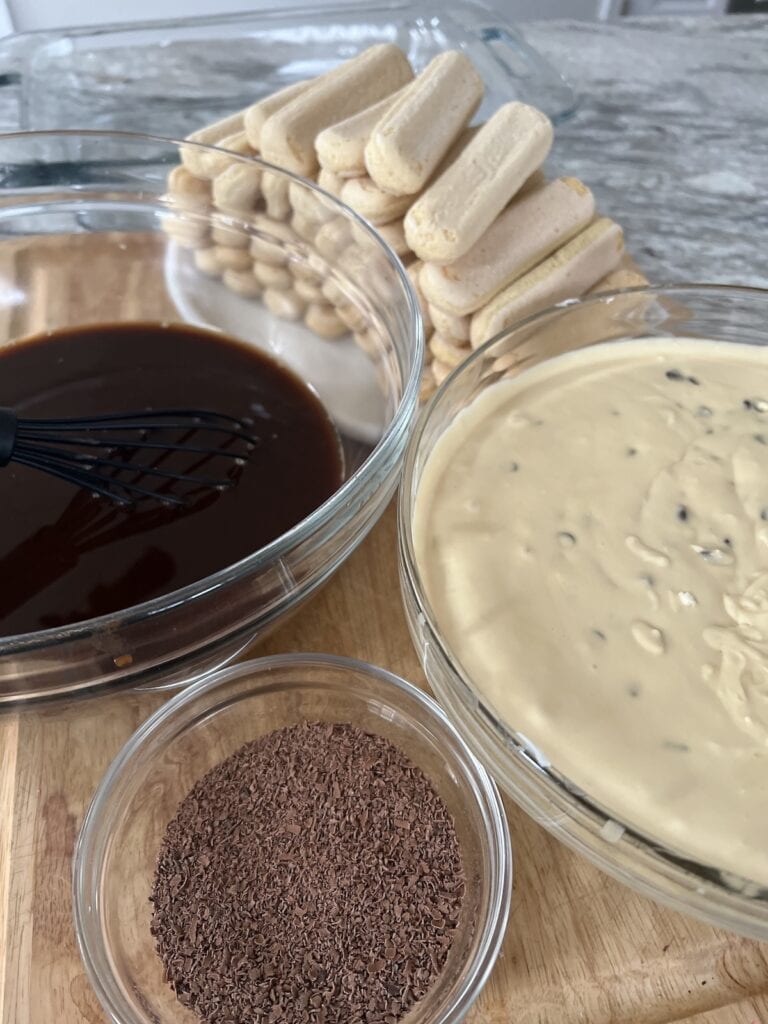
- Dip the Ladyfingers: Quickly dip each ladyfinger, one-by-one, into the espresso mixture just a second or two on each side. They should be slightly soaked and not soggy.
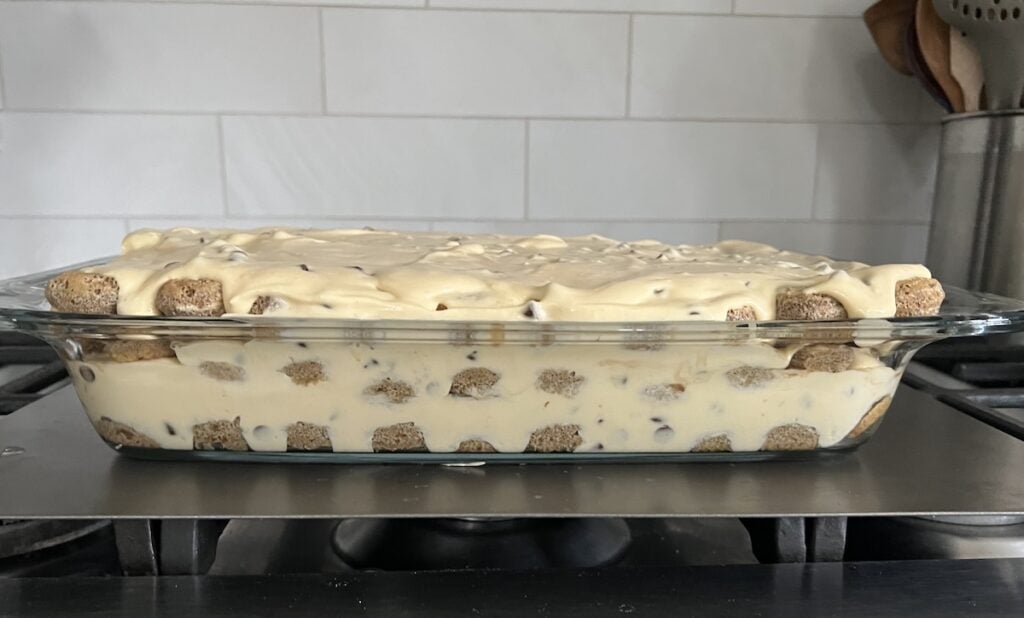
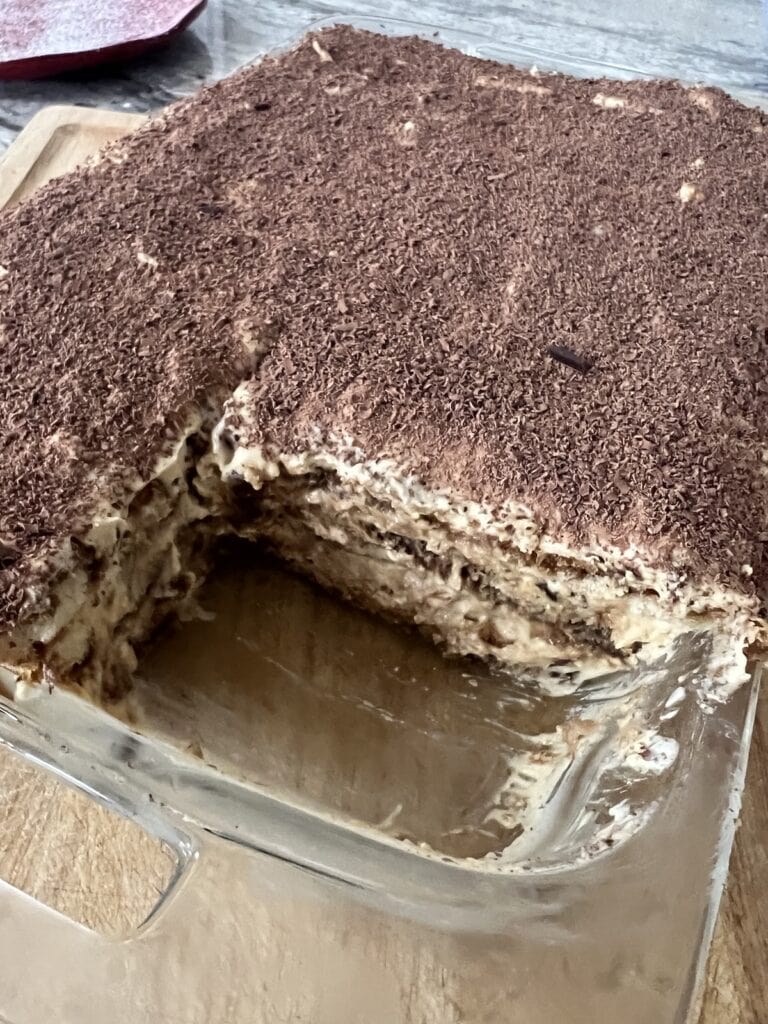
- Build the Layers: Arrange a layer of dipped ladyfingers on the bottom of a 13×9” dish. Spread about 1/3 of the mascarpone mixture evenly over the top.
- Repeat the process for two more layers, finishing with a smooth layer of custard on top
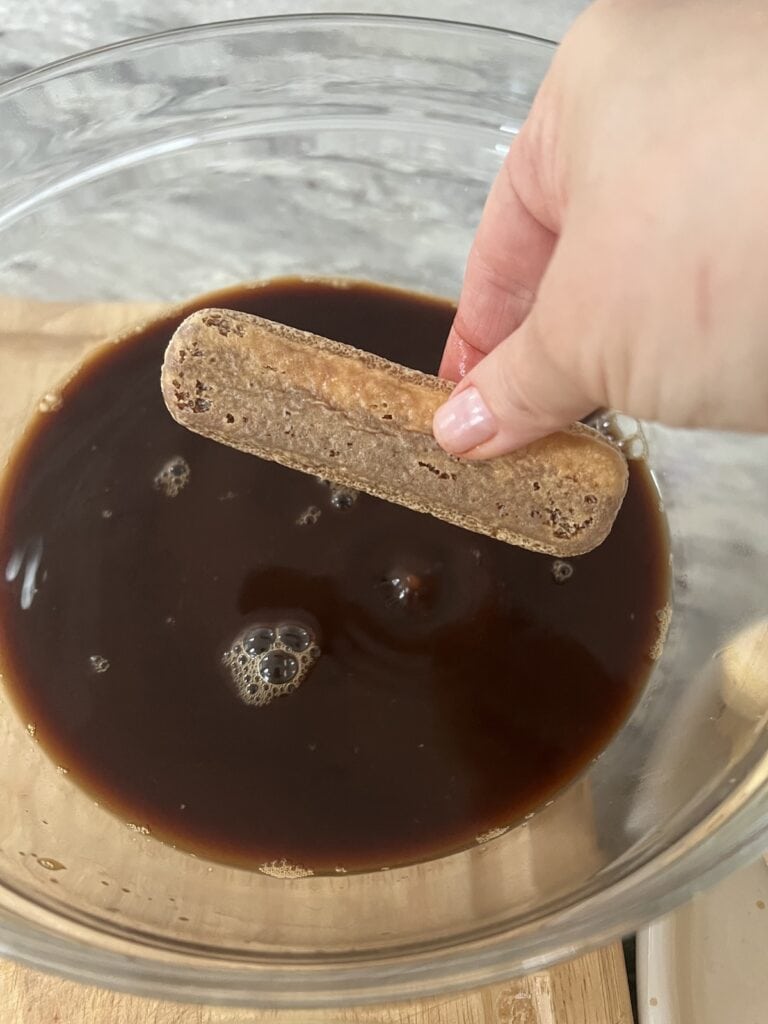
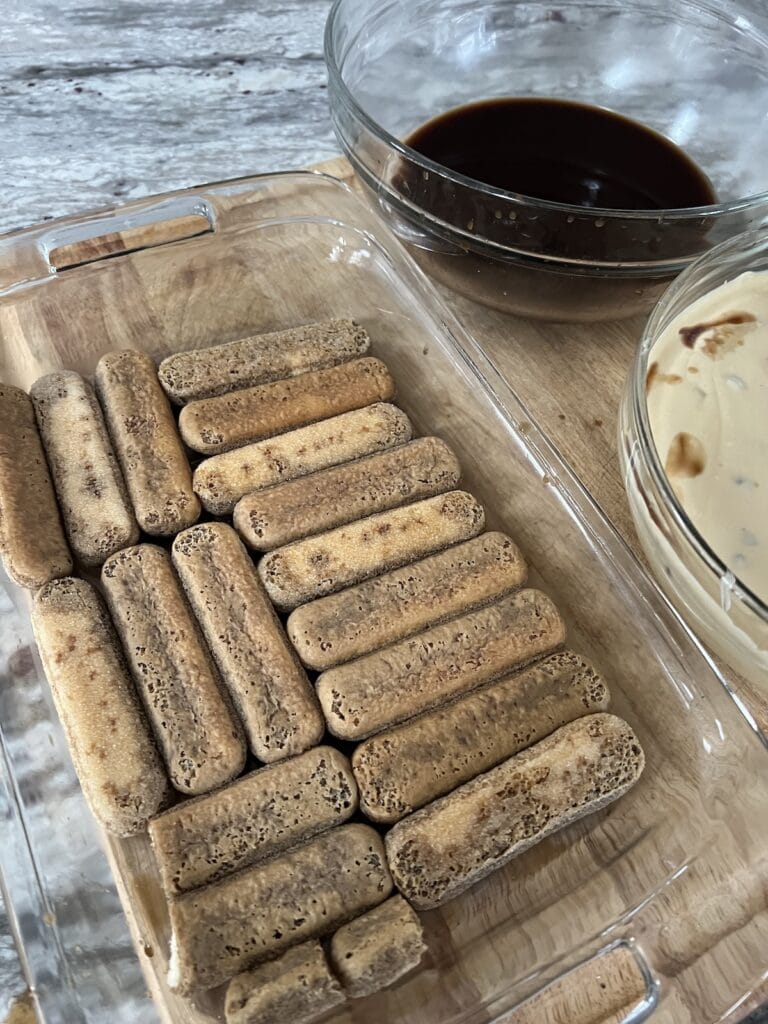
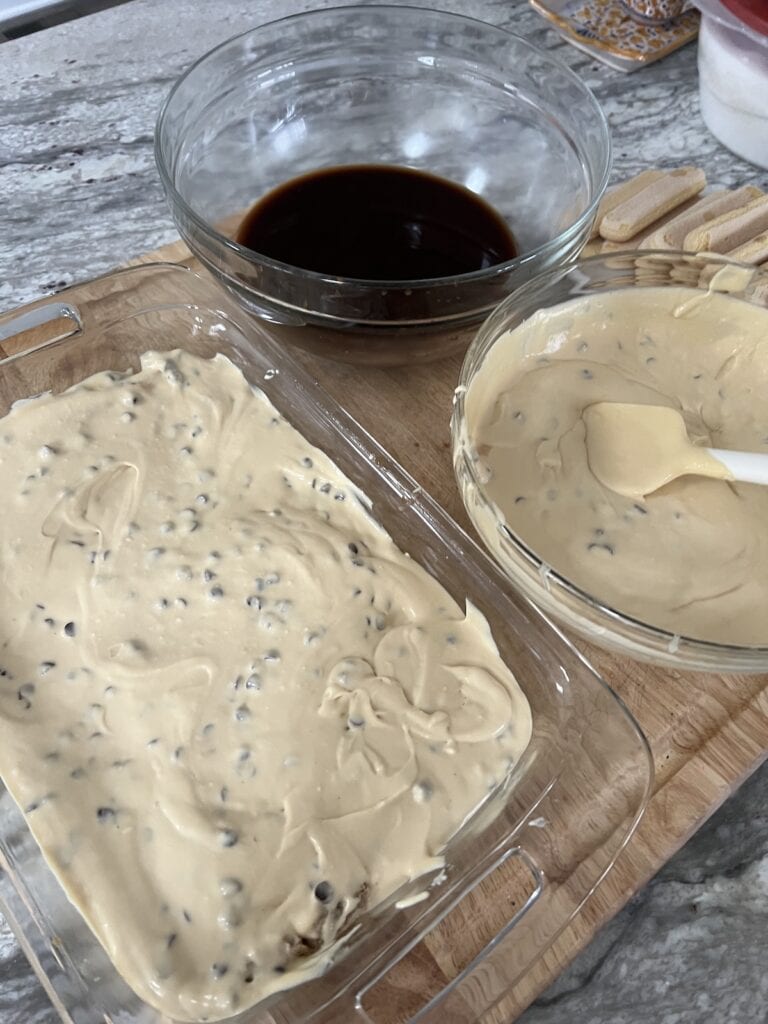
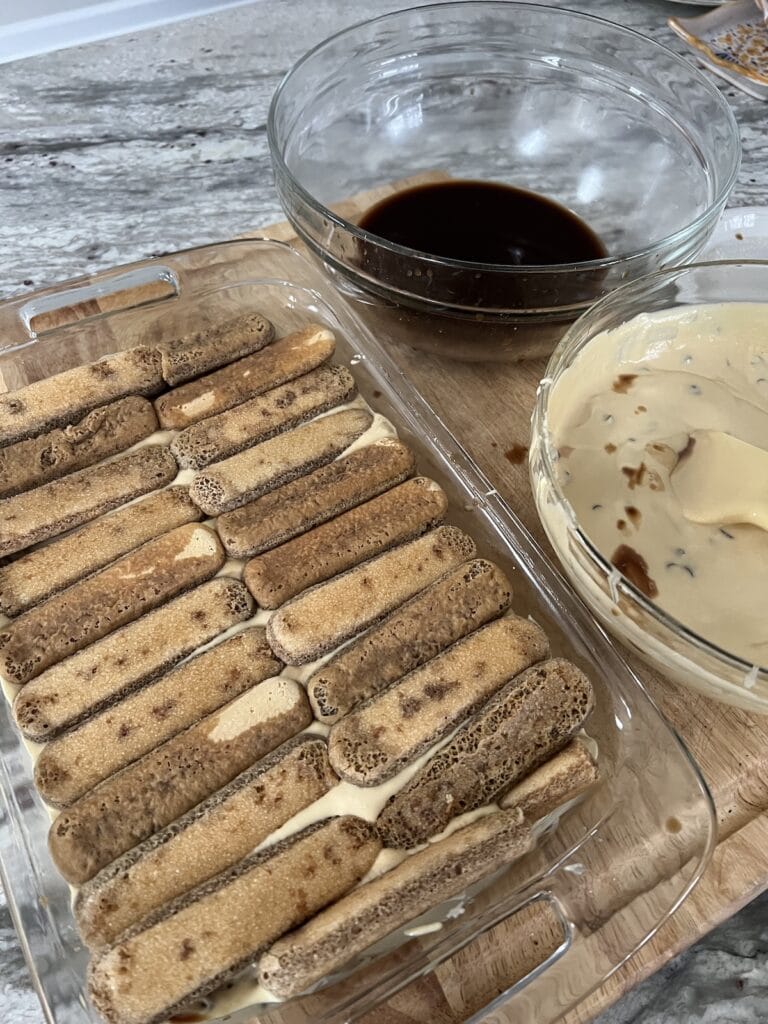
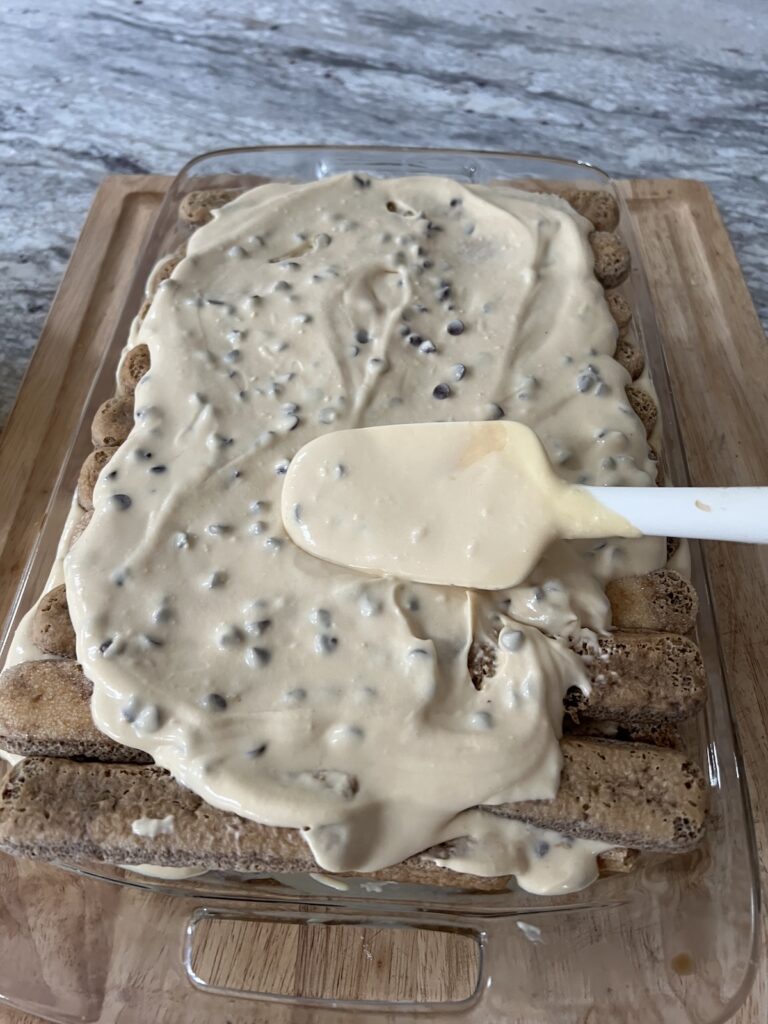
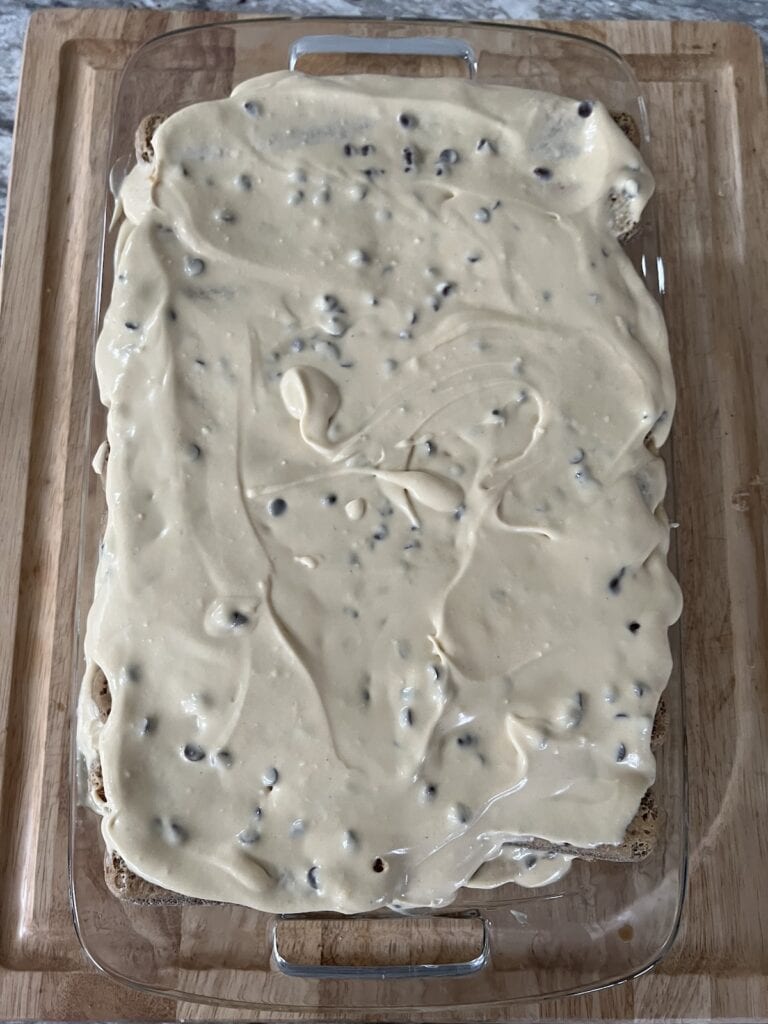
- Chill the Tiramisu: Refrigerate uncovered for two to three hours then cover and chill for at least five more hours or overnight. This resting time is essential for the flavors to develop and the texture to set properly.
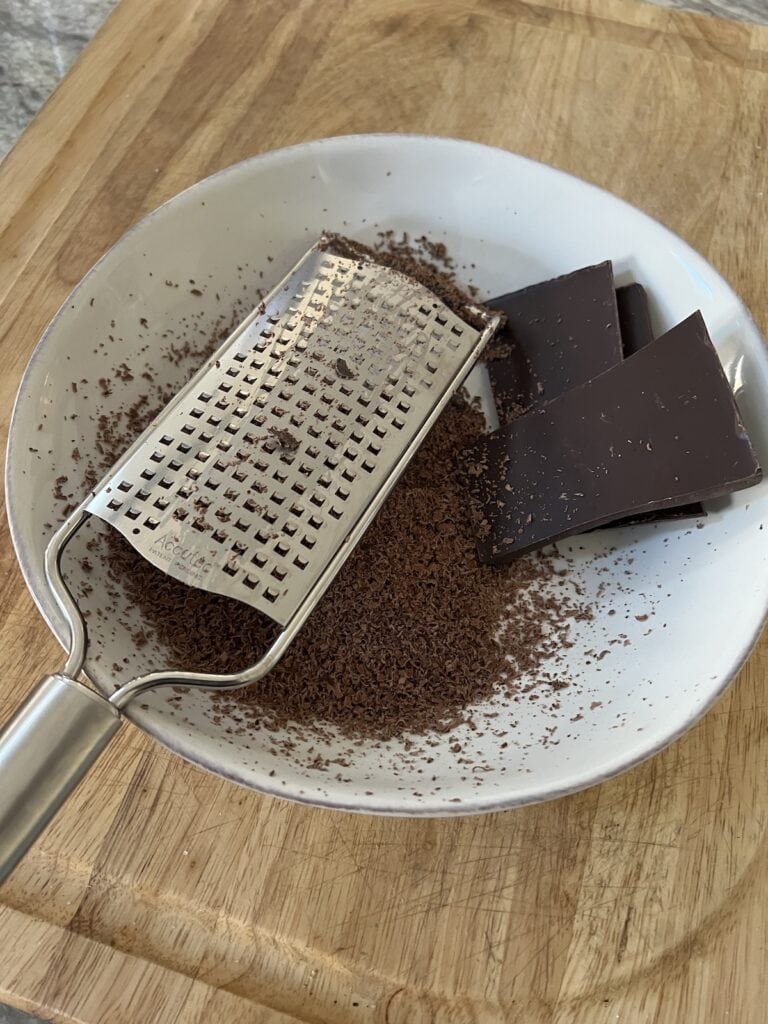
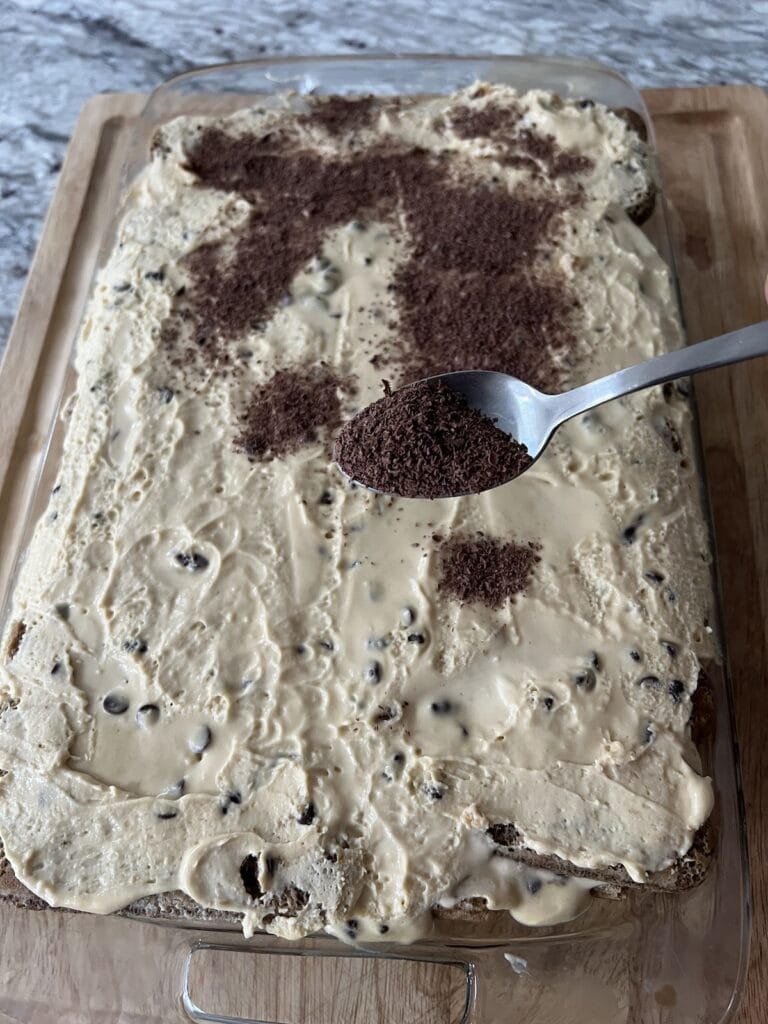
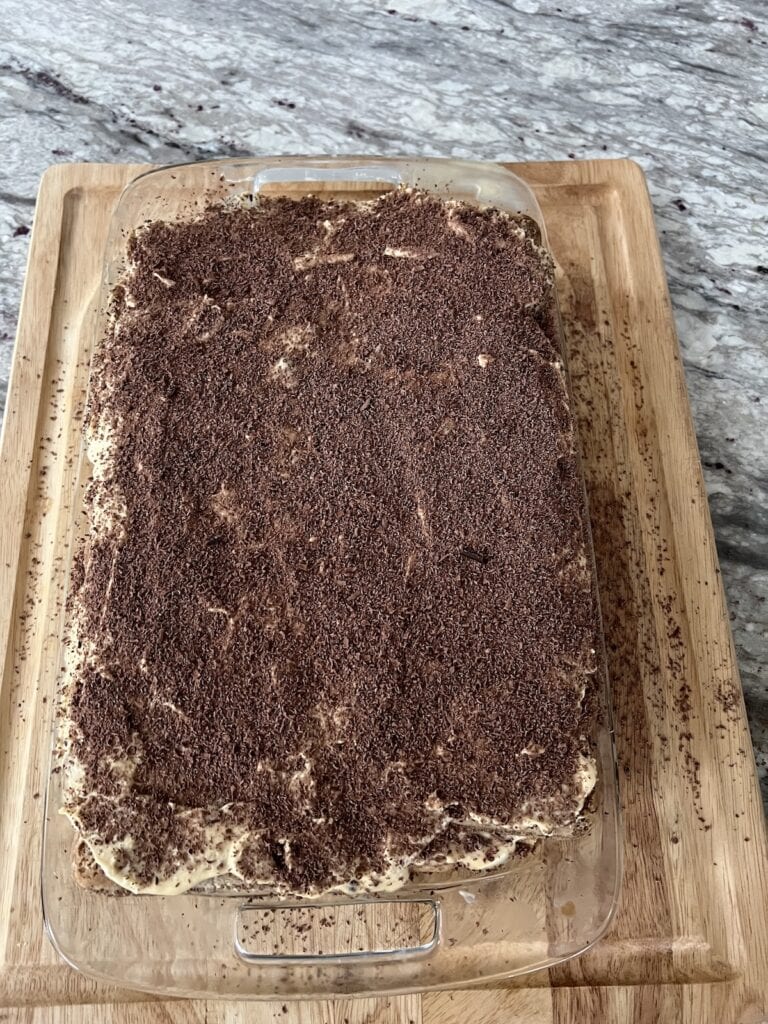
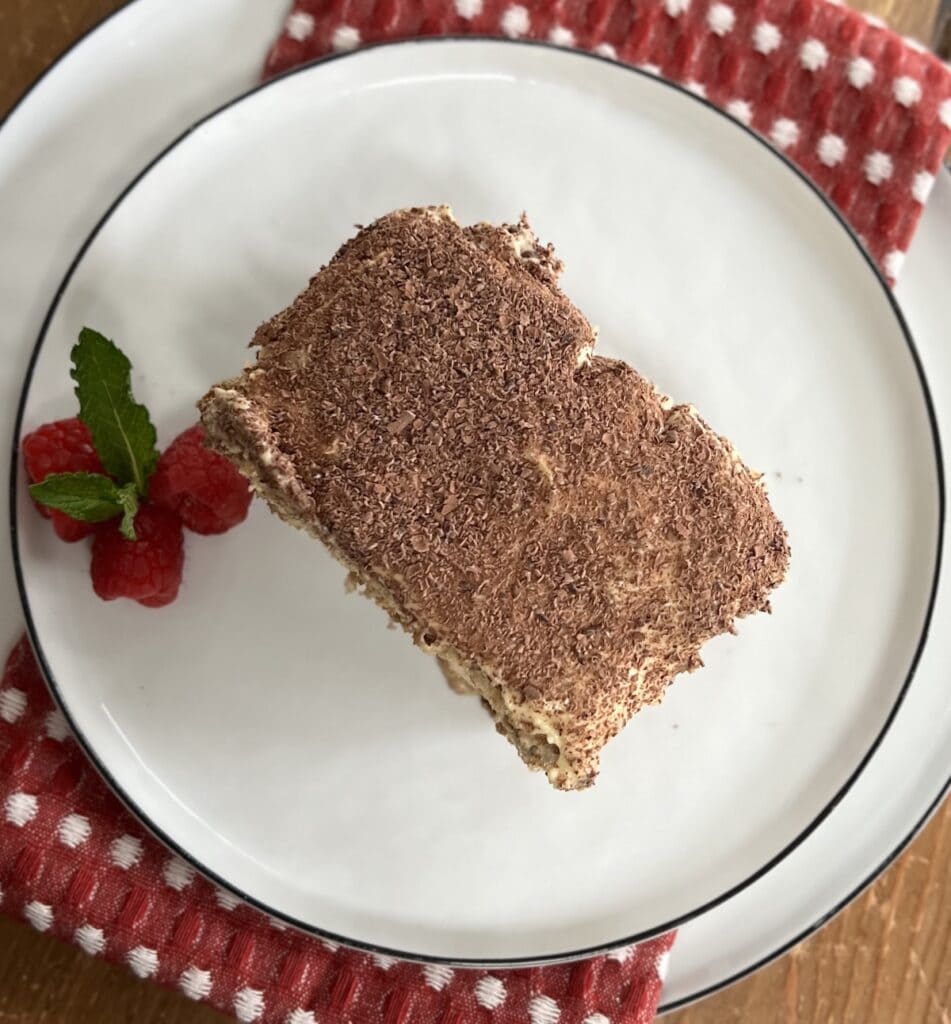
- Final Topping and Serve: Just before serving, top with freshly grated chocolate, scoop with a large spoon and served chilled. Enjoy!
Common Tiramisu Substitutions
- For an alcohol-free version of this tiramisu, use espresso in place of the coffee liqueur.
- To use freshly made espresso (or really dark, strong coffee) in place of the espresso powder, substitute 2¼ cups of the 3 cups simmering water called for in the recipe with hot, just made espresso or strong coffee. (More details in Recipe Notes below.)
- Mascarpone: Although I do not recommend using a substitute for mascarpone, some people may not have access to this ingredient. If this is the case, here’s an option for a mascarpone substitute made with cream cheese, heavy cream and butter.
Recipe Variations
- Alcohol-Free: use espresso in place of the coffee liqueur
- Berry Tiramisu: substitute mixed berries in place of the chocolate chips or include fresh berries in the layers; consider a berry liqueur such as Chambord.
- Pumpkin Tiramisu: use bourbon instead of coffee liqueur and add some pumpkin puree and warming spices (cinnamon, ginger, nutmeg, clove) to the custard. Eliminate the chocolate chips.
Frequently Asked Questions
As tiramisu is a fresh dessert, I suggest making it 1 to 2 days at most before serving. This also gives the layers time to chill, set and develop flavor.
In this recipe, the eggs are gently cooked and get up to 160°F when making the sabayon custard. They are cooked but do not get as cooked as you may be used to.
If you’re skittish about using raw eggs, consider buying and using pasteurized eggs. Alternatively, you can pasteurize the eggs by holding them in 140° water for three minutes, then shock it in an ice bath, peel it and proceed with the recipe.
Problems making tiramisu often arise if overheating the custard (eggs will become scrambled), overmixing the mascarpone into the custard (making the mixture runny or grainy), soaking the ladyfingers too long in the coffee mixture (making them soggy) and/or not chilling the dessert long enough which will affect its flavor and structure.
Follow the recipe below exactly and all will be great!
Yes, you can freeze tiramisu for up to 3 months in an airtight container. I recommend portioning it out before freezing so that you can have a sweet treat for one anytime! Just let it thaw completely in the refrigerator before enjoying. Expect that the dessert will give off some moisture as it thaws. Top with extra shaved chocolate or some cocoa powder if you wish before serving.
No. Authentic tiramisu relies on mascarpone, eggs and sugar for its creamy texture. Heavy cream and cream cheese are more common in modern shortcut versions.
What Makes This Tiramisu Authentic?
At its core, this recipe stays true to the traditional Italian method:
- No heavy cream
- Zabaglione (cooked custard) vs. raw eggs
- Real mascarpone cheese
- Lots of real coffee flavor (espresso + liqueur)
TOP TIPS for Italian Tiramisu
- Custard: When making the zabaglione custard, it’s important to not let the mixture get too hot or the eggs will scramble and then you’ll need to start over. Place the bowl over lightly simmering water and move it off for a couple seconds if it’s becoming too hot.
- Safety: And, since you are basically whisking over a heating flame and simmering water, hold the rim of the bowl with a potholder or oven mitt.
- Baking Dish: This recipe is the perfect amount for a 13x9x2” (3 quart) baking dish and makes a large portion that will serve at least 12 people (depending on portion size).
- You can use a slightly large pan and will have a shorter tiramisu.
- Likewise, you can divide up this recipe into two smaller dishes if desired.
- LadyFinger Dunking: Dip ladyfingers briefly — too long and they’ll collapse; too short and they’ll be dry.
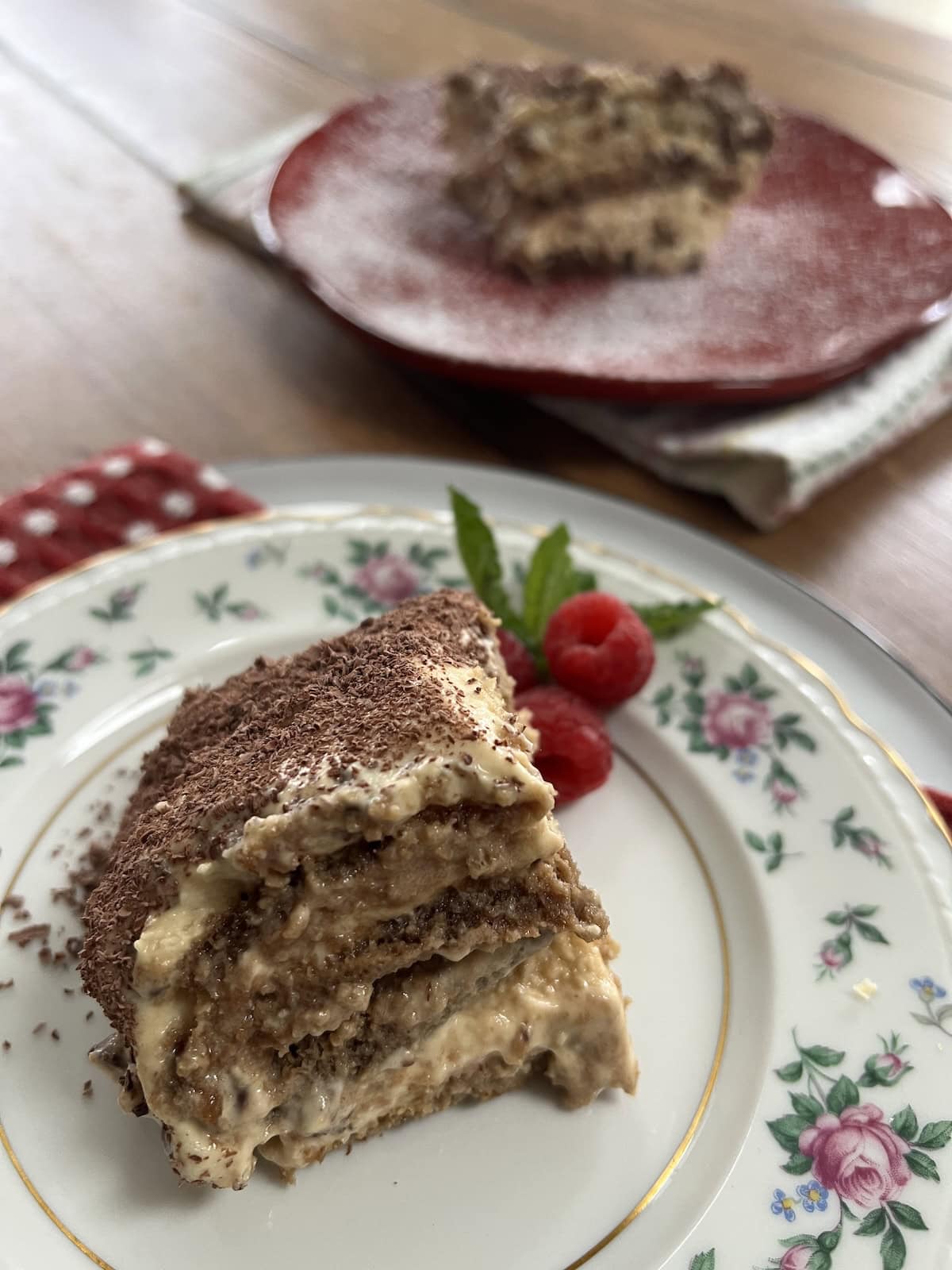
- Slicing: This is more of a rustic, use-a-large-spoon-to-serve-it kind of dessert. Embrace the non-uniformity!
- Serving: Tiramisu is perfect on its own and even more delicious (and beautiful!) with some fresh assorted berries and a sprinkling of powdered sugar.
- If you’d like to prepare individual servings, build the tiramisu layers in glasses or glass dishes for portion control and presentation.
- Store tiramisu in the refrigerator and refrigerate leftovers immediately. They’ll last up to 4 days in the refrigerator and up to 3 months in the freezer in an airtight container.
Authentic Italian Tiramisu Recipe

Video
Equipment
- 13x9x2” (3 quart) Baking Dish ideally, glass
Ingredients
- 6 large eggs
- 1 cup granulated sugar
- ½ cup coffee liqueur, (See Notes.)
- 2 pounds mascarpone cheese, (about 4 cups)
- 1 cup tiny chocolate chips, squares or bits (semisweet or milk chocolate)
- 3 cups simmering water
- 3 Tbsp light brown sugar
- 3 Tbsp instant espresso powder
- 1 Tbsp unsweetened cocoa powder, a.k.a., “baking cocoa”
- 2 (7-ounces) packages ladyfinger cookies, a.k.a., savoiardi (about 60 biscuits or 1pound)
- ½ cup grated bittersweet chocolate, (See Notes.)
- Optional Garnish: powdered sugar, fresh berries
Instructions
- Gather all ingredients, tools and equipment. FYI, it’s best to grate and sprinkle the chocolate on the finished, chilled tiramisu just before serving.(Please see the section above in the blog post for Step-By-Step instructions with photos.)
- Make Zabaglione:Gather a pot and a bowl, (copper, glass or stainless steel) that will fit securely over the pot so that you can whisk or use a hand mixer.
- Then, fill the pot about 2/3 with water and bring it to a simmer. Essentially, you are making a double-boiler.
- Place the eggs and sugar in the bowl and then place the bowl over the simmering water in the pot. Start whisking it immediately with either an electric hand mixer (easier) or a balloon whisk (more challenging and takes longer). Do not let the bowl touch the simmering water or get too hot. (Once you add sugar to eggs, you must start whisking immediately or the sugar can harden the eggs.)NOTE: For safety, hold the rim of the bowl with a potholder or oven mitt.6 large eggs, 1 cup granulated sugar
- Beat the egg/sugar mixture about 7 minutes or until the mixture has approximately tripled in volume and some loose peaks are formed. Be careful not to get the custard too hot or the eggs will scramble and you’llneed to start over.
- When finished, the mixture should be pale yellow, frothy, thick and feel warm to the touch.o Another way to tell if the zabaione is done is to lift the whisk or beaters out of the bowl. If the custard falls back into the bowl in thick, slow ribbons that hold their shape for a moment, it’s ready!o Alternately, if available, insert a stem thermometer into the custard and check its temperature. When it reads 160℉ it’s done.
- Then, remove the bowl from over the pot and add the liqueur 1 Tablespoon at a time while whisking/beating continuously until the mixture is cool.½ cup coffee liqueur
- Fold In Mascarpone and Chocolate Chips:Once the custard has cooled, fold in the mascarpone and beat it until well-blended.Then, stir in the chocolate chips/bits/squares until well-incorporated.2 pounds mascarpone cheese, 1 cup tiny chocolate chips
- Chill Custard:Cover and refrigerate for at least one hour or until the mixture iswell-chilled. It can also chill/rest overnight.NOTE: You can also quickly chill the custard if you’re short on time. Put thebowl of warm custard into a larger bowl of ice water right after cooking andkeep whisking as it cools,
- Make Coffee Mixture:Carefully combine 3 cups simmering water, brown sugar, espresso powder and cocoa powder in a bowl. Whisk until everything is dissolved and well-combined.Let this mixture cool a bit.3 cups simmering water, 3 Tbsp light brown sugar, 3 Tbsp instant espresso powder, 1 Tbsp unsweetened cocoa powder
- Assemble Layers/Build Tiramisu:Once the custard and coffee mixture have cooled, gather them together with the 13”x9”x2” (or similar) baking dish and ladyfingers.
- Whisk the coffee mixture, stir the custard and then start building the tiramisu.
- Dip the ladyfingers, one by one, quickly in the espresso mixture. Do not soak them long or they will get soggy!2 (7-ounces) packages ladyfinger cookies
- Then begin to arrange them in the bottom of the baking dish. (See photos above.)
- Completely cover the bottom of the dish and cut the biscuits to fit if necessary.
- Next, evenly spread about 1/3 of the mascarpone mixture over the coffee-soaked biscuits.
- Continue dipping and layering for two more layers and end with a mascarpone custard layer. There should be a total of 3 layers each of both custard and biscuits.
- Smooth out the top custard layer evenly with a spatula.NOTE: If using a 13x9x2” baking dish as suggested, the dish will be filled to the top. If you prefer, use a deeper or slightly larger dish.
- Chill:Refrigerate the tiramisu uncovered for 2-3 hours, then cover it completely with plastic wrap. Return it to the refrigerator for at least another 5 hours or overnight.NOTE: By chilling the tiramisu a bit uncovered,the custard solidifies a bit making it easier/less of a mess to wrap in plastic.
- Dust with Chocolate and Serve:After refrigeration, carefully remove the plastic wrap. If any of the custard has been pulled up/off while uncovering, just add it back to the top and smooth it out with a spatula.
- Just before serving, sprinkle the grated chocolate all over the top surface of the tiramisu.½ cup grated bittersweet chocolate
- Cut it into squares or scoop it out with a large spoon and transfer to serving plates. Serve chilled and garnish with a little powdered sugar and fresh berries, if desired. Buon Appetito!
Notes
- The total time noted above indicates active prep time and does not include the resting and chilling time fyi.
- Yield and Serving Sizes:
-
- This recipe is the perfect amount for a 13x9x2” (3 quart) baking dish and makes a large portion that will serve at least 12 people (depending on portion size).
- You can use a slightly large pan and will have a shorter tiramisu.
- Likewise, you can divide up this recipe into two smaller dishes if desired.
- You can cut the recipe in half as well as the baking dish size for a smaller yield.
- Custard: When making the zabaglione custard, it’s important to not let the mixture get too hot or the eggs will scramble and then you’ll need to start over. Place the bowl over lightly simmering water and move it off for a couple seconds if it’s becoming too hot.
- Coffee liqueur is my first (and obvious) choice for this recipe, but you can also use hazelnut or walnut liqueur or brandy. Each liqueur will contribute its own unique flavor to the finished dish.
- For the grated bittersweet chocolate, I used half of a 60%-cacao dark chocolate (4-ounces) bar and grated it on a fine paddle grater. You can also use the fine grating side of a box grater.
- Lady fingers/savoiardi are sometimes referred to as champagne biscuits.
- LadyFinger Dunking: Dip ladyfingers briefly — too long and they’ll collapse; too short and they’ll be dry.
- Instant espresso powder packs a ton of coffee flavor and is easy to always have on hand and to use here and in lots of coffee-flavored desserts. However, if you prefer to use freshly made espresso (or really dark, strong coffee) in place of the espresso powder, you can do so. Depending on the brand (I used Ferrara brand), 3 Tbsp espresso powder is roughly the equivalent of 18 ounces, or 2¼ cups espresso. If you decide to go this route, you will need to substitute 2¼ cups of the 3 cups simmering water called for in the recipe with hot, just made espresso.
- Once made, tiramisu must be stored in the refrigerator and will last up to 4 days. Leftovers should be refrigerated as soon as possible.
- You can also freeze tiramisu for up to 3 months in an airtight container. I recommend portioning it out before freezing so that you can have a sweet treat for one anytime! Just let it thaw completely in the refrigerator before enjoying. Expect that the dessert will give off some moisture as it thaws. Top with extra shaved chocolate or some cocoa powder if you wish before serving.

love soup?
Get My Cookbook!
Ditch the dish and embrace the bowl with Soupified: Soups Inspired by Your Favorite Dishes!
Available in ebook, paperback and hardcover.

I’ve made tiramisu so many times and it always turned out either too sweet or too heavy, so I’m really curious to see how this no-cream version lets the mascarpone and espresso do the talking. Going to give it a try this weekend for my parents — they’ll be the real test. More at https://baxian-movie.com/
The chocolate chips are a standout EVERY TIME!