
This post may contain affiliate links or sponsored content. That means if you click on my link and buy something, I will earn a small commission from the advertiser at no additional cost to you. For more information, see our disclosure policy.
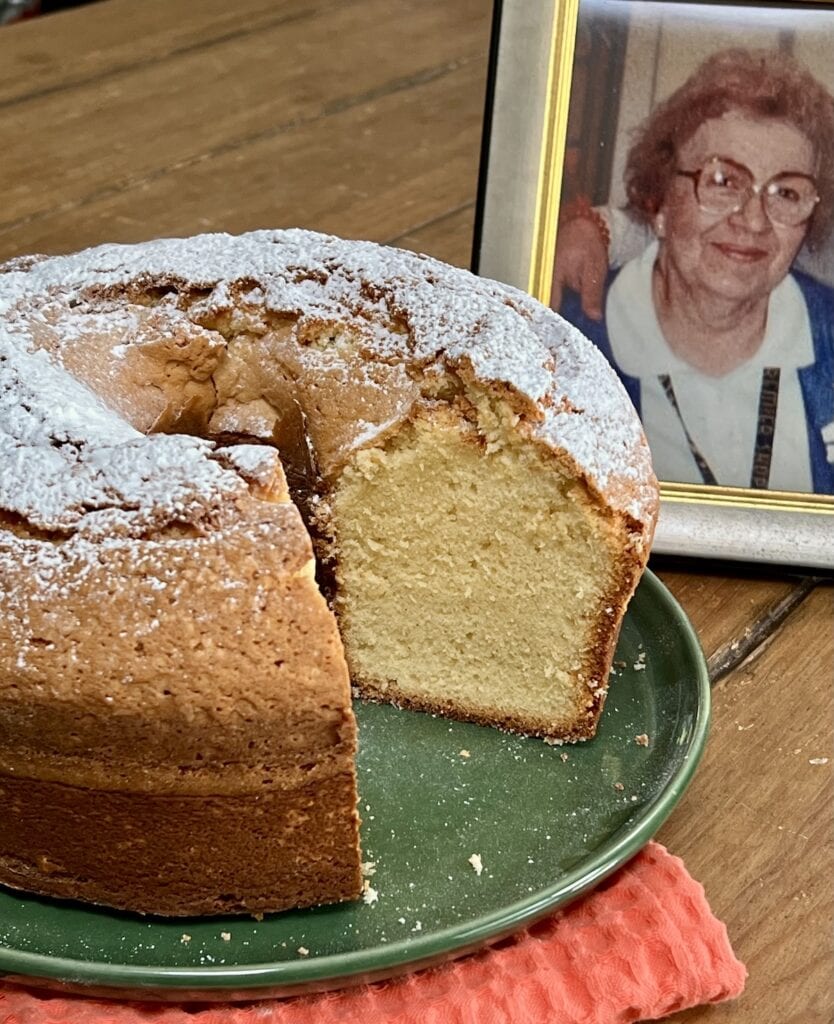
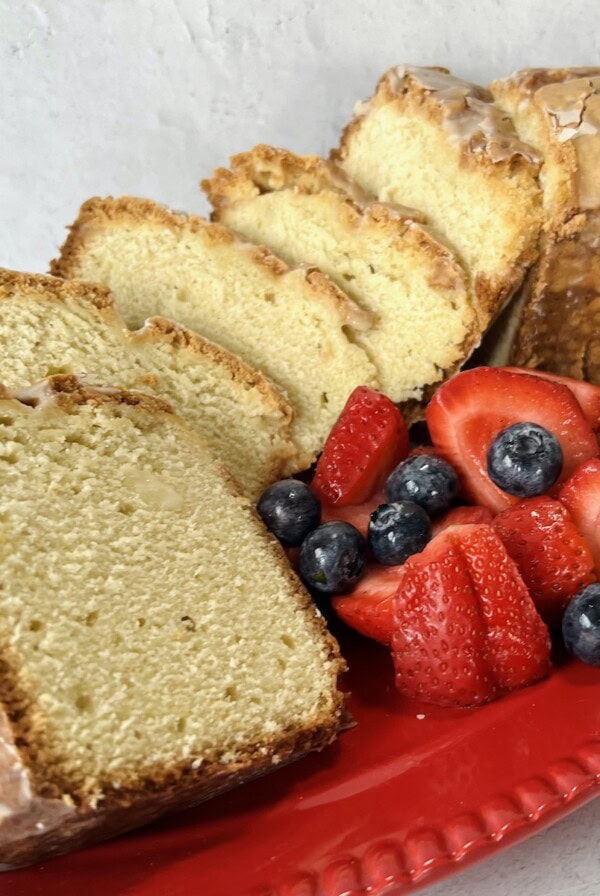
Old Fashioned Sour Cream Pound Cake is one of those cozy, nostalgic desserts that always hits the spot. It’s rich, moist and buttery with a characteristic dense but tender texture. Perfect for any occasion, this classic dessert has graced my family’s tables for generations.
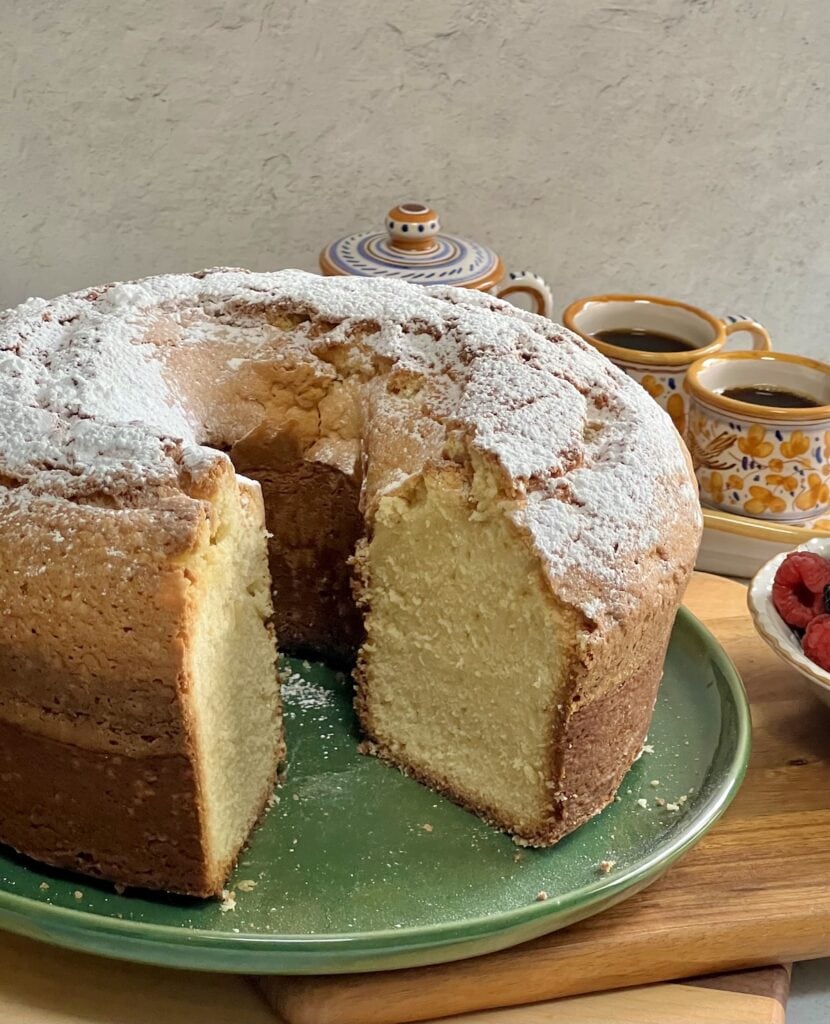
Did you know that pound cake was so named for its original recipe of one pound each of butter, eggs, flour and sugar?
And, that it’s actually considered one-of-if-not-the densest types of cakes around?
But dense does not mean heavy and bad here. When it comes to pound cake, it means true bliss!
There’s just something inherently comforting about a slice of old fashioned sour cream pound cake. Its golden crust, moist crumb and subtle tang make it equally perfect for casual afternoons with coffee, festive brunches, holiday gatherings or even elegant dinner parties.
Quite honestly, pound cake is a perfect, simple dessert. Rich and buttery with a nostalgic flavor, crusty top and tight moist crumb, it’s hearty, no-fuss and requires no decoration.
And, it’s a very easy recipe that can be made with ingredients you likely have on hand.
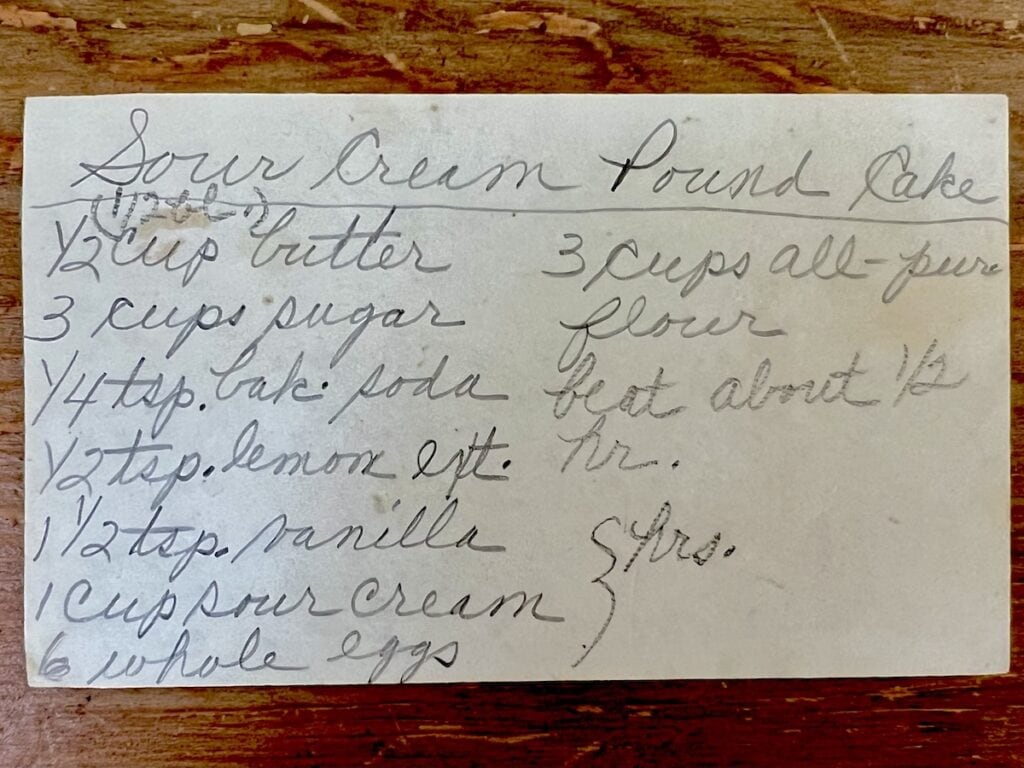

This old-fashioned sour cream pound cake recipe came from my mom and, along with her cream cheese pound cake, was a staple in our house growing up. It strikes a lovely balance of tanginess, sweetness and richness. A great treat to have on hand anytime friends and family would stop by!
Table of Contents
- Why Sour Cream Makes All the Difference
- Serving Sour Cream Pound Cake + Leftovers
- Main Ingredient Notes
- Baking Science Behind This Recipe
- How to Make Sour Cream Pound Cake
- Frequently Asked Questions
- What Could Go Wrong?
- Troubleshooting Table/Summary
- Best Pan for Making this Pound Cake
- Pan and Bake-Time Chart
- Recipe Variations and Substitutions
- Storage and Freezing
- TOP TIPS for Sour Cream Pound Cake
- Old Fashioned Sour Cream Pound Cake Recipe
Why Sour Cream Makes All the Difference
Sour cream is a subtle hero in this recipe because:
- Moisture and Fat: It keeps the dense cake tender and moist without weighing it down or thinning out the batter.
- Adds Tangy Flavor: Balances the sweetness and adds tanginess.
- Acidity: Sour cream reacts with the baking soda to help the cake rise gently and tenderize the crumb.
By the way, if you love sour cream, check out my Sour Cream Topped Cheesecake recipe–incredibly delicious!
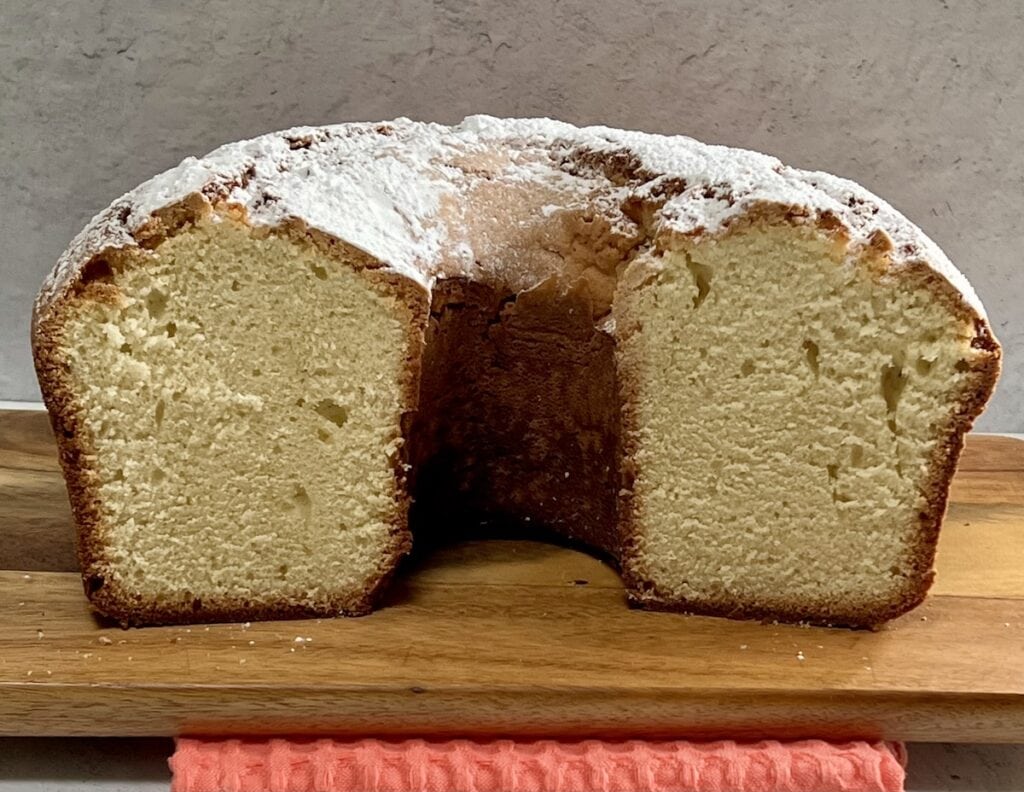
Compared to milk, water or other liquids, sour cream yields a tender, rich texture that feels indulgent yet never heavy. I also make a cream cheese pound cake and have even added Greek yogurt and buttermilk to pound cake recipes in the past.
A perfectly baked, tender and flavorful Sour Cream Pound Cake is a timeless dessert–rich, tender and versatile. Savor it just as it is any day of the week, or dress it up with a glaze, fresh berries and whipped cream for something a bit more special. No matter how you serve it, it’s sure to impress. Mangia bene!
Serving Sour Cream Pound Cake + Leftovers
I love this recipe plain. It’s perfectly sweet and satisfying as is, but I did include an optional glaze recipe below for when you’re in the mood for something a little bit sweeter!
Having said this, it pairs beautifully with whipped cream, fresh fruit, chocolate or caramel sauce, and ice cream, or even jam! It’s very versatile. I’ve even had cousins assemble a “pound cake bar” at showers with lots of different topping options–so fun!
Believe it or not, when we had pound cake in the house back in the day, my sister and I would sometimes toast a slice of it and then spread it with butter. I know–seriously decadent indeed! This works best when the cake is not glazed, fyi.

Main Ingredient Notes
- Unsalted Butter (at room temp): The base of the cake’s flavor and structure. Cream the butter with sugar for a light, airy texture. Softened butter or shortening can be used to grease the cake pan,
- Sugar: Use granulated or cane sugar for sweetness and structure. While 3 cups may seem like a lot of sugar, this is a very large, dense cake and this amount is needed to sweetness and properly cream the butter and cream cheese. (If you reduce the sugar in the recipe, the cake could be dry.)
- Eggs (room temp):Eggs are the binder and workhorse in the recipe. They also provide lift, density, structure and richness.
- Sour Cream (full-fat, room temp): Enhances moisture, tenderness, tangy flavor and texture of the cake with subtle leavaning help.
- All-Purpose Flour: The base of the batter. Provides structure; can swap with cake flour for a slightly lighter crumb.
- Vanilla and Lemon Extracts: Flavor enhancers; almond can replace lemon or all vanilla can be used.
- Baking Soda: To help the cake rise, especially with acidic sour cream. While baking soda is not in the original pound cake recipe (a.k.a., the million dollar pound cake), a small bit here helps the crumb/texture in this recipe.
- Salt: Just a little bit is in the recipe for flavoring, to enhance the other flavors in the cake and to balance sweetness. If you’re using salted butter, you can skip the salt in the recipe.

Baking Science Behind This Recipe
As a trained chef, I love sharing the secrets behind any recipe–techniques, timing, ingredients. All of these things can transform a simple concept into something unforgettable.
Here, you’ll not only learn how to bake a flawless Sour Cream Pound Cake but also understand the why behind its rich texture with troubleshooting tips, recipe variations and storage methods to make this a dessert you’ll return to again and again.
- Room Temperature Ingredients: Butter, eggs and sour cream at room temp mix more evenly, trapping air for a lighter texture.
- Creaming Butter and Sugar: Incorporates air bubbles, contributes to lift.
- Sour Cream Acidity: Reacts with baking soda, producing carbon dioxide for rise while tenderizing the gluten in the flour.
- Low, Slow Baking: A low temp of 325°F allows for even baking of the dense batter and prevents over-browning before the center is cooked.
- Rest in Oven: Avoids sudden collapse due to temperature shock.

How to Make Sour Cream Pound Cake
- Set the butter, sour cream and eggs out on the counter for 1-2 hours to allow them to come to room temperature before getting started.
- Grease and flour the bottom and sides of a 10” diameter tube cake pan with at least a 16 cup capacity (18 cups is ideal).
- Place a rack in the middle of the oven and remove any racks above it. Preheat oven to 325°F.
Pro-Tip
Room temperature ingredients blend/bond together more easily because they’re warmer, creating a more evenly textured and smoother, velvety batter.


- Place the softened butter in the bowl of a stand mixer and beat on low using the paddle attachment. Gradually increase the speed to medium. Gradually add in sugar and beat until smooth. Scrape the bowl with a spatula.
- Add and beat in vanilla and lemon extracts, baking soda and salt. Then, add sour cream and continue to mix.
- Next, turn the mixer on low and add the eggs two at a time, whipping each into the batter until combined.
- Finally, add the flour while the mixer is off, 1 cup at a time. Beat well and ensure that each cup is mixed in before adding the next.
- Scrape the bowl with a spatula, then continue to beat on high until light and fluffy. Scrape the bowl again.


- Carefully scoop or pour the cake batter into the prepped (greased and floured) cake pan and use a spatula to smooth out the top.
- Then, poke a few “air holes” into the batter with the spatula.
- Transfer the cake pan to a rack in the middle of the preheated 325°F oven and bake for 1½-1¾ hours. Then check the cake’s doneness with a cake tester, thin skewer or thin knife inserted into the center of the cake.
- If it comes out clean with no streaks of batter (a few small crumbs are ok), then the cake is done.
- If there’s clinging batter, continue to bake, testing every 10 minutes or so.
Pro-Tip
Every oven is different, so it’s best to check after 1 hour 15 minutes, but it will likely need more time.


- Once the cake is done baking, turn the heat off, but keep the cake in the oven for 5 more minutes with the oven door propped open. Then, remove the cake from the oven and let it cool. If you have a wire rack, place the pan on it.
- Once the outside of the cake pan is cool enough to touch (20 minutes or so), run a thin knife around the perimeter of the cake, in between the cake and the pan, to loosen it.
- Once the cake is completely cooled, sprinkle some powdered sugar over the cake if you’d like. Or leave it au naturel! Enjoy!
Pro-Tip
Don’t wait too long to turn the cake out. A too-hot cake is too delicate to be removed from the cake pan.
But if the cake is left in the pan too long, condensation may form, potentially causing the cake to steam in the pan and stick, which would not be good.


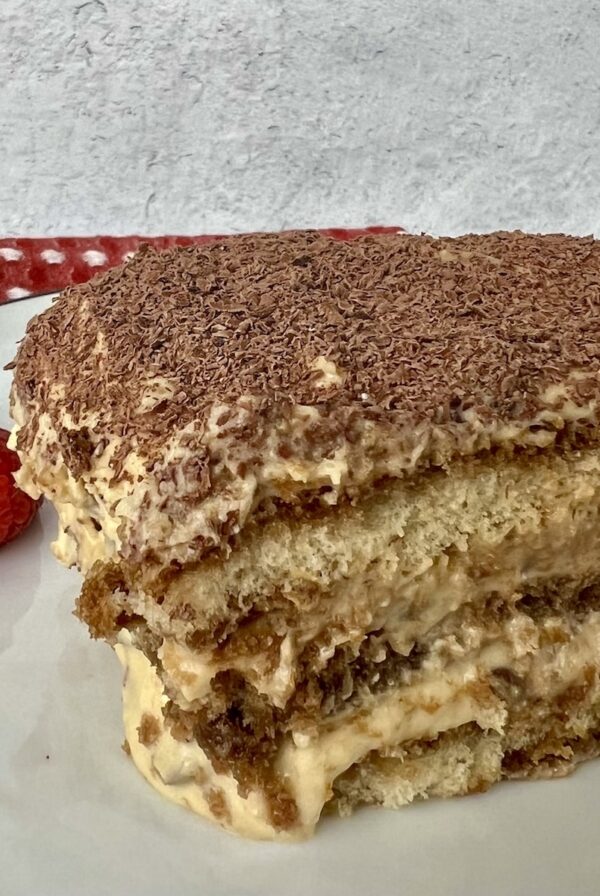
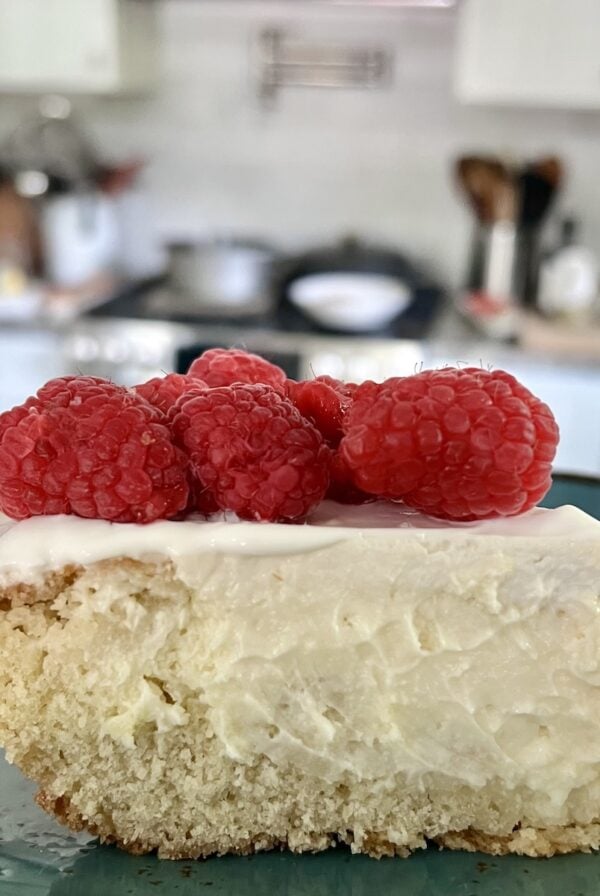
Love sweets? Check out Classic Italian Tiramisu, Sicilian Ricotta Cheesecake and also some of my cookie recipes: Anginetti Cookies, Anise Pizzelles, Czechoslovakian Bar Cookies, Buttery Snowball Cookies and Chocolate Chip Peanut Butter Cup Cookies.
Frequently Asked Questions
This step helps to ensure that the pound cake will not fall. I ran a test to verify this.
Well, no, they don’t actually need the sour cream. But, in addition to the sour cream adding a pleasant tangy flavor to the cake, it helps to keep the cake moist and dense (in a good way).
Adding dairy is actually the secret to a great pound cake, in my humble opinion. I sometimes also make a cream cheese pound cake and have even added Greek yogurt and buttermilk to pound cake recipes in the past. The added dairy definitely contributes to a moist cake without weighing down the crumb. Plus, I love the flavor they add as well!
I (and my mother) have always used all-purpose flour for this recipe, but “cake flour” can also be used successfully. Some say that cake flour rises better and has a more tender crumb. Cake flour should generally be sifted before measuring.
DO NOT use self-rising flour for this recipe. The leavening agents in it will cause the pound cake to rise too much and spill out of your pan, creating a mess. Pound cakes are meant to be dense and only rise minimally as compared to other types of cakes.
What Could Go Wrong?
The most common reason for this or any type of pound cake falling is if you open the oven door too often while the cake is baking or take it out of the oven before it is fully baked (thereby exposing it to cold air before it was baked through).
Leaving the pound cake in the oven for five minutes after it’s done with the door propped open and temperature off helps to ensure that the pound cake will not fall.
NO! Pound cakes are large, dense cakes that take some time to bake properly. Patience is definitely a virtue when baking a good, old fashioned sour cream pound cake!
Higher heat risks uneven baking, cracks and a dry cake. Stick to 325°F for best reults.
Reducing the sugar or butter, baking the cake for too long, using too much flour or cooking in a hotter oven than called for in the recipe can all dry out your pound cake (or ANY cake!). Be sure to use the exact amount of ingredients as indicated in the recipe below.
A crack is normal and my sour cream pound cake always has a cracked top! It’s sign of a proper rise and a normal characteristic of a well-baked pound cake with a dense crumb. Due to the dense batter of the pound cake, it naturally tends to crack on top as the center expands and pushed through the crust during baking.
In fact, a crackless pound cake might indicate it’s too dense or didn’t rise enough.
Be sure to grease and flour the pan meticulously (instructions in recipe below).

Troubleshooting Table/Summary
| PROBLEM | LIKELY CAUSE | SOLUTION |
| Cake Fell | Oven opened too early, underbaked | Bake fully, let rest in oven 5 minutes before removing |
| Cake Dry | Overbaked, reduced butter/sugar, too hot | Follow recipe ratios, check doneness with skewer |
| Cracked Top | Natural rise of dense batter | Not a problem, normal characteristic |
| Cake Stuck to Pan | Insufficient greasing/flouring | Use full greasing and flouring method described |
| Too dense | Overmixed flour, too much flour, wrong pan | Mix carefully, measure flour properly, use correct pan |
Best Pan for Making this Pound Cake
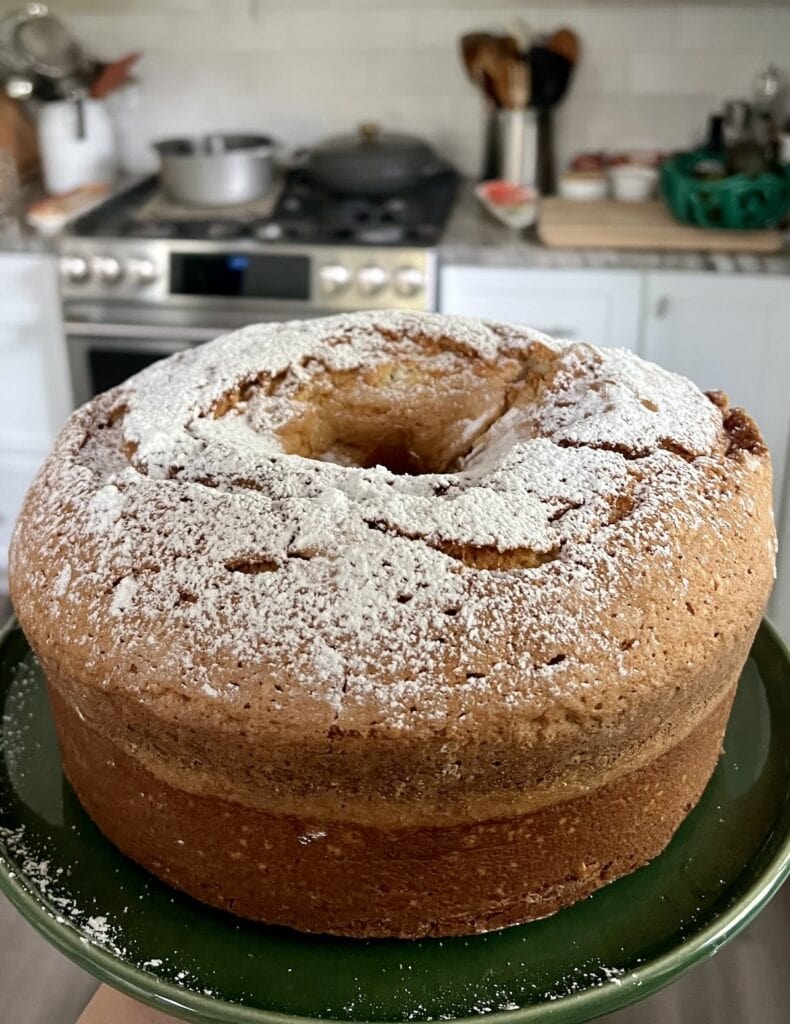
The best cake pan to use for this recipe is a 10” diameter tub cake pan with an 18 cup capacity (although a 16 cup capacity will work). The pan I use is also nonstick making it easier to flip the cake out of the pan, but nonstick is not necessary. I like the straight-sided tube pans as that’s what I grew up with. This type of pan is often referred to as an angel food cake pan.
You can use a bundt pan with a decorative finish as well, but as they tend to be smaller, you will have extra batter left over. Fill the bundt pan about ¾ of the way.
You can also make this cake in mini/individual cake pans or a loaf pan. You’ll need 2-9”x5” loaf pans for this recipe. Note that the cook time will vary if you make this recipe in these smaller pans.
Pan and Bake-Time Chart
| PAN TYPE | SIZE/CAPACITY | *APPROX. BAKE TIMES |
| Tube/Angel Food Pan | 10”/16-18 cups | 1 hour 30-1 hour 45 |
| Bundt Pan | 10-12 cups | 1 hour 15-1 hour 30 |
| Loaf Pans | 2x9x5” | 1 hour-1 hour 15 |
| Mini-Loaf/Individual | 6-8 ounces each | 25-40 minutes |
*always test with a cake tester
Recipe Variations and Substitutions
Truth be told, I don’t really mess with this recipe. But, if you have the itch to try something different with it, here are a few ideas:
- Switch lemon extract for almond.
- Scape in a vanilla bean for extra vanilla flavor. You can also use all vanilla extract and omit the lemon if desired.
- For extra citrus flavor, fold in some lemon or orange zest.
- Fold in chocolate chips, chopped nuts or dried fruit for some chunkiness. (Avoid wet ingredients like fresh fruit.)
- Top with powdered sugar, glaze or fruit and whipped cream for presentation.
- Sour Cream: Do not use “light” sour cream in this recipe.
- Full-Fat Greek Yogurt or Buttermilk can work in this recipe, but the quantities may need to be adjusted slightly. The fat level and tang of sour cream work best in this recipe for the desired texture.
- Butter: If you’re using salted butter, skip the salt in the recipe.
- Cake Flour can be used successfully in this recipe. Some say that cake flour rises better and has a more tender crumb. Cake flour should generally be sifted before measuring.
- Dairy-Free? This recipe cannot be made without dairy as written.
Storage and Freezing
- Room Temp: 3-5 days, wrapped airtight.
- Refrigerate: Extend for a few more days.
- Freeze: Up to 3 months; wrap in plastic + foil or freeze slices individually. Thaw fully before serving.

TOP TIPS for Sour Cream Pound Cake
- Follow the recipe exactly for best results. Measure all ingredients precisely for the perfect wet to dry ingredient ratio.
- Grease and Flour the pan properly! Otherwise, you will have a real hard time getting the cake out of the pan! (See details in recipe below.)
- Room Temperature: Be sure that the butter, sour cream and eggs are all at room temperature. Room temperature ingredients blend/bond together more easily because they’re warmer. This creates a more evenly textured and smoother, velvety batter that we want here to make a finished cake with the best texture.
- Poke a Few “Air Holes” into the cake batter once it’s in the pan with a spatula. This releases large trapped air bubbles that may cause tunnels and cracks in the final cake.
- Cake Only in Oven: To ensure that the heat of the oven circulates properly around the cake, don’t bake anything else in oven at the same time as the cake.
- Turning Out the Cake: Don’t wait too long to remove the cake from the pan. If the cake is left in the pan too long, condensation may form, potentially causing the cake to steam in the pan and stick, which would not be good. Once the outside of the cake pan is cool enough to touch (20 minutes or so), you should turn it out.
Old Fashioned Sour Cream Pound Cake

Video
Equipment
- Tube Cake Pan (10” diameter, at least 16 cup capacity/18 cups is ideal)
Ingredients
- 2 sticks unsalted butter, at room temperature (1 cup/8 ounces) + more to grease pan
- 3 cups sugar
- 2 tsp vanilla extract
- 1 tsp lemon extract
- ¼ tsp baking soda
- ½ tsp salt
- 1 cup sour cream, at room temperature
- 6 large eggs, at room temperature
- 3 level cups all-purpose flour, (no need to sift) + more for to flour pan
- Powdered sugar, for topping (optional)
Instructions
- Set the butter, sour cream and eggs out on the counter for 1-2 hours to allow them to come to room temperature before getting started.2 sticks unsalted butter, 1 cup sour cream, 6 large eggs
- Place a rack in the middle of the oven and remove any racks above it. Preheat oven to 325℉.(Please see the section above in the blog post for Step-By-Step instructions with photos.)
- Grease (with butter or shortening) and flour the bottom and sides of a 10” diameter tube cake pan with at least a 16 cup capacity (18 cups is ideal). This means to rub the bottom and sides with softened butter using your fingers or a wad of wax paper, making sure to coat every crevice, including the corners and seams where the edges meet the bottom. Wipe off the excess with a paper towel. Then add some flour and lightly swirl it around in the pan (rotate the pan) so that the bottom and sides gets a light dusting and are entirely coated. Turn the pan upside down and tap it gently to remove and discard any extra flour, rotating the pan as you tap. Set the pan aside.
- Place the softened butter in the bowl of a stand mixer and beat on low using the paddle attachment. Gradually increase the speed to medium and add in sugar and beat until smooth. Scrape the bowl with a spatula.2 sticks unsalted butter, 3 cups sugar
- Add and beat in vanilla and lemon extracts, baking soda and salt.2 tsp vanilla extract, 1 tsp lemon extract, ¼ tsp baking soda, ½ tsp salt
- Then, add sour cream and continue to mix.1 cup sour cream
- Next, turn the mixer on low and add the eggs two at a time, whipping each into the batter until combined.6 large eggs
- Finally, add the flour while the mixer is off, 1 cup at a time. Beat well and ensure that each cup is mixed in before adding the next.3 level cups all-purpose flour
- Scrape the bowl with a spatula, then continue to beat on high until light and fluffy. Scrape the bowl again.
- Carefully scoop or pour the cake batter into the prepped (greased and floured) cake pan and use a spatula to smooth out the top. Then, poke a few “air holes” into the batter with the spatula.NOTE: Poking holes in the cake batter will release large trapped air bubbles that may cause tunnels and cracks in the final cake.
- Transfer the cake pan to a rack in the middle of the preheated 325℉ oven and bake for 1½-1¾ hours. Then check the cake’s doneness with a cake tester, thin skewer or thin knife inserted into the center of the cake. If it comes out clean with no streaks of batter (a few small crumbs are ok), then the cake is done. If there’s clinging batter, continue to bake, testing every 10 minutes or so.(Every oven is different, so it’s best to check after 1 hour 15 minutes, but it will likely need more time. The cake took 1 hour 30 minutes in my (electric) oven but used to take less time in my previous gas oven.)
- Once the cake is done baking, turn the heat off, but keep the cake in the oven for 5 more minutes with the oven door propped open. Then, remove the cake from the oven and let it cool. If you have a wire rack, place the pan on it.
- Once the outside of the cake pan is cool enough to touch (20 minutes or so), run a thin knife around the perimeter of the cake, in between the cake and the pan, to loosen it.NOTE: Don’t wait too long to turn the cake out. A too-hot cake is too delicate to be removed from the cake pan. But if the cake is left in the pan too long, condensation may form, potentially causing the cake to steam in the pan and stick, which would not be good.
- Grab a dinner plate (or any plate large enough to hold the cake), place it over the cake upside down. Then, grab hold of the plate and cake pan, take a breath and say a prayer and turn the cake over. If the pan was greased and floured properly, the cake should easily come out! Turn the cake back over and voilà! Now, let the cake finish cooling completely (on a wire rack if you have one).
- Once the cake is completely cooled, sprinkle some powdered sugar over the cake if you’d like. Or leave it au naturel! Buon Appetito!
Notes
- Be sure that the butter, sour cream and eggs are all at room temperature. Set them out on the counter for a 1-2 hours before you plan to make. The butter should be softened and easy to mix. Room temperature ingredients blend together better than cold ingredients and result in the smooth, velvety batter we want here to make a finished cake with the best texture.
- You can use either softened butter or shortening to grease the cake pan. My mom always used shortening and I use butter.
- If you’re using salted butter, skip the salt in the recipe.
- Do not use “light” sour cream in this recipe.
- Cake Flour can be used successfully in this recipe. Some say that cake flour rises better and has a more tender crumb. Cake flour should generally be sifted before measuring.
- The best cake pan to use for this recipe is a 10” diameter tub cake pan with an 18 cup capacity (although a 16 cup capacity will work).
- You can use a bundt pan with a decorative finish as well, but as they tend to be smaller, you will have extra batter left over. Fill the bundt pan about ¾ of the way.
- You can also make this cake in mini/individual cake pans or a loaf pan. You’ll need 2-9”x5” loaf pans for this recipe. Note that the cook time will vary if you make this recipe in these smaller pans.
- To ensure that the heat of the oven circulates properly around the cake, don’t bake anything else in oven at the same time as the cake.
- Be sure it’s fully cooled, then cover it well in plastic wrap or keep it in an airtight container so that it doesn’t dry out or become stale.
- If there is still cake left after 5 days, then transfer it to the refrigerator where it can stay another few days.
- Wrap the (cooled) cake tightly in 2 to 3 layers plastic wrap then a layer of foil and/or place it in a freezer bag.
- You can also wrap and freeze individual slices, or just put parchment paper in between slices and wrap as if a whole cake.
- Unwrap and thaw completely at room temperature before serving.
- About 1½ cups powdered sugar
- About 4 Tbsp whole milk or fresh lemon juice
- 1 tsp vanilla extract
- Mix until smooth.
- Pour over completely cooled cake.
- Adjust thickness by adding sugar or liquid.

love soup?
Get My Cookbook!
Ditch the dish and embrace the bowl with Soupified: Soups Inspired by Your Favorite Dishes!
Available in ebook, paperback and hardcover.

I followed the recipe exactly and the cake came out great. Moist, delicious, light. Fantastic recipe.
I’m so happy to hear this, Debbie! It’s one of my favorites! Thanks for your comment. 🙂
I’ll try this for New Year’s Eve! Also, I really liked the notecards with your mom’s hand-written recipe – that brought back a lot of memories.
ditto for all that Tony said
I plan to make it right after Christmas when my friends come over
thanks for sharing
Love this cake! Great for breakfast, a snack or after dinner!