
This post may contain affiliate links or sponsored content. That means if you click on my link and buy something, I will earn a small commission from the advertiser at no additional cost to you. For more information, see our disclosure policy.
This Butternut Squash and Sausage Pasta has all the flavors of fall in one hearty, incredibly delicious dish! Sweet, caramelized roasted butternut squash, savory Italian sausage, fresh sage and toasted pecans are tossed with pasta in a rich and creamy sauce with Parmigiano and a touch of nutmeg.
And here’s the best part–some of that tender roasted squash gets simply mashed with a fork and stirred right into the sauce, making it extra creamy while plenty of caramelized pieces remain throughout the pasta for texture.
Keep In Mind Before You Start . . .
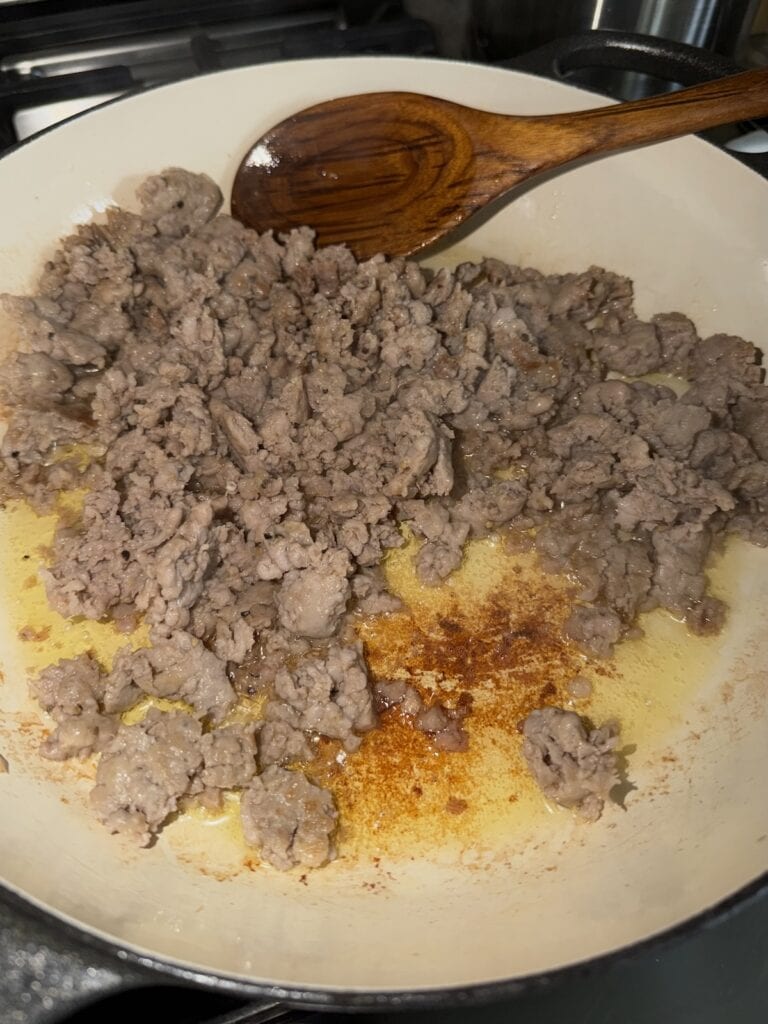
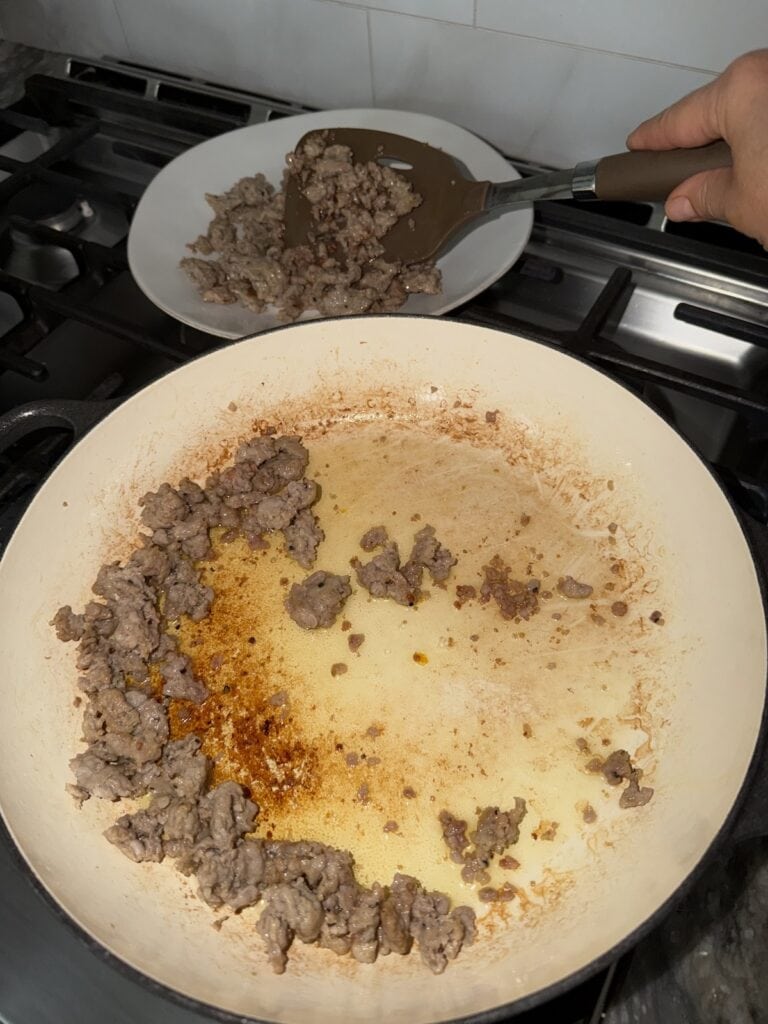
- Brown the sausage well. Don’t just cook it until it’s no longer pink. Let it develop some good color! That browning means more flavor in the sausage itself and creates flavorful bits on the bottom of the pan that will become part of the sauce.
- Roast the squash until tender and caramelized. Roasting brings out the butternut’s natural sweetness and develops much more flavor than simply boiling or steaming it. Just don’t take it so far that the pieces become mushy—you want some of them to remain intact in the finished pasta.
- Mash some, but not all, of the squash. While it’s still hot and tender, simply mash about one-third of the roasted squash with a fork right on the sheet pan. It will practically fall apart! There’s no need to dirty a blender—the mashed squash becomes part of the creamy sauce while the remaining caramelized pieces give the pasta texture and a more rustic feel.
- Don’t overdo the sage. Sage has a bold, assertive flavor and a little goes a long way. You want it to complement the butternut squash and sausage, not overpower them.
- Don’t skip the toasted pecans if you don’t have to! They’re technically optional, but the crunch and toasted nuttiness add a wonderful contrast to the creamy pasta. If you’re avoiding nuts, toasted pumpkin seeds are a great alternative.
- Get ahead by roasting the squash early. It can be roasted up to 2 days in advance and refrigerated in an airtight container until you’re ready to make the pasta.
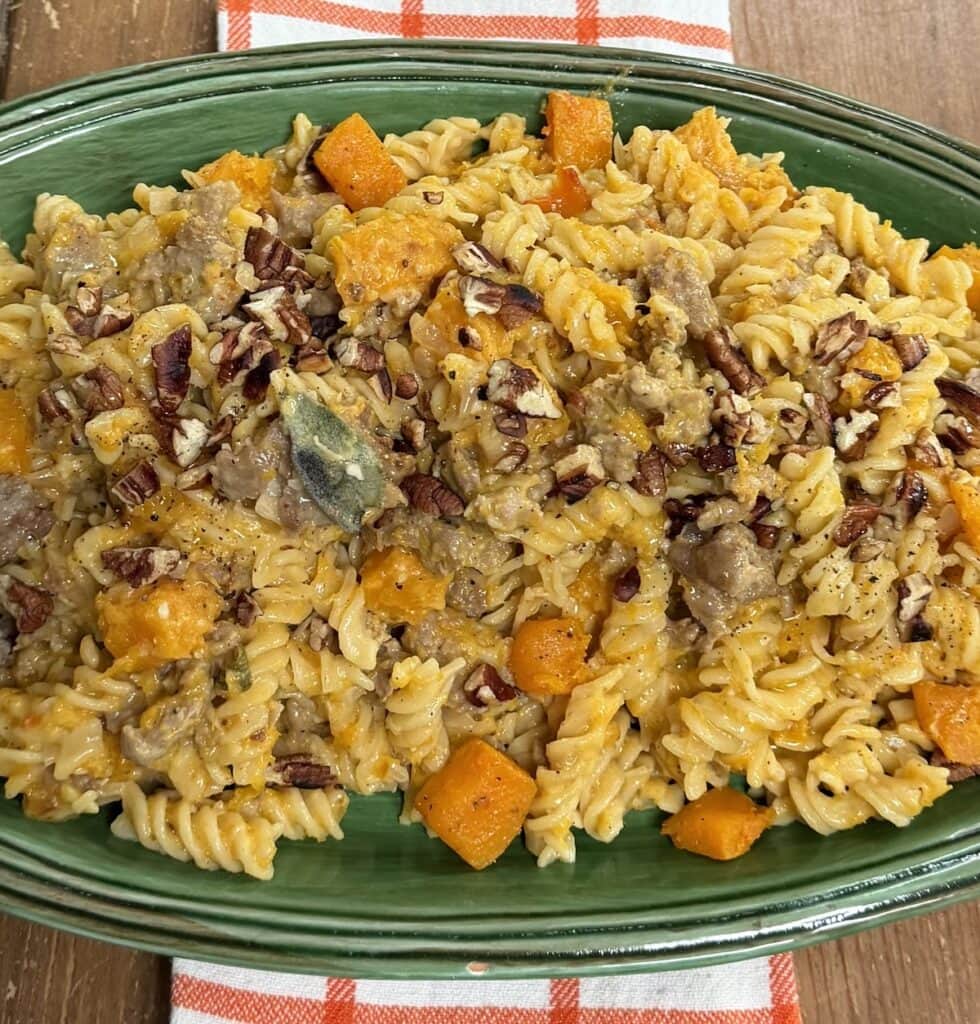
A Cozy Fall Pasta
Butternut squash wasn’t something I grew up eating—my mom never cooked it. It wasn’t until I went to culinary school and started working professionally in the food industry that I really got to know and appreciate this incredibly versatile winter squash.
And I fell in love with it, especially when roasted! Roasting brings out its natural sweetness and gives it those delicious caramelized edges.
By the way, I also roast it for my Creamy Butternut Squash Soup with Fennel and Apples–so good!
Over the years, I’ve used roasted butternut squash in everything from soups and salads to grain bowls and simple side dishes. In fact, the roasted squash in this recipe is delicious enough to serve all on its own.
This pasta was mostly inspired by the flavors of fall. While butternut squash is available pretty much year-round these days, there’s no mistaking that it really comes into its own in autumn–which just happens to be my favorite season!
And given my obsession with all things pasta and my tendency to add a little la cucina italiana to just about everything, this dish makes perfect sense a casa mia. Sweet roasted squash, savory Italian sausage, sage, cream, Parmigiano and toasted pecans come together in a hearty pasta that feels right at home throughout fall and into the Thanksgiving and holiday season.
It’s rich and satisfying enough to be the main event, too. Add a simple green salad and dinner is done!
For a few other fall favorites, check out Creamy Mushroom Pappardelle, Chicken Marsala Stuffed Mushrooms, Italian Beef Soup with Potatoes and Roasted Romanesco Broccoli.
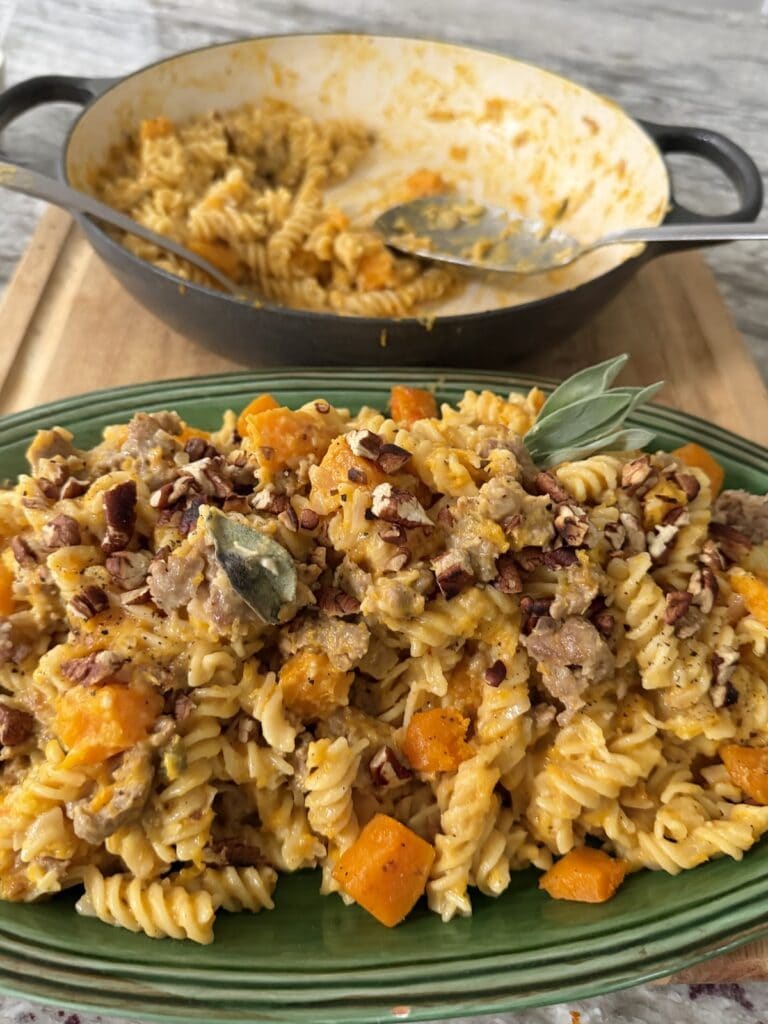
Main Ingredient Notes
Here are a few things to keep in mind when gathering the ingredients for this Butternut Squash and Sausage Pasta:
- Butternut Squash: Look for a squash that feels heavy and dense for its size, with tan or cream-colored skin and no soft spots. You’ll need about 2 pounds of raw, diced squash, so start with a whole squash that’s roughly 2½ to 3 pounds. And don’t hesitate to buy pre-peeled, pre-cut butternut squash if you’d rather skip the peeling and seeding!
- Italian Sausage: The rich, savory sausage is the perfect counterpoint to the natural sweetness of the roasted squash. Use sweet or hot Italian sausage—pork, turkey or chicken all work here.
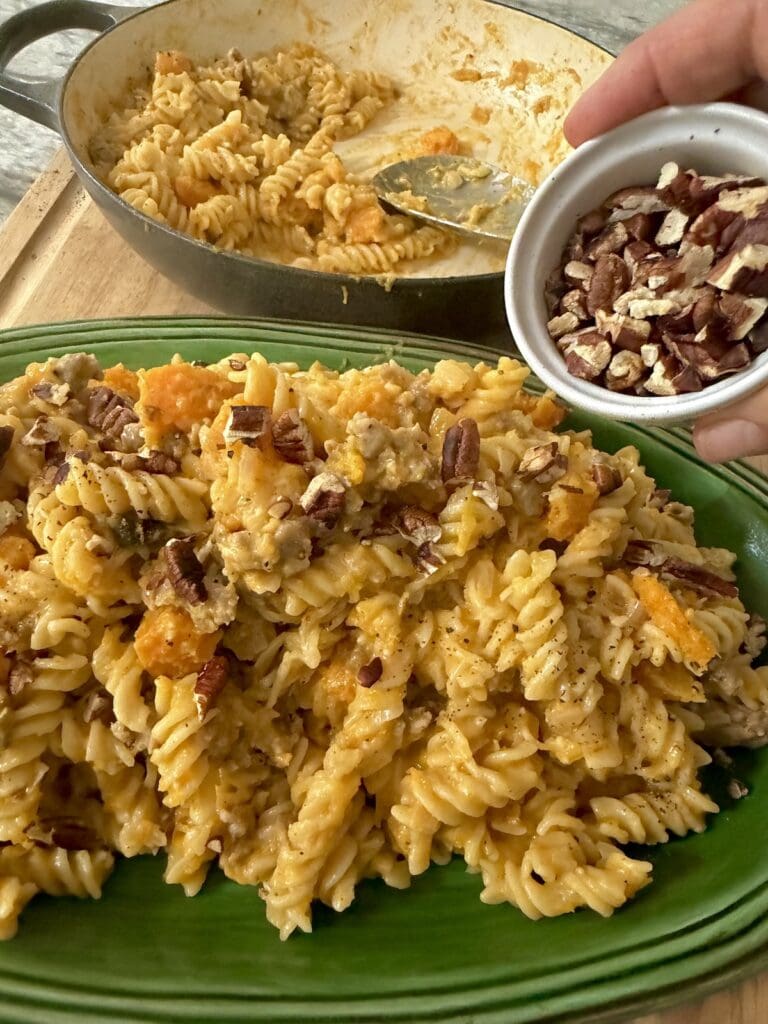
- Pecans: I call these optional because of nut allergies, but if you can include them, please do! Their crunch and toasted nuttiness add such an important contrast to the creamy pasta. Toasted pumpkin seeds are a great alternative if you’re avoiding nuts. I also love serving the toasted pecans in a small bowl at the table and letting everyone sprinkle on as much as they’d like—almost like you would with grated cheese.
- Shallots + Garlic: These create the aromatic base of the sauce. Sweet onion can easily be substituted for the shallots.
- Fresh Sage: Sage and butternut squash are a classic pairing for good reason, but sage is assertive and a little goes a long way. I use just enough to flavor the pasta without overwhelming it. Rubbed sage can be substituted for fresh, and thyme also works as a partial or full substitute.
- Dry White Wine: Use a dry white wine that you’d be happy to drink, such as Pinot Grigio. It deglazes all those flavorful browned bits left behind by the sausage while adding acidity that helps balance the richness of the dish.
- Heavy Cream: Just enough to create a rich, silky sauce along with the mashed roasted squash. This isn’t simply pasta swimming in cream—the squash itself becomes an important part of the sauce.
- Nutmeg: Just a small amount complements the squash, cream and sage and adds subtle warmth without making the pasta taste sweet.
- Pasta: I used fusilli, which does a great job holding onto this thick, chunky sauce. Rigatoni, penne, cavatappi and even fettuccine are other great choices. Whatever you choose, use a sturdy pasta that can stand up to the sauce.
- Parmigiano-Reggiano: Adds savory, nutty depth and helps bring the finished sauce together. Grana Padano or Pecorino Romano can be substituted; Pecorino will give the pasta a sharper, saltier flavor.
- Butter: A few small pieces are stirred into the pasta off heat at the very end for additional richness and silkiness.
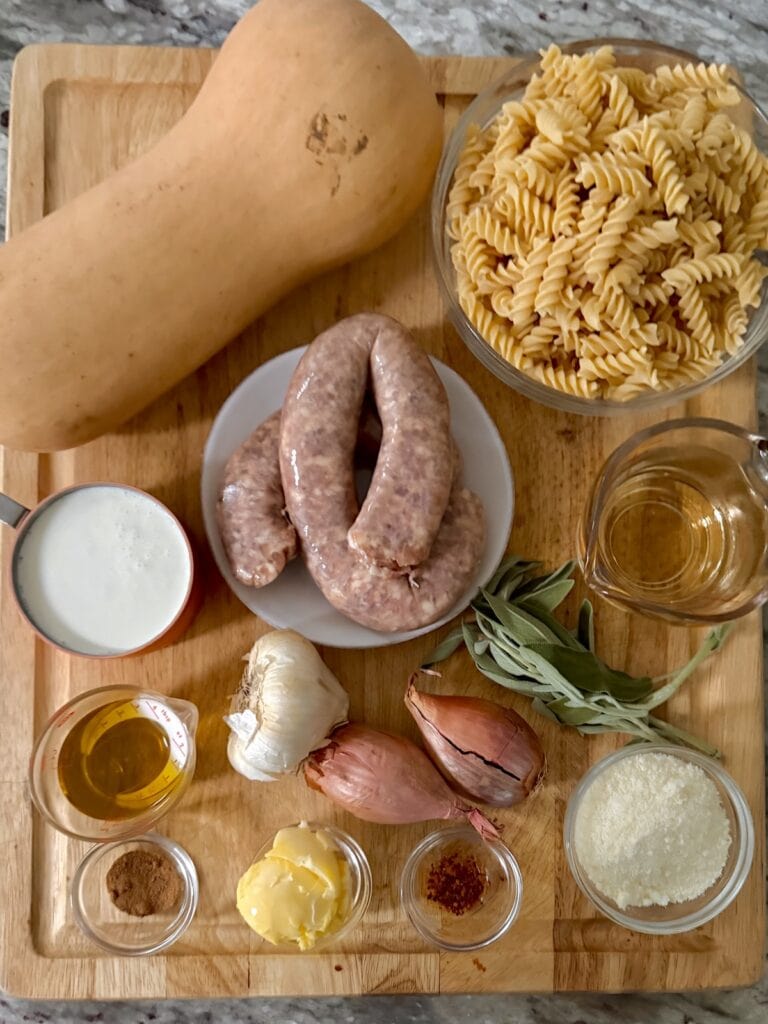
How to Make Butternut Squash and Sausage Pasta
Prep, Roast & Mash Butternut Squash
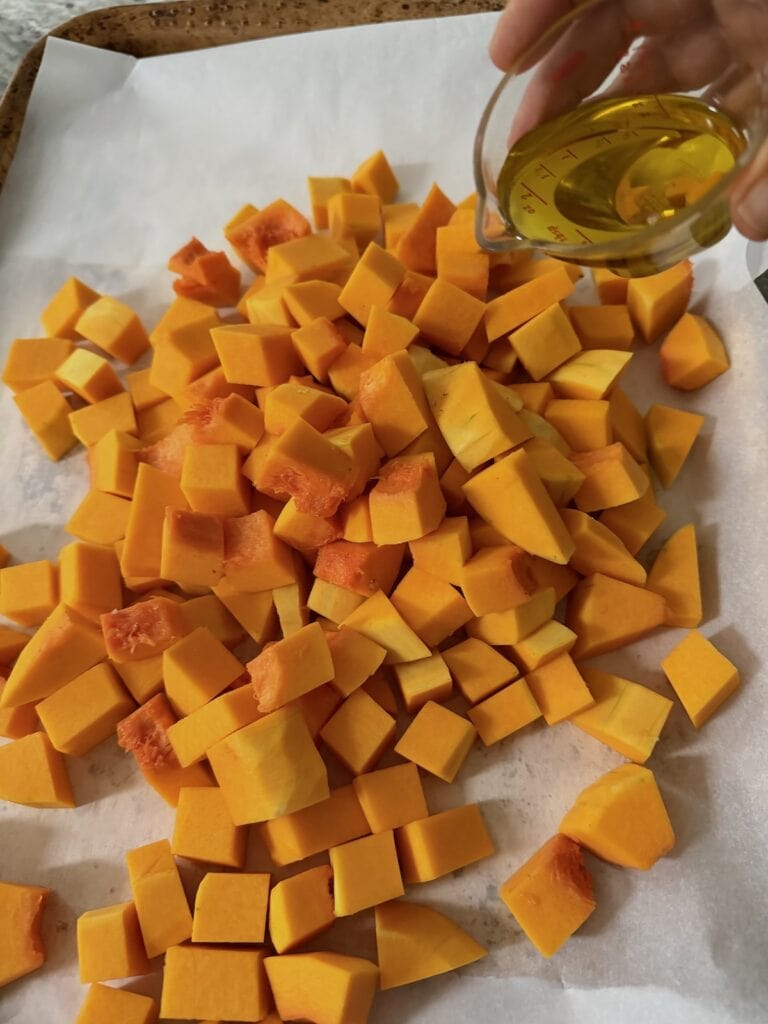
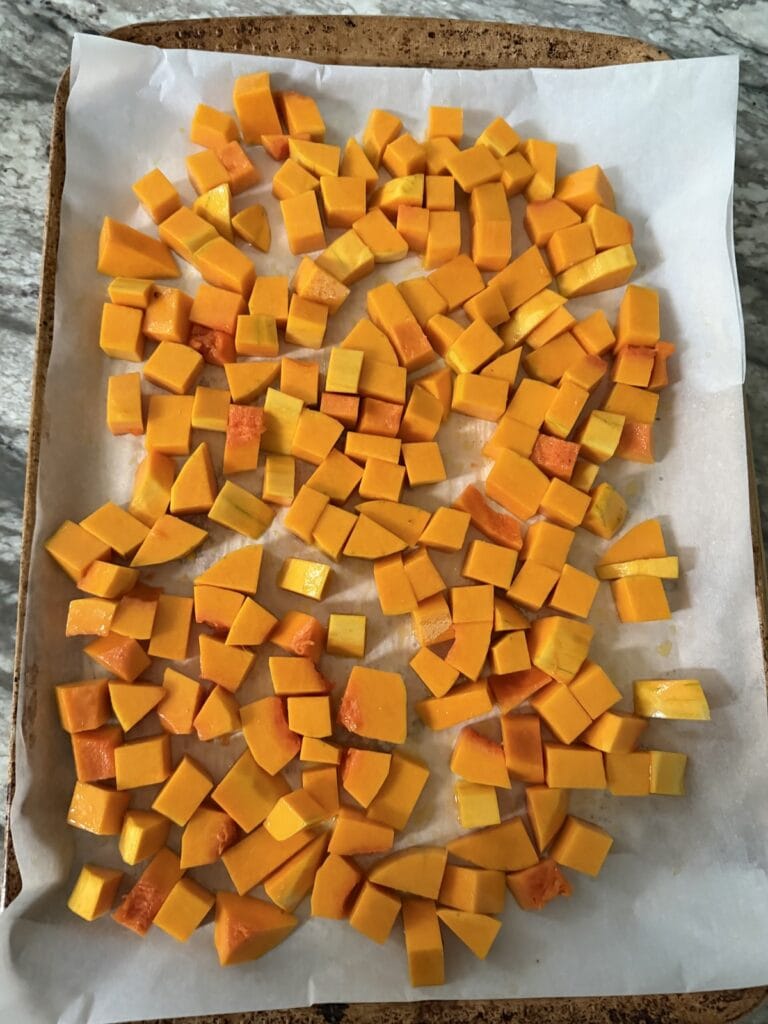
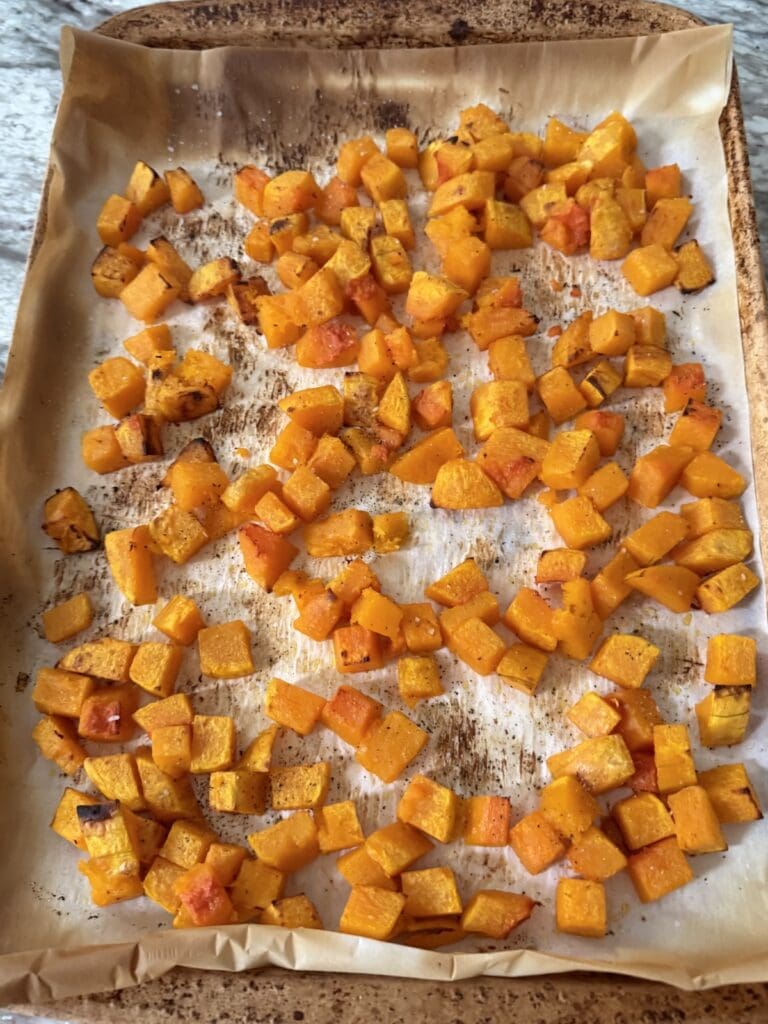
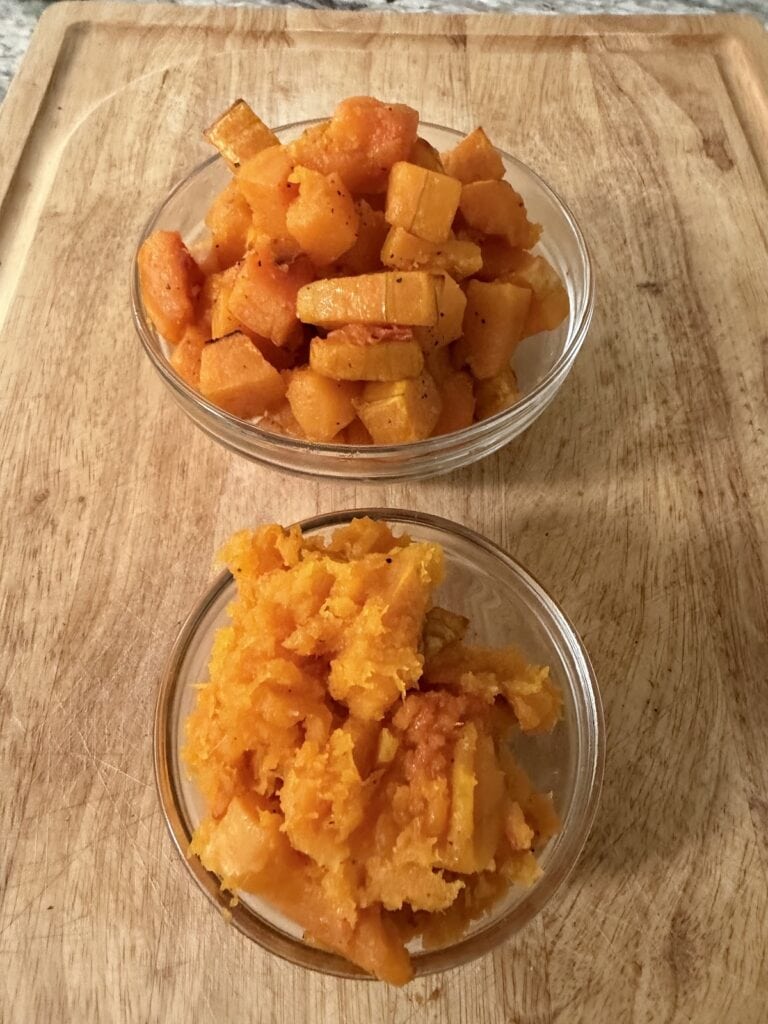
- Cut the squash into approximately ½- to ¾-inch pieces, toss them lightly with oil and spread them out on a sheet pan. Don’t overcrowd the pan—use two if necessary. Roast until the squash is tender and nicely caramelized around the edges.
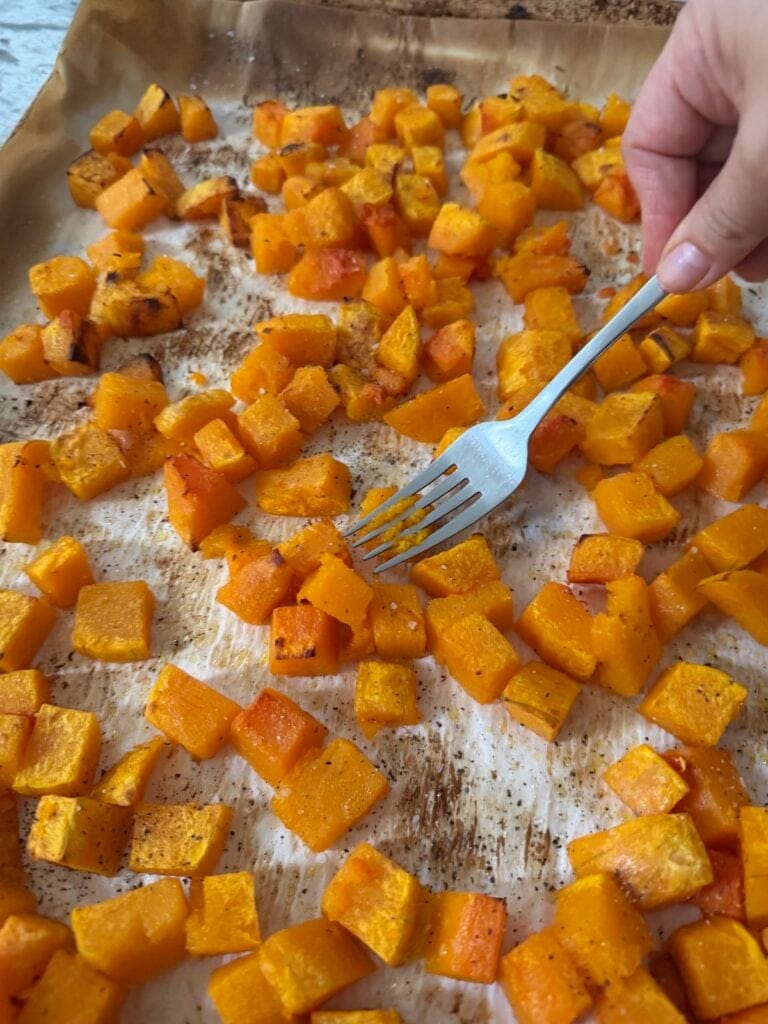
- While it’s still hot, use a fork to mash about one-third of the roasted squash right on the sheet pan. No blender necessary! The squash will be very tender and easy to mash. This portion will melt into the cream and become part of the sauce, while the remaining pieces stay intact throughout the pasta.
While the Squash is Roasting…
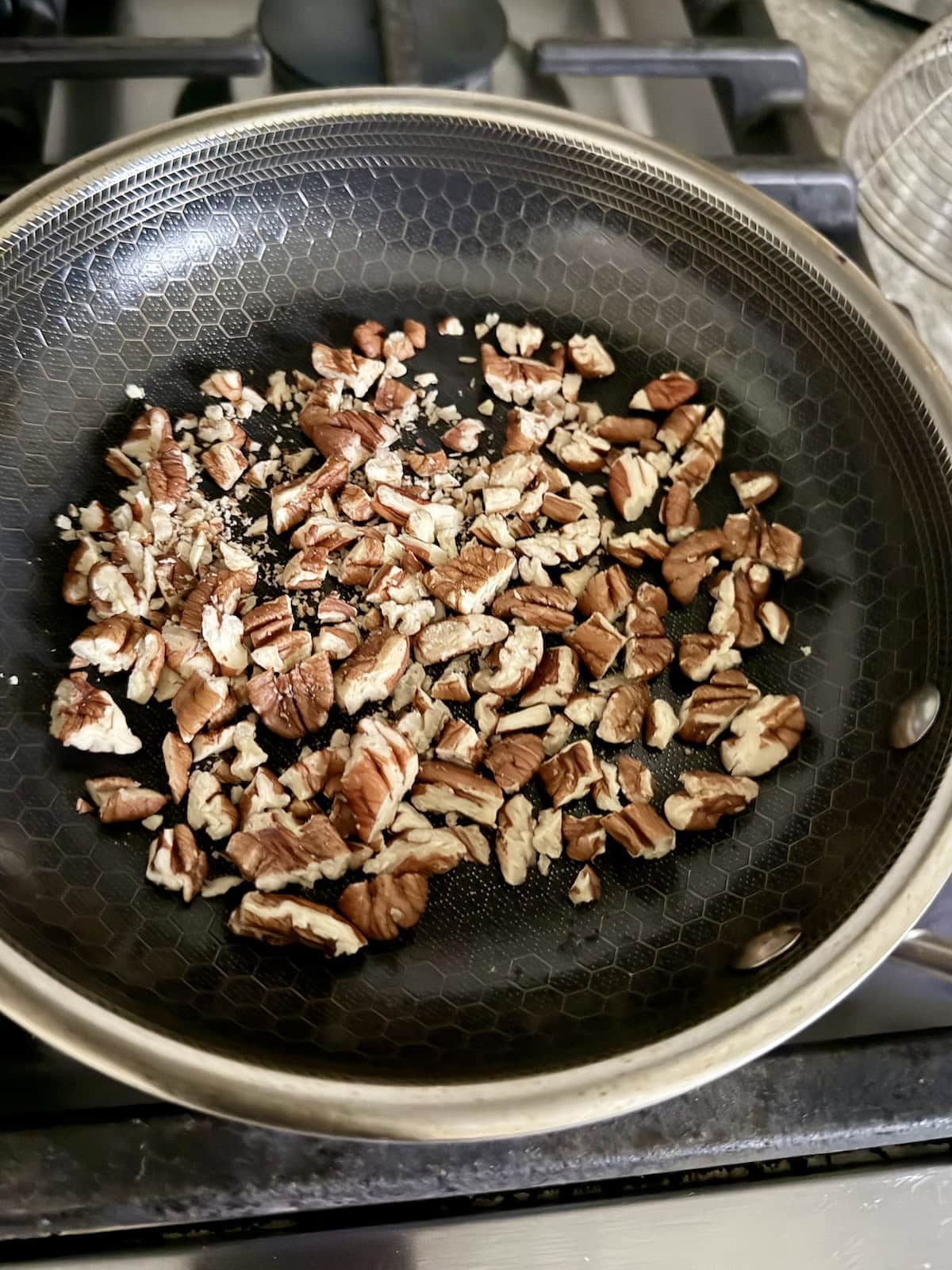
- Toast the pecans. Toast the chopped pecans briefly in a dry skillet until fragrant. Keep an eye on them—they can go from beautifully toasted to burned very quickly!
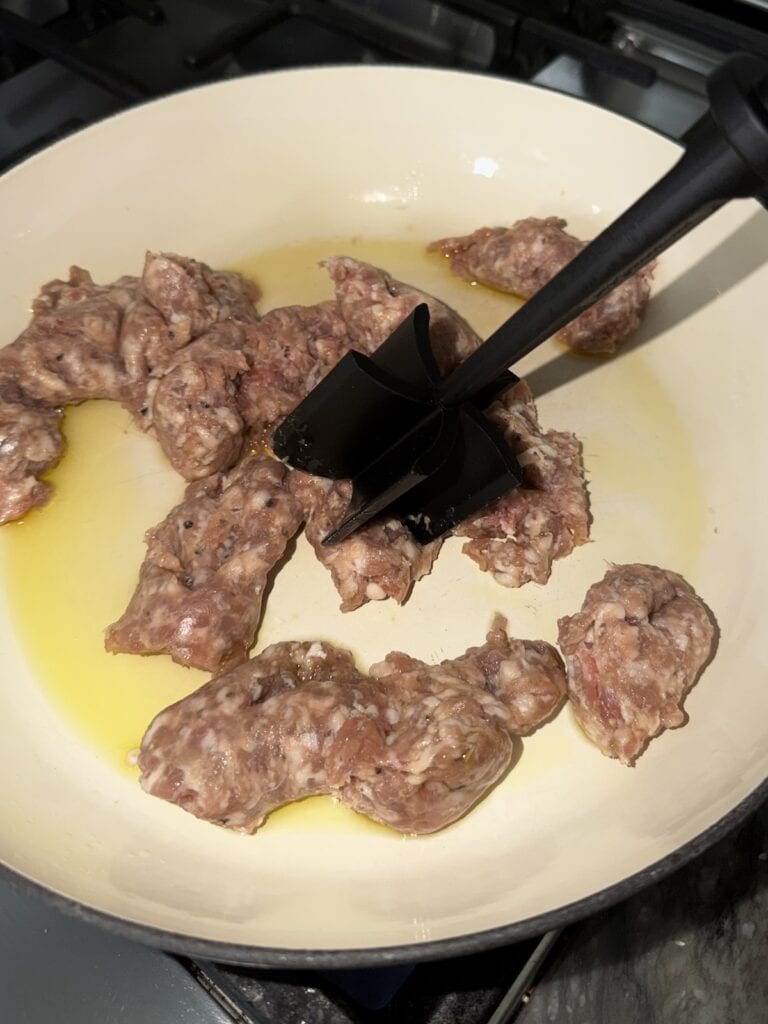
- Brown the sausage. Cook the Italian sausage in olive oil, breaking it into bite-sized pieces as it cooks. Let it develop some real color rather than simply cooking it through. Once nicely browned, transfer the sausage to a plate, leaving all those flavorful browned bits behind.
Build the Sauce
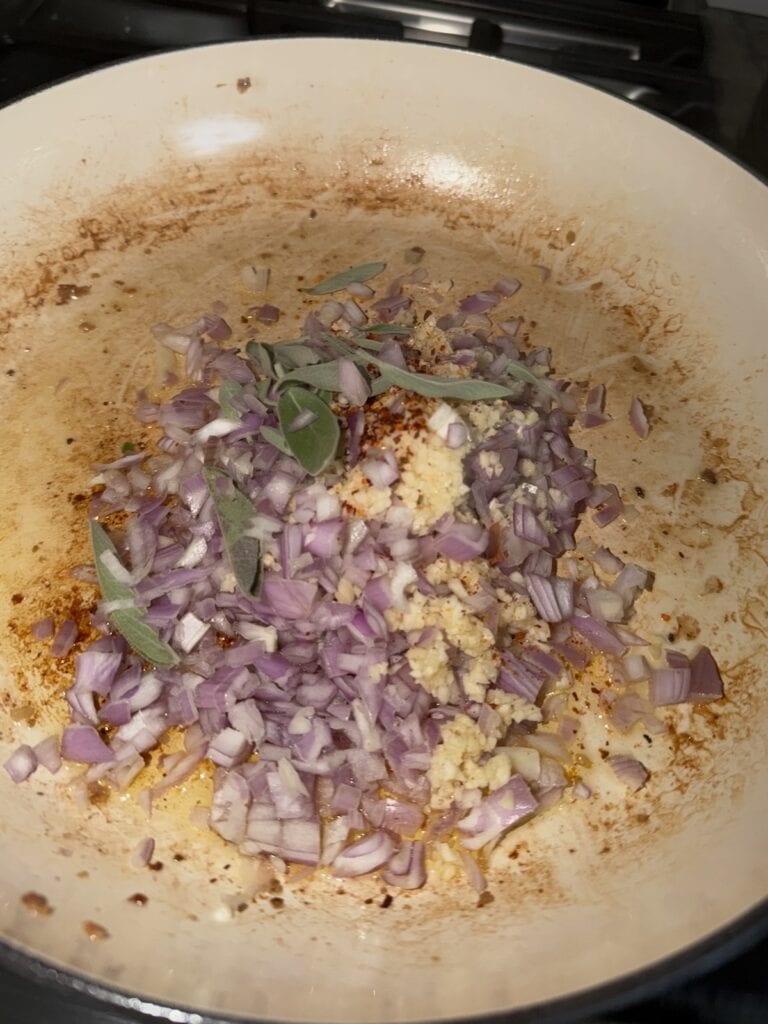
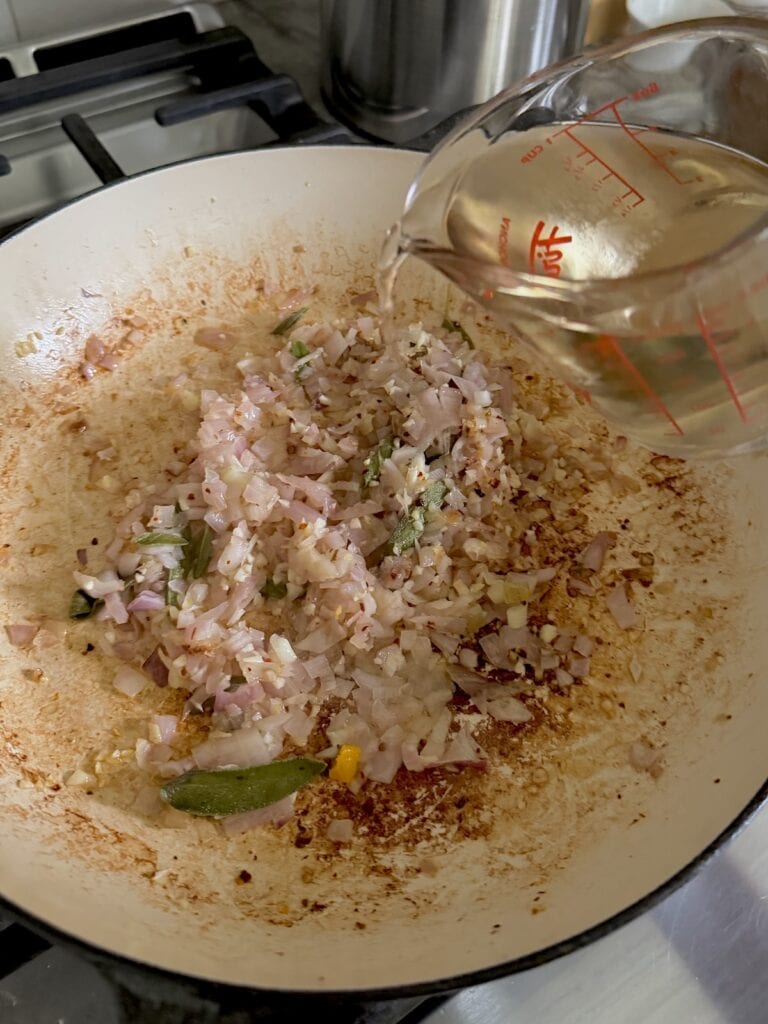
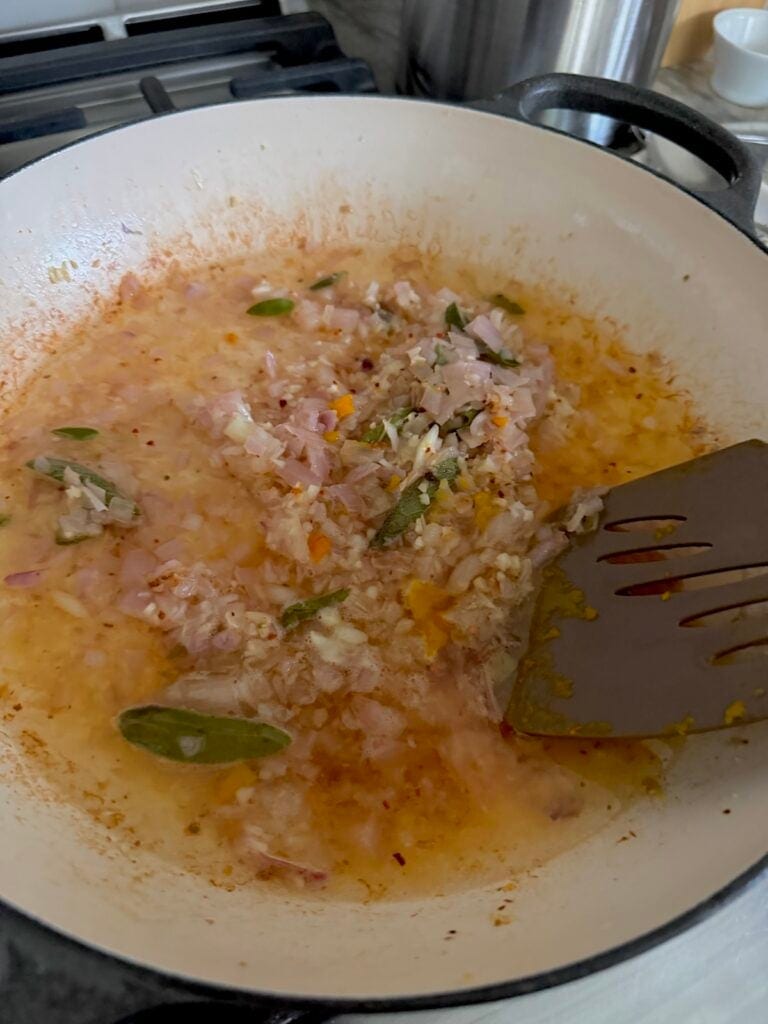
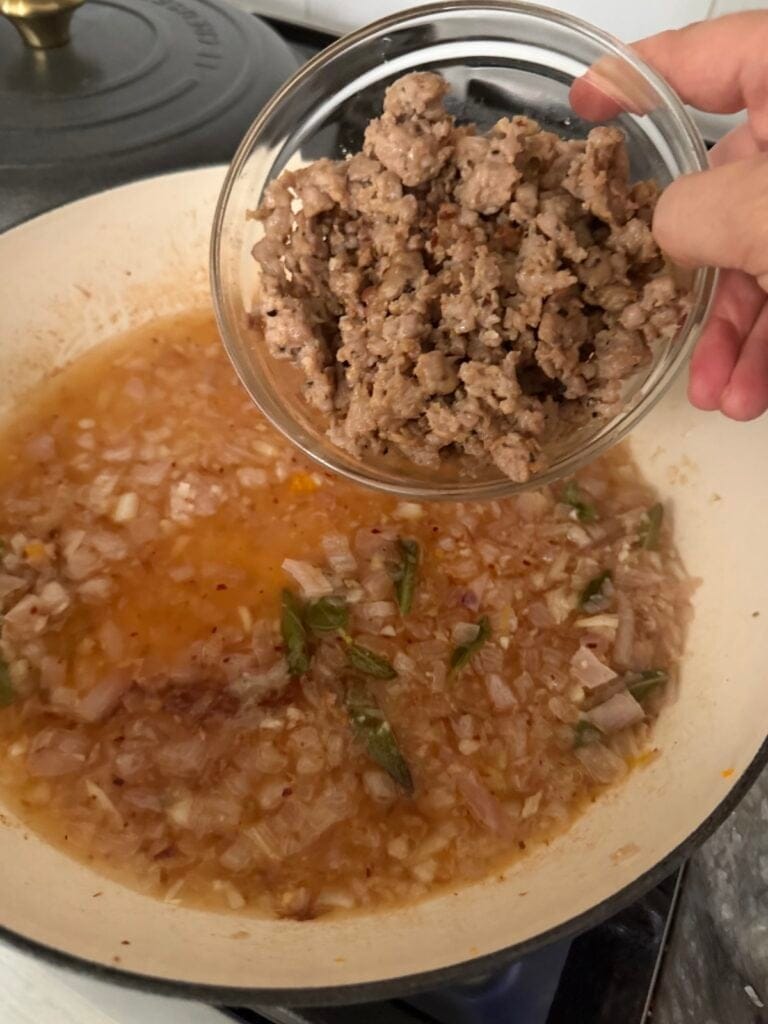
- Sauté the shallots, garlic, whole sage leaves and crushed red pepper in the same pan. Deglaze with the white wine, scraping up the flavorful browned bits from the sausage, then return the sausage to the pan and let the wine reduce.
Finish the Sauce
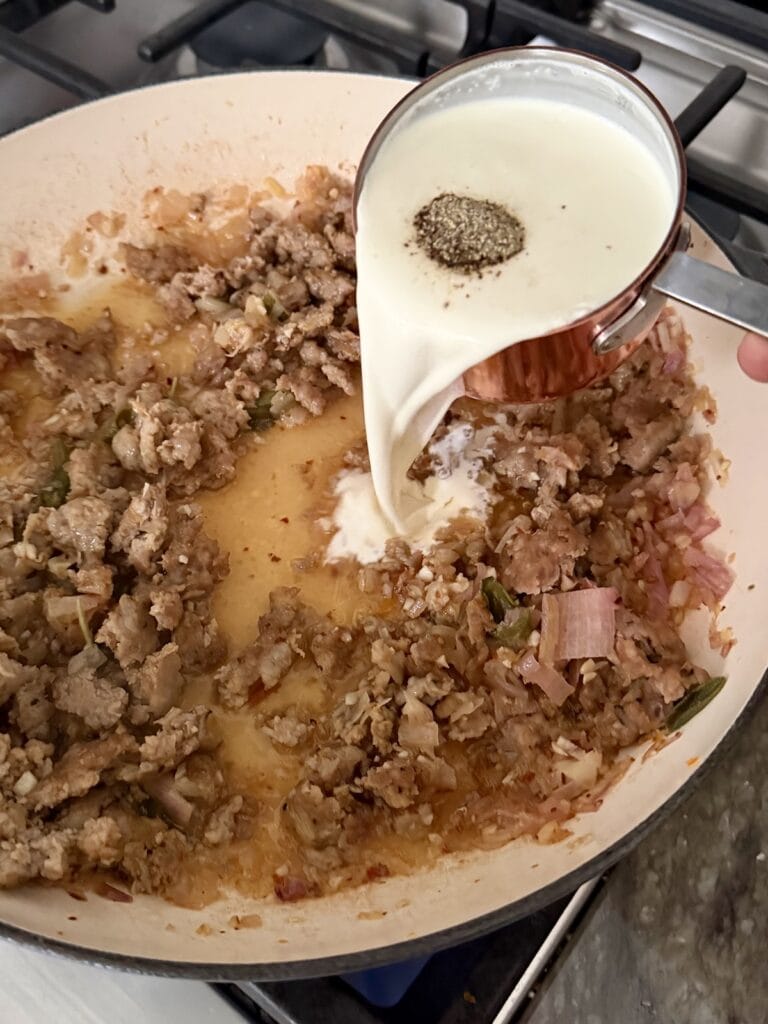
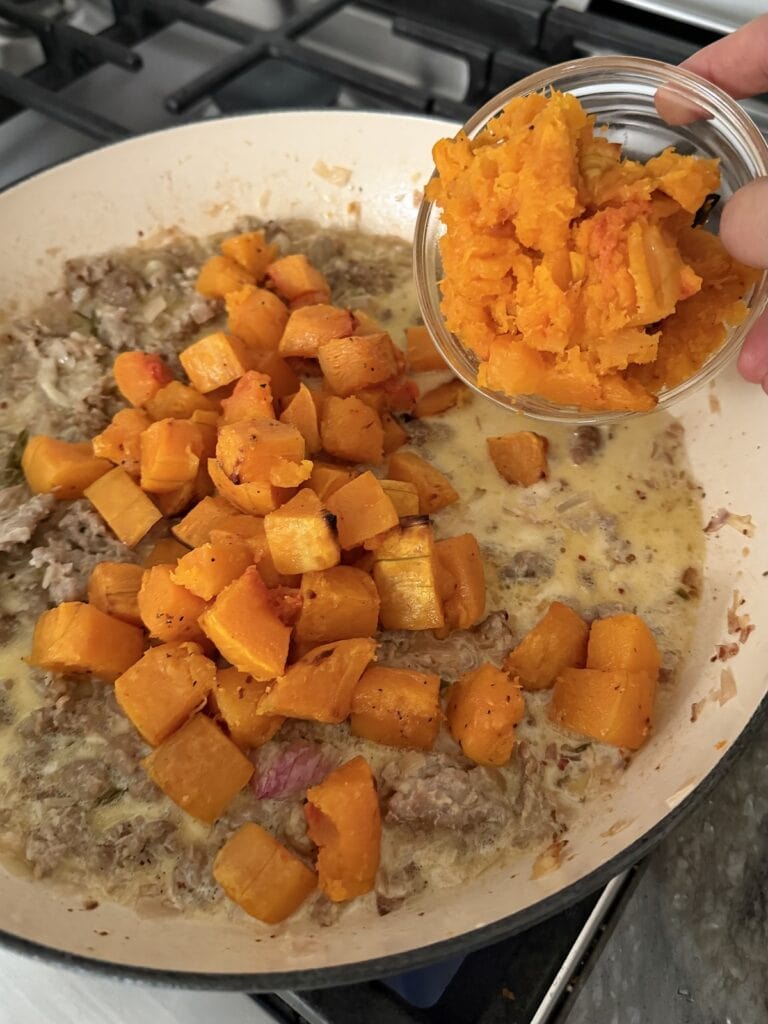
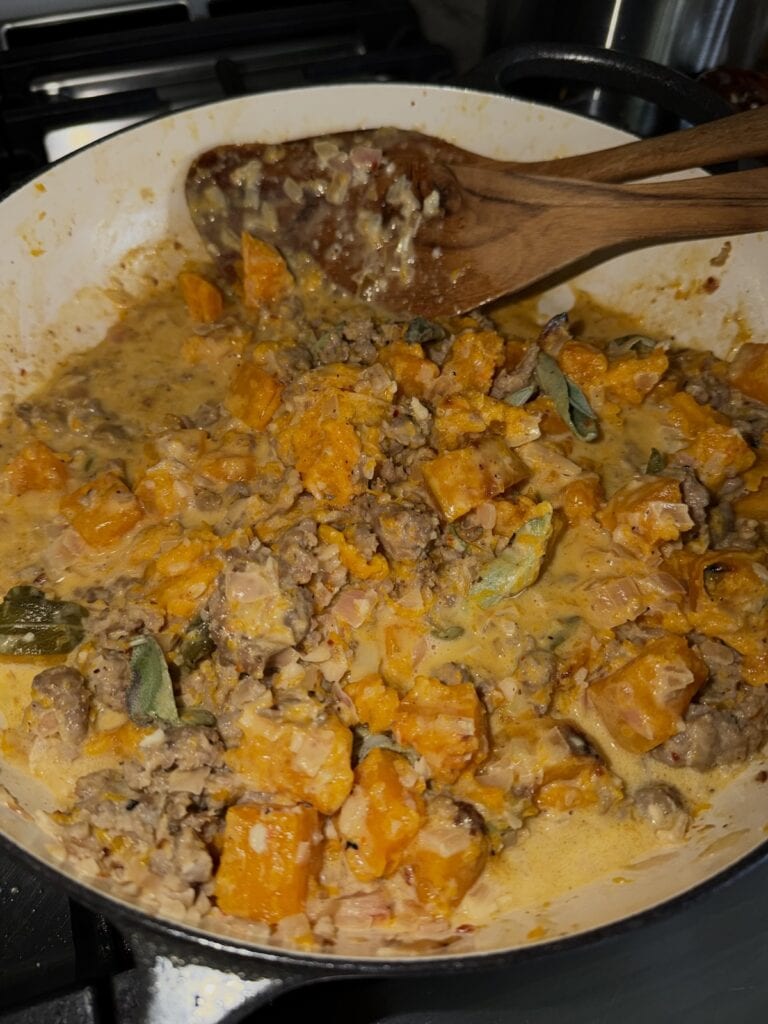
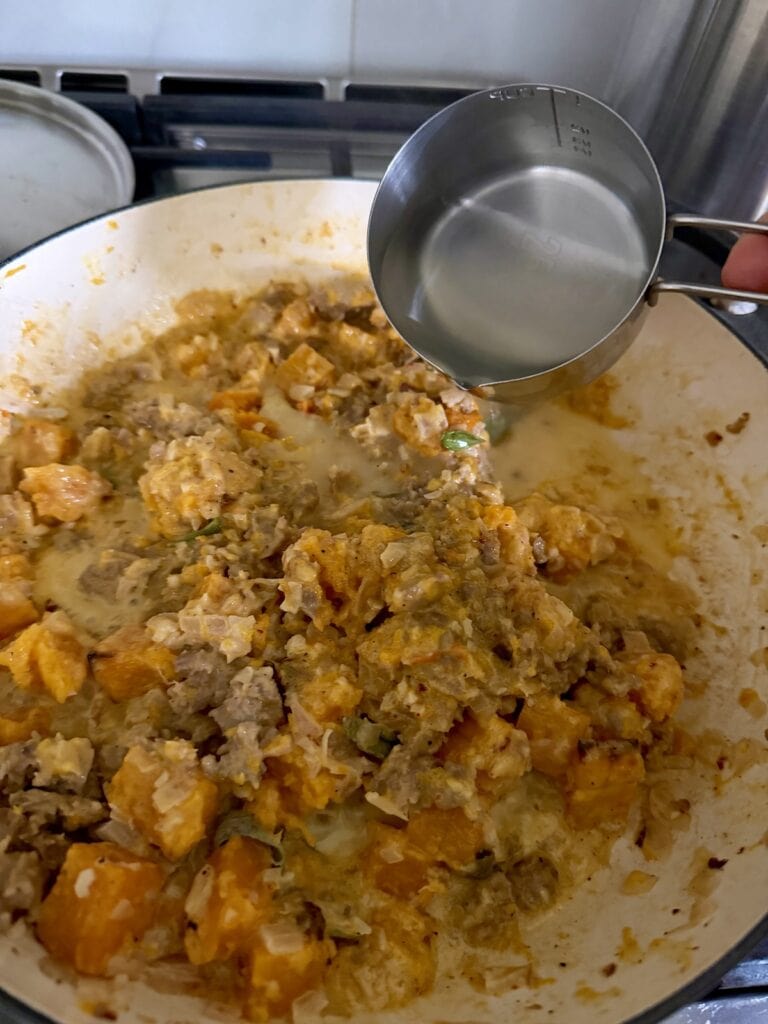
- Add the heavy cream, seasonings and both the mashed and whole roasted butternut squash. As everything simmers together, the mashed squash becomes part of the sauce while the whole pieces retain their texture.
Cook Pasta & Finish
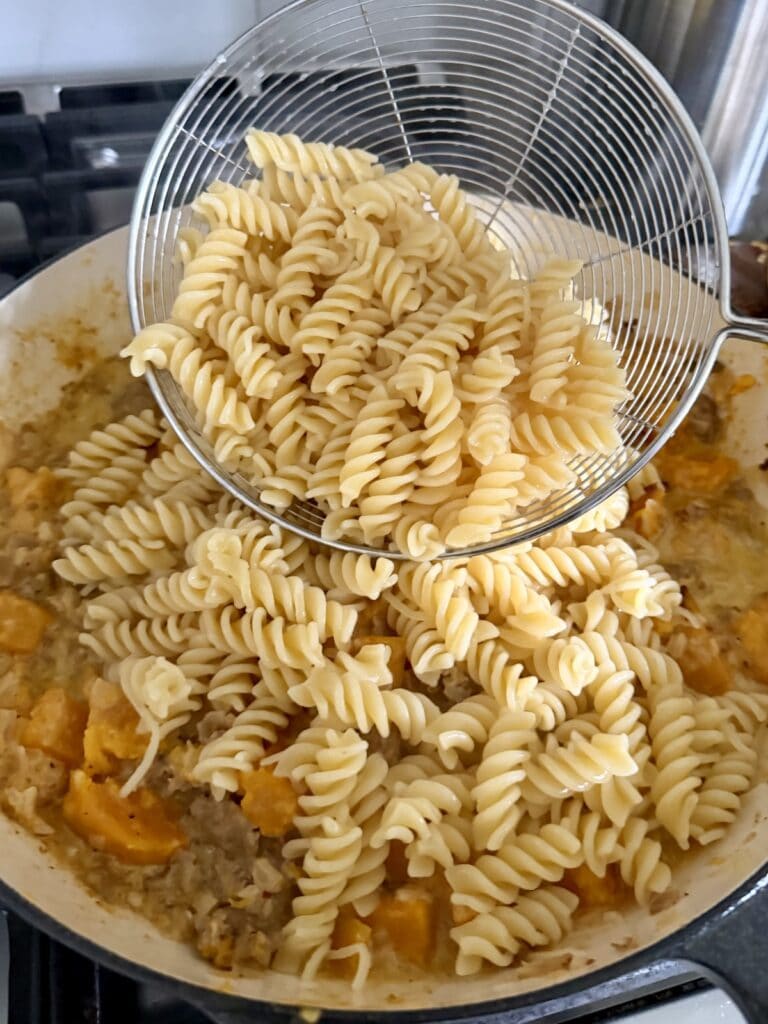
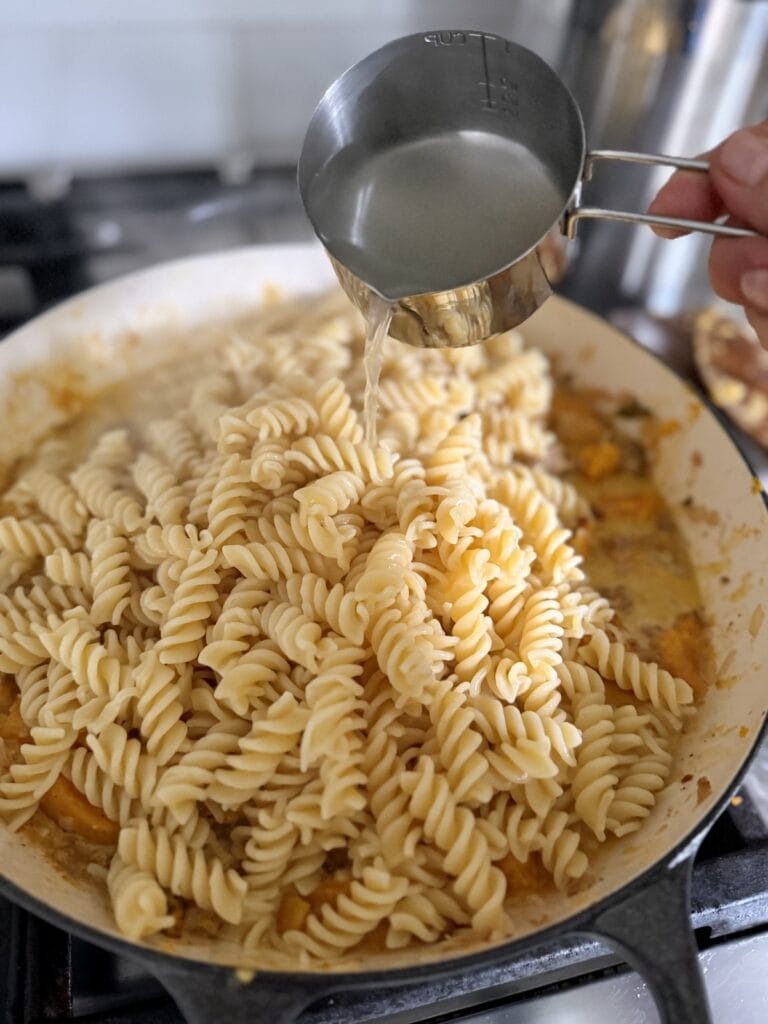
- Cook the pasta until just shy of al dente, reserving plenty of that valuable starchy pasta water. Transfer the pasta directly to the sauce and let it finish cooking there, adding pasta water as needed until everything is beautifully coated.
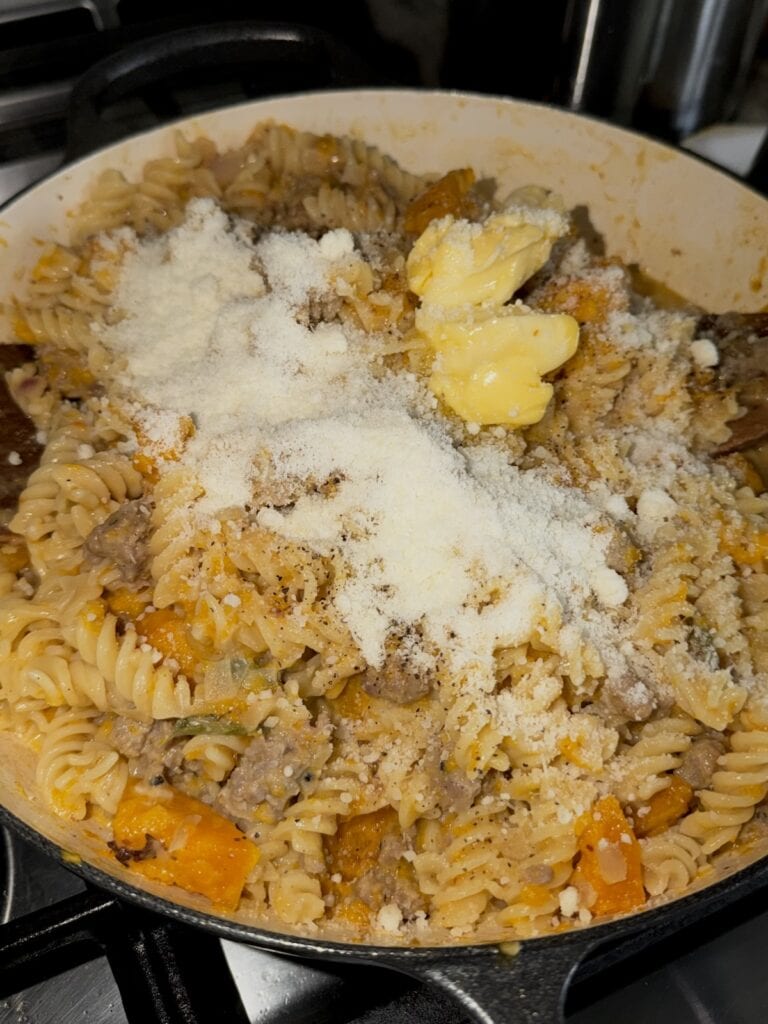
- Once the pasta is al dente, turn off the heat and gently stir in the Parmigiano-Reggiano, butter, chopped fresh sage and plenty of freshly ground black pepper. Transfer to a platter and finish with the toasted pecans and, if you’d like, a drizzle of extra-virgin olive oil. Serve immediately and enjoy!
Frequently Asked Questions
Absolutely! If you’d rather not peel and cut a whole butternut squash, buy pre-peeled squash chunks and cut them down into approximately ½- to ¾-inch pieces.
You’ll need about 2 pounds of raw, diced butternut squash for this recipe. Whether you’re starting with a whole squash or pre-cut pieces, the most important thing is to keep the pieces approximately the same size so they roast evenly.
Yes! The butternut squash can be roasted up to 2 days in advance and stored in an airtight container in the refrigerator until you’re ready to make the pasta.
This is a great way to break up the recipe and makes the pasta much quicker to put together when you’re ready to eat.
I used fusilli, but lots of pasta shapes work well here. Rigatoni, penne, cavatappi and even fettuccine are all great choices.
The sauce is creamy and substantial, with pieces of roasted squash and sausage throughout, so choose a sturdy pasta that can stand up to it and hold onto all that delicious sauce.
Yes. I prefer fresh sage here, but rubbed sage can be substituted. Add all of the dried sage with the shallots and garlic at the beginning so it has time to rehydrate and flavor the sauce.
You can also substitute fresh or dried thyme for some or all of the sage. Just remember that sage has a bold flavor, so more isn’t necessarily better!
Toasted pumpkin seeds are a great alternative and will still give the pasta some of that important crunchy texture and toasted flavor.
And while the pecans are technically optional, I highly recommend including them if you can. They really do elevate the finished pasta! Sprinkle them over the platter just before serving or pass them around the table in a small bowl so everyone can add their own.
More Cozy Pasta Recipes
If you’re in the mood for more hearty, comforting pasta dishes, here are a few more favorites to try:
A Taste of Fall
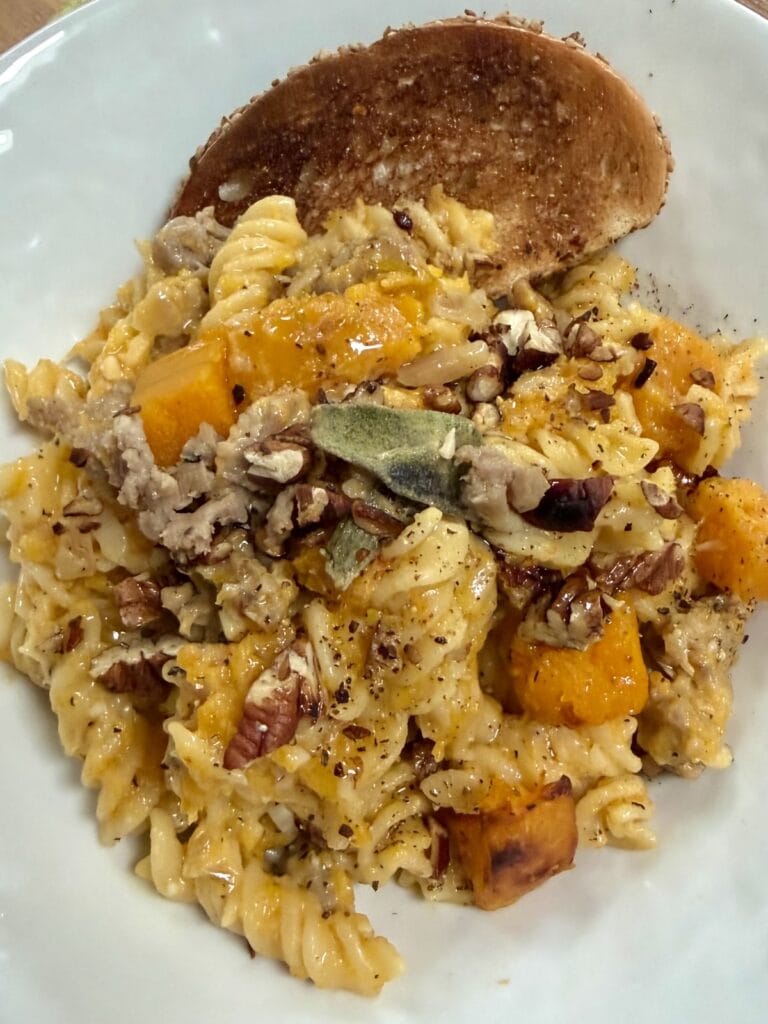
This may not be a pasta I grew up eating, but it has definitely earned a place at my table—especially once fall rolls around!
It’s cozy, hearty and full of the flavors I love this time of year. I hope you enjoy it as much as I do and that it finds its way onto your autumn table, too.
Mangia bene!
Butternut Squash and Sausage Pasta
Video
Equipment
- Meat Chopper (optional)
Ingredients
- 1 (2½-3 pounds) butternut squash , (See Notes.)
- Olive oil or other neutral oil , for roasting
- Salt and black pepper
- ½ cup chopped pecans, optional, about 2 ounces
- 1½ pounds Italian sausage, casings removed
- 4 Tbsp olive oil, divided
- 1 cup finely chopped shallots or sweet onion
- 2 Tbsp chopped garlic
- 6 sage leaves, divided (3 whole and 3 chopped)
- ¼ tsp crushed red pepper
- 1 cup dry white wine , such as Pinot Grigio
- 1 cup heavy cream
- ½ tsp salt
- ¼ tsp ground black pepper
- ¼ tsp ground nutmeg
- 1 pound pasta + salt for pasta water, See Notes below.
- ⅓ cup grated Parmigiano-Reggiano cheese, about 1.7 ounces
- 2-3 Tbsp butter at room temperature, cut into small cubes
- Freshly ground black pepper
- Extra virgin olive oil, optional, for finishing
Instructions
- Prep and gather all ingredients according to specifications above. Place a rack in the middle of the oven and preheat it to 400°F. Use the convection setting if your oven has that option. Bring a large pot of water to a boil. Chop 3 sage leaves and leave the remaining 3 whole. Cut the butternut squash into ½”- ¾” dice. (See Notes below for details on this.)(Please see the section above in the blog post forStep-By-Step instructions with photos.)
- Roast Butternut SquashToss the diced butternut squash very lightly with oil, then spread it out in an even layer on a parchment-lined sheet pan. Use two sheet pans if necessary.1 (2½-3 pounds) butternut squash
- Roast it in the 400°F preheated oven until tender (but not mushy) and caramelized, about 30-35 minutes.
- Remove pan from the oven and sprinkle it with salt and black pepper.
- While the squash is still hot, mash about ⅓ of it with a fork. Then set both the whole and mashed roasted squash aside.
- Toast Pecans (if including)Place chopped pecans in a small, dry skillet that fits them easily in a single layer over medium-low heat. Stir them occasionally until they are toasted lightly and have a nutty aroma. This will only take a couple of minutes. Nuts will burn very quickly, so do not walk away from the stove when doing this!½ cup chopped pecans
- Brown SausageWhile the butternut is roasting, pour 2 Tbsp olive oil into a skillet over medium heat. Add the sausage and break it up into bite-sized pieces as it cooks. NOTE: Be sure to brown the sausage well for maximum flavor.1½ pounds Italian sausage
- Once the sausage is cooked and browned, remove it to a plate and set aside.
- Sauté Aromatics & Make SauceReduce the heat to medium-low and pour the remaining 2 Tbsp olive oil into the pan, followed by the shallots, garlic, 3 whole sage leaves and crushed red pepper.1 cup finely chopped shallots or sweet onion, 2 Tbsp chopped garlic, ¼ tsp crushed red pepper
- Cook until the shallots are translucent and the garlic has softened and browned a bit, about 5 minutes or so. You can cover the pan to speed up this process if desired.
- Deglaze with WineThen pour the wine into the pan and use a wooden spoon to scrape up any brown bits.1 cup dry white wine
- Return the cooked sausage to the pan, increase the heat to medium and simmer for about 5 minutes, or until the wine has reduced a bit and most of the alcohol flavor has cooked off.
- Add Cream and Finish SauceAdd the cream, salt, black pepper and nutmeg to the pan and stir.1 cup heavy cream, ½ tsp salt, ¼ tsp ground black pepper, ¼ tsp ground nutmeg
- Then add both the mashed and whole pieces of roasted butternut squash to the pan and stir gently until all ingredients are well-combined.
- Cook until the cream has reduced a bit and thickened slightly, about 5 minutes. If the sauce has become too thick, stir in some pasta water. Then, turn off the heat.
- Cook Pasta & Finish DishMeanwhile, once the water comes to a boil, add salt, then the pasta, stirring frequently. Turn the sauce back on to medium-low after the pasta has been cooking for about 5 minutes.1 pound pasta + salt for pasta water
- Cook the pasta for 2 minutes less than the package directions, or about 2 minutes before you think it is al dente. Be sure to reserve at least 1 cup of the starchy pasta water.
- Transfer the cooked pasta to the sauce and toss well, allowing the pasta to finish cooking in the wonderful flavors of the sauce. Add pasta water for additional moisture as needed, about ½ cup at a time.
- Once the pasta is al dente, turn off heat. Then gently stir in the Parmigiano cheese, butter, remaining 3 chopped sage leaves and a large pinch of freshly ground black pepper until well-combined. Taste and adjust seasonings if necessary.⅓ cup grated Parmigiano-Reggiano cheese, 2-3 Tbsp butter at room temperature
- Drizzle with a bit of extra-virgin olive oil (optional) then transfer to a serving platter. Sprinkle with chopped nuts (if including) and serve immediately. Buon Appetito!
Notes
- Pick a butternut squash that feels heavy and dense for its size, is fully tan or cream with no green or yellow patches and does not have any soft or mushy parts.
- You’ll need about 2 pounds diced, raw butternut, so start with a squash that’s about 2½ –3 pounds. You’ll lose some weight from trimming, peeling and deseeding.
- After roasting, you should have about 1½ pounds total roasted butternut squash. If you have extra, just use it for another purpose. It goes great tossed into a salad or enjoyed on its own as a side dish.
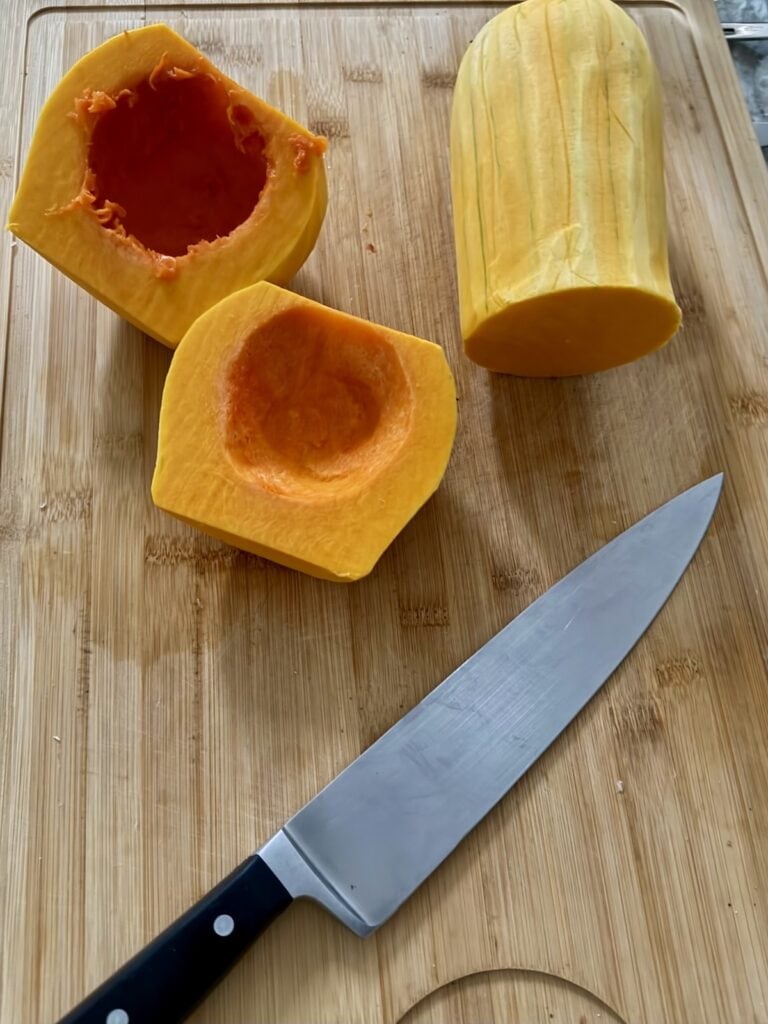
- Scrub the outside of the squash clean.
- Slice about ¼” or so off both ends of the squash revealing the orange flesh.
- Use a sharp vegetable peeler to remove the tough outer skin. You may need to peel it a couple of times until you see the bright orange squash flesh.
- Then, use a sharp knife to cut the neck and bulb apart.
- Slice the bulb in half and scoop out all the seeds and fibers with a spoon.
- Then cut the both the neck and bulb pieces into cubes that are approximately ½”–¾” dice.
- Don’t worry too much about perfection here.
- You’re not starting with a perfect rectangle or square so it won’t be possible to get a perfect dice.
- The most important thing is that the pieces are all approximately the same size so that they cook at the same time.
- You can roast the butternut squash up to 2 days in advance of making the pasta. Just store it in an airtight container in the refrigerator until you need it.
- NOTE: If you feel skittish about prepping butternut squash, you have two options: (1) buy pre-peeled squash in chunks (which is generally available in grocery stores year-round) and cut it down into smaller pieces, or (2) use a cut-resistant glove (linked above), which I find very handy!
- Use a large pot with 5 to 6 quarts water for 1 pound of pasta. Bring the water to a boil before adding the salt. Use 1½-2 Tbsp salt.
- The pasta water is key! Add it to the sauce along with the pasta as needed for additional moisture to finish cooking the pasta.
- You may also need to add some pasta water before adding the pasta to loosen up the sauce.
- Sprinkle the toasted nuts over the plattered pasta. Alternatively, place them in a small bowl to be passed around at the table.
- Note that toasted pumpkin seeds would also be a great option!
love soup?
Get My Cookbook!
Ditch the dish and embrace the bowl with Soupified: Soups Inspired by Your Favorite Dishes!
Available in ebook, paperback and hardcover.

Fall in a (pasta) bowl! Delicious!