
This post may contain affiliate links or sponsored content. That means if you click on my link and buy something, I will earn a small commission from the advertiser at no additional cost to you. For more information, see our disclosure policy.
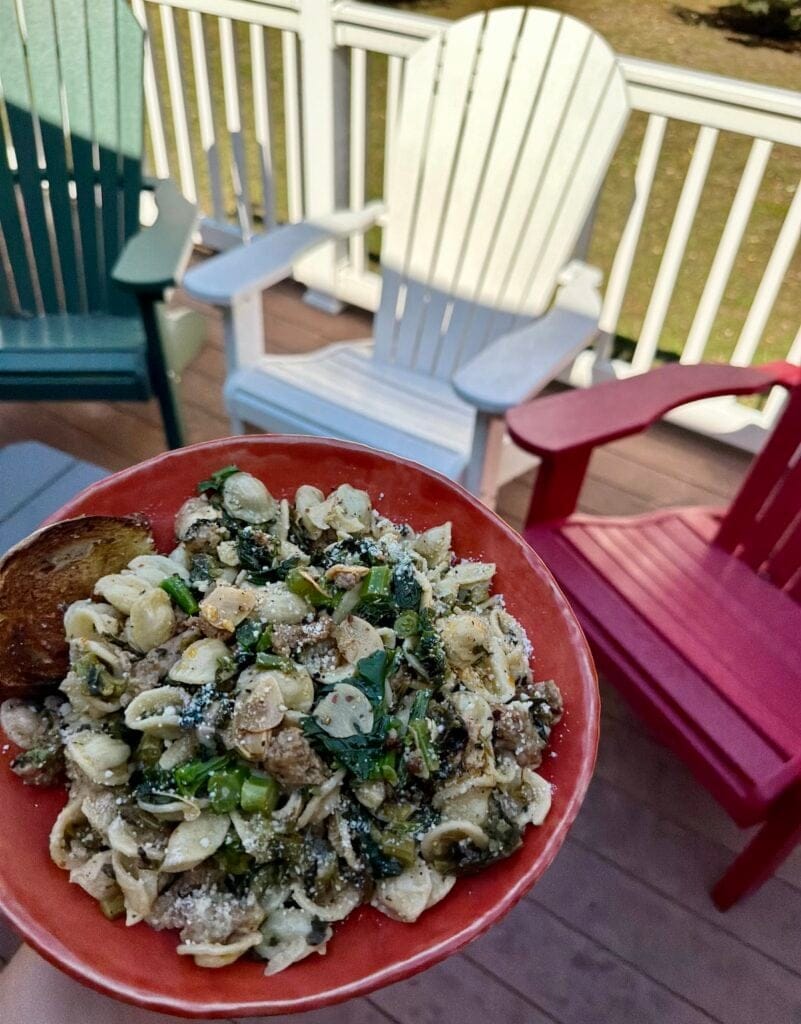
Orecchiette with Broccoli Rabe and Sausage is a classic southern Italian pasta dish made with savory Italian sausage, pleasantly bitter broccoli rabe, lots of garlic, white wine and Pecorino Romano cheese. It’s rustic, hearty and full of flavor, with a light, garlicky sauce that coats every little ear of pasta.
My streamlined method makes it even easier! The broccoli rabe and orecchiette cook in the same pot of water, saving time and cleanup without sacrificing flavor.
Keep In Mind Before You Start . . .
- Don’t throw away the broccoli rabe stems! Cut the thicker stems into small pieces and give them a head start in the boiling water so they become tender without overcooking the leaves and florets.
- Use the same pot of water twice. Blanch the broccoli rabe first, remove it with a spider, then cook the orecchiette in the same water.
- Brown the sausage well. Let it develop some good color, which adds flavor to the sausage and creates browned bits in the skillet that become part of the sauce.
- Reduce the wine and finish the pasta in the skillet. Cook the wine down to a small amount of concentrated liquid, then use starchy pasta water to finish cooking the orecchiette. Add the Pecorino Romano off the heat.
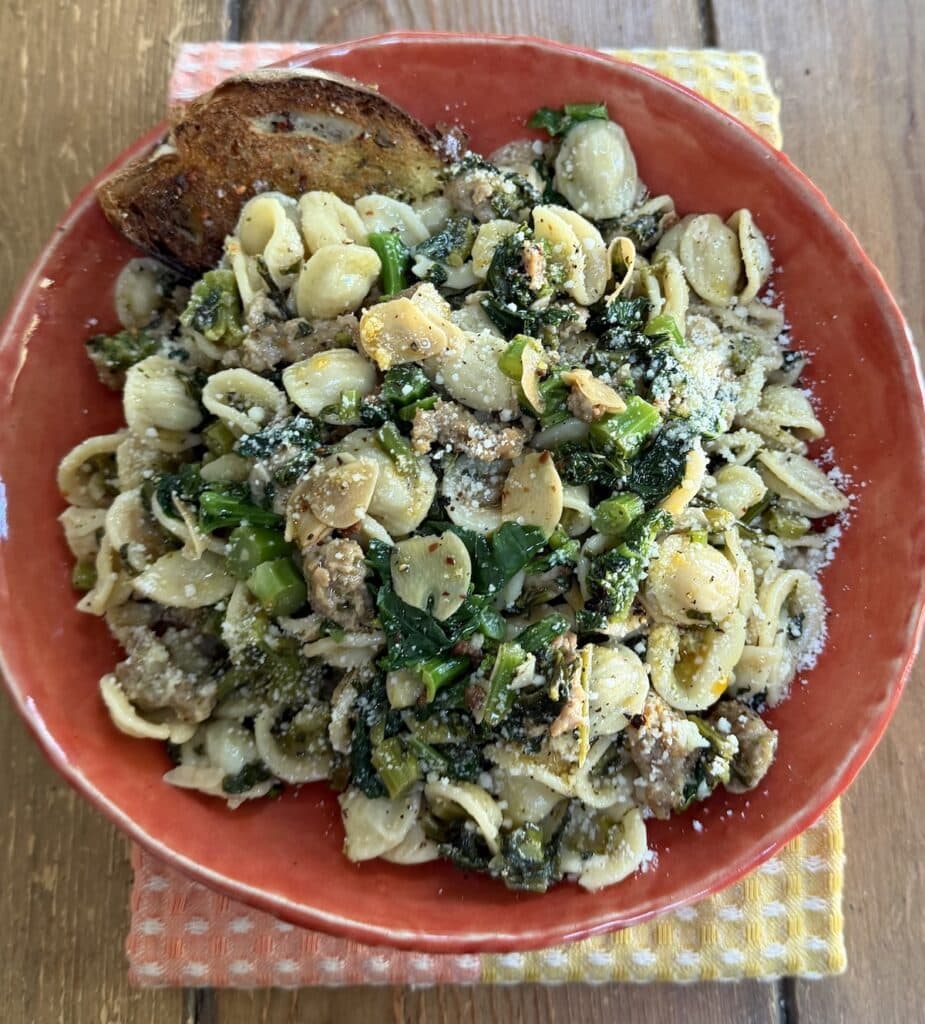
A Classic Italian Combination That’s Close to My Heart
Broccoli rabe has been part of my life for as long as I can remember. Growing up in an Italian-American family, we ate it all the time. My mom even sent us to school with broccoli rabe sandwiches in our lunchboxes! Needless to say, I’ve always loved its pleasantly bitter flavor.
But it wasn’t until my travels through Italy as an adult, especially southern Italy, that I became familiar with Orecchiette with Broccoli Rabe and Sausage as a restaurant dish. I had always thought of this simple, rustic combination as something you’d find in home kitchens, so it was a pleasant surprise to see it on restaurant menus.
And honestly, there’s a reason this combination is such a classic. The slightly bitter greens, savory Italian sausage, plenty of garlic and Pecorino Romano are just meant to be together.
And orecchiette, which means “little ears” in Italian, is the perfect pasta shape for this dish! Those little cups catch all the bite-sized pieces of broccoli rabe, sausage and garlic, so you get a little bit of everything in every bite.
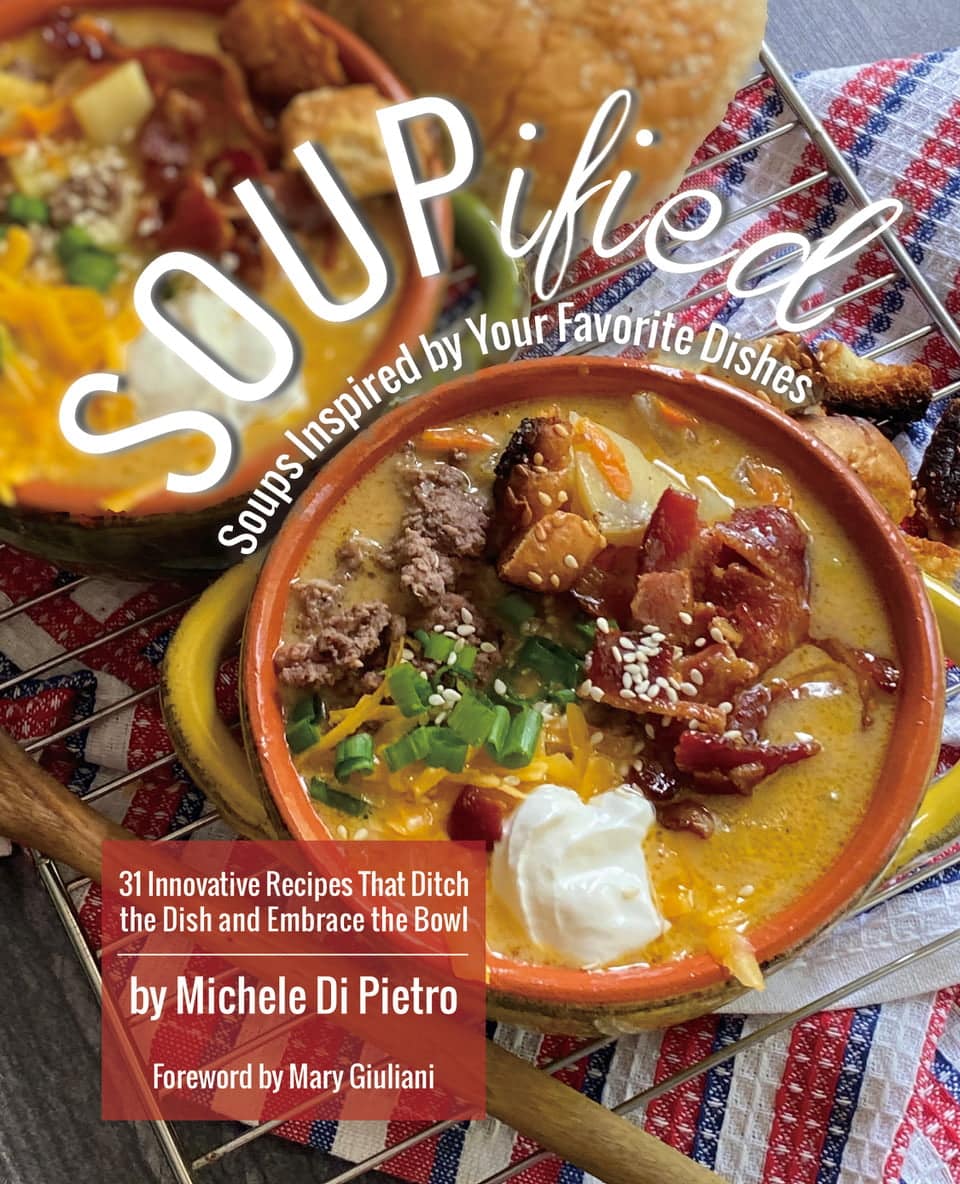
In fact, I love these flavors so much that I created an Orecchiette with Sausage and Broccoli Rabe Soup for my cookbook, SOUPified: Soups Inspired by Your Favorite Dishes! That version includes a little tomato paste and savory miso for added depth, while this pasta stays closer to the traditional olive oil-based preparation.
Love pasta + sausage?
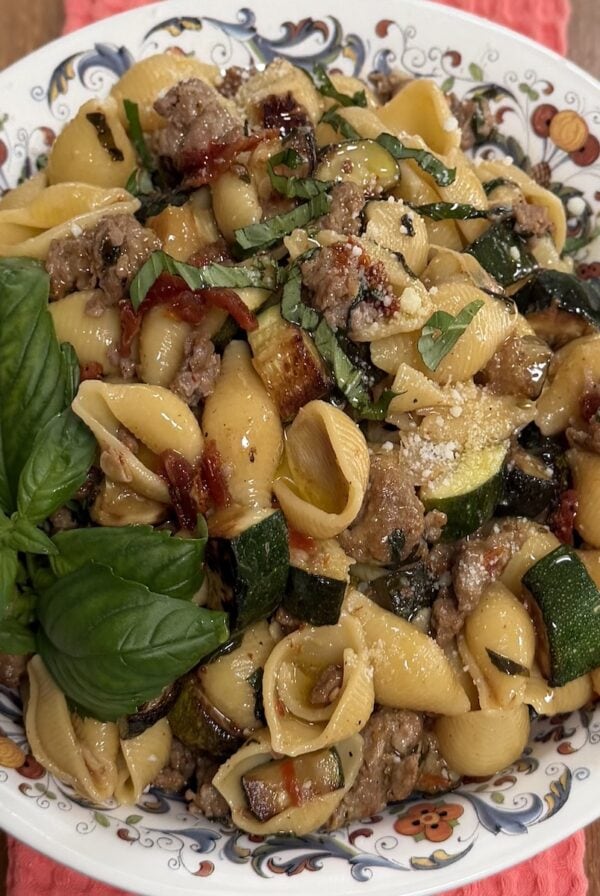
Check out Zucchini Sausage Pasta, Rigatoni Boscaiola with Mushrooms, Creamy Pasta Norcina with Sausage and Eggplant Sausage Ragu.
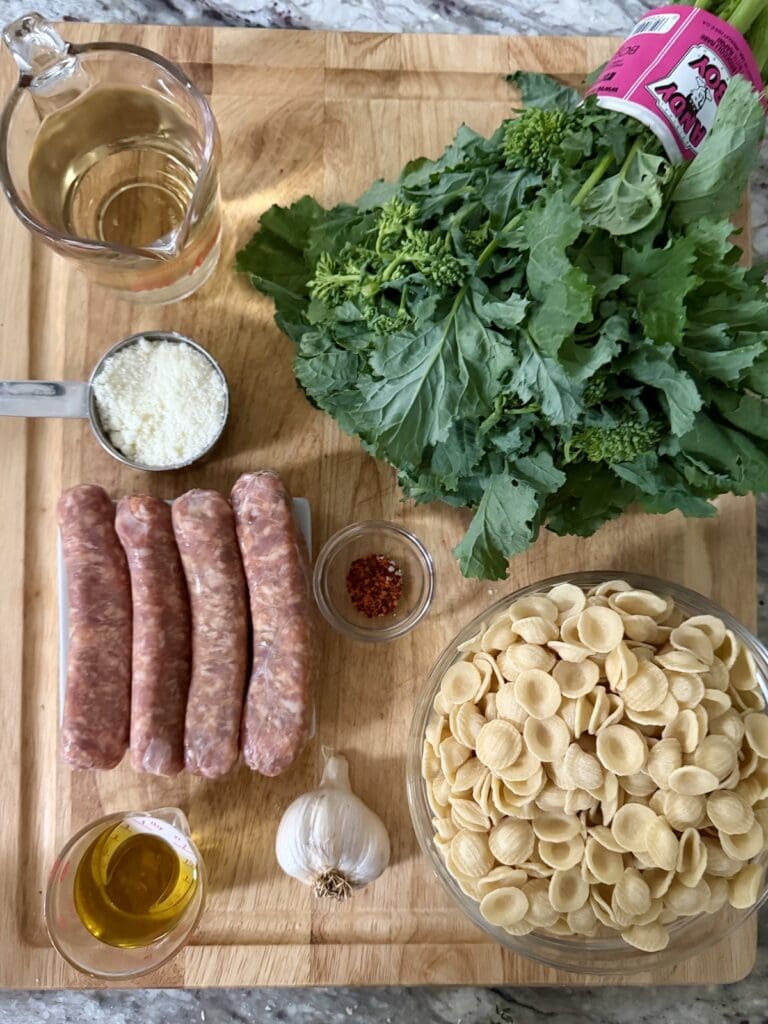
Main Ingredient Notes
- Orecchiette: This is the traditional pasta shape for this dish, and for good reason! Its small, cupped shape is ideal for catching all those delicious bits of sausage, broccoli rabe and garlic. Cavatelli, shells, rigatoni or another favorite pasta can also work.
- Broccoli Rabe (Rapini): You’ll need about 1¼ pounds before trimming, usually one large bunch or two smaller bunches. Its pleasantly bitter flavor is an important part of this dish. Don’t discard the thick stems! Trim only the very ends, then cut the thicker portions smaller so they cook evenly.
- Italian Sausage: Sweet or hot Italian pork sausage both work beautifully. Remove the casings and brown the sausage well, leaving some larger, rustic pieces for texture. Italian chicken or turkey sausage can also be used, although leaner varieties may need a little additional olive oil.
- Garlic: Be generous! Garlic is one of the main flavors in this pasta. Cook it gently until lightly golden and fragrant, but don’t let it burn.
- Dry White Wine: Adds acidity and depth while loosening the flavorful browned bits left by the sausage. Choose a dry wine such as Pinot Grigio or Sauvignon Blanc. Reducing it to about ¼ cup concentrates the flavor without leaving the pasta swimming in wine.
- Olive Oil: Use olive oil to brown the sausage and cook the garlic, then finish the pasta with a drizzle of good-quality extra virgin olive oil for additional flavor and richness.
- Pecorino Romano: Its sharp, salty flavor complements the sausage and bitter greens. Grate it finely and add it off the heat, starting with ⅓ cup and adjusting to taste.
- Crushed Red Pepper and Black Pepper: Crushed red pepper adds heat, while black pepper rounds out the savory flavors. Adjust the crushed red pepper depending on whether you’re using sweet or hot sausage.
- Butter (Optional): A tablespoon or two of softened butter stirred in at the end adds a silkier, restaurant-style finish. I like this pasta without it, too, so consider it entirely optional.
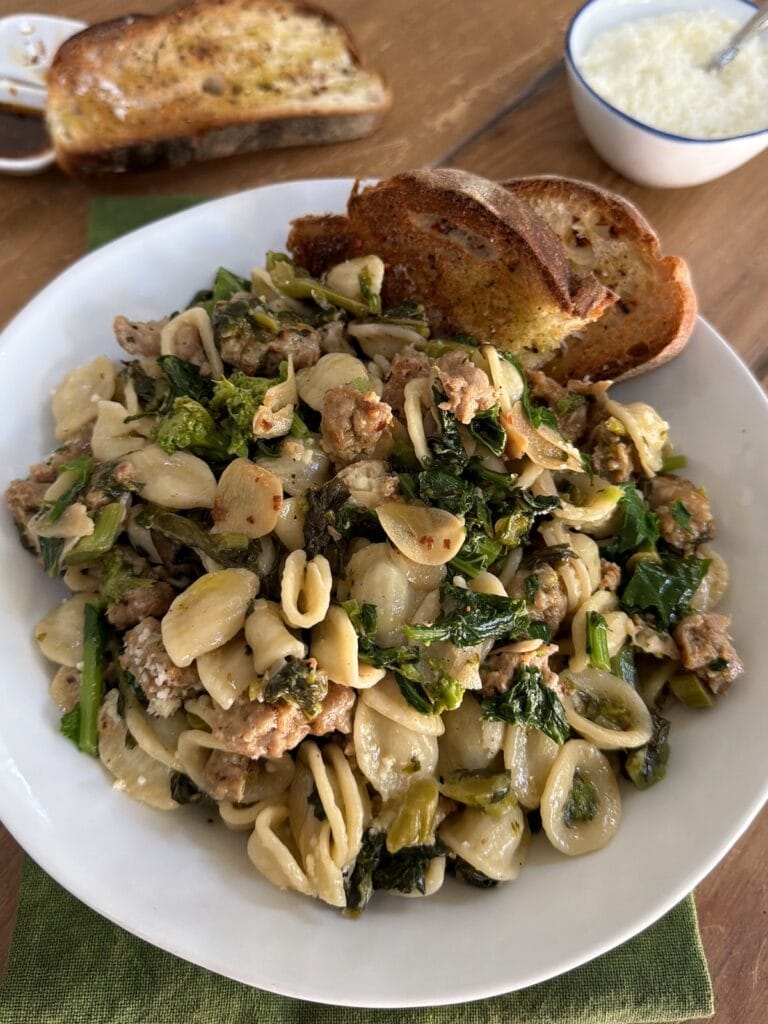
How to Prepare Broccoli Rabe So It’s Tender, Not Stalky
One of my biggest pet peeves is broccoli rabe that’s served with tough, fibrous stems. In fact, it’s one of the reasons I rarely order it in restaurants!
The solution is simple: cut the thicker stems smaller and give them a head start in the boiling water.
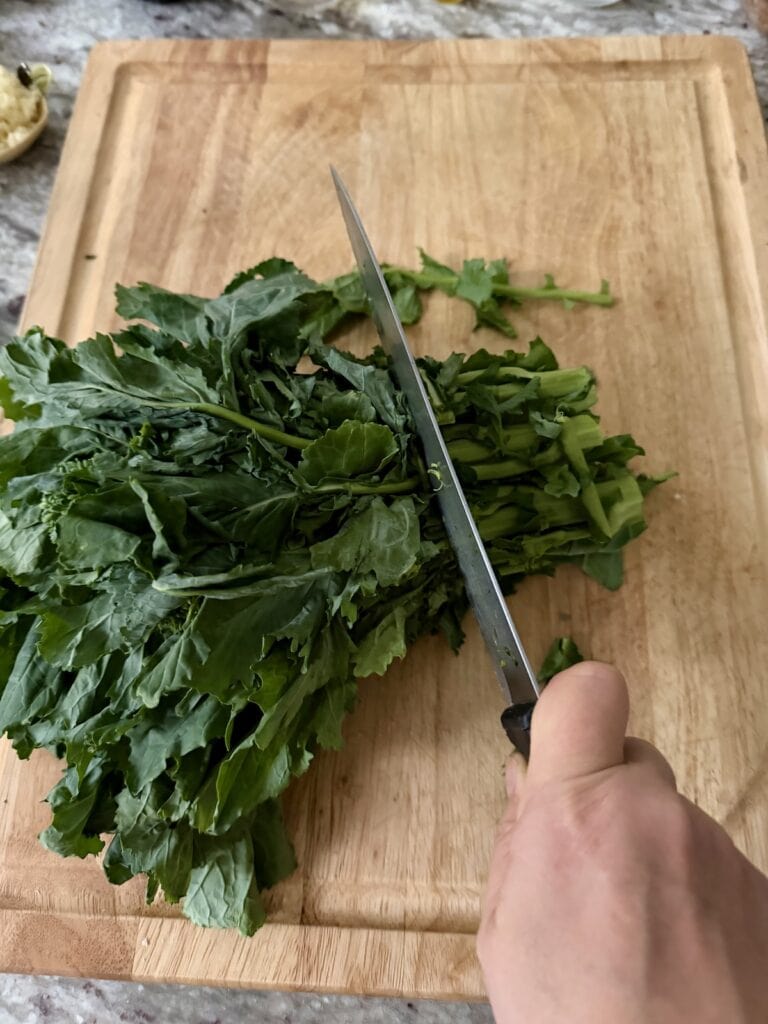
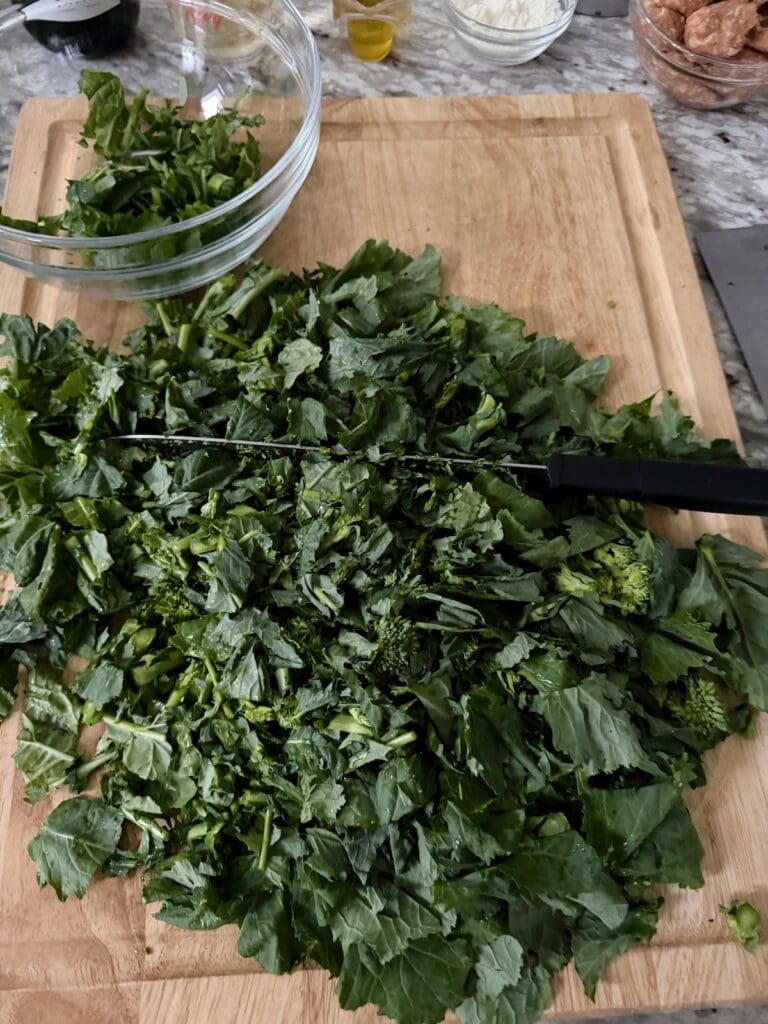
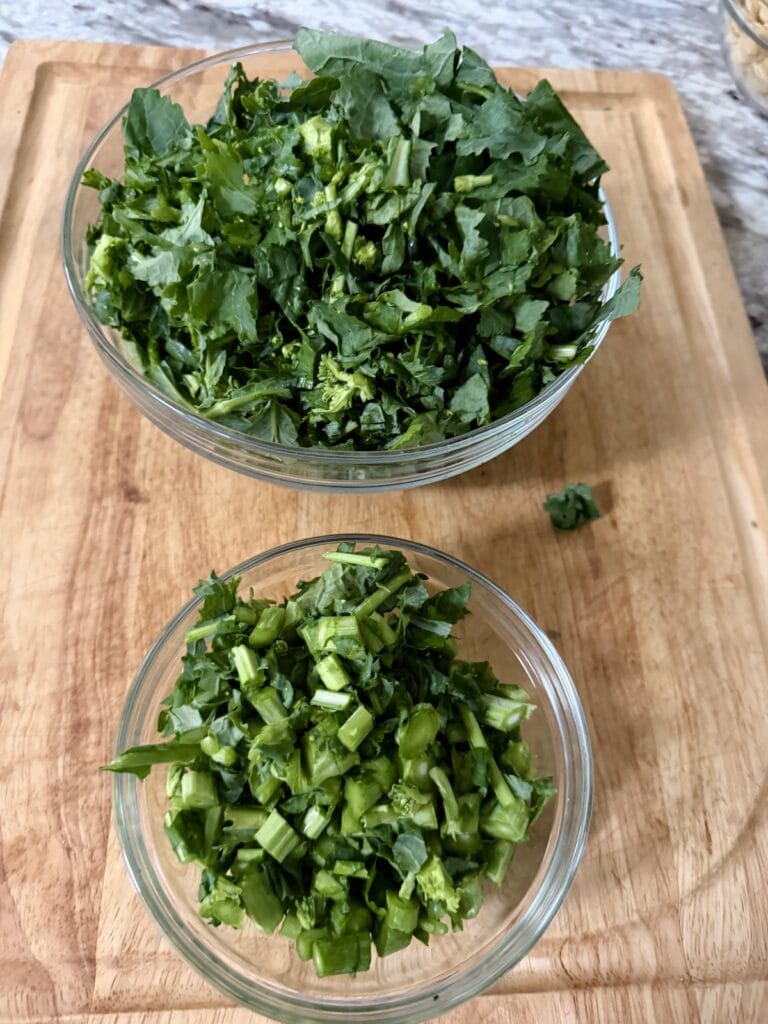
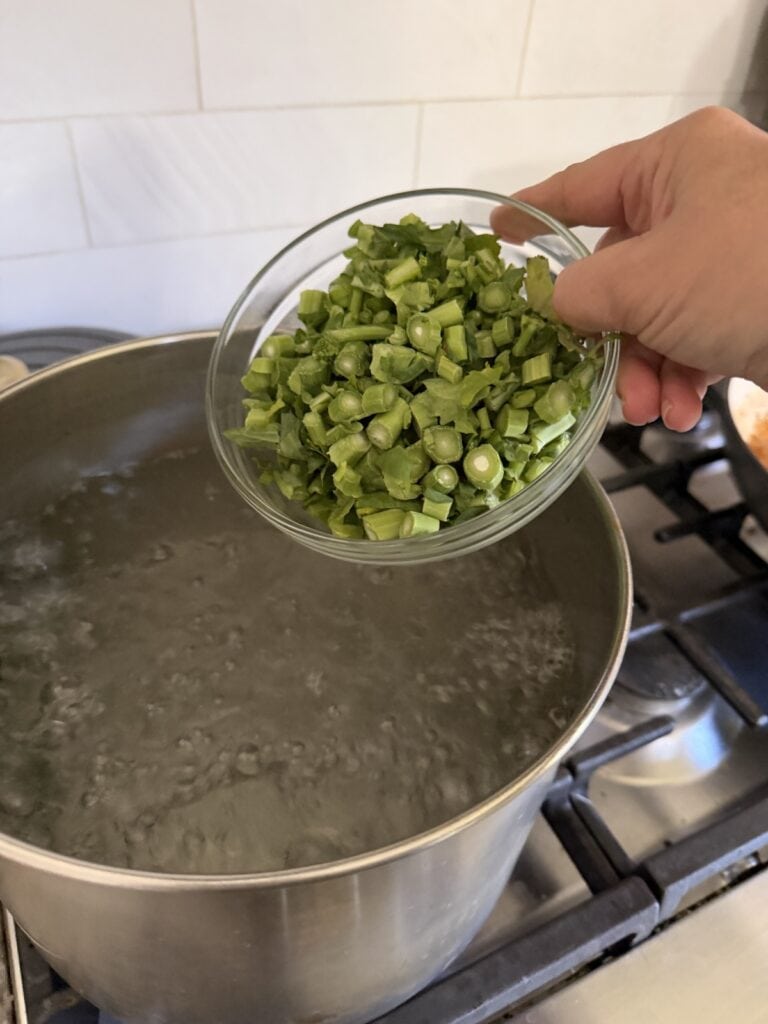
Trim and discard only the very ends of the broccoli rabe stems, about ¼–½ inch. Cut the thicker stems into approximately ½-inch pieces and keep them separate from the leaves, florets and remaining tender stems, which should be cut into bite-sized pieces.
Add the small stem pieces to boiling salted water and cook for 1 minute. Then add the remaining broccoli rabe and continue cooking for about 2 minutes more, or until the stems are tender and the greens are just cooked.
I always use tongs to pull out a stem and test its tenderness before removing the broccoli rabe from the water. The exact timing varies depending on the thickness and maturity of the vegetable.
This is the same basic technique I use in my Sautéed Broccoli Rabe (Rapini) recipe, although I cut the stems smaller here because they’ll be mixed throughout the pasta.
And here’s another shortcut: use a spider to transfer the broccoli rabe directly to the skillet, then cook the orecchiette in that same boiling water!
How to Make Orecchiette with Broccoli Rabe and Sausage
- Prepare the broccoli rabe. Wash thoroughly, trim just the very ends of the stems and cut the thicker stems into approximately ½-inch pieces. Keep these separate from the chopped leaves, florets and remaining stems. Bring a large pot of water to a boil.
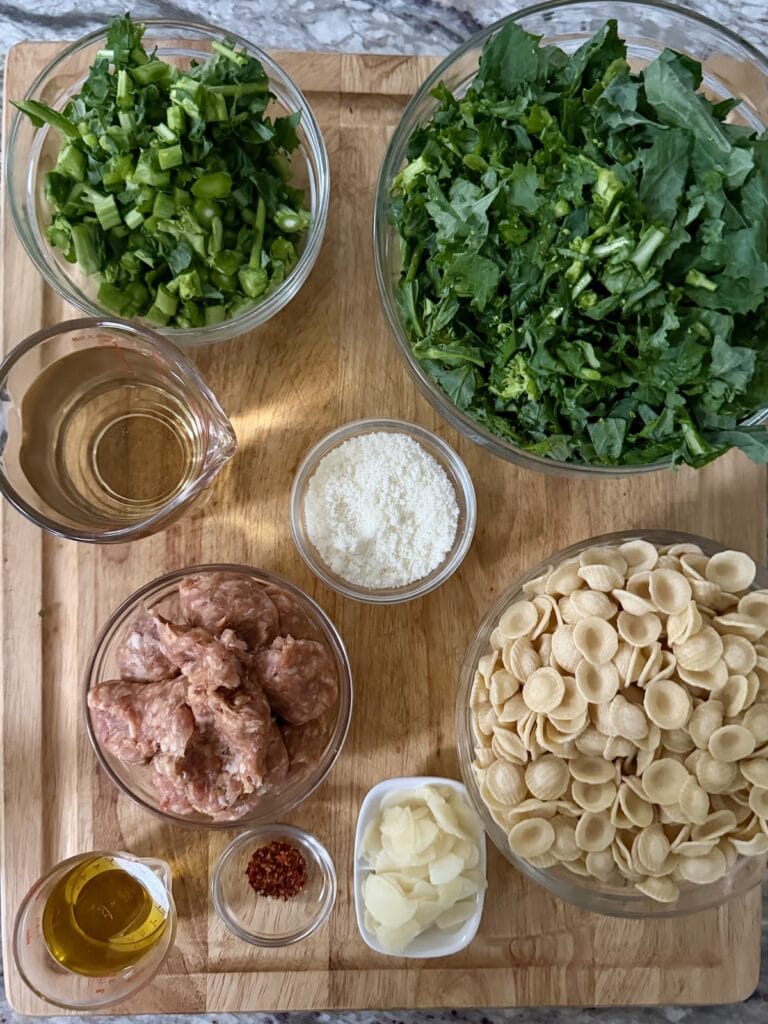
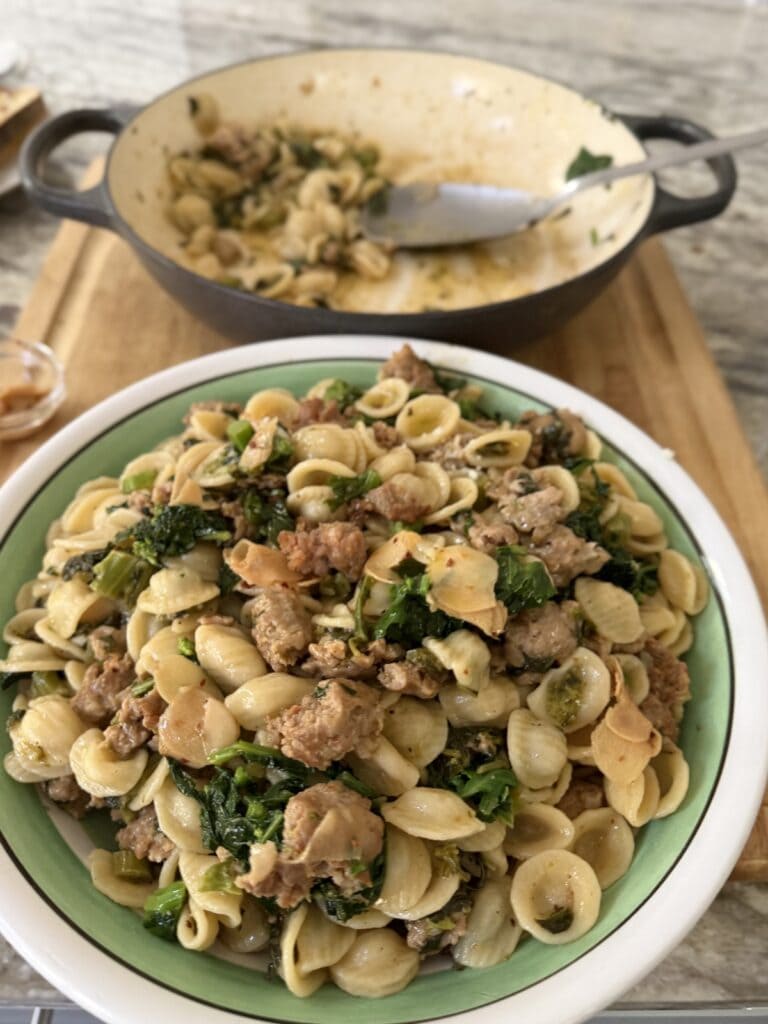
- Brown the sausage. Heat the olive oil in a large, deep skillet over medium heat. Add the sausage, breaking it into bite-sized pieces while leaving some larger pieces for texture. Cook for 6–8 minutes, until nicely browned and cooked through. Remove with a slotted spoon, leaving the flavorful drippings in the skillet.
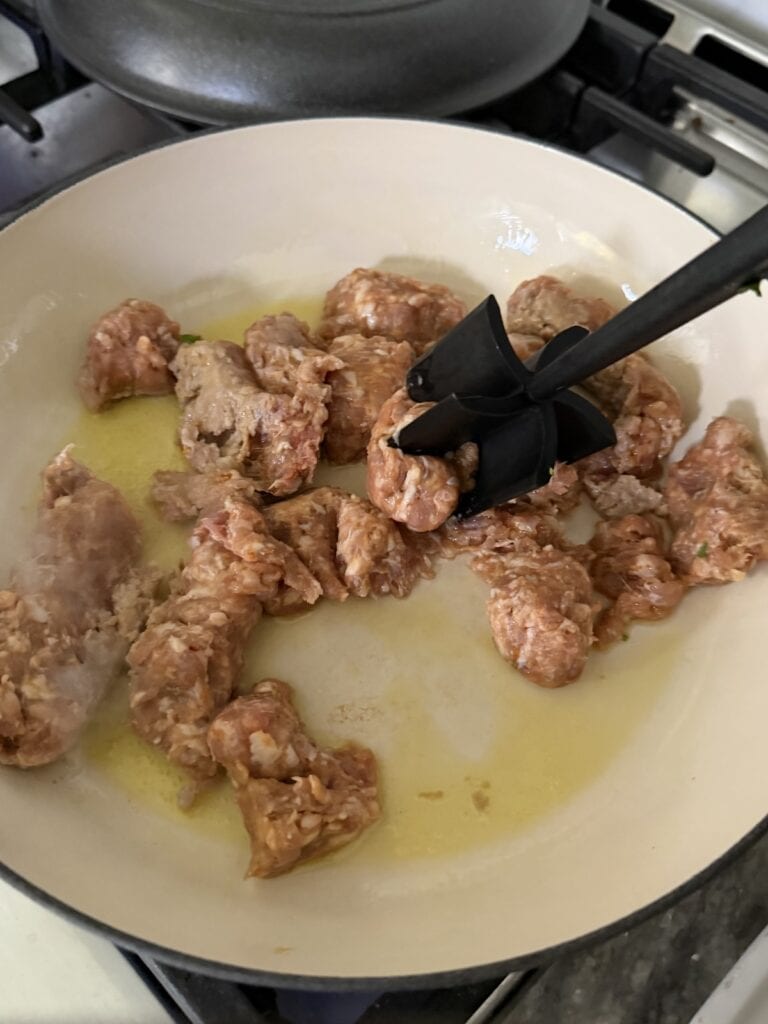
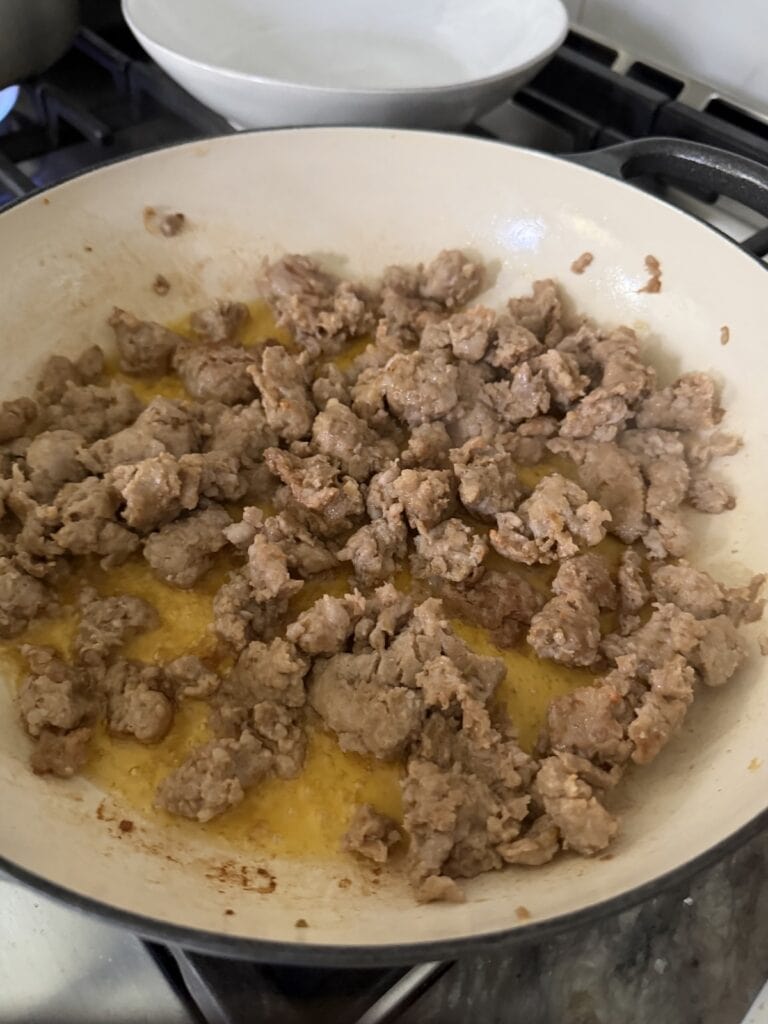
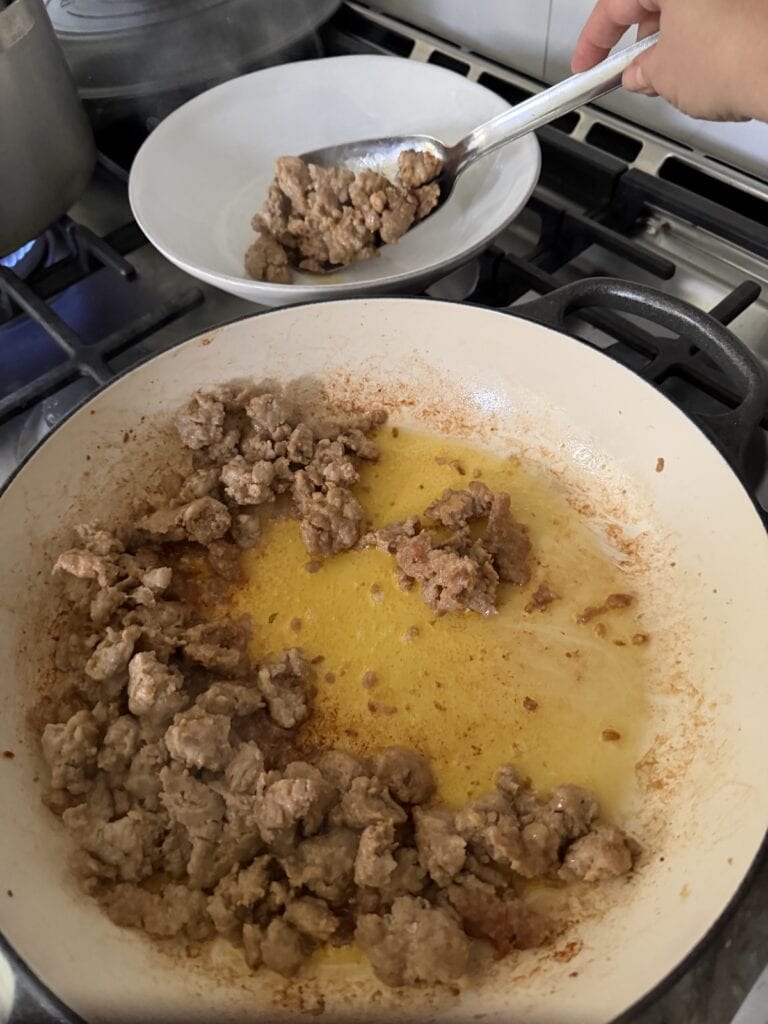
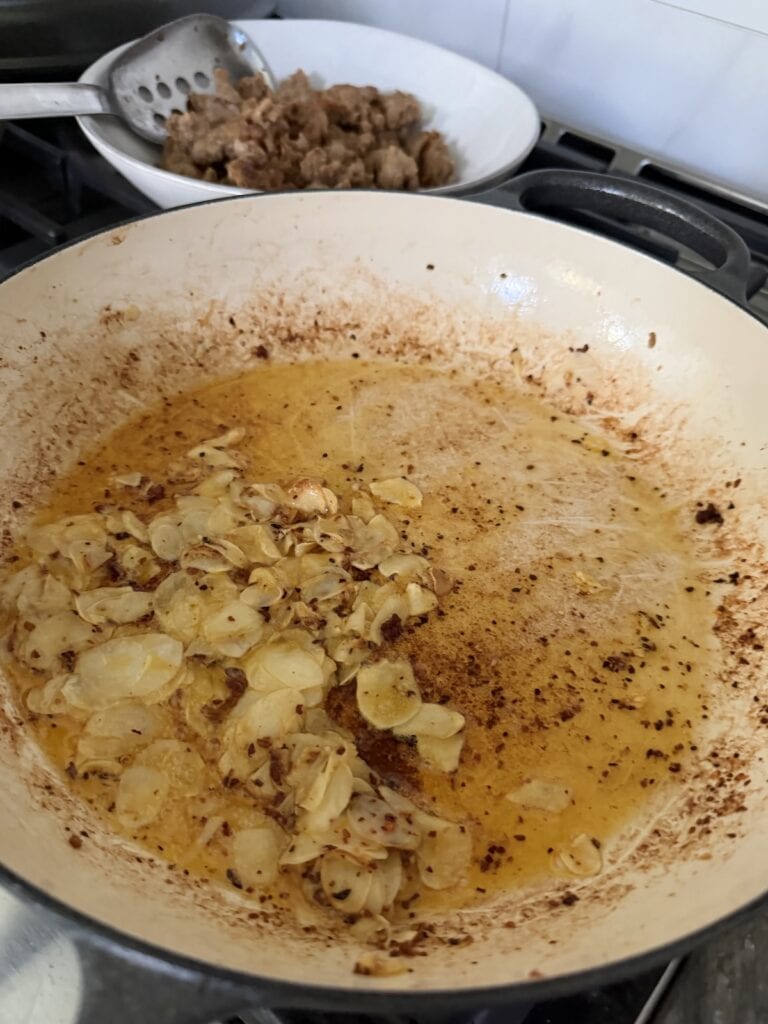
- Cook the garlic. Reduce the heat to medium-low and let the skillet cool slightly. Add the garlic and crushed red pepper flakes and cook for 1–2 minutes, stirring frequently, until lightly golden and fragrant. Don’t let the garlic burn.
- Reduce the wine. Pour in the white wine and increase the heat to medium, scraping up any browned bits from the bottom of the skillet. Simmer until the wine has reduced substantially to about ¼ cup. Don’t let the skillet cook completely dry. Reduce the heat to very low or turn it off while you blanch the broccoli rabe.
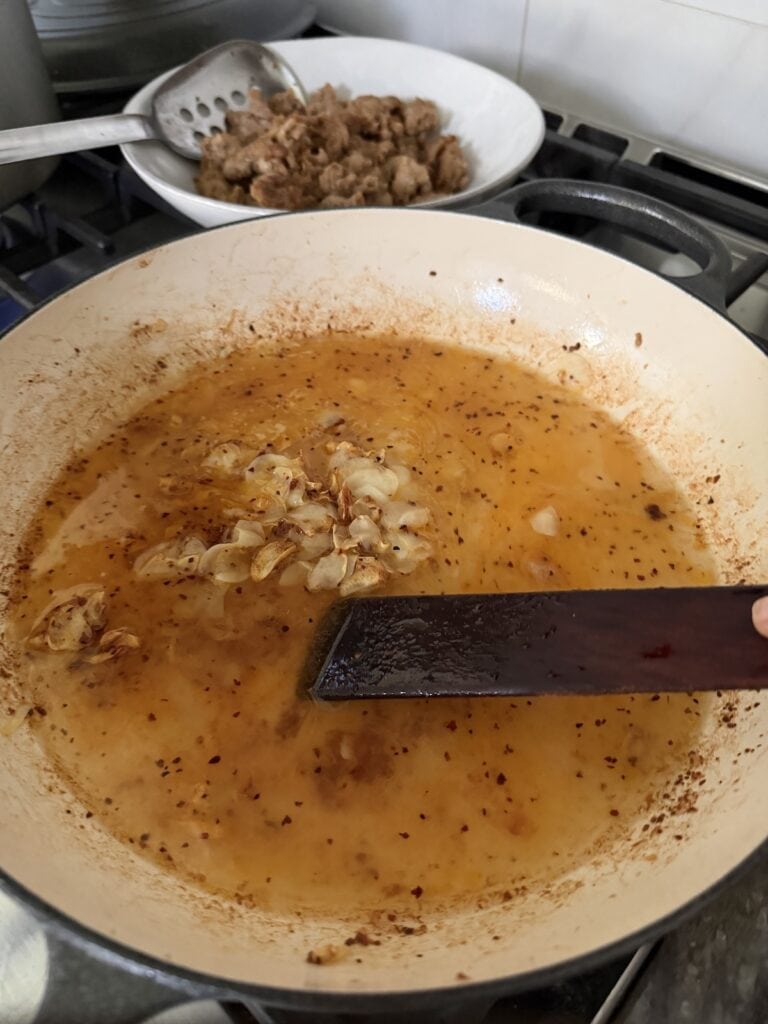
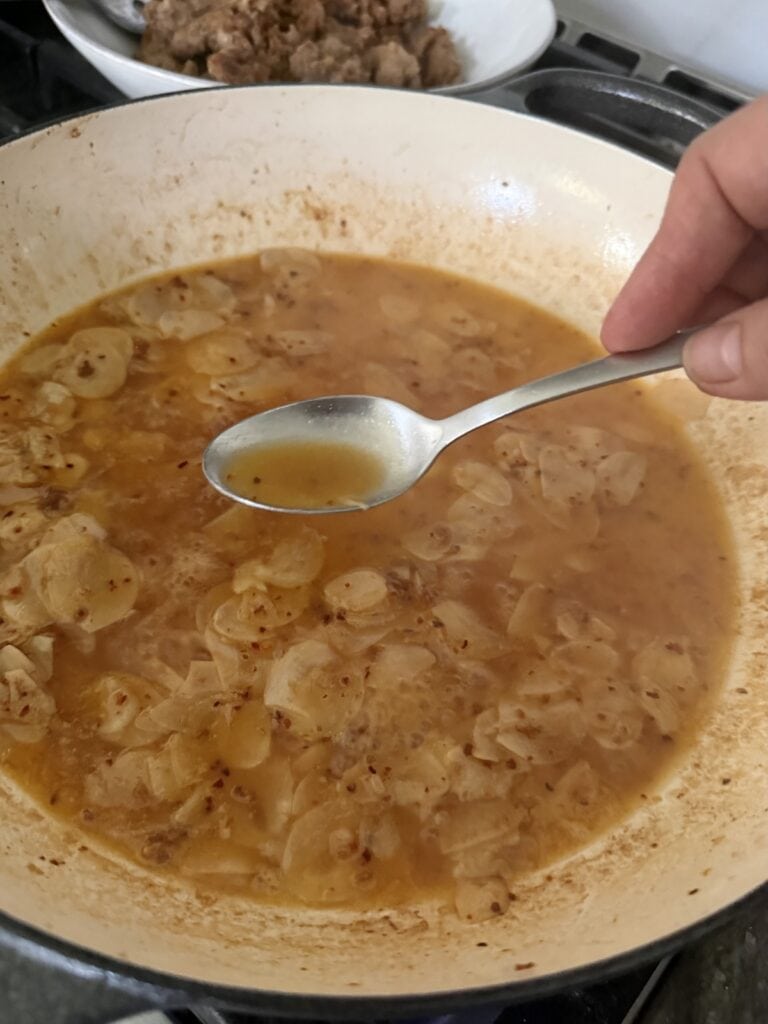
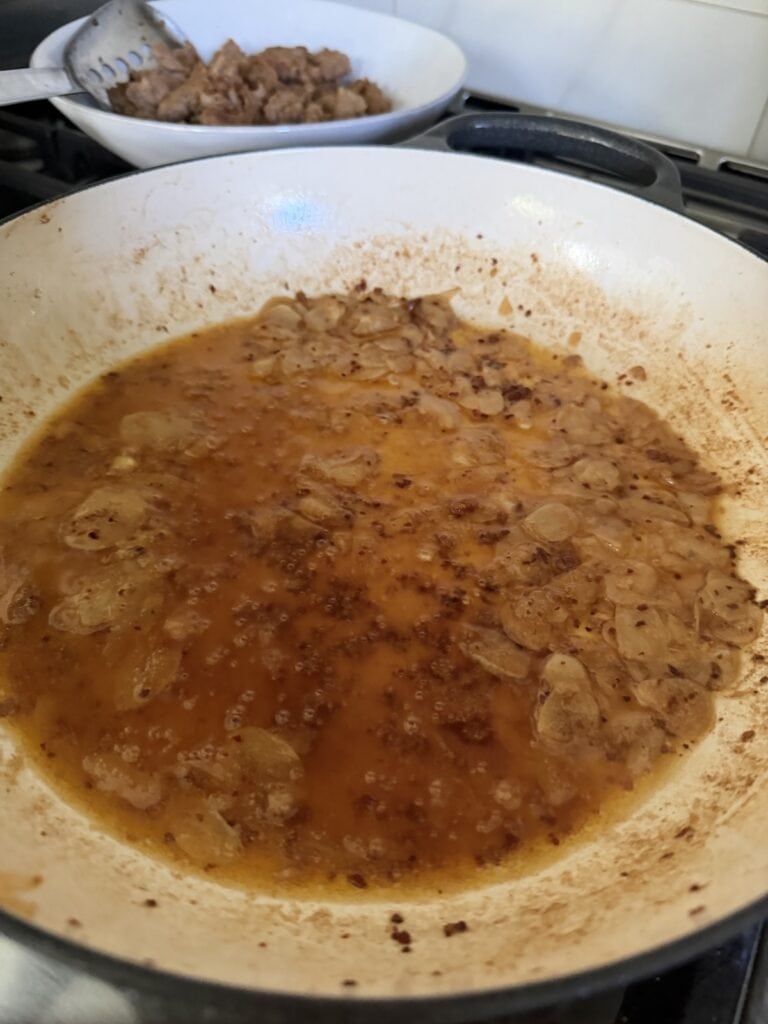
- Blanch the broccoli rabe. Salt the boiling water, then add the small stem pieces and cook for 1 minute. Add the remaining broccoli rabe and cook for approximately 2 minutes more, or until the stems are tender. Test a stem with tongs before removing the greens. Meanwhile, return the skillet to medium heat.
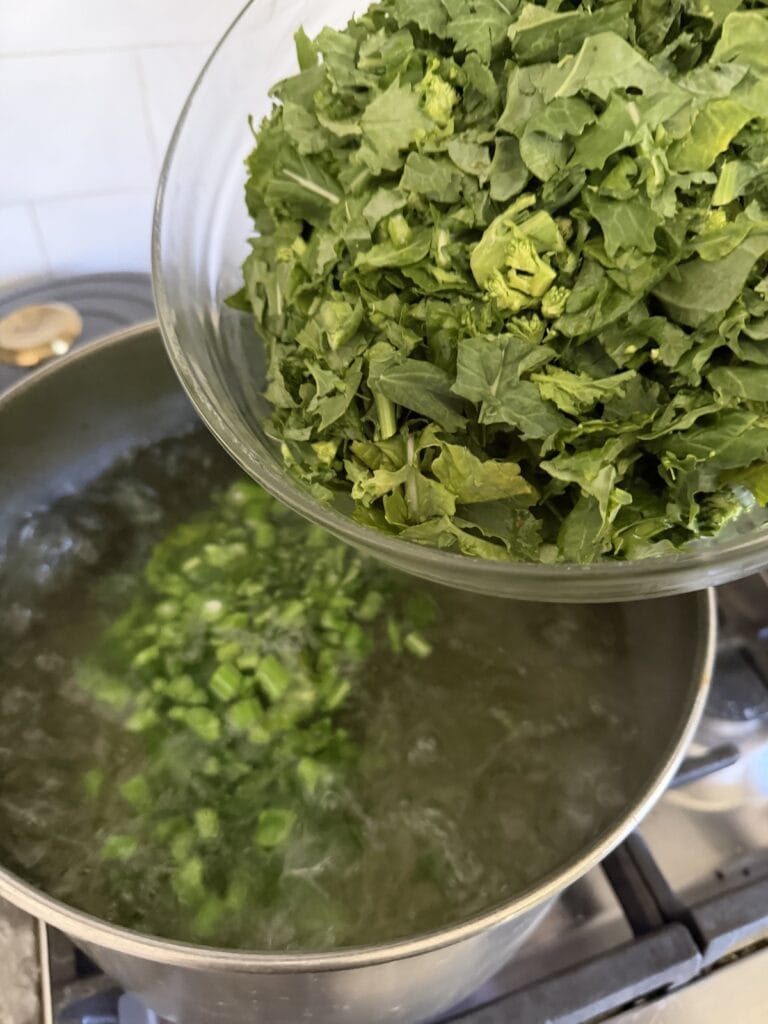
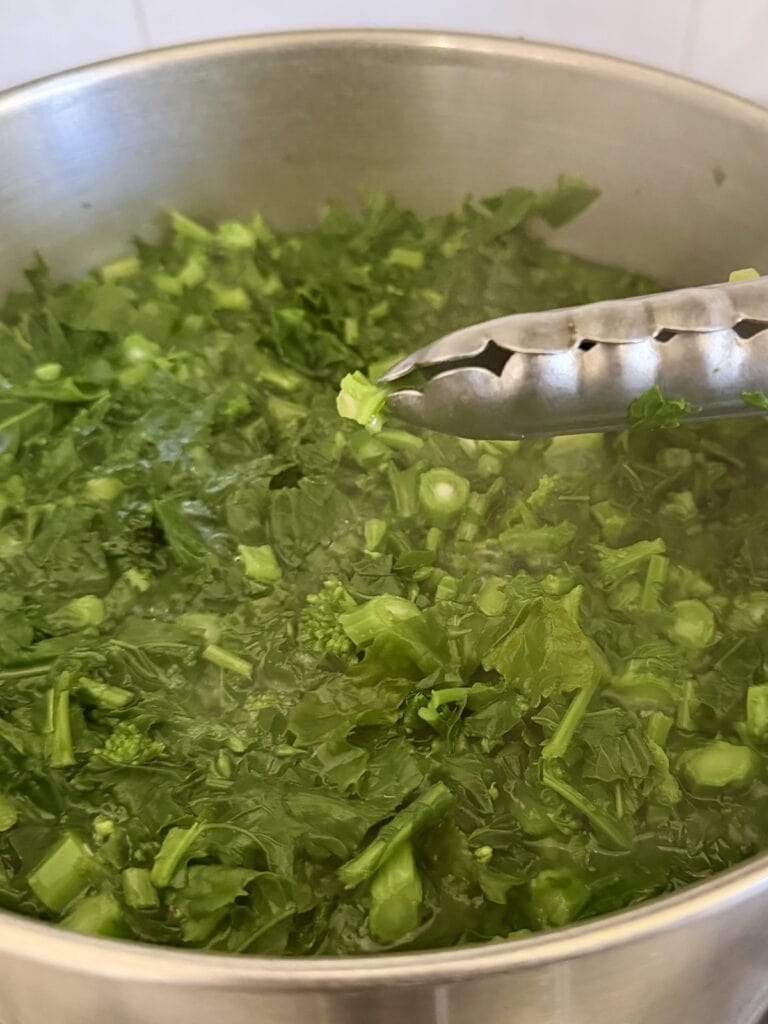
- Finish the sausage and broccoli rabe mixture. Using a spider, drain the broccoli rabe well and transfer it directly to the skillet. Save the boiling water for the pasta. Toss the greens in the garlicky oil and reduced wine for about 1 minute, allowing excess moisture to evaporate. Return the sausage and any accumulated juices, add the salt and black pepper, and toss until heated through. Turn off the heat or keep the skillet very low while the pasta cooks.
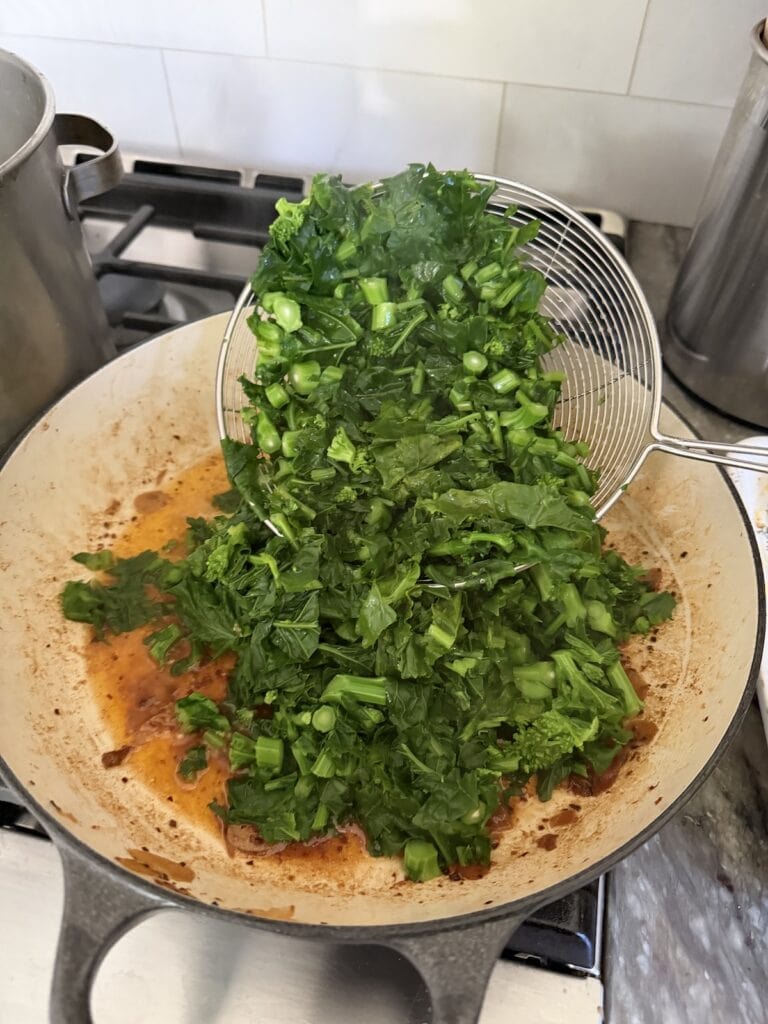
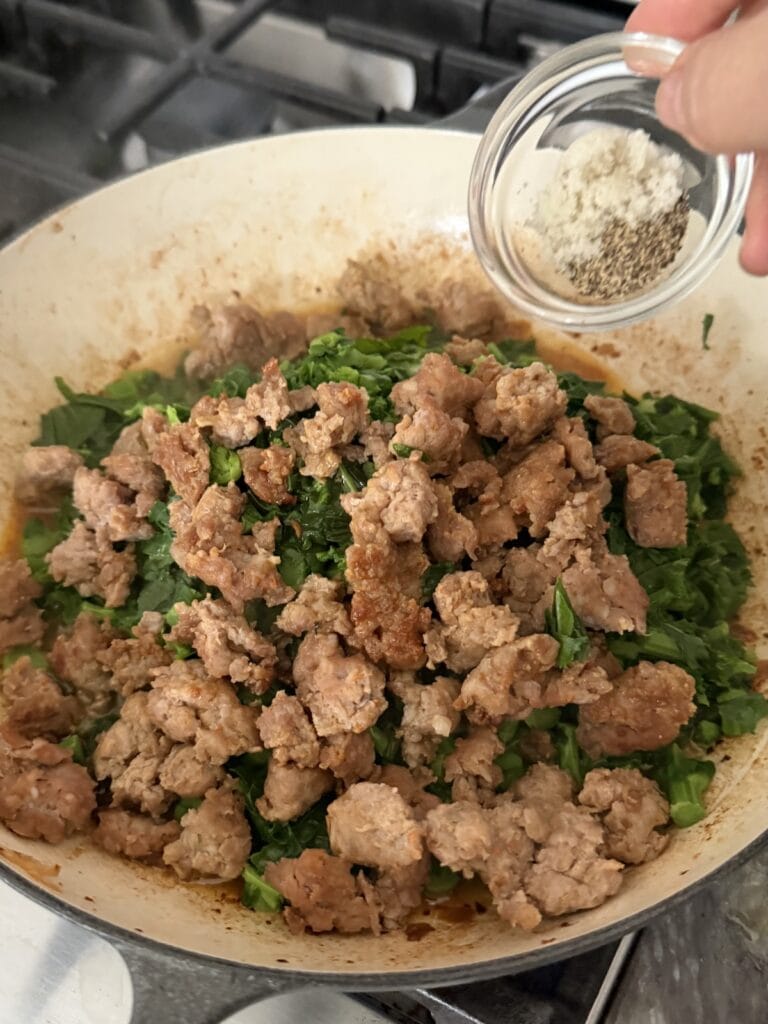
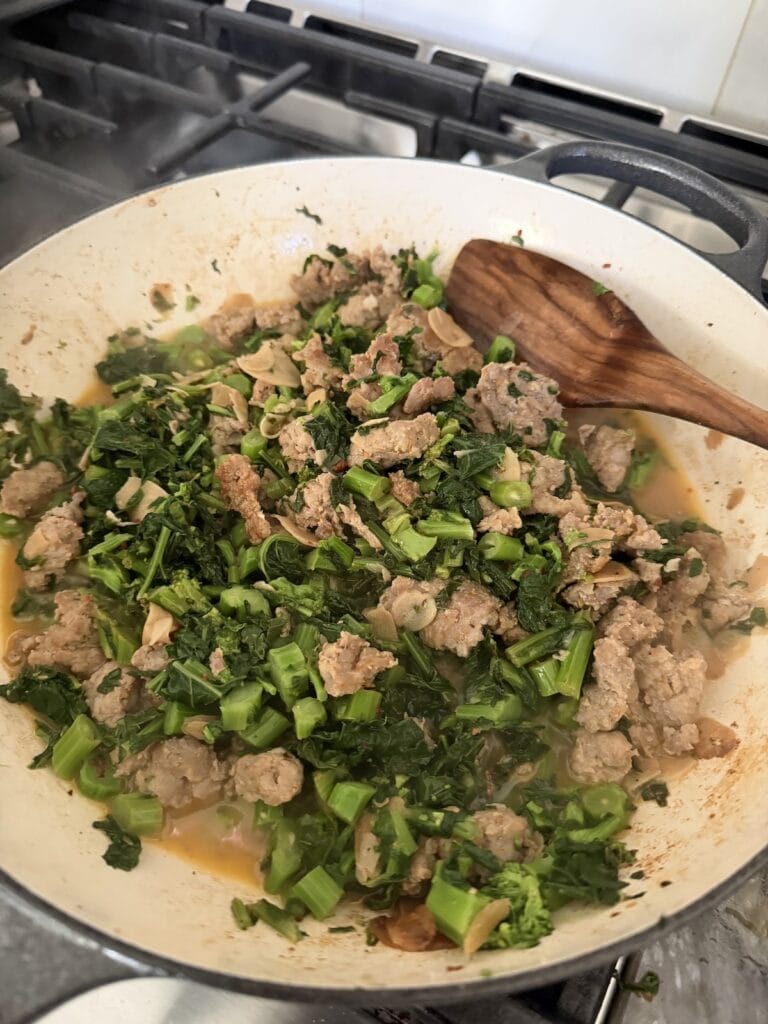
- Cook orecchiette. Return the reserved broccoli rabe water to a boil, if necessary. Add the pasta and cook until about 2 minutes shy of al dente, according to the package instructions. Reserve at least 1 cup of the starchy cooking water. Return the sausage and broccoli rabe skillet to medium-low heat when the pasta is nearly ready.
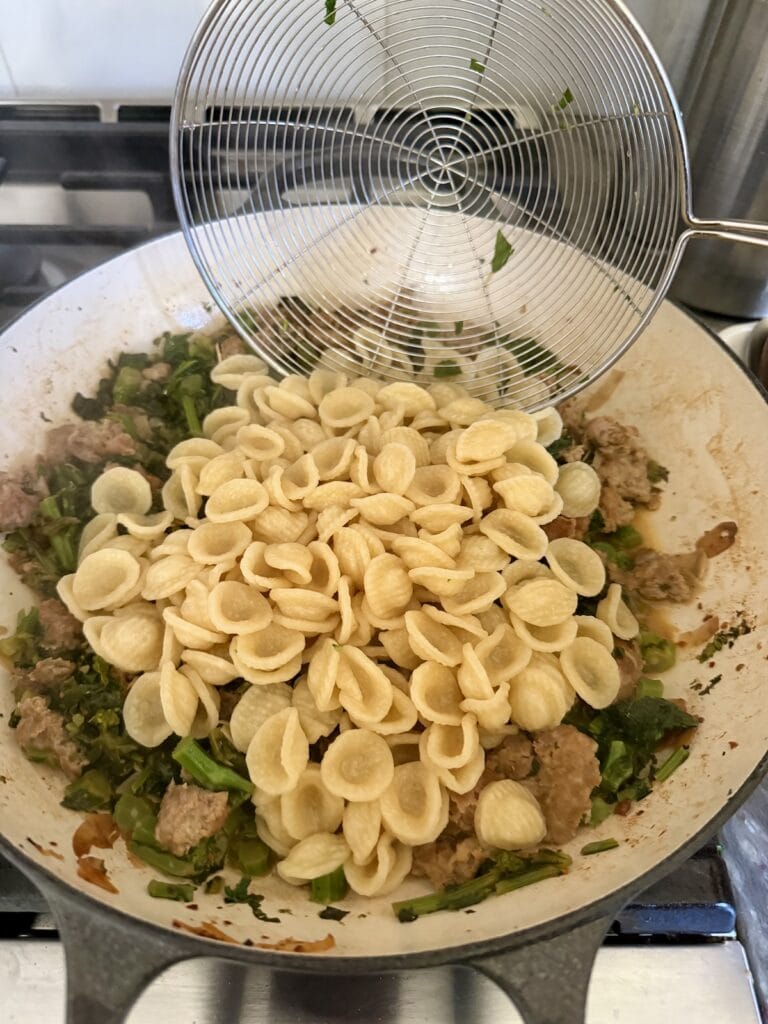
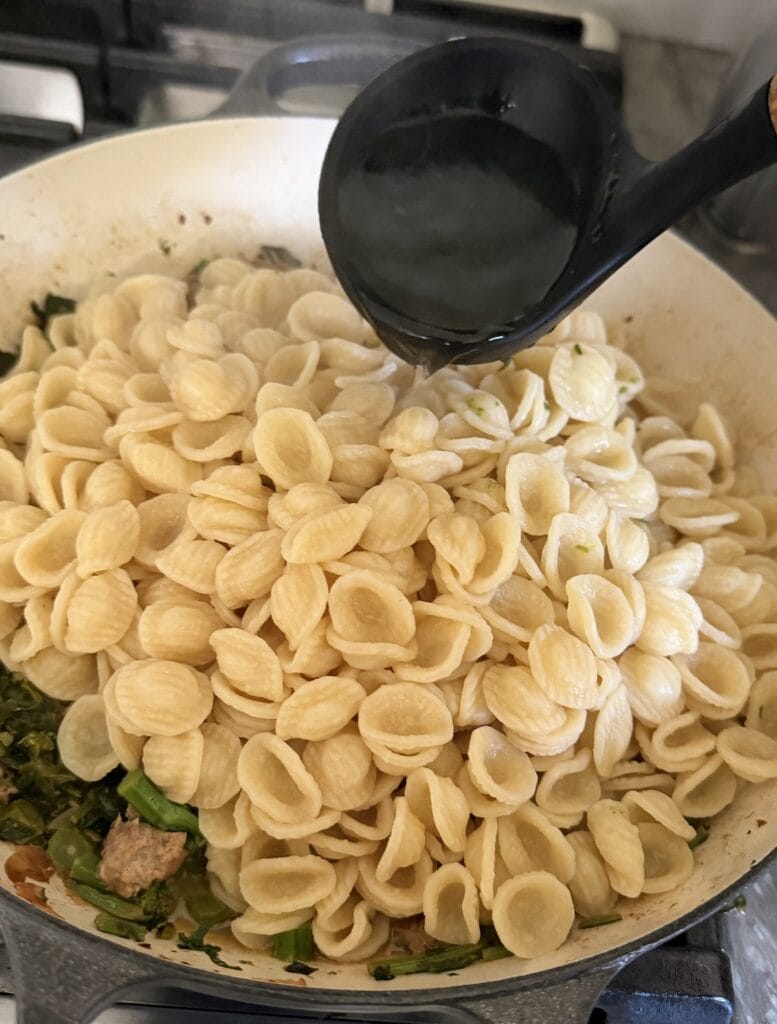
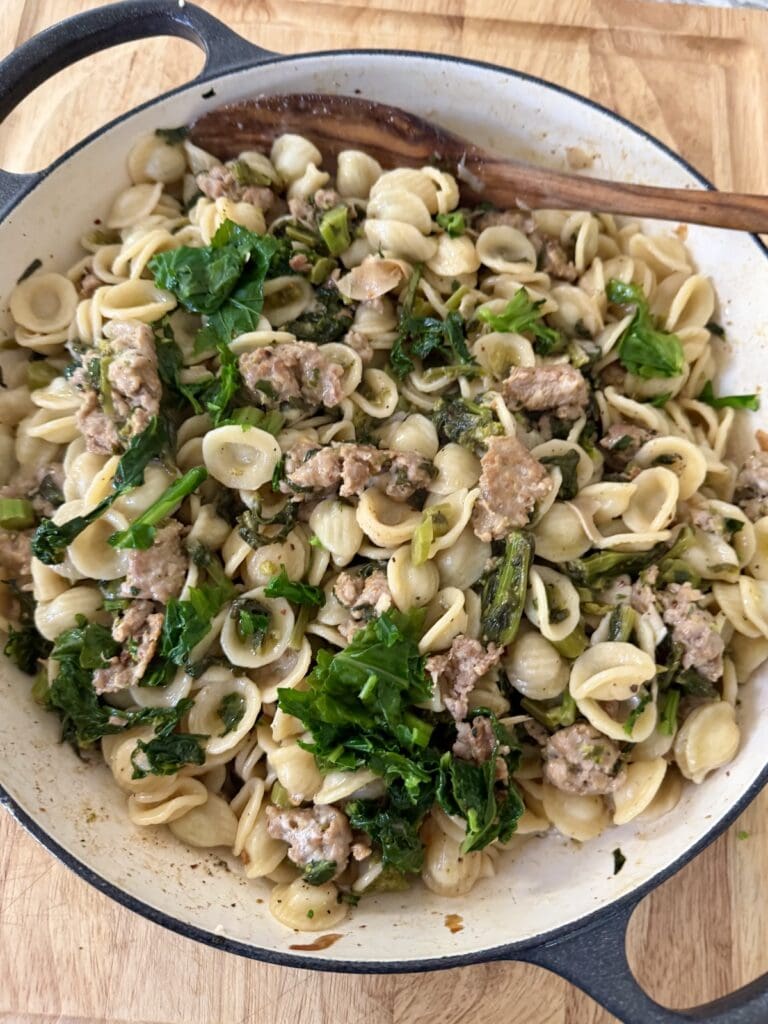
- Finish pasta in the skillet. Transfer the orecchiette to the skillet and toss well, letting it finish cooking in the flavorful sauce. Add reserved pasta water as needed, about ½ cup at a time, until the pasta is al dente and lightly coated with sauce.
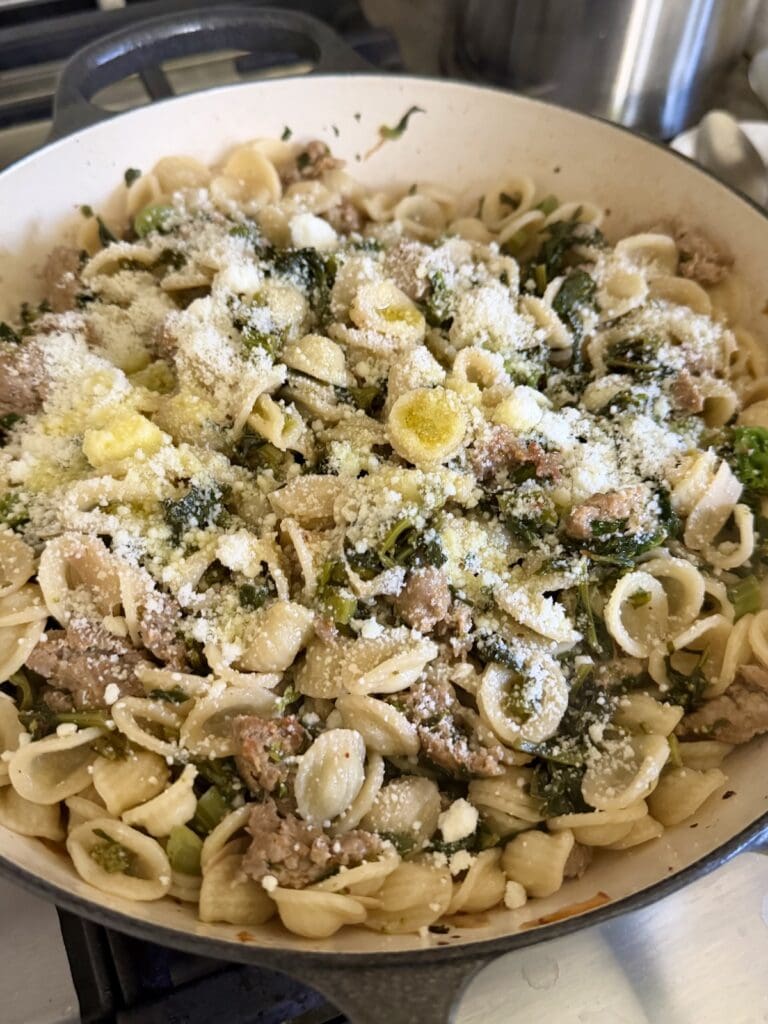
- Add cheese and olive oil. Turn off the heat and stir in the grated Pecorino Romano. Finish with a good drizzle of extra virgin olive oil. For a silkier finish, stir in 1–2 tablespoons softened butter, if desired. Taste and adjust the seasonings. Enjoy!
Recipe Variations and Substitutions
- Add Sun-Dried Tomatoes: Stir in about ¼–⅓ cup finely chopped, oil-packed sun-dried tomatoes with the garlic for concentrated sweetness, acidity and umami. I especially like how their flavor complements the bitterness of broccoli rabe.
- Add Toasted Garlicky Breadcrumbs: Sprinkle toasted breadcrumbs over the finished pasta for a little crunch. They’re delicious with or without grated cheese.
- Change the Sausage: Use sweet or hot Italian pork sausage or substitute Italian chicken or turkey sausage. Adjust the olive oil as necessary if using a leaner sausage.
- Try a Different Pasta: Cavatelli, small shells or rigatoni are good alternatives to orecchiette. Just adjust the cooking time for the pasta shape.
- Skip the Wine: Deglaze the skillet with a little chicken broth or water instead. The sauce will have a slightly different flavor, but the recipe will still work.
- Skip the Pasta: Love sausage and broccoli rabe but don’t want pasta? Pair my Sautéed Broccoli Rabe with Oven-Baked Italian Sausage for an easy Italian-style meal. Add cooked cannellini beans if you’d like to make it heartier.
Make Ahead, Leftovers and Storage
- Make Ahead: Clean, trim and chop the broccoli rabe in advance. You can also blanch it ahead of time, cool it promptly and refrigerate it until ready to use.
- Refrigerate: Store leftover pasta in an airtight container in the refrigerator for up to 3–4 days.
- Reheat: Warm gently in a covered skillet over medium-low heat with a splash of water or broth to loosen the sauce.
- Freezing: I prefer this pasta freshly made. The finished orecchiette may lose some of its texture after freezing and thawing.
Frequently Asked Questions
Not necessarily, but it does need to be cooked before combining with the pasta. You can sauté it directly in the pan with a splash of water.
I do recommend blanching the rapini for this recipe. Blanching helps tenderize the stems and mellow some of the bitterness. Since we’re using the same pot of water for the pasta, it doesn’t require another pot.
Blanching in boiling water helps mellow its naturally bitter flavor. The savory sausage, garlic, olive oil and Pecorino Romano also balance that bitterness beautifully. I wouldn’t try to eliminate it completely, though—it’s part of what makes this combination so delicious!
Yes, although the flavor will be different. Regular broccoli is milder and sweeter than broccoli rabe. Cut it into small florets and adjust the blanching time until tender. You’ll lose some of the characteristic bitterness, but you’ll still have a delicious sausage and broccoli pasta.
If you’d like, check out my mom’s Pasta with Broccoli recipe, which is always a winner!
You probably need more reserved pasta water. The orecchiette continues absorbing liquid as it finishes cooking in the skillet. Add a little starchy pasta water at a time, tossing until the pasta is tender and lightly coated. Finish with the Pecorino Romano and olive oil off the heat.
More Classic Pasta Recipes
If you love rustic Italian pasta dishes, here are a few more to try:
- Penne alla Puttanesca
- Pasta Sorrentina with Tomatoes, Basil and Fresh Mozzarella
- Wild Boar Bolognese
- Rigatoni Boscaiola
- Hay and Straw Pasta with Mushrooms
- Creamy Tortellini with Ham and Peas
A Rustic Italian Pasta Worth Making Again and Again
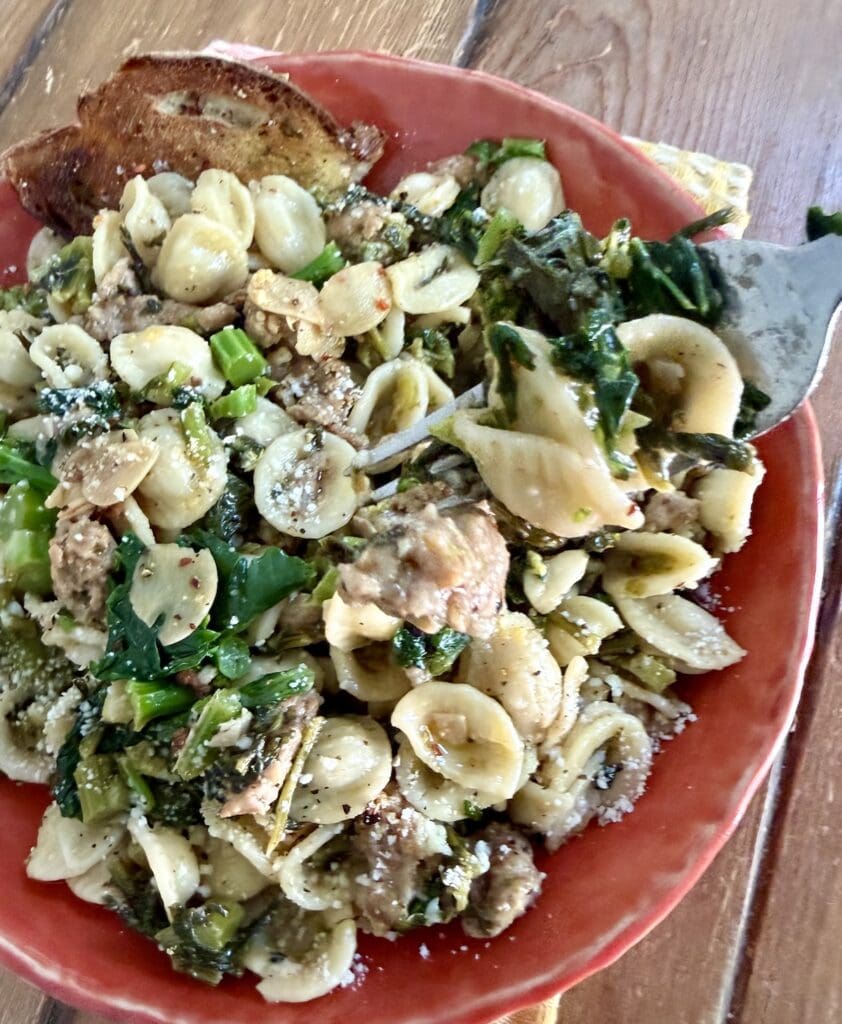
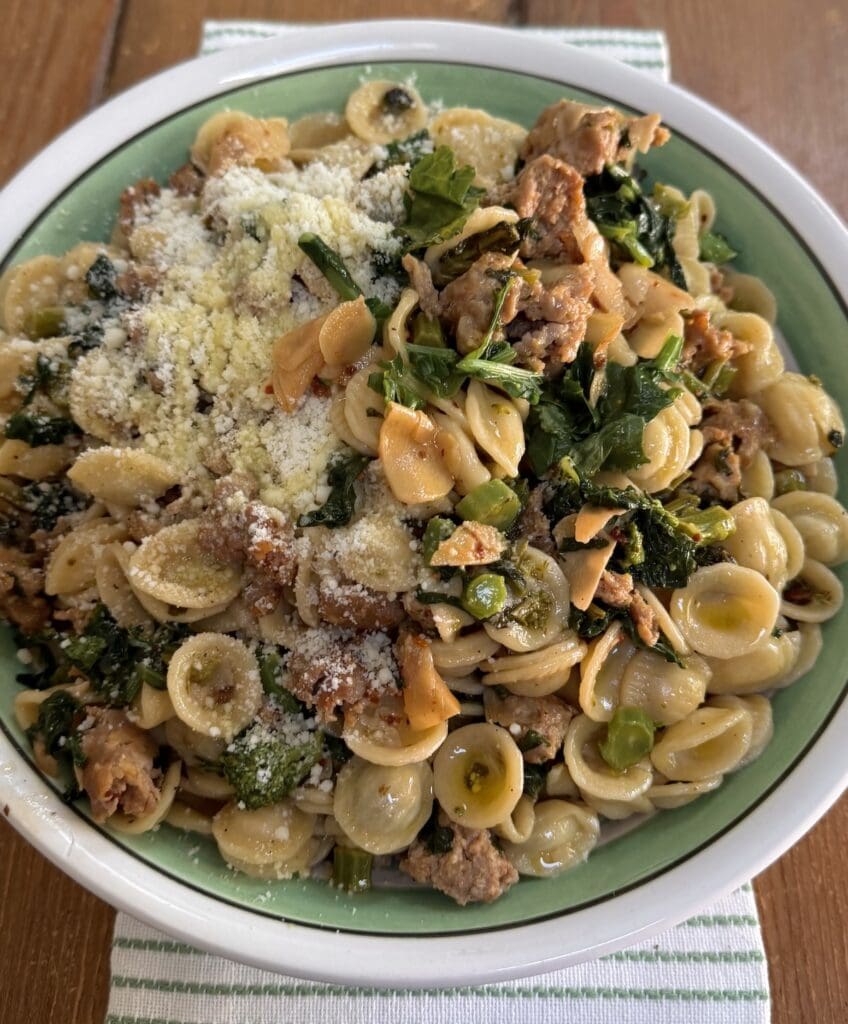
There’s something so satisfying about a pasta dish made with just a handful of ingredients that work perfectly together. Orecchiette with Broccoli Rabe and Sausage is one of those classics that doesn’t need much fuss—just good ingredients and a little attention to technique.
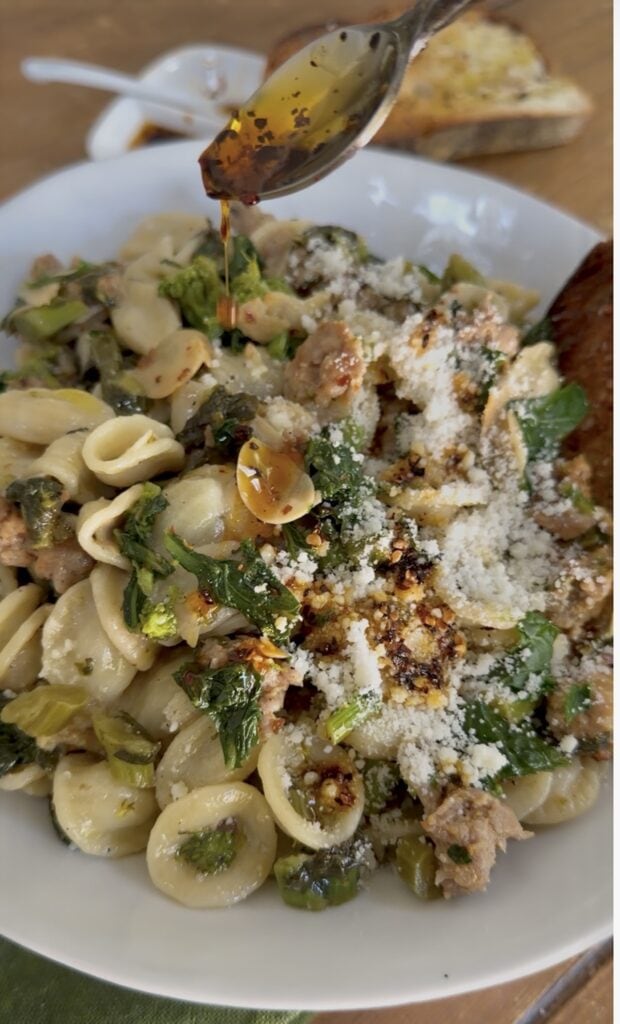
Serve it with extra Pecorino Romano, a drizzle of your best olive oil and, if you like things spicy, some of my homemade chili oil (olio santo). I always have a jar of it on the dinner table!
Mangia bene!
Orecchiette With Sausage and Broccoli Rabe
Video
Equipment
- Large pot for boiling pasta and broccoli rabe
- Dutch oven or large, deep skillet or sauté pan
- Spider or hand strainer
- Cheese grater (optional)
Ingredients
- 1 large bunch broccoli rabe, (about 1¼ pounds before trimming; see Notes.)
- 2 Tbsp olive oil
- 1-1¼ pounds sweet or hot Italian sausage, casings removed
- 3-4 Tbsp chopped or thinly-sliced garlic
- ¼–½ tsp crushed red pepper flakes, or to taste
- 1 cup dry white wine , such as Pinot Grigio
- ½ tsp salt or to taste , at end
- ¼ tsp ground black pepper
- 1 pound orecchiette pasta, See Notes.
- Salt for pasta water
- ⅓-½ cup finely grated Pecorino Romano cheese + more for serving, about 2 ounces
- Extra virgin olive oil, for finishing
- 1-2 Tbsp butter, optional, for finishing
Instructions
- Prep and gather all ingredients according to specifications above. Bring a large pot of water to a boil. (Please see the section above in the blog post forS tep-By-Step instructions with photos.)
- Prepare broccoli rabe. Trim and discard only the very ends of the broccoli rabe stems (about ¼–½ inch). Cut the thicker stems into approximately ½-inch pieces and set them aside. Cut the remaining stems, florets and leaves into bite-sized pieces, keeping them separate from the smaller stem pieces.1 large bunch broccoli rabe
- Brown sausage. Heat 2 tablespoons olive oil in a large, deep skillet over medium heat. Add the sausage, breaking it into bite-sized pieces as it cooks with a wooden spoon. (Don’t completely break up the sausage; leave some larger pieces for character and texture. See photos above.)2 Tbsp olive oil, 1-1¼ pounds sweet or hot Italian sausage
- Cook until browned and cooked through, approximately 6–8 minutes. Using a slotted spoon, transfer the sausage to a plate, leaving the drippings in the skillet.
- Cook garlic. Reduce the heat to medium-low and allow the pan to come down in temperature a bit (so that the garlic does not burn).
- Add the garlic and crushed red pepper flakes. Cook gently, stirring frequently, until the garlic is lightly golden and fragrant, approximately 1–2 minutes. Do not let it burn.3-4 Tbsp chopped or thinly-sliced garlic, ¼–½ tsp crushed red pepper flakes
- Deglaze with white wine. Pour in the white wine and increase the heat to medium. Scrape up any browned bits from the bottom of the skillet and simmer until the wine has reduced substantially to about ¼ cup and the alcohol taste has cooked off. Do not let the skillet cook completely dry.1 cup dry white wine
- Then, turn the heat down to warm or off until the rapini has been blanched.
- Next, blanch broccoli rabe. Once pot of water comes to a boil, add about 1½-2 Tbsp salt followed by the small stem pieces and cook for 1 minute. Then, immediately add the remaining broccoli rabe pieces and continue cooking for 2 minutes more, or until the stems are tender and the greens are just cooked. (It will cook a bit more in the skillet, fyi.)NOTE: Use tongs to remove a stem and check its tenderness, since cooking time will vary with thickness and maturity.
- While the broccoli rabe is cooking, return the skillet to medium heat.
- Transfer broccoli rabe. Using a spider or small colander, drain the rapini well and transfer it directly to the skillet. Do not discard the boiling water; you'll use it to cook the pasta.
- Finish sauce. Toss the drained broccoli rabe in the garlicky oil and reduced wine for about 1 minute, as the residual liquid from the broccoli rabe evaporates and the rapini cooks a bit more.
- Then, return the sausage and any accumulated juices to the skillet, along with the salt and black pepper. Toss to combine and heat through, then turn off the heat or keep very low until the pasta is ready.½ tsp salt or to taste , ¼ tsp ground black pepper
- Cook pasta. Return the reserved broccoli rabe cooking water to a boil, if necessary. Add the orecchiette and cook for 2 minutes less than the package directions, or about 2 minutes before you think it is al dente. Be sure to reserve at least 1 cup of the starchy pasta water.1 pound orecchiette pasta, Salt for pasta water
- Turn the sausage rapini sauce back on to medium-low after the pasta has been cooking for about 5 minutes.
- Combine pasta and sauce. Transfer the cooked pasta to the skillet and toss well, allowing the pasta to finish cooking in the wonderful flavors of the sauce. Add pasta water for additional moisture as needed, about ½ cup at a time.
- Finish with cheese. Once the pasta is al dente, turn off heat. Then stir in the pecorino cheese and drizzle with a good glug of extra virgin olive oil. Taste and adjust seasonings if necessary. NOTE: If you’d like more of a silky, restaurant-style finish, add a couple pats softened, room temperature butter and mix in.⅓-½ cup finely grated Pecorino Romano cheese + more for serving, 1-2 Tbsp butter
- Serve. Transfer to a serving platter, sprinkle with a bit more grated cheese and serve immediately. Buon Appetito!
Notes
- Bunches of rapini generally run between ¾ pound and 1¼ pound before trimming. You’ll need about 1¼ pounds (before trimming) for this recipe, but you can use 2 small bunches or 1 large bunch.
- Don’t discard the thick stems! Cut them into small pieces and blanch them briefly before adding the leaves and florets.
- Always test a stem for tenderness before removing the broccoli rabe from the water.
- Greens tend to contain a fair amount of dirt, so always be sure to rinse them thoroughly in multiple bowls of water until clean.
love soup?
Get My Cookbook!
Ditch the dish and embrace the bowl with Soupified: Soups Inspired by Your Favorite Dishes!
Available in ebook, paperback and hardcover.

Always a winning flavor and texture combo!