
This post may contain affiliate links or sponsored content. That means if you click on my link and buy something, I will earn a small commission from the advertiser at no additional cost to you. For more information, see our disclosure policy.
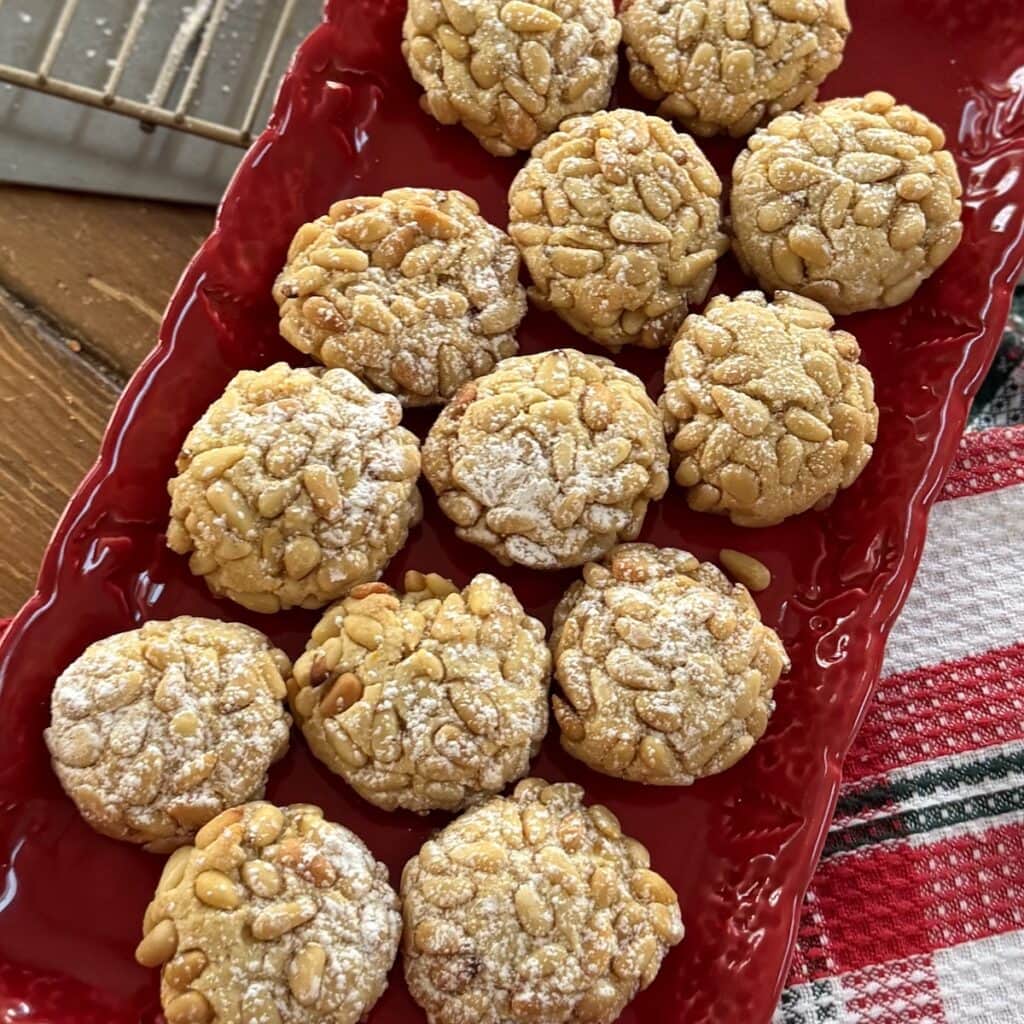
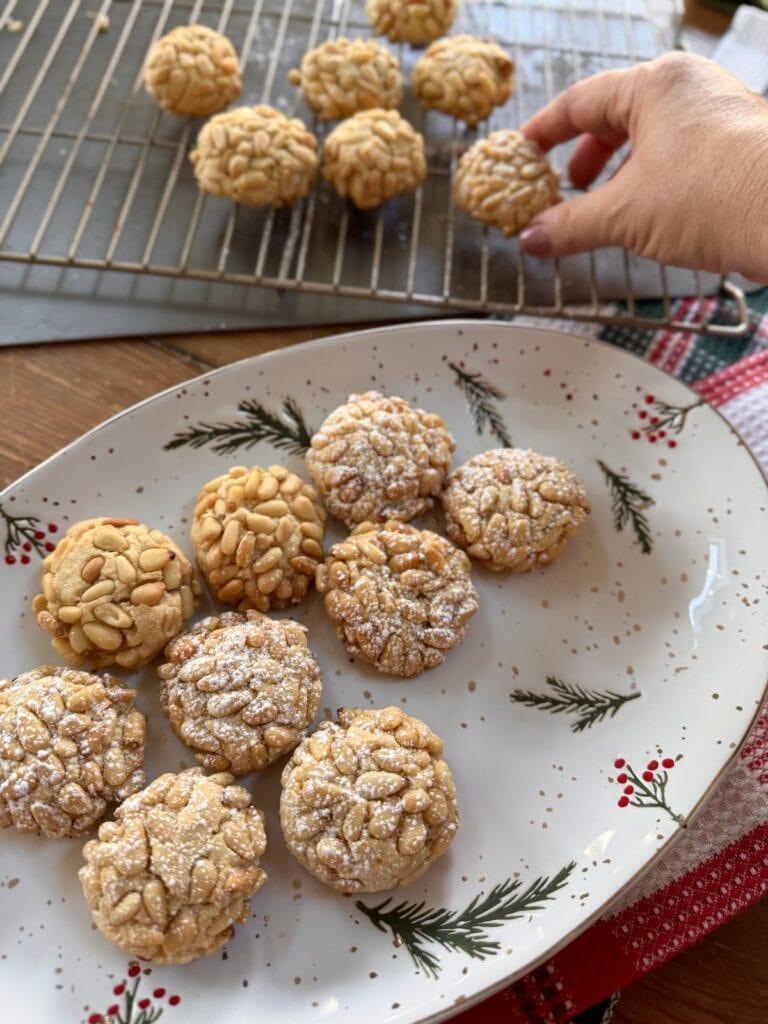
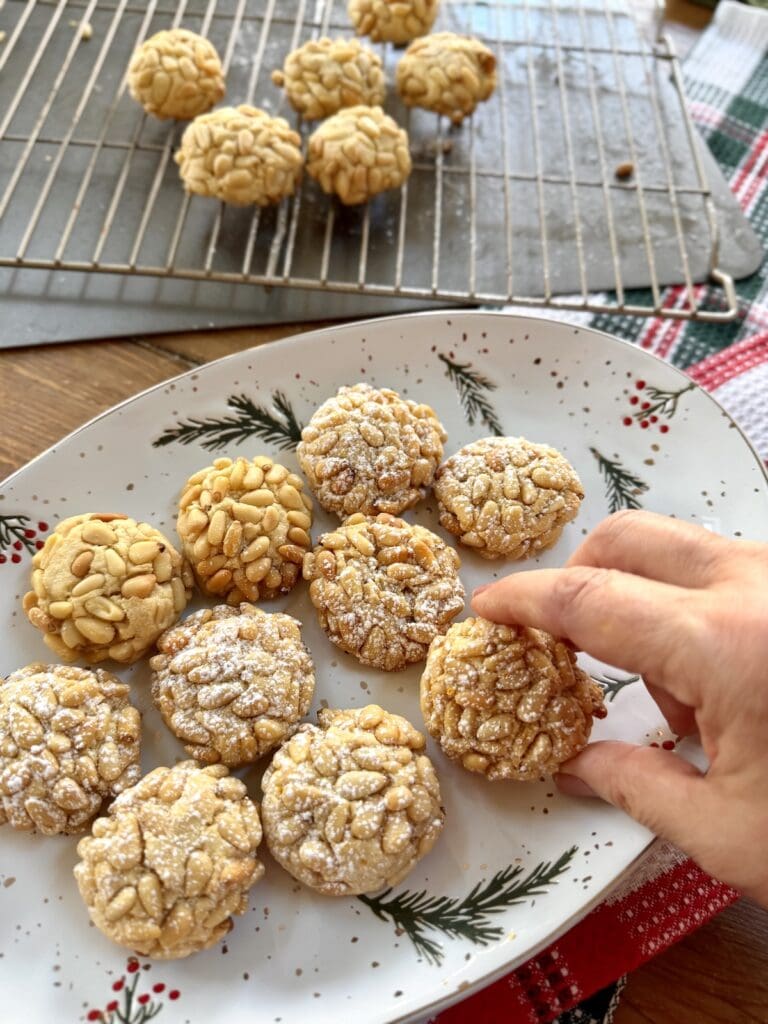
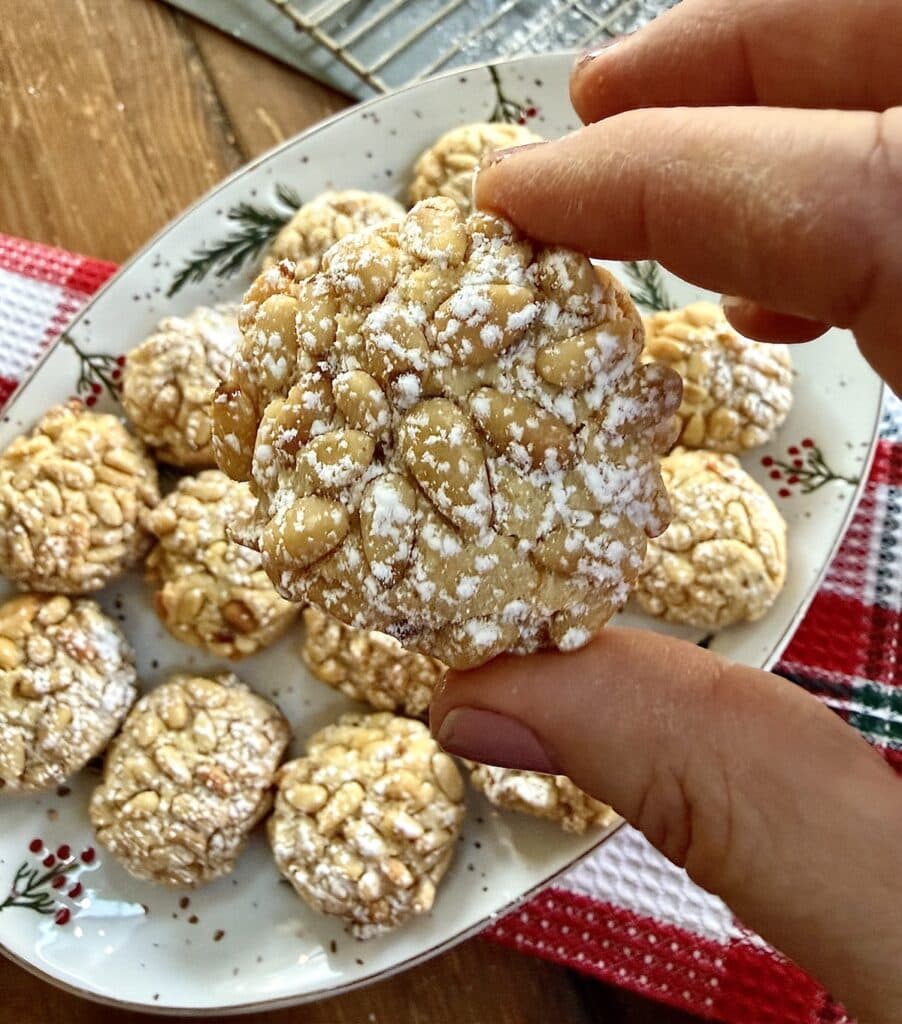
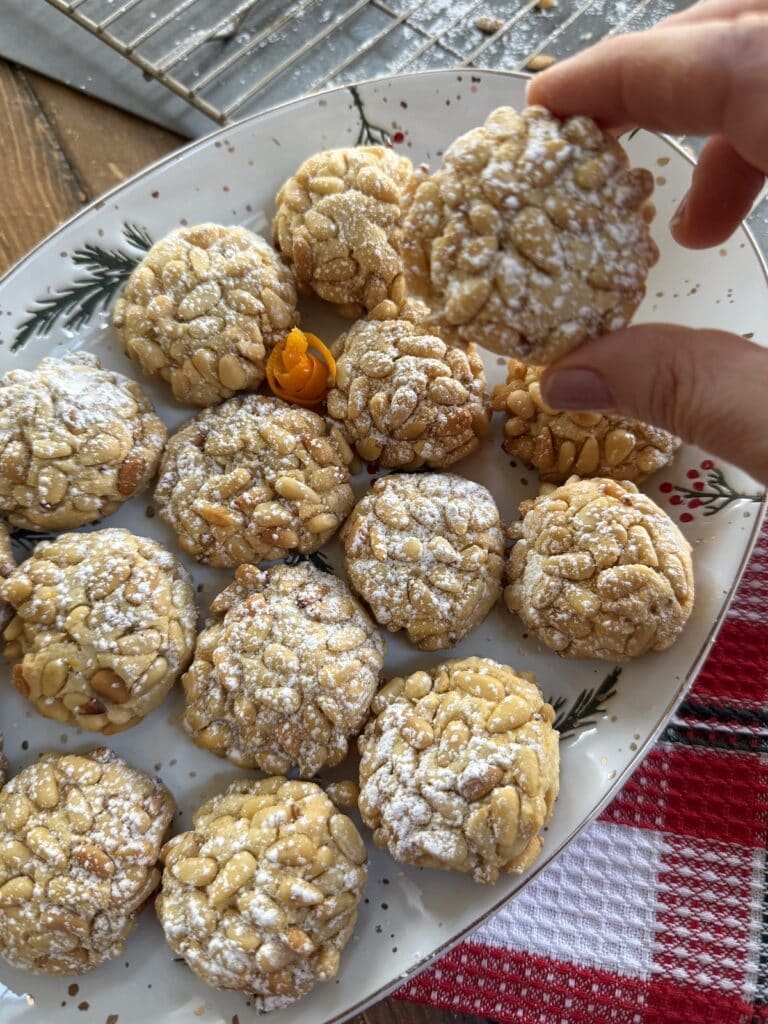
These Pignoli Cookies (Italian Pine Nut Cookies) are sweet, soft and chewy on the inside with lightly golden edges and a delicious crunch from toasted pine nuts! Made with almond flour instead of almond paste, they’re naturally gluten-free and honestly some of the easiest cookies I’ve ever made! No mixer, no food processor, no chilling and very little cleanup. Just a few simple ingredients and a surprisingly quick process!
A hint of fresh orange complements the rich almond flavor in these classic Italian bakery cookies, perfect for Christmas and holiday cookie trays!
Keep In Mind Before You Start . . .
- No almond paste, mixer or chilling required!
- The dough is a bit tacky—that’s completely normal.
- Scoop the dough directly into the pine nuts before shaping.
- Use raw pine nuts and don’t overbake to keep the centers chewy.
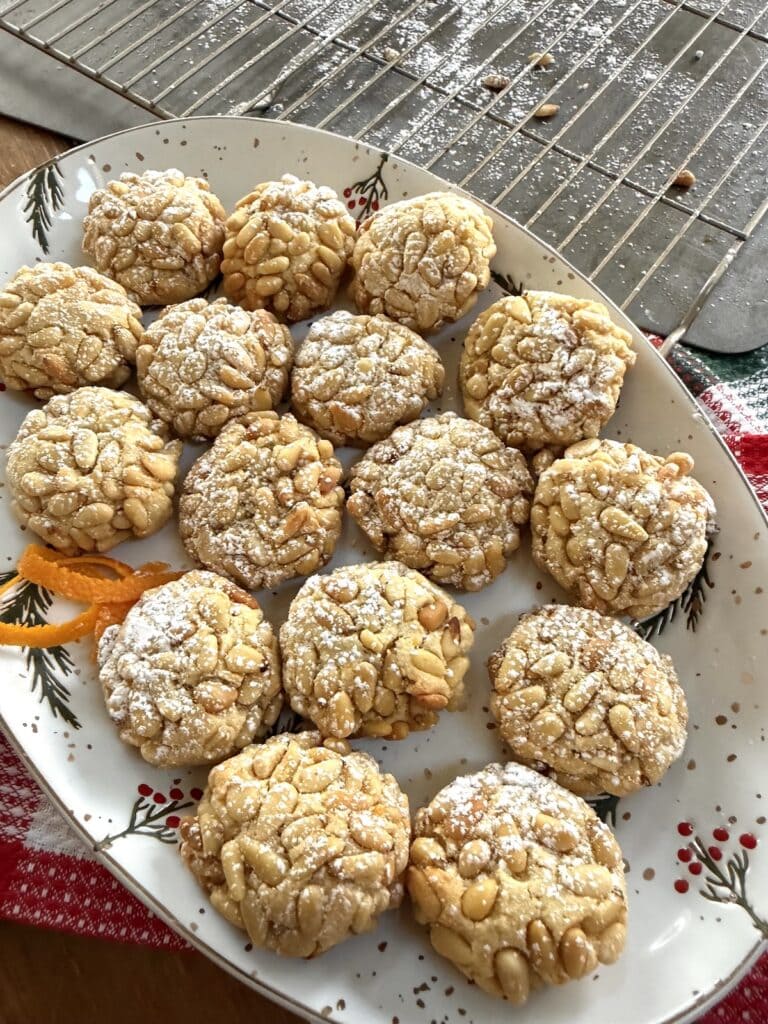
Classic Italian Bakery Cookies Made Easy!
If you’ve ever walked into an old-school Italian bakery in New York, New Jersey or Philadelphia, chances are you’ve seen these beautiful little cookies covered in golden pine nuts!
Pignoli Cookies have always been one of my favorites. There’s just something about that sweet, pronounced almond flavor and wonderfully chewy texture that’s unlike most other cookies.
And, although I’ve enjoyed them for years, I’ve always wanted to make them at home rather than buy them at the bakery—especially since they can be pretty expensive!
Pignoli means pine nuts in Italian (also commonly called pinoli), and they’re the signature ingredient that gives these cookies their distinctive appearance and delicious nutty crunch.
Most recipes use prepared almond paste as their base. But almond paste can be pricey and sometimes difficult to find, so I decided to skip it altogether and use simple ingredients—almond flour, sugar, egg whites and almond extract—to create that same wonderful almond flavor and chewy texture.
And these are seriously some of the easiest cookies I’ve ever made! There’s no mixer, no food processor, no chilling, and hardly any mess to clean up afterward. I start mixing the dough with a spoon, finish it with my hands, then scoop it right into the pine nuts. It’s surprisingly quick and easy!
I also added a little fresh orange zest and orange extract because I absolutely love the combination of almond and orange. It’s a pairing I used in my Sicilian Cheesecake with Ricotta, Orange and Almond, too!
The orange flavor is subtle and complements the almond rather than overpowering it. But if you prefer a more traditional pignoli cookie, simply leave the orange out.
These are wonderful for Christmas cookie trays, homemade gifts or anytime you’re craving a little something sweet with your coffee.
And once you see how easy they are to make, you may never want to pay Italian bakery prices again! Mangia bene!
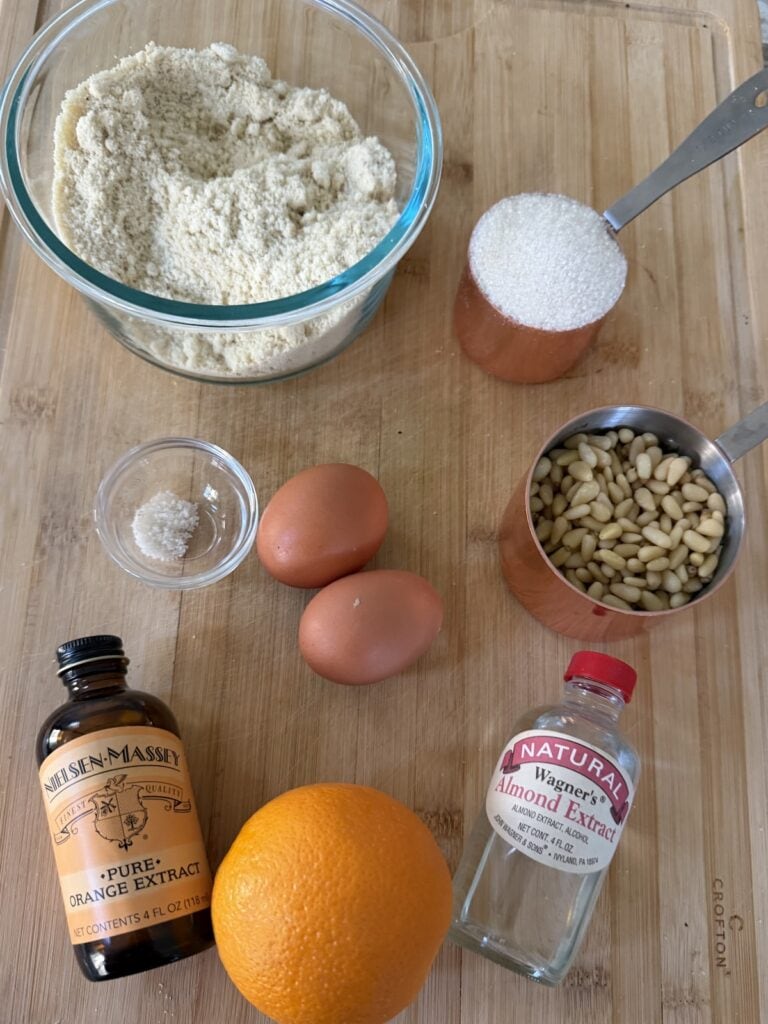
Ingredient Notes
You only need a handful of simple ingredients to make these Italian Pine Nut Cookies, and there’s no almond paste involved!
- Almond Flour: Use finely ground blanched almond flour, which is made from almonds without their skins. Almond meal is generally coarser and often includes the skins, so I don’t recommend substituting it here.
- Sugar: Granulated sugar adds sweetness and helps create that distinctive chewy texture.
- Egg Whites: They bind the ingredients together and give the dough its sticky consistency. Two large egg whites are approximately 60 grams, although egg sizes can vary.
- Almond and Orange Extracts: Almond extract enhances the cookies’ wonderful almond flavor, while a little orange extract adds a subtle citrus note. You can omit the orange extract if preferred.
- Fresh Orange Zest: I use a generous amount of finely grated orange zest for a little freshness and extra flavor. Leave it out along with the orange extract for a more traditional version.
- Pine Nuts (Pignoli): Use raw, unsalted pine nuts. There’s no need to toast them beforehand—they’ll become beautifully golden as the cookies bake! Sliced almonds also work for a more economical variation.
- Powdered Sugar: Completely optional, but a light dusting over the cooled cookies makes them especially pretty for Christmas and holiday gatherings!
How to Make Pignoli Cookies
These cookies come together quickly with just a couple of bowls, a spoon and your hands. No electric mixer or food processor necessary!
See the recipe card below for the complete measurements and detailed instructions.
- Prepare the oven and baking sheets. Preheat the oven to 325°F. Lightly butter the baking sheets or line them with parchment paper. If you use parchment instead of butter, the cookies will also be dairy-free! Place the raw pine nuts in a shallow bowl.
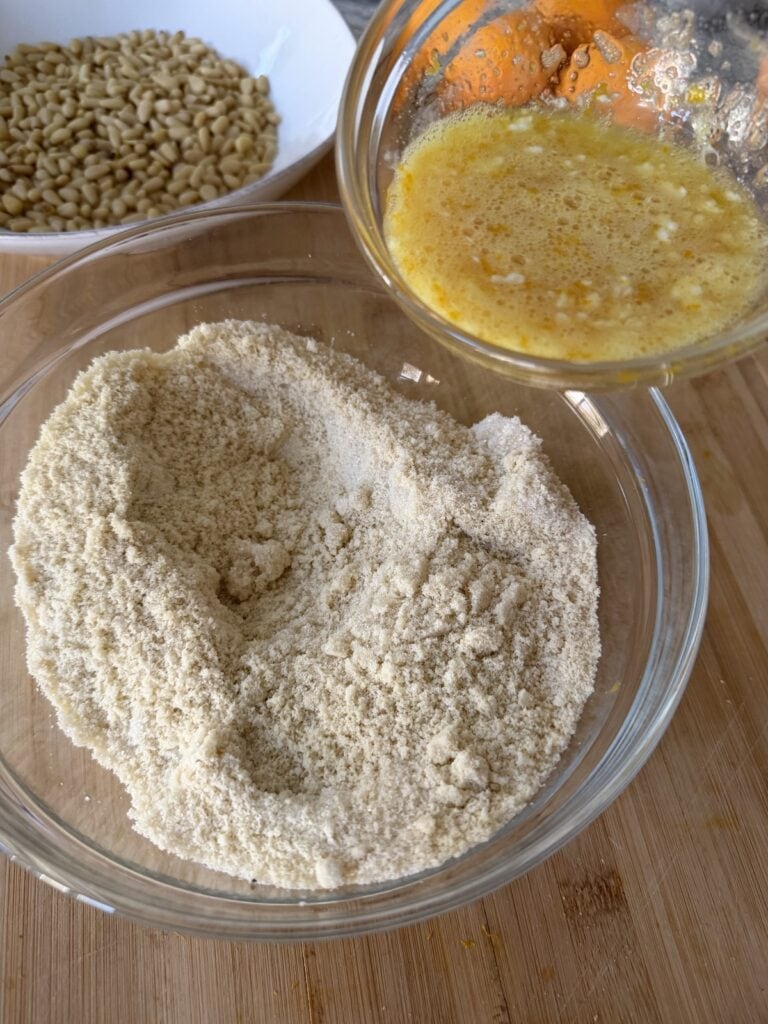
- Combine the dry ingredients. Stir together the almond flour and granulated sugar in a medium bowl.
- Mix the wet ingredients. Whisk the egg whites until foamy, then stir in the almond and orange extracts, salt and freshly grated orange zest.
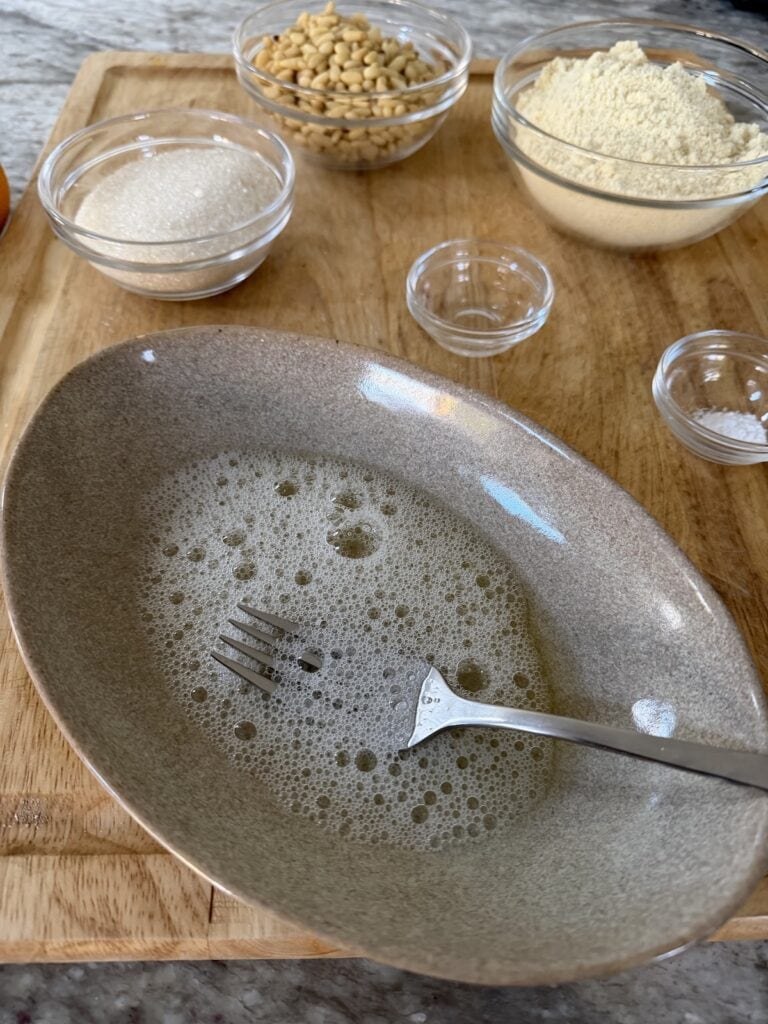
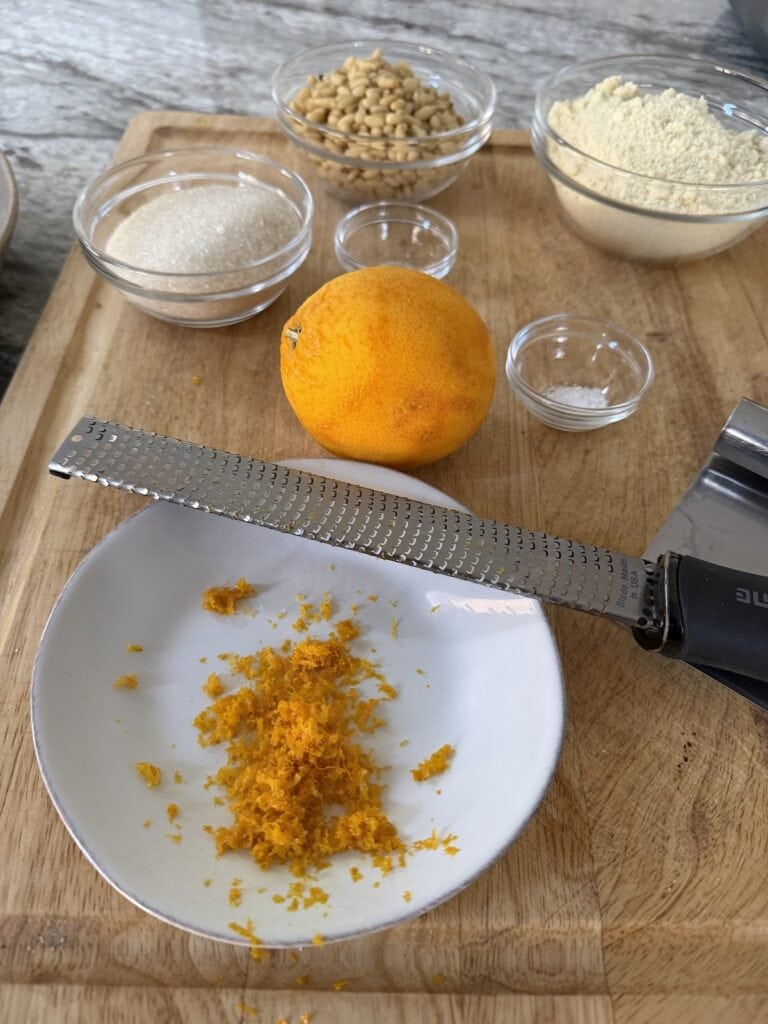
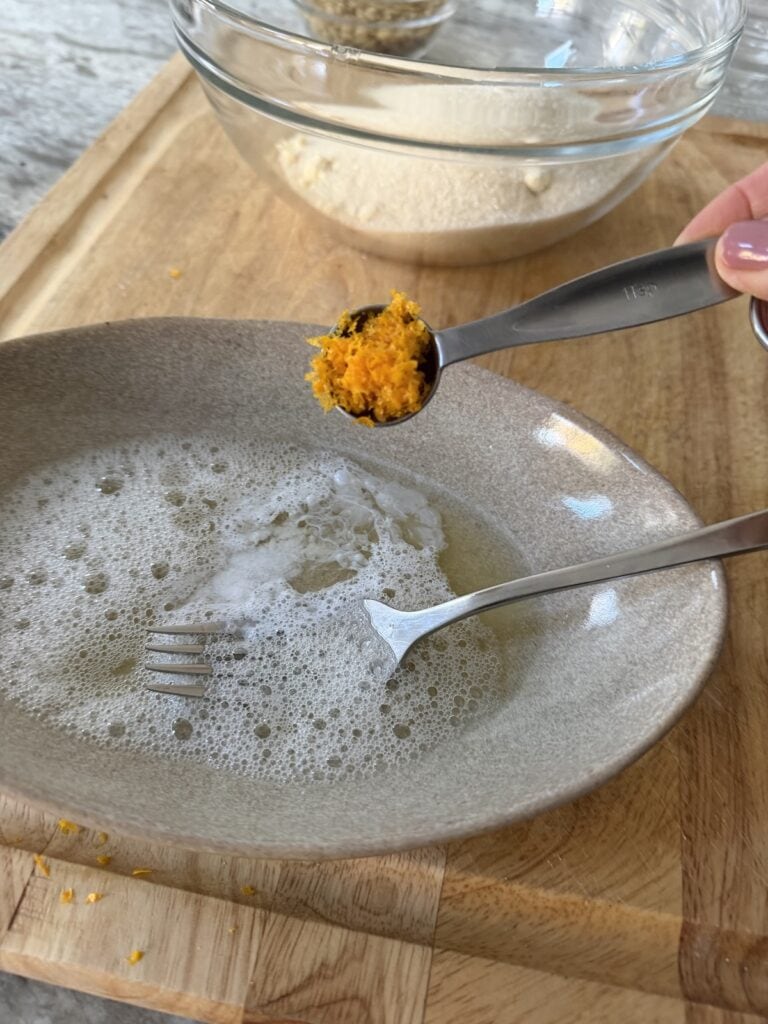
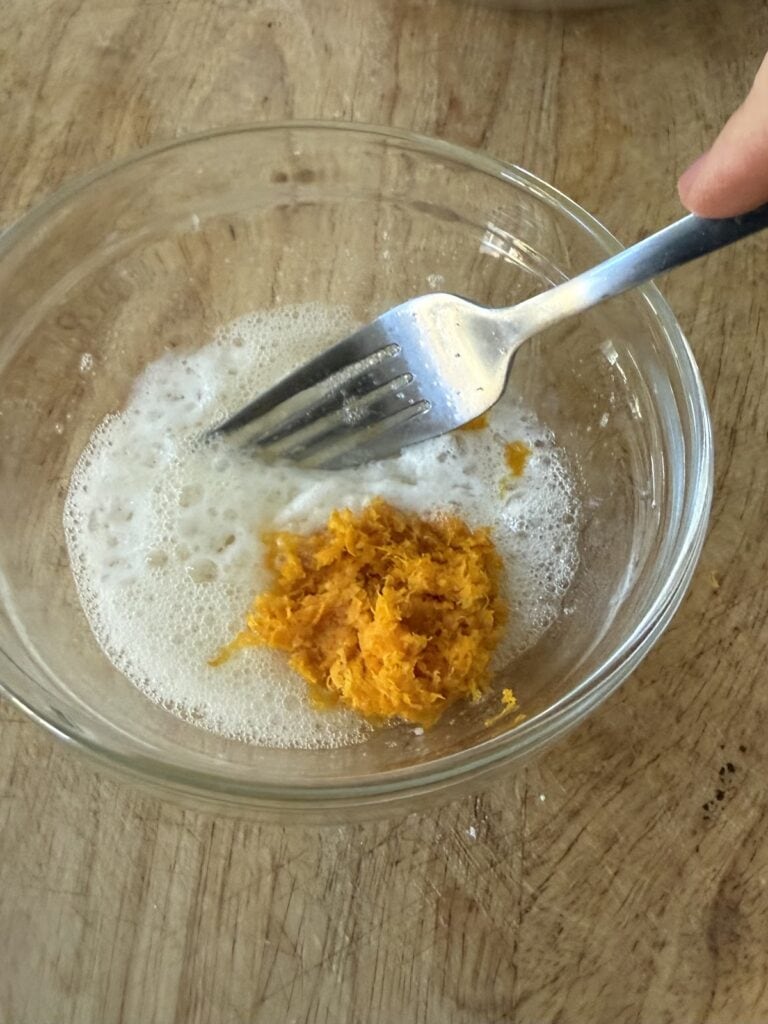
- Make the dough. Add the wet ingredients to the dry ingredients and stir with a large spoon. Finish mixing gently with your hands until everything is incorporated. The dough will be fairly tacky.
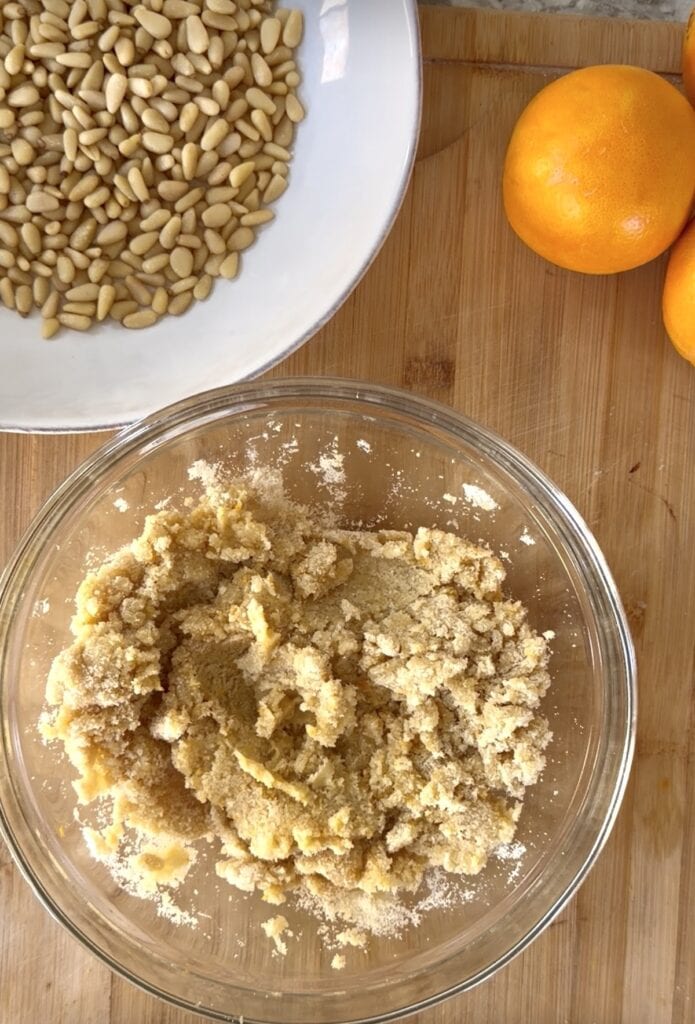
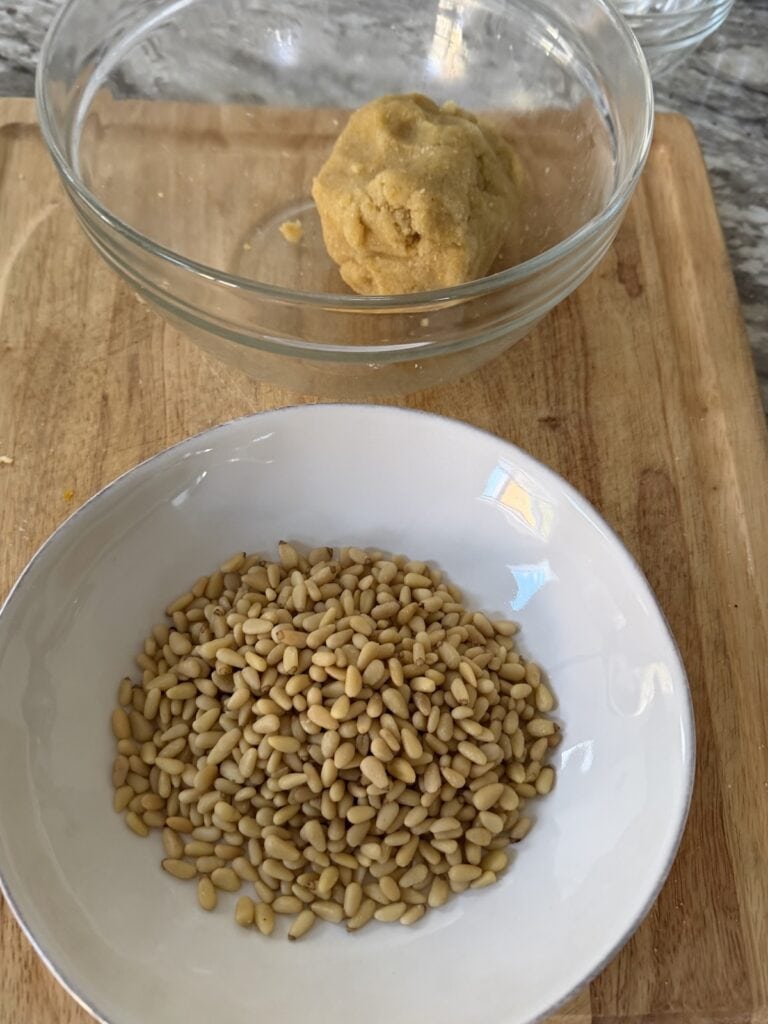
- Coat with pine nuts. Scoop approximately 1 tablespoon of dough directly into the bowl of pine nuts. Gently roll it around, then pick it up and carefully roll it between your palms, lightly pressing the pine nuts into the dough as you shape it into a ball.
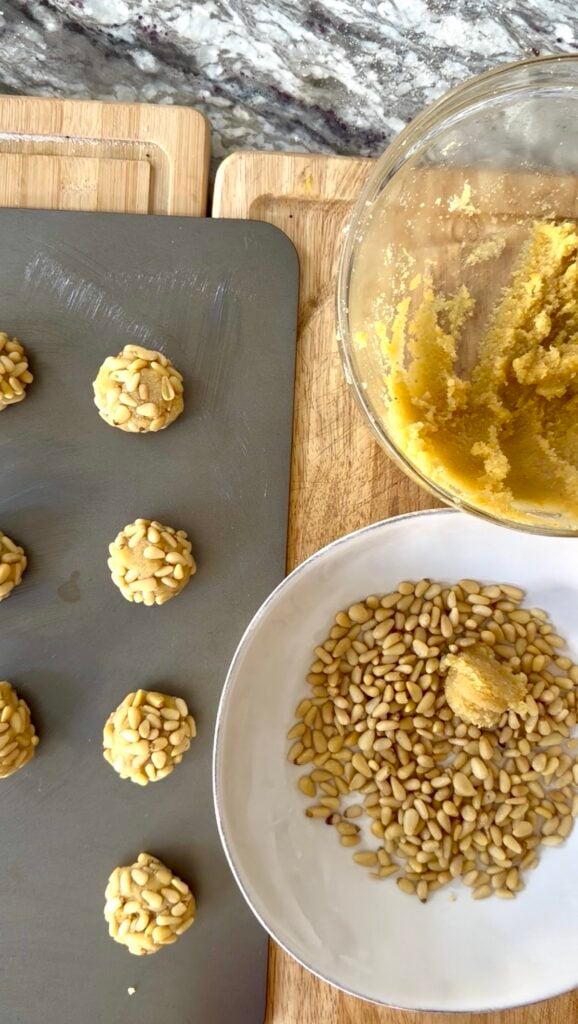
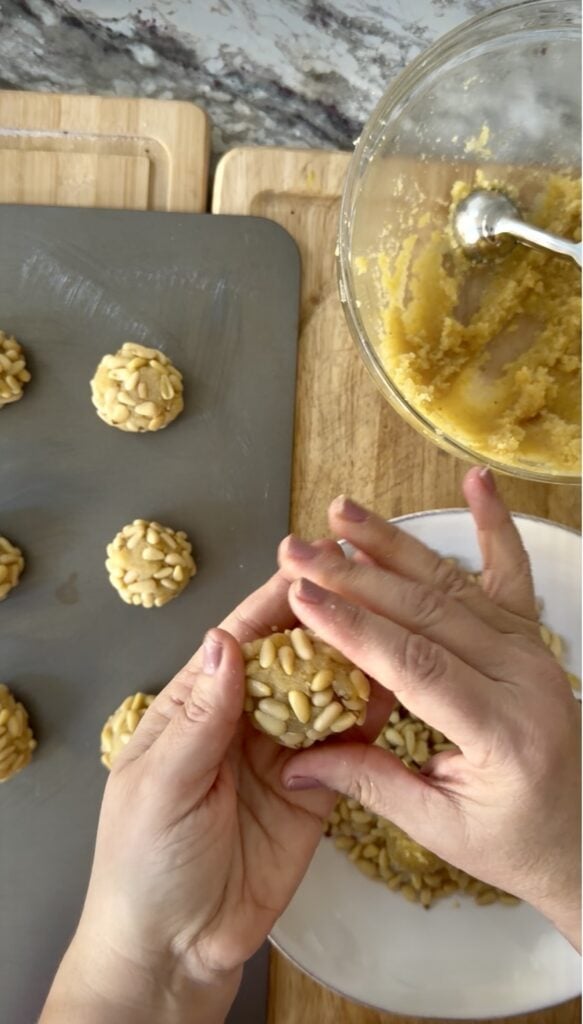
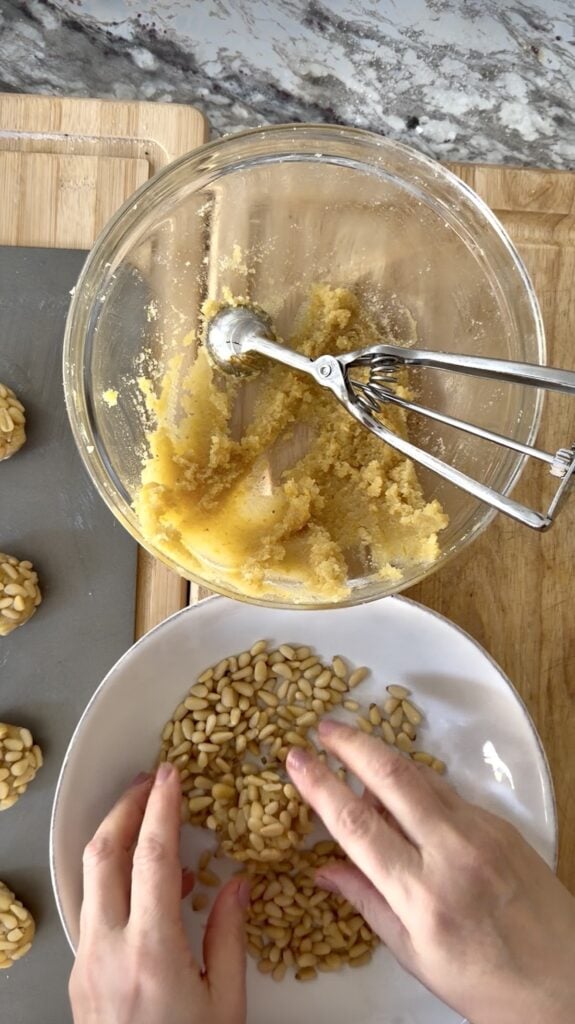
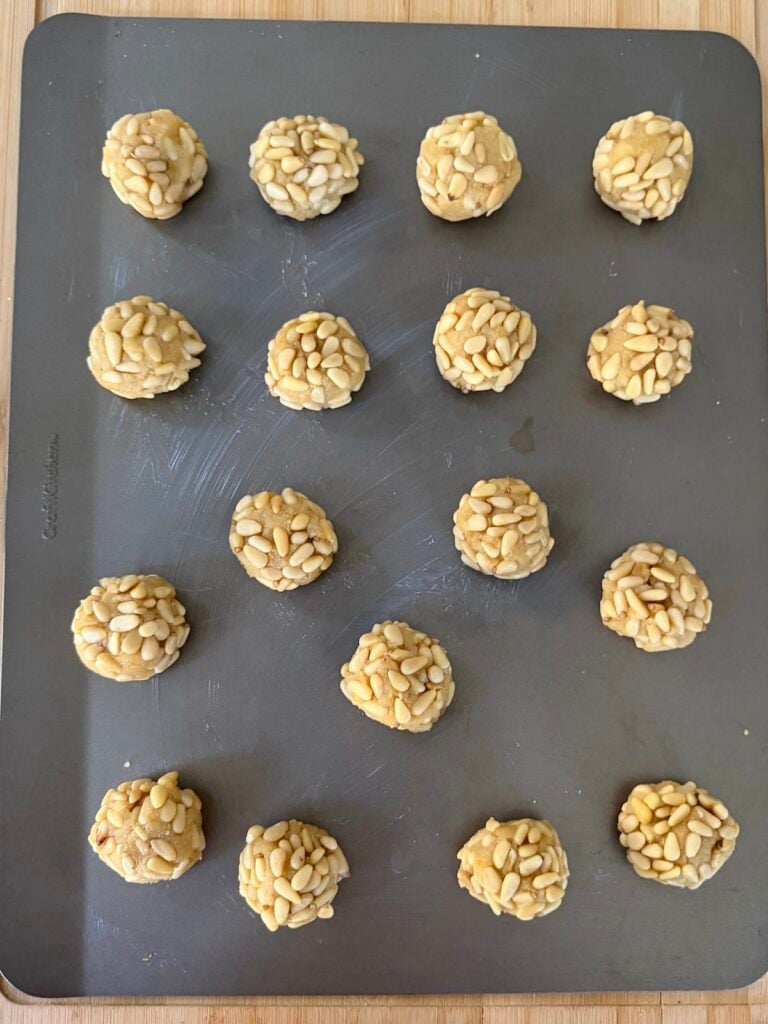
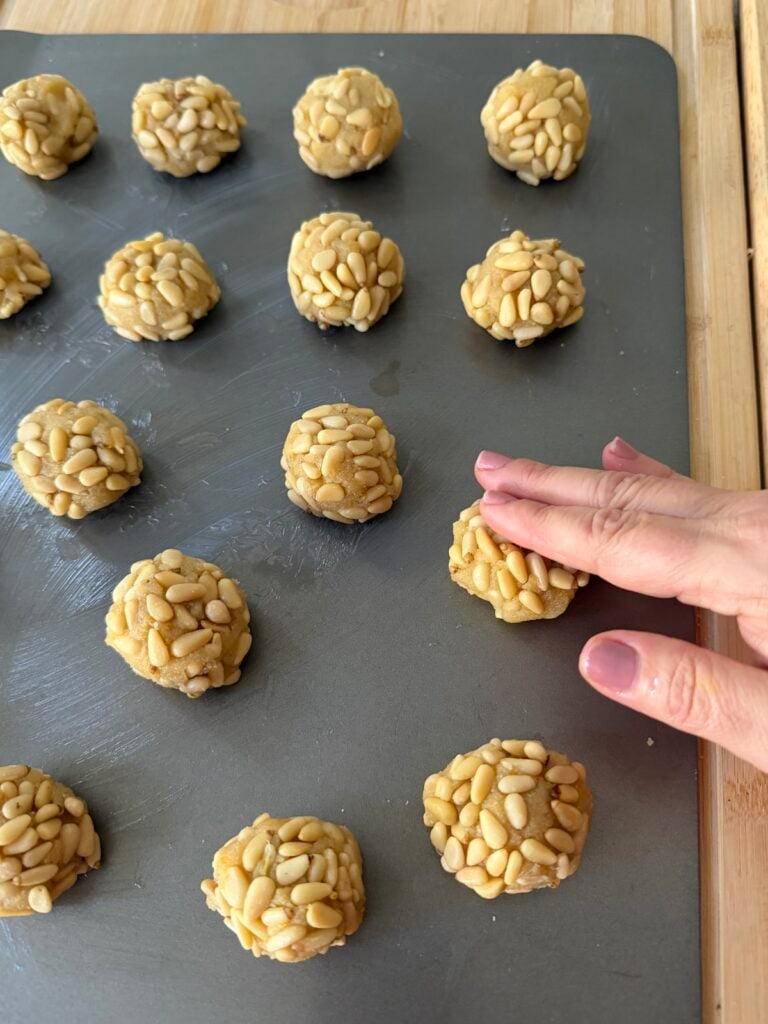
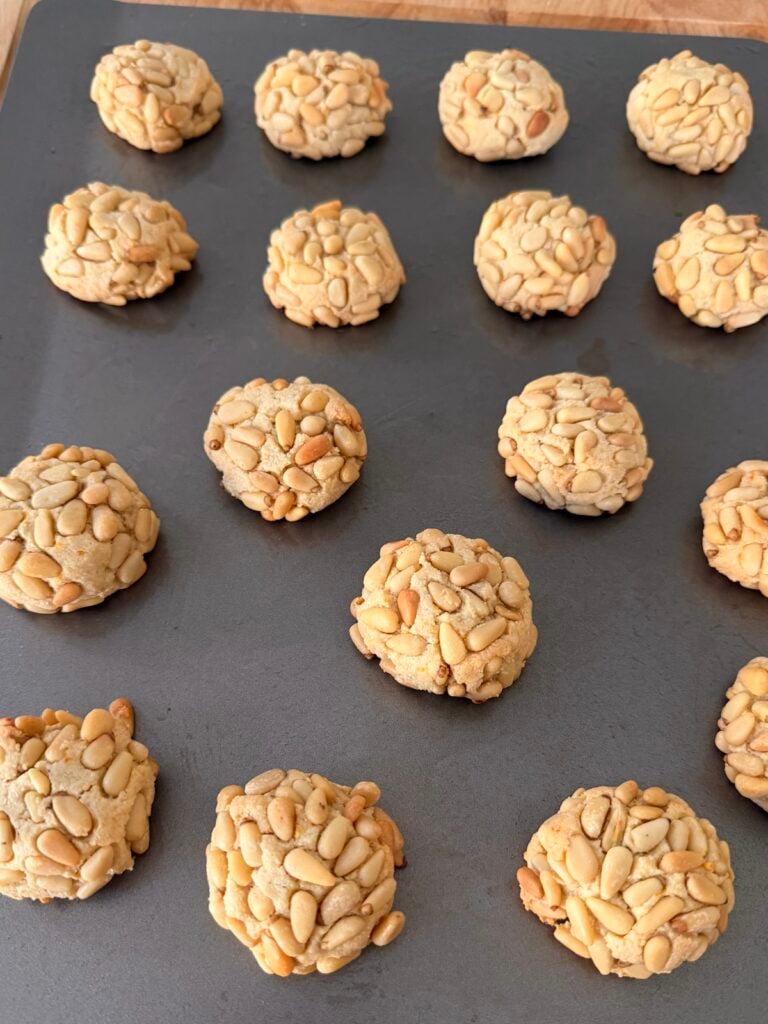
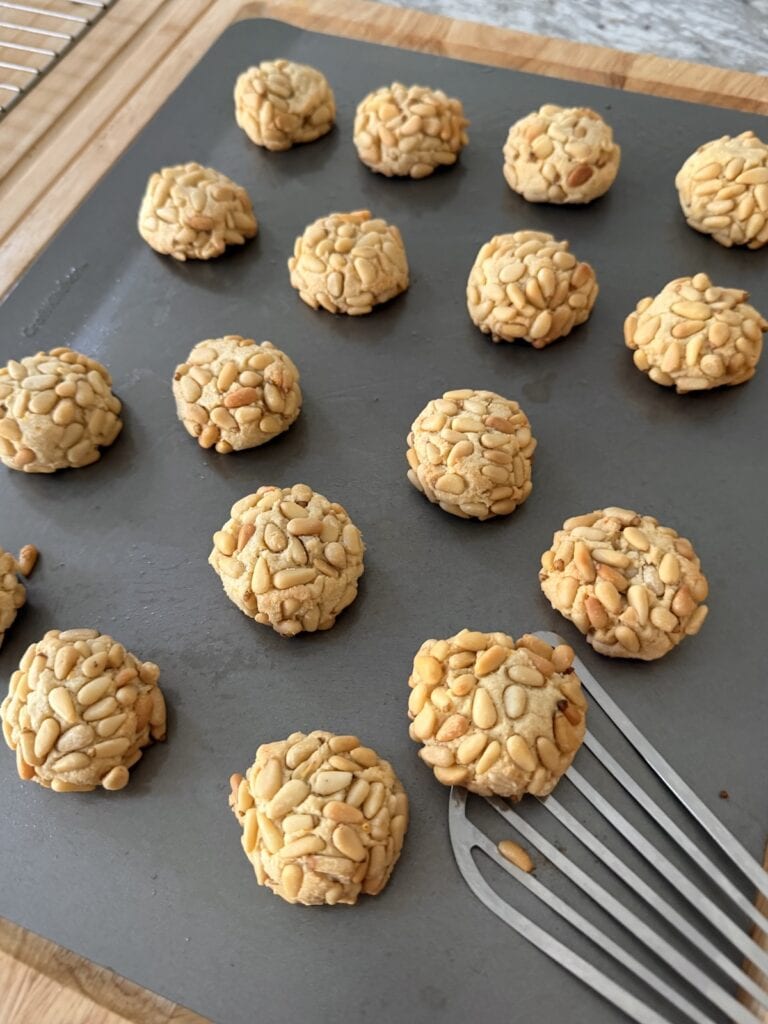
- Arrange on baking sheets. Place the coated cookies approximately 1-inch apart on the prepared baking sheets. Press down very lightly to form small mounds. They won’t spread much while baking.
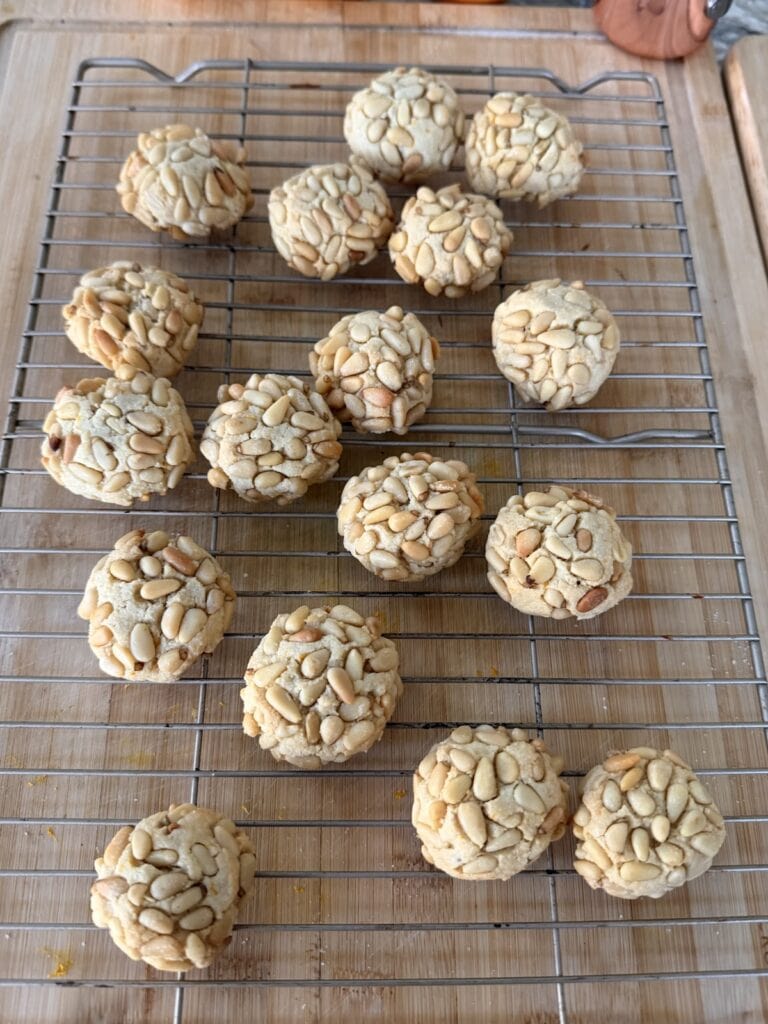
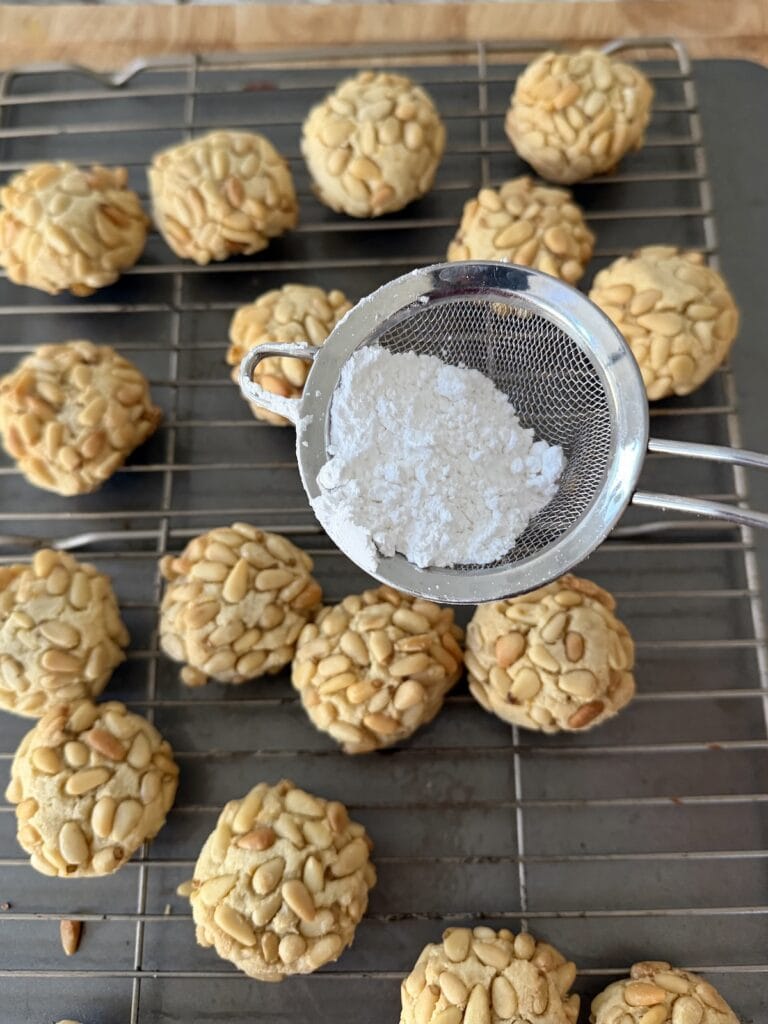
- Bake and cool. Bake for approximately 18–20 minutes, checking at 16 minutes. The pine nuts and edges should be lightly golden while the centers remain pale and soft. Cool on the baking sheets for about 5 minutes before carefully transferring to a cooling rack. Dust with powdered sugar after cooling, if desired.
My Best Tip for Coating Pignoli Cookies!
- The dough is a little tacky, but don’t let that scare you!
- And whatever you do, don’t try to roll the dough into perfectly round balls before coating it with pine nuts. The pine nuts will be more difficult to stick to the dough if you do so.
- Instead, scoop the dough directly into a shallow bowl of pine nuts and gently roll it around to start coating.
- Then pick it up and roll it carefully between your hands, almost like you’re making a meatball, but much more gently, while lightly pressing the pine nuts into the dough.
- Once the outside is covered with nuts, the dough becomes so much easier to handle!
- And there’s no need for an extra egg-white coating to make the pine nuts stick. The dough is already sticky enough!
Recipe Substitutions and Variations
- Traditional Almond Flavor: Omit the orange zest and orange extract for a more traditional, almond-only pignoli cookie and increase the almond extract to 1 teaspoon.
- Use Sliced Almonds: Pine nuts can be expensive! Sliced almonds are a delicious and more economical alternative. You could even make half the batch with pine nuts and half with almonds for a fun assortment!
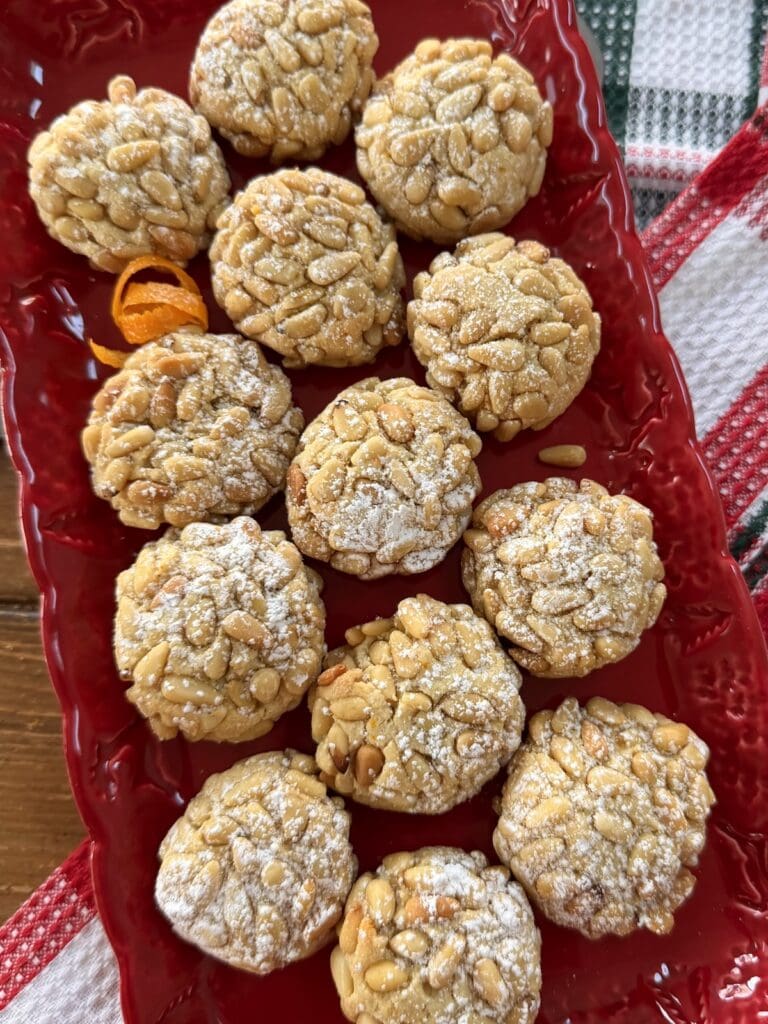
- Add a Festive Finish: Once the cookies have cooled, dust them lightly with powdered sugar using a small fine-mesh strainer. It’s a simple way to dress them up for the holidays.
Frequently Asked Questions
Absolutely! This recipe uses almond flour instead of prepared almond paste, which can be expensive and difficult to find.
You still get that wonderful almond flavor and distinctive chewy texture without needing to purchase a specialty ingredient.
And since this recipe was developed specifically with almond flour, I recommend following the ingredients as written rather than substituting prepared almond paste.
It’s supposed to be!
The tacky consistency is completely normal for this type of almond cookie dough. It should be thick enough to scoop, however, and shouldn’t drip off the spoon.
Since egg whites can vary in size, the dough may occasionally be wetter than expected. If it’s too loose to hold a portion, add another tablespoon of almond flour at a time until it becomes scoopable.
And remember, there’s no need to refrigerate or roll the dough before coating it. Simply drop each portion directly into the pine nuts.
The biggest secret is not overbaking them!
You want the pine nuts to be lightly toasted and the edges just golden while the centers still look pale and a little soft.
I recommend using a 1-tablespoon scoop for consistently sized cookies. The baking time in this recipe is based on that size.
Also, don’t try to move the cookies immediately after removing them from the oven. They’re very soft when hot and need about 5 minutes on the baking sheet to set before transferring to a rack.
Yes! These cookies are a great option for holiday baking and can be made in advance.
Once completely cooled, store them in an airtight container at room temperature for approximately 3–4 days. For the best texture, I prefer enjoying them within the first couple of days.
You can also freeze the baked cookies in a freezer-safe container for up to 3 months, placing parchment paper between layers. Let them thaw at room temperature before serving.
If you’re planning to dust them with powdered sugar, wait until after thawing, just before serving.
More Cookies and Italian Holiday Favorites
If you’re putting together a Christmas cookie tray, here are a few more favorites to try!
- Anginetti Cookies (Mom’s Italian Christmas Cookies) — A family favorite and a must for the holidays!
- Anise Pizzelle (Classic Italian Wafer Cookies) — Thin, delicate and wonderfully crisp.
- Easy Buttery Pecan Snowball Cookies — Buttery, nutty and covered in powdered sugar.
- Czechoslovakian Cookies — Delicious layered cookie bars with nuts and jam.
Pignoli Cookies (Italian Pine Nut Cookies)
Video
Equipment
- Cookie Sheet or Sheet Pan
- Portion Scoop (optional)
- Small Fine Mesh Strainer (optional)
Ingredients
- Butter for greasing baking sheet, optional
- 1¾ cups almond flour, (183 grams)
- ½ cup + 2 Tbsp granulated sugar
- 2 large egg whites
- ¾ tsp almond extract
- ½ tsp orange extract
- ¼ tsp salt
- Grated zest form 2 large oranges, 3-4 tsp zest
- About 1 cup pine nuts, raw/untoasted or as needed to coat
- Powdered sugar for dusting finished cookies, (as needed, optional)
Instructions
- (Please see the section above in the blog post for Step-By-Step instructions with photos.)
- Prepare oven and baking sheet. Place a rack in the center of the oven and preheat to 325°F. Lightly butter the baking sheets or line them with parchment paper. If you use parchment instead of butter, the cookies will also be dairy-free! Place the raw pine nuts in a shallow bowl.About 1 cup pine nuts
- Combine dry ingredients. Stir together the almond flour and granulated sugar in a medium bowl.1¾ cups almond flour, ½ cup + 2 Tbsp granulated sugar
- Mix wet ingredients. In a separate bowl, whisk the egg whites until foamy. Stir in the almond and orange extracts, salt and finely grated orange zest until combined.2 large egg whites, ¾ tsp almond extract, ½ tsp orange extract, ¼ tsp salt, Grated zest form 2 large oranges
- Make dough. Pour the egg white mixture into the dry ingredients and stir with a large spoon until mostly combined. Then use your hands to gently mix the dough right in the bowl until everything is incorporated, about 1–2 minutes. The dough will be quite tacky. That's normal!
- Coat with pine nuts. Using a 1-tablespoon portion scoop or measuring spoon, drop a portion of dough directly into the shallow bowl of pine nuts. Gently roll it around to begin coating, then pick it up and carefully roll it between your palms, lightly pressing the pine nuts into the dough as you shape it into a ball. The nuts should adhere to the outside without being pushed deeply into the dough. There's no need to dip the dough in additional egg white. (See photos above.)About 1 cup pine nuts
- Arrange cookies. Place each coated dough ball on the prepared baking sheet, leaving approximately 1-inch between cookies. Repeat with the remaining dough. Gently press down on each cookie to form a small mound. These cookies don't spread much during baking.
- Bake. Bake on the center rack for approximately 18–20 minutes, checking at 16 minutes. The pine nuts should be lightly toasted and golden, the edges just set and lightly colored, and the centers still pale and a little soft. Be careful not to overbake, or the cookies will lose their wonderful chewy texture.
- Cool and serve. Let the cookies rest on the baking sheet for approximately 5 minutes to firm up before carefully transferring them to a cooling rack. Once completely cooled, dust lightly with powdered sugar, if desired, using a small fine-mesh strainer. Serve and enjoy. Buon Appetito!
Notes
- Almond Flour: Use finely ground, blanched almond flour rather than coarser almond meal. There’s no need to purchase almond paste for this recipe! The almond flour, sugar, egg whites and almond extract create that deliciously chewy, almond-flavored dough.
- Egg Whites and Dough Consistency: Two large egg whites are approximately 60 grams, although sizes vary. The dough should be very sticky but thick enough to scoop—not runny. If it’s unusually wet and won’t hold a portion, mix in additional almond flour, 1 tablespoon at a time, only as needed.
- Coating with Pine Nuts: Don’t try to shape the sticky dough into a perfect ball before coating it! Scoop it directly into the pine nuts first, then gently roll and press the nuts into the dough with your hands. No extra egg white is necessary. Use raw, unsalted pine nuts; they’ll toast naturally in the oven.
- Cookie Size and Baking: I recommend a level 1-tablespoon portion for each cookie. The baking time is based on this size, so larger cookies may need longer. Look for lightly golden edges and pine nuts while the centers remain soft. Let the cookies set briefly on the baking sheet before moving them.
- Orange Flavor: The orange zest and extract add a subtle citrus note that complements the almond flavor without overpowering it. For a more traditional almond-only version, simply omit the orange zest and orange extract.
- Nut Substitutions: Pine nuts can be expensive! For a more economical variation, coat the dough with sliced almonds instead. You could even make half the batch with pine nuts and half with almonds. They won’t technically be pignoli cookies without pine nuts, but they’ll still be delicious!
- Storage and Make-Ahead: Once completely cooled, store the cookies in an airtight container at room temperature for approximately 3–4 days. For longer storage, freeze the baked cookies in an airtight, freezer-safe container, separating layers with parchment paper, for up to 3 months. Thaw at room temperature before serving. For the nicest presentation, add the optional powdered sugar after thawing, just before serving.
- Gluten-Free: These cookies are naturally gluten-free because they’re made with almond flour instead of wheat flour. If baking for someone with celiac disease or a gluten allergy, check the ingredient labels and avoid cross-contact with gluten-containing foods.
love soup?
Get My Cookbook!
Ditch the dish and embrace the bowl with Soupified: Soups Inspired by Your Favorite Dishes!
Available in ebook, paperback and hardcover.

So much easier than you think and freeze really well!