
This post may contain affiliate links or sponsored content. That means if you click on my link and buy something, I will earn a small commission from the advertiser at no additional cost to you. For more information, see our disclosure policy.
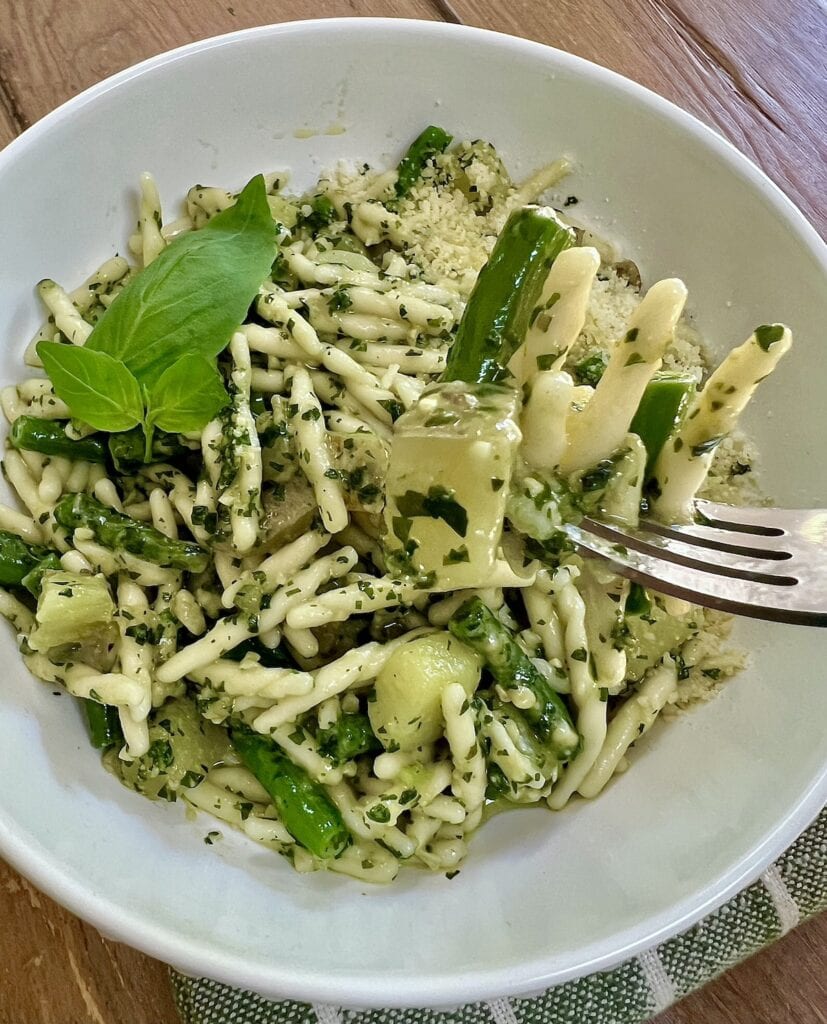
Trofie al Pesto Genovese with Green Beans and Potatoes is a classic summer pasta recipe hailing from the northern Italian region of Liguria. It’s abundant with flavor from fresh basil, extra-virgin olive oil, pine nuts, parmesan cheese and garlic transformed into a fragrant pesto sauce that’s combined with hearty green beans, potatoes and twisty trofie pasta.
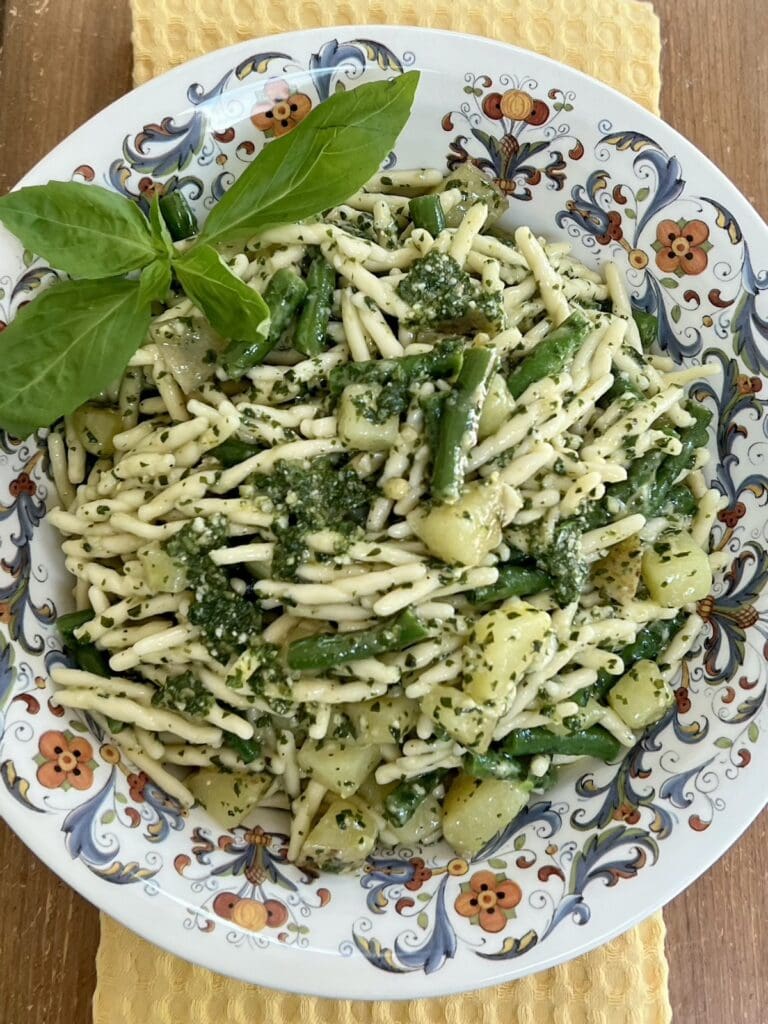
While you might be more used to simply tossing pasta with some pesto and calling it a day, try something new this summer!
Trofie al pesto with green beans and potatoes is one of the most classic Ligurian flavor combinations. Trofie is a short, thin and twisted pasta shape that’s found in and around the Italian port city of Genova (Genoa), the birthplace of pesto. And, it pairs beautifully with vibrant pesto, al dente green beans and tender potatoes.
The green beans add a pleasant crunch while starchy potatoes help to bind the sauce and absorb excess oil from the pesto. Not to mention how well the flavors work with each other–this dish is truly something to enjoy and savor! Plus, the dish becomes a much more filling and hearty meal than a simple pasta al pesto.
By the way, this combo also shows up in Italian-American green beans and potatoes.
If you’ve never made homemade pesto from scratch before, be prepared to get addicted! I actually suggest doubling or even tripling the recipe below to have some on hand for other dishes or when you just have a hankering. It freezes beautifully, is so versatile and makes almost everything better!
Some of my favorite recipes that use pesto are Tuna Pesto Pasta, Baked Tomatoes with Parmesan, Pesto Turkey Meatballs, Pesto Roasted Mixed Veggies, Chicken Parm, Pesto Ricotta Pasta and Creamy Zucchini Pasta.
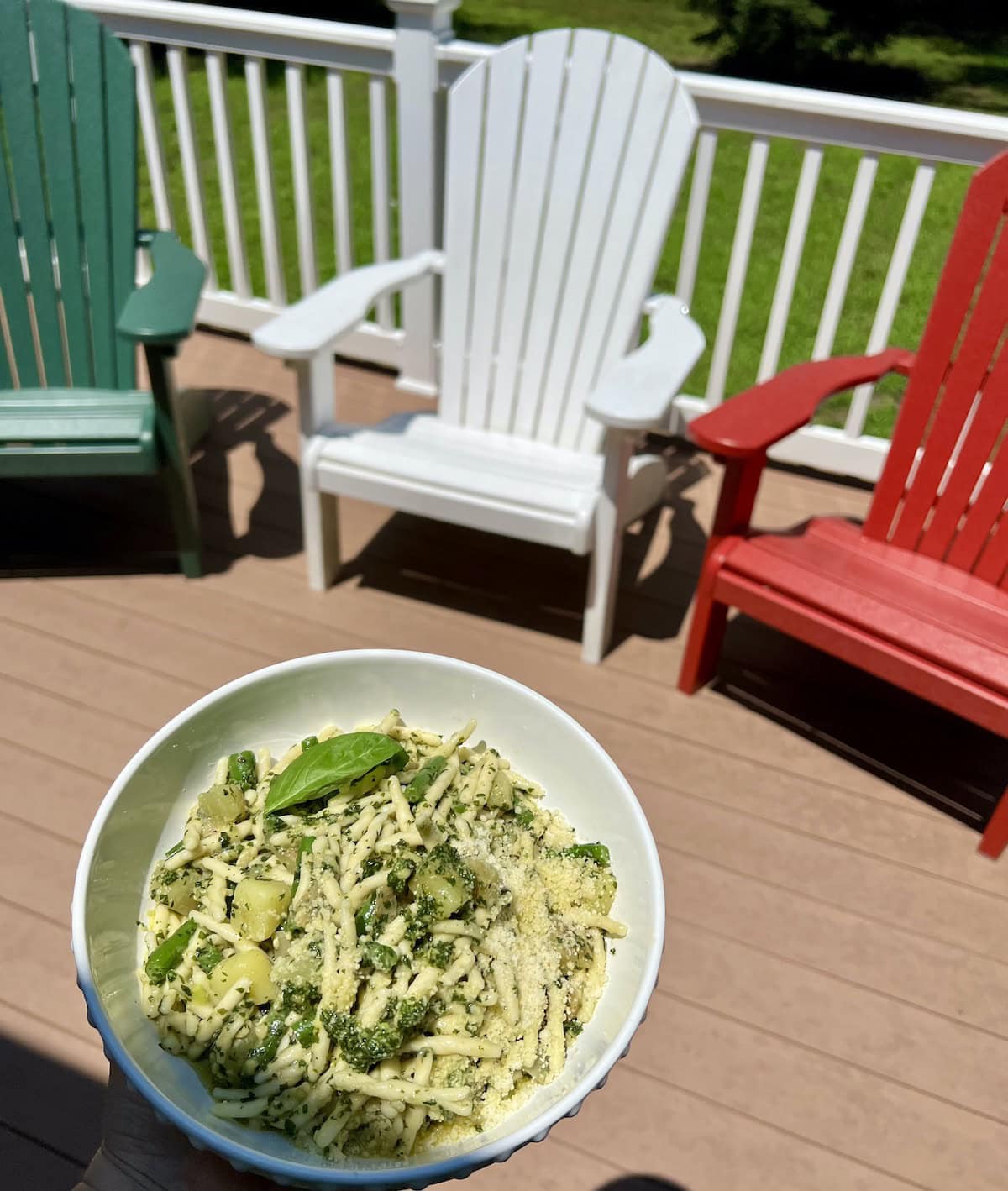
Packed with both flavor and texture, classic trofie al pesto Genovese is not to be missed this summer. Mangia bene!

Main Ingredient Notes
Just aim for the freshest, best quality ingredients you can get your hands on for this simple Italian dish and I guarantee it’ll taste delicious! Here’s what you need:
- Fresh Basil: A major part of this recipe! It provides its distinctive aromatic flavor and signature green color. Find the freshest and best quality regular, sweet basil (not to be confused with Thai basil, holy basil or purple basil) that you can for the most fragrant and flavorful pesto. Look for bright green leaves that are fragrant and free of wilting or brown spots. (Note that dried basil should not be used in this recipe.)
- Garlic: While pungent, raw garlic is the traditional choice for basil pesto, you can also try use some or all garlic confit or roasted garlic to up the savoriness and smoothness factor. Plus, these two alternatives are both milder in flavor than sharp, raw garlic. And, as always, add more or less garlic to your personal liking.
- Pine nuts: While the classic nut (and the one I have used in the recipe below) in Genovese pesto is pine nuts, it can 100% be substituted with an alternative. Some of my favorites for this recipe are walnuts, almonds and pistachios. In keeping with tradition for this classic recipe, I left the pine nuts here raw and untoasted. But feel free to toast them if you prefer a more buttery flavor.
- Cheese: Use both parmigiano and pecorino cheeses here for a really well-rounded flavor. Earthy, nutty and umami-rich Parmigiano-Reggiano is perfectly complemented by a bit of sharp, tangy and salty Pecorino Romano. You can use Grana Padano if Parmigiano Reggiano is unavailable.
- Extra Virgin Olive Oil: Definitely use a quality extra virgin olive oil in this recipe. The pesto sauce is not cooked, so the flavor nuances of the oil can definitely be noticed!
- Green Beans and Potatoes: Both frozen green beans or haricots verts can be used in this recipe. Their cooking times vary, though, so keep a close eye when blanching them in the boiling water. I leave the skins on the Yukon gold potatoes as it’s more rustic. But you can peel the potatoes if you prefer. Also, other waxy potatoes or “boiling” potatoes will work as well in this dish, such as red bliss potatoes. Russet potatoes have a lower starch content and make break apart in this recipe. So, they’re not recommended.
- Pasta: This recipe uses a classic trofie pasta which is a short and thin twisted shape that originates from the northern Italian region of Liguria (from where this recipe hails). Trenette, which is similar to linguine, is another classic shape for this dish. Having said this, I don’t think there is a pasta shape out there that would not work well in this recipe! Penne rigate, spaghetti, fusilli and fettuccine are all also perfect options in my book. Pesto is an extremely versatile sauce.

How to Make Trofie al Pesto Genovese
- Prep all ingredients. Put a large pot of water on to boil. Trim and cut the green beans. Cube the potatoes.
- Make the pesto: add basil, pine nuts, garlic, salt and olive oil to food processor. Pulse until coarsely chopped and all ingredients are fully incorporated.
Pro-Tip
The mixture should not become overly processed or too smooth.


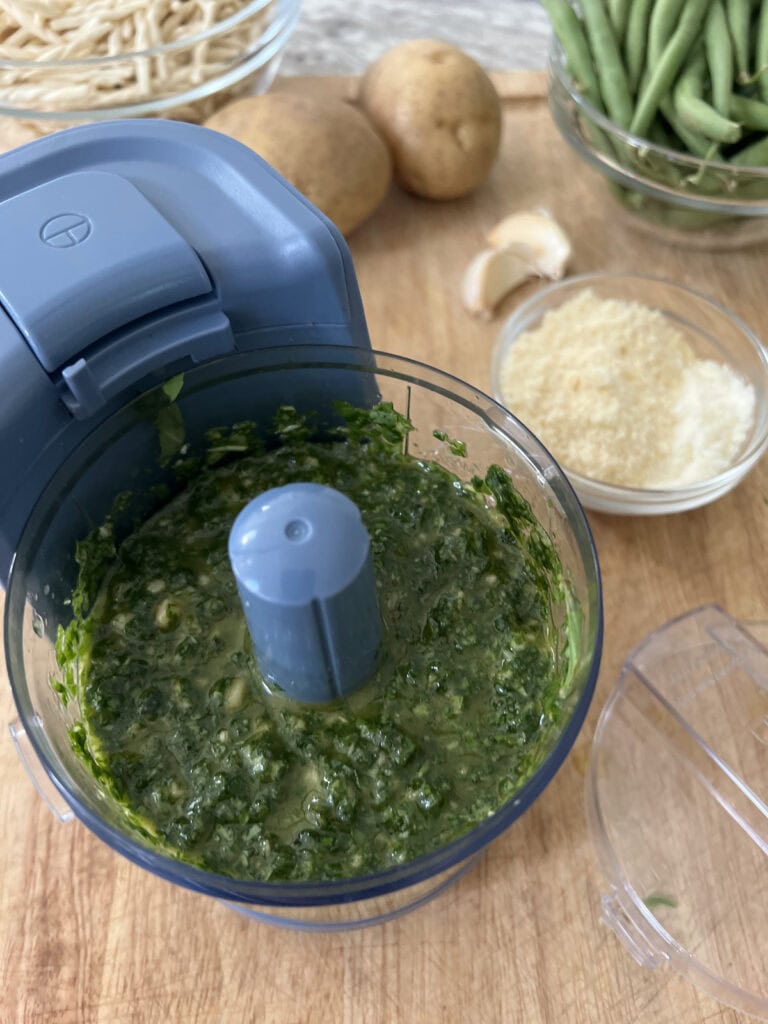
- Transfer the mixture to a bowl, then mix in the grated cheese.
Pro-Tip
The pesto can be made up to one week in advance and held in an airtight container in the refrigerator. Just bring it to room temperature before using in this recipe.


- Next, cook the green beans, then potatoes, then the pasta separately in the boiling water. Before you get started, be sure to have a large bowl with the pesto nearby.
- Once the water comes to a boil, add salt, then the prepped green beans and cook until tender but still firm, about 3 to 5 minutes. Then, promptly remove them with a strainer or spider and shake off excess water. Place them in the bowl with the pesto and stir.

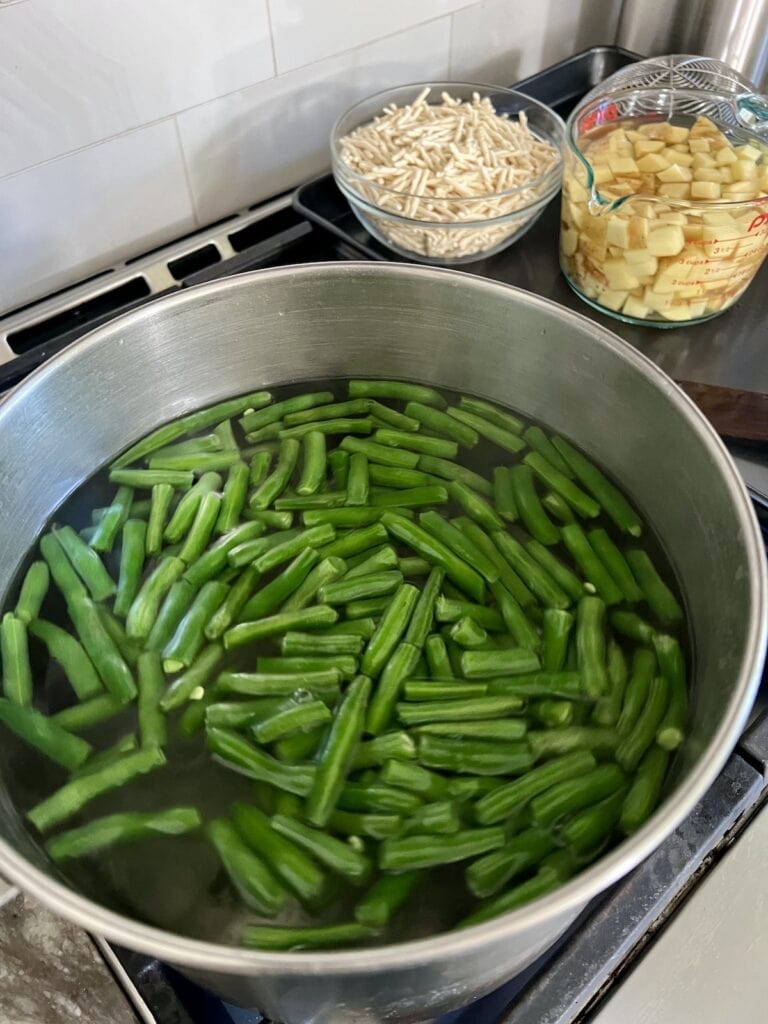

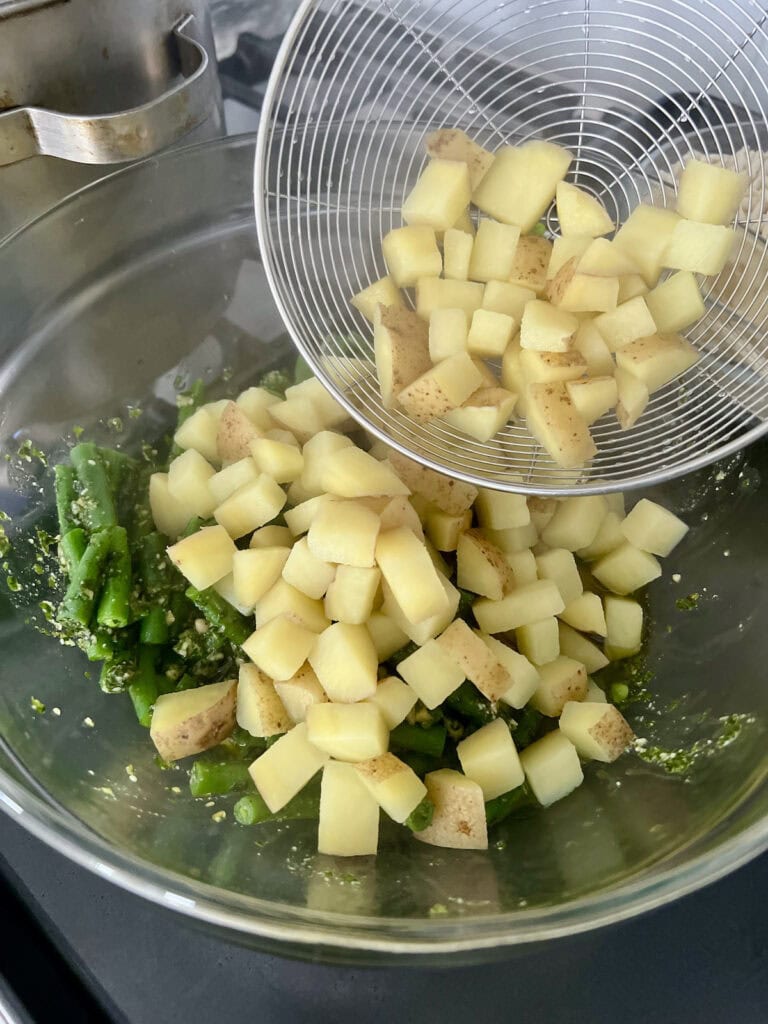
- Next, add the potatoes to the boiling water. Cook until they’re tender but still hold their shape, about 5 minutes or so. Once they’re ready, promptly remove them with a strainer or spider and shake off excess water. Place them in the bowl with the pesto and green beans and stir.


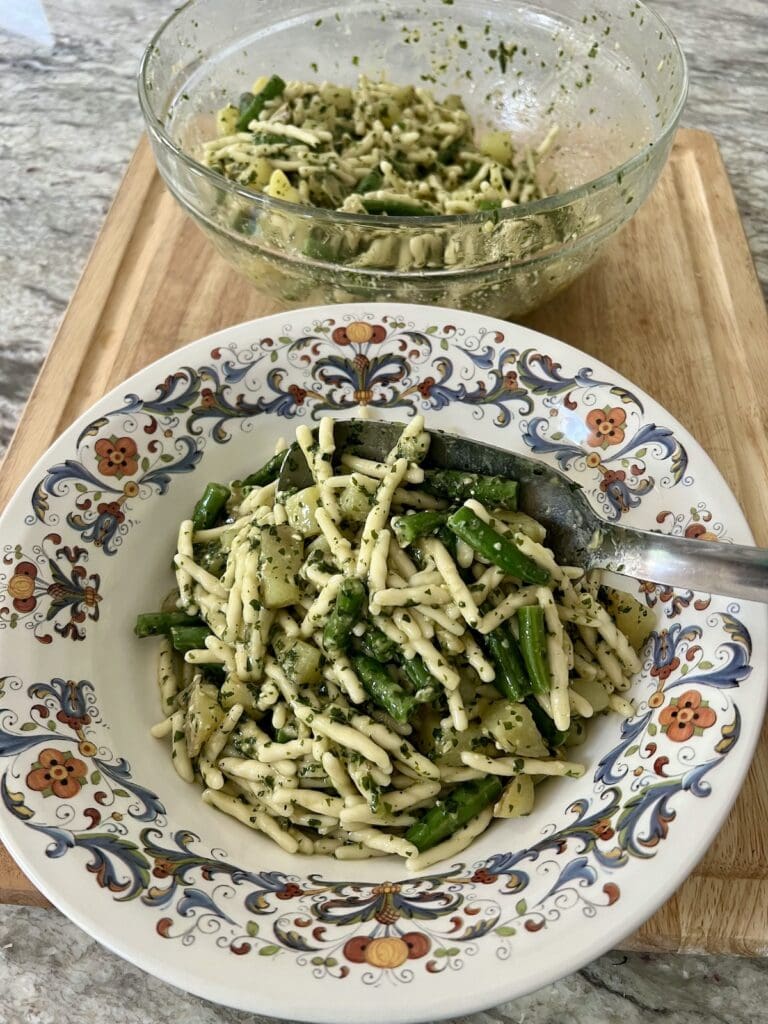
- Gradually add in some of the reserved pasta water to create a creamy sauce. Finish the dish by mixing in grated parmigiano and more extra virgin olive oil. That’s it!
- Finally, cook the pasta in the boiling water. Once the pasta is al dente, reserve about 1 cup of the starchy pasta water, then drain the pasta and add it to the bowl with the pesto, green beans and potatoes and mix well.
Pro-Tip
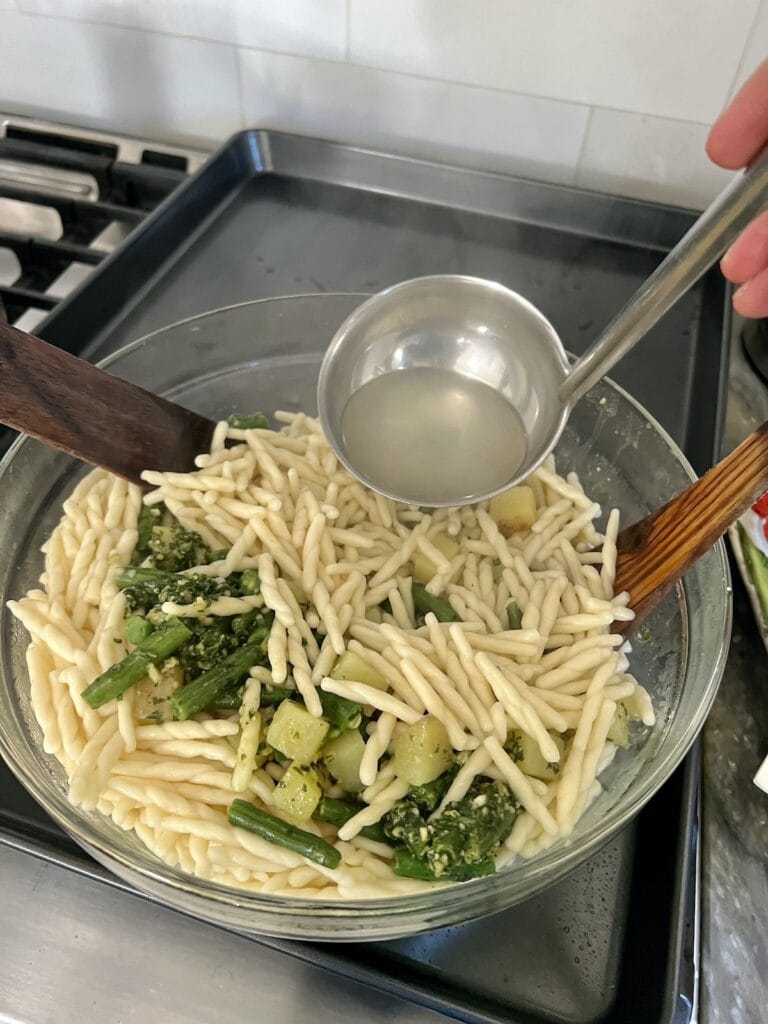
If the sauce appears watery at first, just let the dish sit a few minutes to allow the pasta to absorb the liquid.


More Summer Pasta Favorites
- Spaghetti and Crabs
- Ricotta Pasta with Eggplant and Tomatoes
- Pasta with Quick Grape Tomato Sauce
- Pasta alla Checca (No-Cook Tomato Sauce with Ricotta)
- Bowtie Pasta Salad with Tomatoes and Arugula
- Pesto Ricotta Pasta (No-Cook Sauce)
- Sicilian Pasta alla Norma
If you love green beans, also check out this easy, one-pot green beans in tomato sauce recipe along with garlicky sautéed string beans.
Frequently Asked Questions
Pesto will last in an airtight container in the refrigerator for at least one week and in the freezer for up to three months. It actually freezes really well!
In fact, I suggest freezing pesto in small portions (you can use ice cube trays), then transferring them to an airtight container or freezer bag. This way, you will only have to defrost a small amount at a time and are able to use it in a pinch here and there for extra flavoring.
Yes, for sure, although the resulting pesto texture may end up being less coarse and more smooth. As with a food processor, I suggest stopping it a couple of times to scrape down the sides, chopping the garlic first to avoid large chunks, and using the pulse function to chop the ingredients rather than continuous blending.
Definitely not. The fact that pesto is an easy, no-cook sauce is one of the beauties of this recipe. In fact, heating the pesto will completely change its taste and texture in an unappealing way.
The final pasta with pesto will actually end up being more warm than very hot. The just cooked, hot pasta, green beans and potatoes is mixed with the room temperature pesto sauce, and then served immediately.
For something very different from northern Italian pesto alla Genovese, try Sicilian pesto Trapanese from the south of Italy. While it still contains a good amount of basil, it’s base is raw tomatoes and almonds–very savory and so easy to prepare!
Yes, of course. However, trofie al pesto Genovese is one of those dishes that is really its best eaten immediately when it is creamy and silky and the sauce perfectly coats the pasta, if possible. Once this dish has been refrigerated, its texture will change.
Having said that, leftovers of this pasta are delicious, but really should be heated up (as opposed to eating it cold standing up at the refrigerator…not that I have done this…) with a little bit of water to reinvigorate the sauce.
I don’t recommend this because each ingredient takes a different amount of time to cook. Most likely, the green beans and potatoes will become overcooked and mushy while the pasta continues to cook.
Substitutions
- Use a different nut or make it nut-free! Classically, pine nuts are used in this recipe. But, they are rather costly and sometimes difficult to come by. Walnuts, almonds and pistachios are all great substitutes. Alternatively, if you have a nut allergy, substitute the pine nuts with either sunflower seeds or pumpkin seeds, or omit the nuts and seeds all together for a thinner sauce.
- Both frozen green beans or haricots verts can be used in this recipe. Their cooking times vary, though, so keep a close eye when blanching them in the boiling water.
- If you don’t have any pecorino cheese, just replace it with additional parmigiano. Likewise, you can use Grana Padano if Parmigiano Reggiano is unavailable.
TOP TIPS for Trofie al Pesto Genovese
- Pesto: Besides using quality ingredients to make this simple sauce, the next most important thing to remember is to NOT COOK IT! Fresh, raw flavor is this sauce’s charm and heat will decidedly destroy it, rendering it lifeless and unappealing.
- Cooking the Pasta: With most other pasta recipes that call for a heated sauce, I recommend cooking the pasta about two minutes less than al dente so that the pasta can finish cooking in all the wonderful flavors of the sauce. That is not the case with this recipe. Once the cooked pasta gets combined with the (raw, room temperature) sauce, green beans and potatoes, it does not cook any further. So, the pasta should be a perfect al dente before it is removed from the pasta water.
- Pasta Water: The pasta water is key! Add it to the combined pasta, pesto, green beans and potatoes to create a creamy sauce. If the sauce appears watery at first, just let the dish sit a few minutes to allow the pasta to absorb the liquid.
- Make in Advance: The pesto can be made in advance and held for up to one week in an airtight container in the refrigerator. Just be sure to bring it fully to room temperature before using it in this recipe and mixing it with the hot ingredients.
Trofie al Pesto Genovese with Green Beans and Potatoes

Video
Equipment
- Cheese grater (optional)
- Spider or Large Mesh Strainer
Ingredients
For the Pesto (makes about 1¼ cups)
- 2 cups fresh basil leaves,, fairly packed (about 2 ounces leaves)
- 3 Tbsp pine nuts, (about 1 ounce)
- 1 heaping tsp chopped garlic, (about 2 medium cloves)
- ¼ tsp salt,, or to taste
- ¾ cup extra virgin olive oil
- ¼ cup grated Parmigiano-Reggiano cheese
- 2 Tbsp grated Pecorino Romano cheese
For the Pasta:
- 1¼ cups pesto, (from above)
- Salt for boiling water
- 12 ounces green beans,, stems trimmed and cut into 1½” long pieces
- 1 pound Yukon gold, cut into ½-inch cube, held in cold water to prevent browning (no need to peel)
- 1 pound trofie pasta , (or your favorite shape)
- About ¼ cup grated Parmigiano-Reggiano cheese
- About 3 Tbsp extra virgin olive oil
Instructions
- Prep and gather all ingredients according to specifications above. Put a large pot of water on to boil.(Please see the section above in the blog post for Step-By-Step instructions with photos.)
- This next step is optional to reduce the possibility of the pesto turning brown: place the basil leaves in boiling water for a quick 10 seconds, then immediately plunge them into ice water. Next, lay the leaves out between two sheets of paper towels and let them dry completely before proceeding with the recipe.
- Then, make the pesto. Add the basil, pine nuts, garlic and salt to the food processor. Pour in the olive oil, then pulse until coarsely chopped and all ingredients are fully incorporated. Stop and scrape down the sides a couple of times during this process. Note that the mixture should not become overly processed or too smooth. Transfer mixture to a bowl large enough to hold the cooked pasta, potatoes and green beans.2 cups fresh basil leaves,, 3 Tbsp pine nuts, 1 heaping tsp chopped garlic, ¼ tsp salt,, ¾ cup extra virgin olive oil
- Then, using a spoon or small whisk, gently stir the grated cheeses into the pesto until all ingredients are well-combined. Taste and adjust the seasonings, if necessary.NOTE: The pesto can be made up to one week in advance and held in an airtight container in the refrigerator. Just bring it to room temperature before using in this recipe.¼ cup grated Parmigiano-Reggiano cheese, 2 Tbsp grated Pecorino Romano cheese
- Next, cook the green beans, then potatoes, then the pasta separately in the boiling water. Before you get started, be sure to have a large bowl with the pesto nearby.
- Once the water comes to a boil, add salt, then the prepped green beans and cook until tender but still firm (i.e., al dente), about 3 to 5 minutes. Then, promptly remove them with a strainer or spider and shake off excess water. Place them in the bowl with the pesto and stir.12 ounces green beans,
- Next, drain the potatoes (assuming they are being held in water) then add them to the boiling water. Cook until they are tender but still hold their shape. (They shouldn’t be mushy.) This will take about 5 minutes or so, but stay close to test them and ensure they do not become overcooked. Once they’re ready, promptly remove them with a strainer or spider and shake off excess water. Place them in the bowl with the pesto and green beans and stir.1 pound Yukon gold
- Finally, cook the pasta in the boiling water, stirring a few times. Once the pasta is al dente, reserve about 1 cup of the starchy pasta water, then drain the pasta and add it to the bowl with the pesto, green beans and potatoes.1 pound trofie pasta
- Toss until the pasta is evenly coated with the sauce. Gradually add in some of the reserved pasta water, ½ cup at a time, to create a creamy sauce. If the sauce appears watery at first, just let the dish sit a few minutes to allow the pasta to absorb the liquid.
- Finish the dish by mixing in grated parmigiano and extra virgin olive oil. Buon Appetito!About ¼ cup grated Parmigiano-Reggiano cheese, About 3 Tbsp extra virgin olive oil
Notes
- This recipe makes about 1¼ cups pesto sauce, which is the perfect amount for one pound of pasta. However, feel free (and encouraged!) to double or triple this sub-recipe to have additional on hand for other uses in a pinch. Pesto also freezes beautifully for up to 3 months.
- While pesto is classically made by manually crushing the ingredients together in a mortar and pestle, this streamlined version uses a food processor for ease and efficiency. However, having said this, my technique does digress a bit from most recipes. While I combine the basil, nuts, garlic, olive oil and salt in the food processor, I then transfer the mix to a bowl and manually stir in the grated cheeses with a spoon or small whisk. With this method, the pesto does not become gummy from the cheese. This technique creates a superior texture every time!
- No need to toast the pine nuts, but you can if you want. Likewise, use a different nut or make it nut-free! Classically, pine nuts are used in this recipe. But, they are rather costly and sometimes difficult to come by. Walnuts, almonds and pistachios are all great substitutes. Alternatively, if you have a nut allergy, substitute the pine nuts with either sunflower seeds or pumpkin seeds, or omit the nuts and seeds all together for a thinner sauce.
- It’s best to us chopped garlic in order to avoid large pieces of garlic in the pesto.
- Both frozen green beans or haricots verts can be used in this recipe. Their cooking times vary, though, so keep a close eye when blanching them in the boiling water.
- I leave the skins on the Yukon gold potatoes as it’s more rustic. But you can peel the potatoes if you prefer. Also, other waxy potatoes or “boiling” potatoes will work as well in this dish, such as red bliss potatoes. Russet potatoes have a lower starch content and make break apart in this recipe. So, they’re not recommended.
- If you don’t have any pecorino cheese, just replace it with additional parmigiano. Likewise, you can use Grana Padano if Parmigiano Reggiano is unavailable.
- With most other pasta recipes that call for a heated sauce, I recommend cooking the pasta about two minutes less than al dente so that the pasta can finish cooking in all the wonderful flavors of the sauce. That is not the case with this recipe. Once the cooked pasta gets combined with the (raw, room temperature) sauce, green beans and potatoes, it does not cook any further. So, the pasta should be a perfect al dente before it is removed from the pasta water.
- The pesto can be made in advance and held for up to one week in an airtight container in the refrigerator. Just be sure to bring it fully to room temperature before using it in this recipe and mixing it with the hot ingredients.
- Leftovers can be stored in an airtight container in the refrigerator for up to 4-5 days. Reheat them, covered, in a small skillet over medium low heat with a little bit of water until heated through.
- Feel free to double or even trip the pesto portion of the recipe and freeze the extra in small portions (I use ice trays) to have available in a pinch when you are craving some!
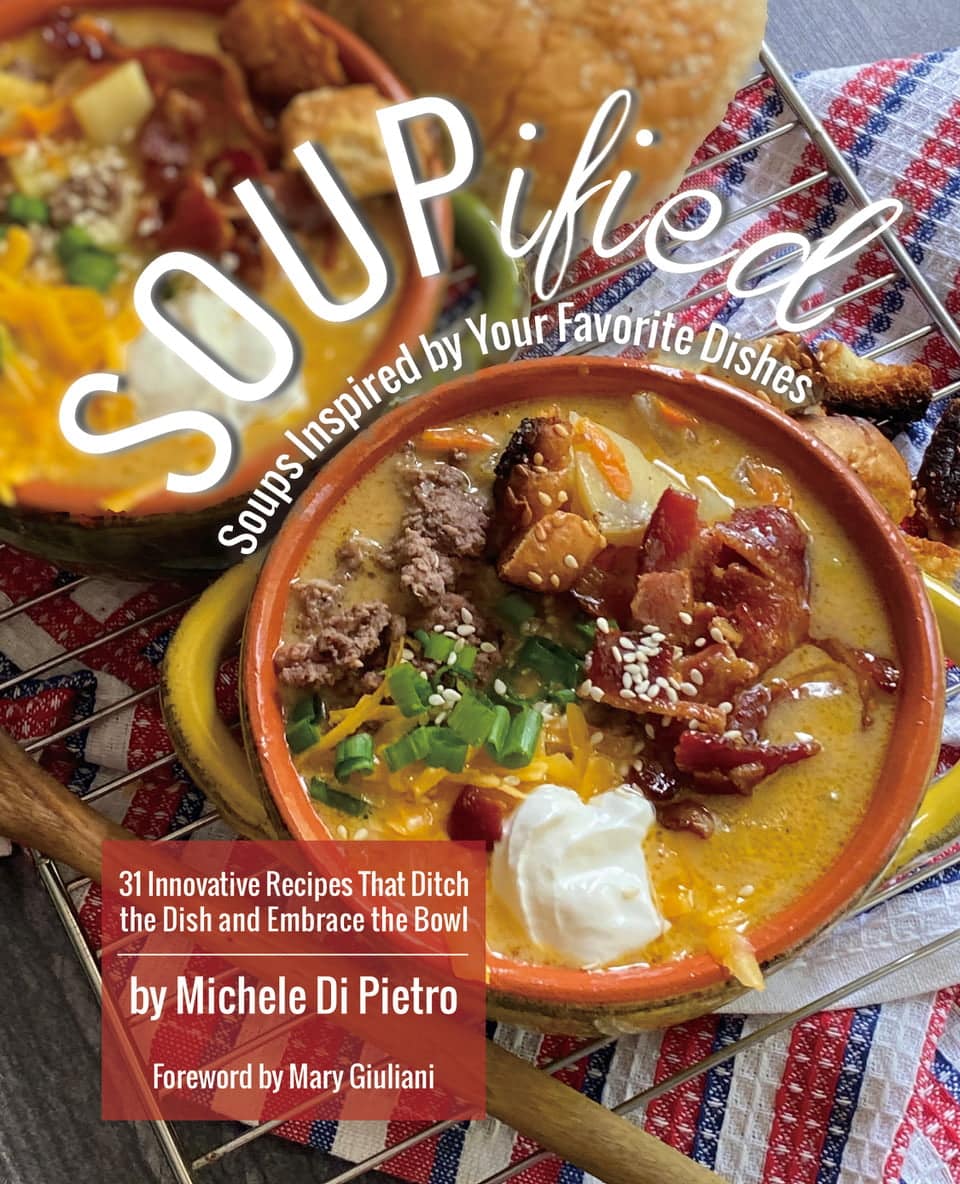
love soup?
Get My Cookbook!
Ditch the dish and embrace the bowl with Soupified: Soups Inspired by Your Favorite Dishes!
Available in ebook, paperback and hardcover.

This recipe never fails to impress!