
This post may contain affiliate links or sponsored content. That means if you click on my link and buy something, I will earn a small commission from the advertiser at no additional cost to you. For more information, see our disclosure policy.
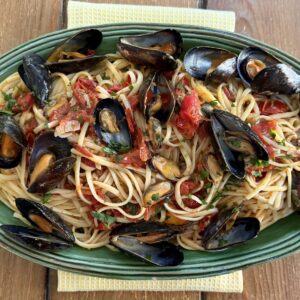
Linguine with Mussels is a classic Italian-American seafood pasta featuring tender mussels, sweet grape tomatoes, garlic, white wine and extra virgin olive oil. Light, garlicky and full of flavor, this restaurant-quality pasta is surprisingly easy and affordable to make at home. Perfect for Christmas Eve’s Feast of the Seven Fishes, summer entertaining or any time you’re craving a delicious seafood pasta!
Keep In Mind Before You Start . . .
- Use 3 pounds of fresh mussels for six servings, or increase to 4 pounds if you prefer lots of mussels or are buying two 2-pound bags. Cook in batches if your pan is crowded.
- Remove about ¾ of the cooked mussels from their shells for easier eating, leaving the rest in their shells for presentation.
- Don’t overcook the mussels! Set them aside once cooked and shelled and return them to the pan along with the cooked pasta so they stay tender.
- The sauce should be light and juicy, not thick like marinara. Add reserved pasta water only as needed, since the mussels will release plenty of flavorful liquid.
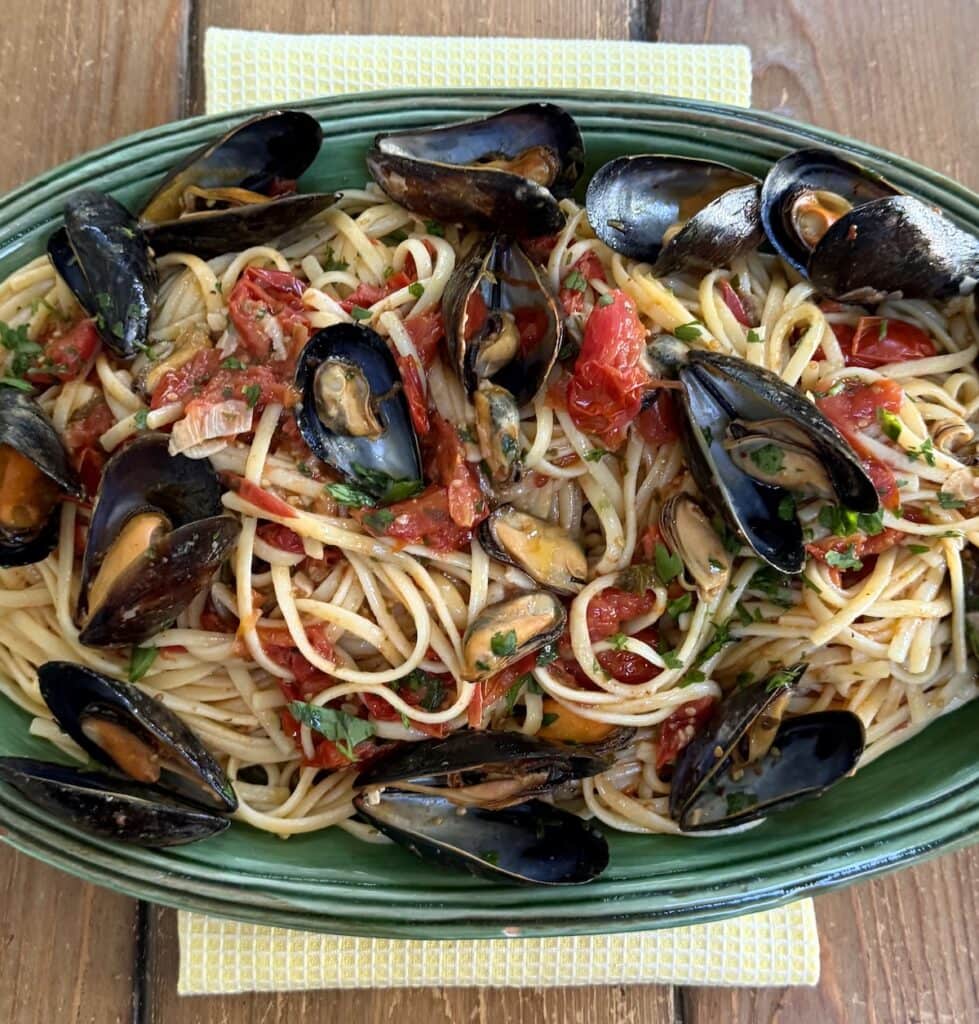
A Favorite Italian-American Seafood Pasta
If you know me, you know that I love seafood, and mussels are definitely one of my favorites! So, combining them with pasta is really a no-brainer for me.
Linguine with Mussels, also known as Linguine con le Cozze, is one of those classic dishes that you’ll often find on the menus of old-school Italian-American restaurants, especially here in the New York, New Jersey and Philadelphia areas.
It’s the kind of dish that feels special enough to order when dining out, but it’s actually surprisingly easy and affordable to make at home. Mussels are generally one of the more economical seafood options, and they don’t require much preparation or cooking time.
I often rotate this dish into my Christmas Eve Feast of the Seven Fishes menu, a tradition celebrated by many Italian-American families. But I certainly don’t reserve it just for the holidays! I love making this pasta year-round, especially during the summer when sweet, juicy tomatoes are at their best.
For this version, I deliberately chose fresh grape tomatoes instead of canned tomatoes or a traditional red sauce. As they cook, they soften and release their juices, adding just enough sweetness, acidity and tomato flavor without making the sauce thick or heavy.
The result is a light, garlicky sauce based on dry white wine and extra virgin olive oil, with plenty of additional flavor coming from the mussels themselves.
And, with a few anchovies for extra savory depth, lots of garlic and fresh parsley, it’s amazing how much flavor you can get from a handful of simple ingredients. Mangia bene!
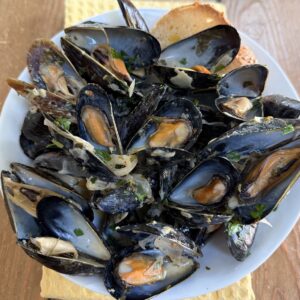
If you enjoy shellfish, be sure to check out Mussels in White Wine Sauce, Mussels Marinara, Zuppa di Vongole (Sautéed Clams in Red Sauce) and Stuffed Clams Oreganata with Lemon Garlic Breadcrumbs, too!
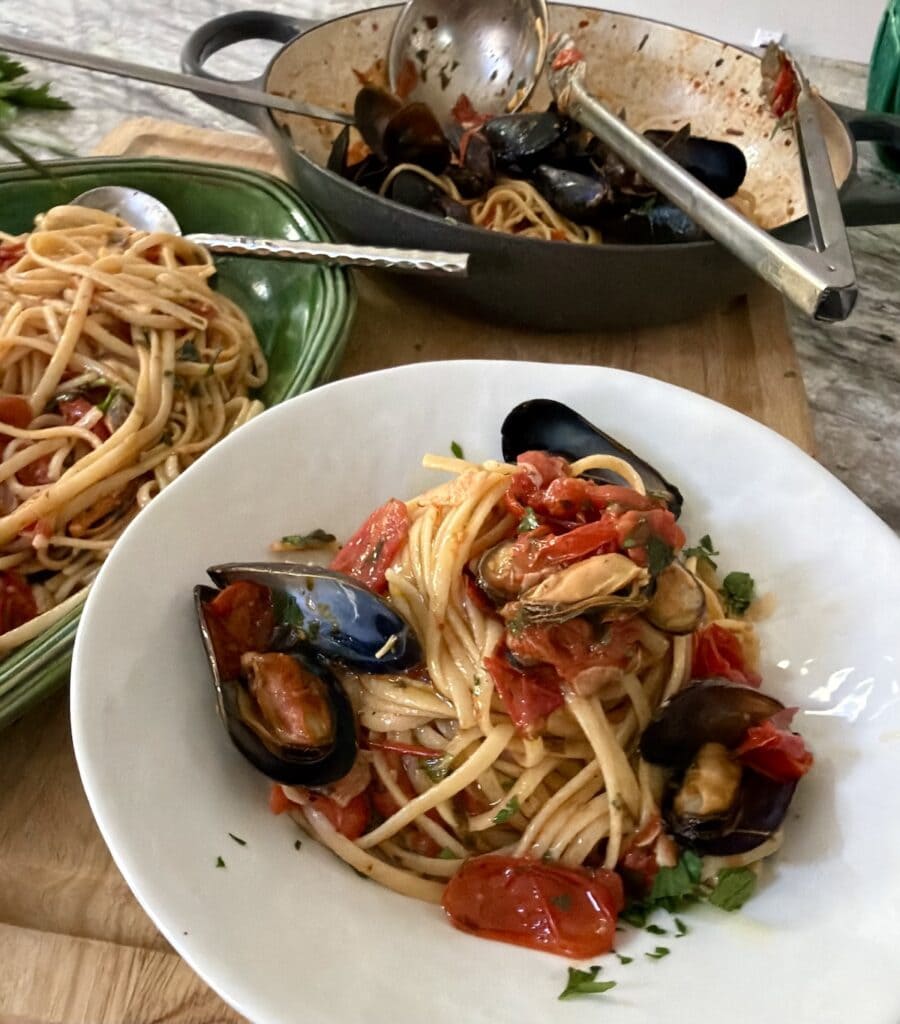
Ingredients Notes
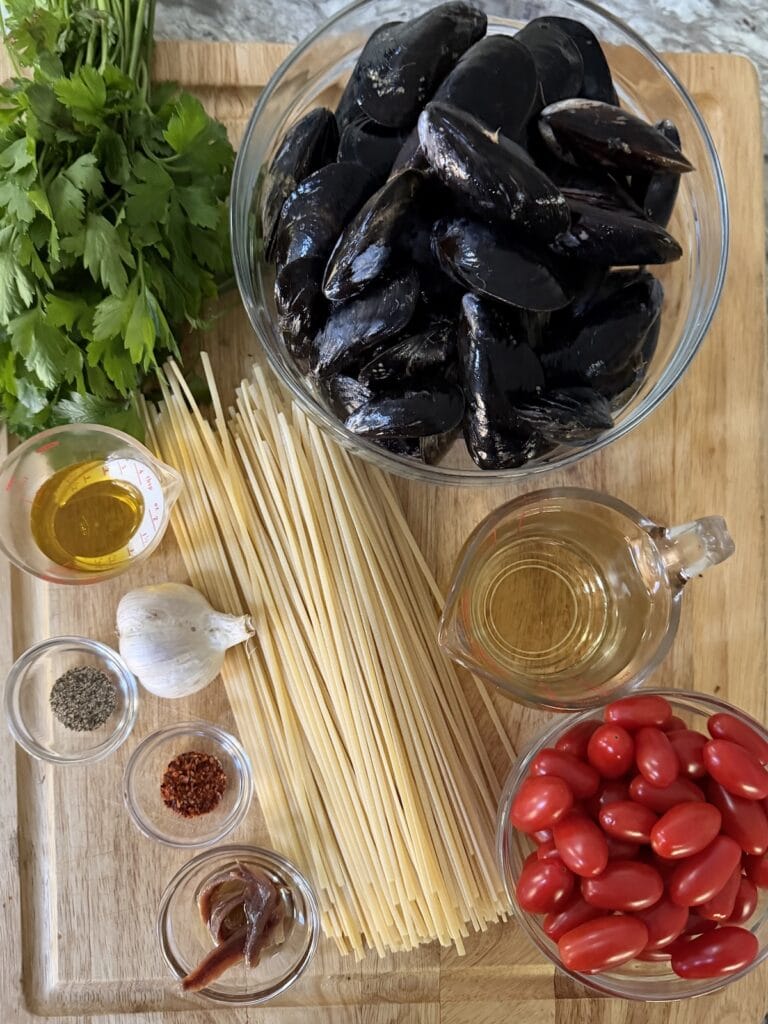
This Linguine with Mussels recipe uses a handful of simple ingredients to create a light but incredibly flavorful seafood pasta.
- Mussels: Use fresh, live black mussels with intact shells. Most commercially sold mussels are farm-raised and relatively easy to clean. I recommend 3 pounds for six servings, but you can use up to 4 pounds if you prefer lots of mussels! See the FAQs below for buying, cleaning and storing information.
- Pasta: Linguine is my preferred pasta for this dish, but spaghetti, bucatini or capellini are all great alternatives.
- Tomatoes: I used fresh grape tomatoes, halved lengthwise, which soften and release their juices into the sauce while retaining some texture. Cherry or pear tomatoes work equally well. You can also substitute canned tomatoes for a richer, more tomato-forward sauce. See the FAQ below.
- Anchovies: These add wonderful umami and savory depth without making the sauce taste fishy. Use anchovy fillets or anchovy paste, or omit them if you prefer.
- White Wine: Choose a light, dry white wine, such as Pinot Grigio or Sauvignon Blanc. If you prefer not to use wine, substitute seafood or vegetable broth or clam juice, and consider adding a little fresh lemon juice at the end.
- Garlic and Parsley: Both add essential flavor and freshness to this dish, so I wouldn’t skimp on either! Use fresh flat-leaf parsley rather than dried. I don’t recommend substituting basil here.
- Olive Oil: Use olive oil to gently cook the garlic and anchovies, then finish the pasta with a generous drizzle of high-quality extra virgin olive oil for additional flavor and richness.
How to Make Linguine with Mussels
Once all your ingredients are prepped, this recipe comes together fairly quickly. The key is to cook the mussels until just done, then finish the linguine in their flavorful cooking liquid.
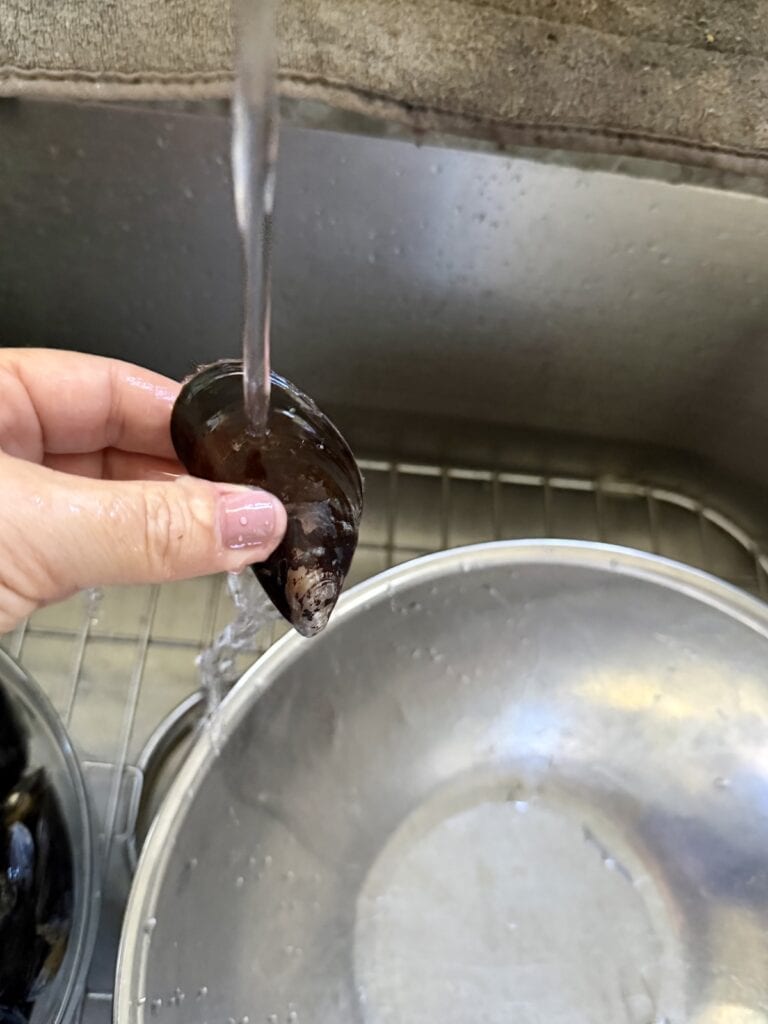
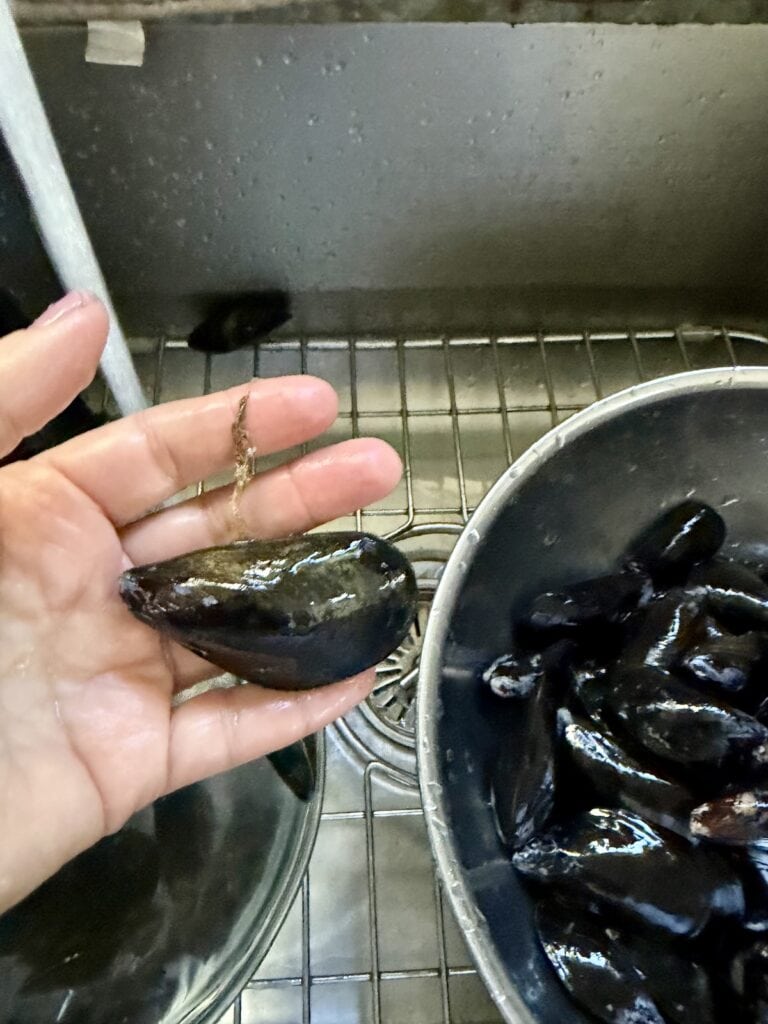
- Clean mussels. Inspect the shells, remove any debris or beards and rinse under cold running water. Discard mussels with cracked shells or those that don’t close when tapped.
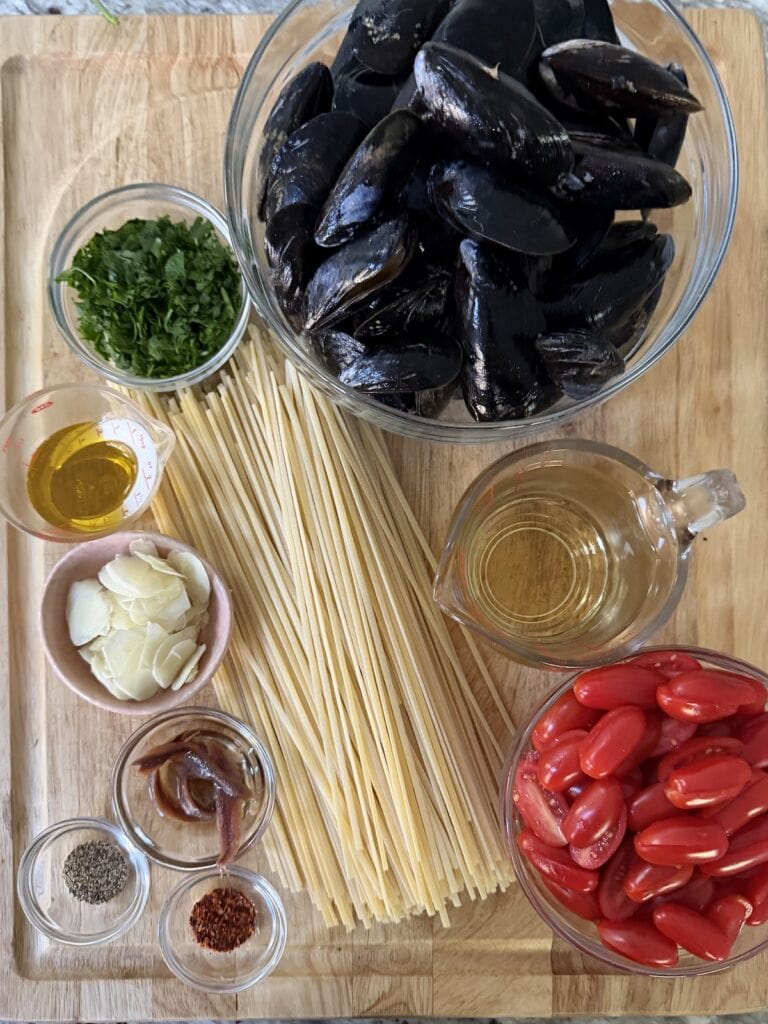
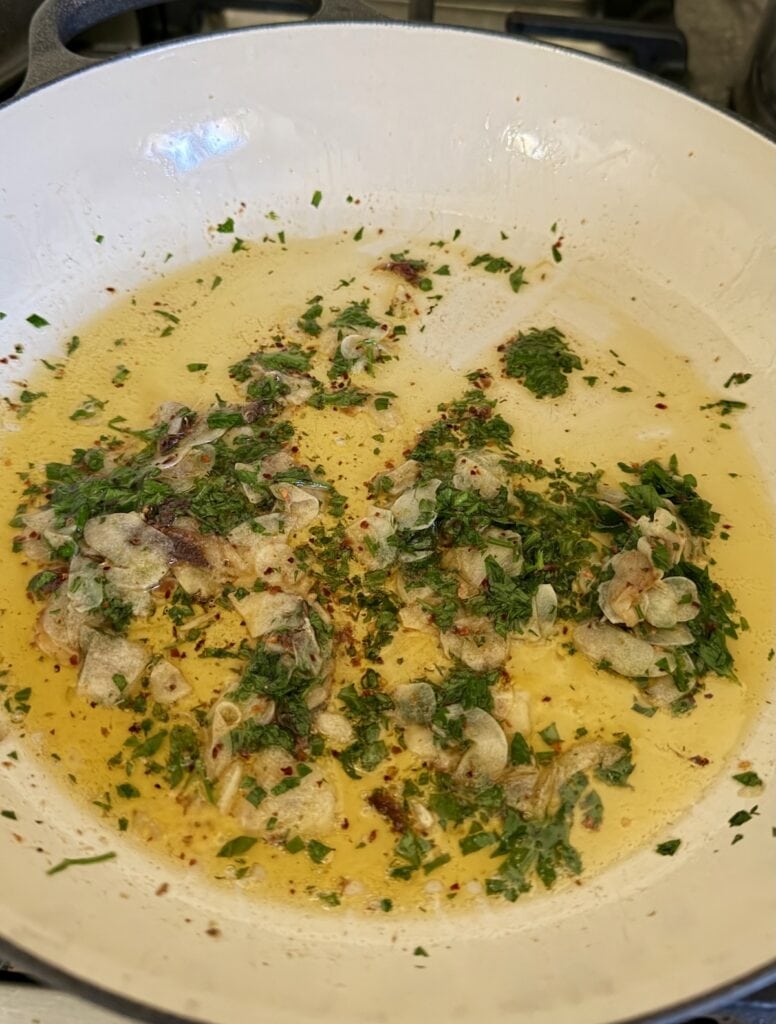
- Cook aromatics. Gently cook the garlic, anchovies and crushed red pepper in olive oil until the garlic softens and the anchovies dissolve. Add half the chopped parsley.
- Add tomatoes. Stir in the halved grape tomatoes and cook until they begin to soften and release their juices. Gently crush some of them, leaving others chunky for texture.
- Add wine. Pour in the white wine and black pepper and simmer briefly until the wine reduces slightly and its flavor mellows.
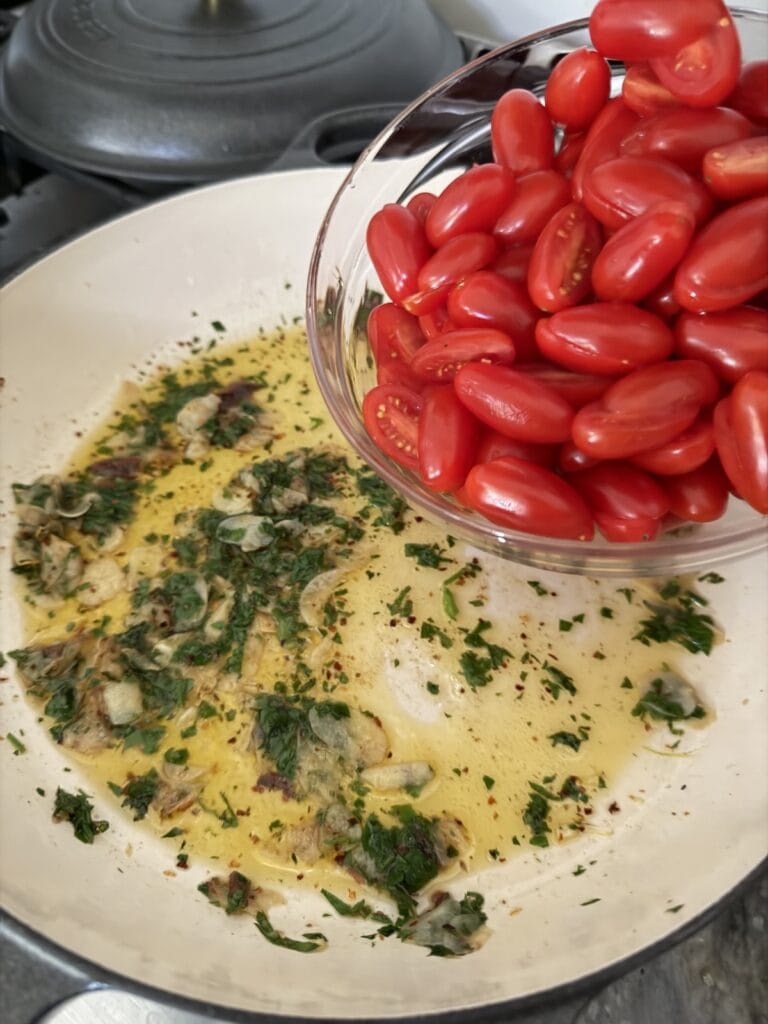
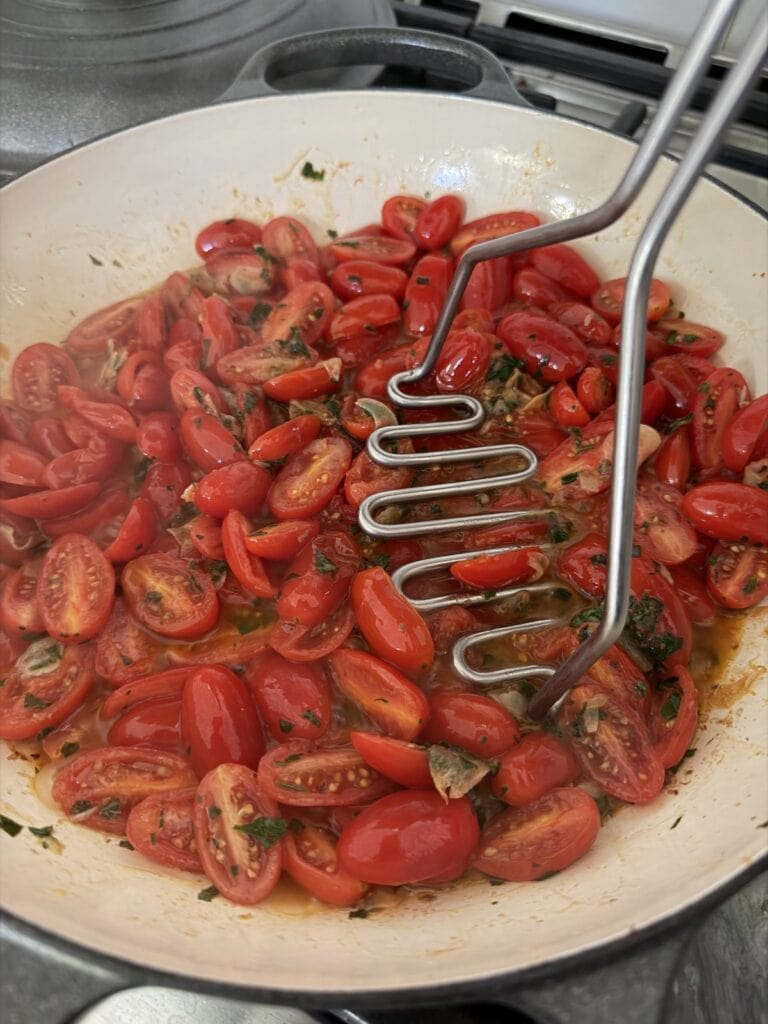
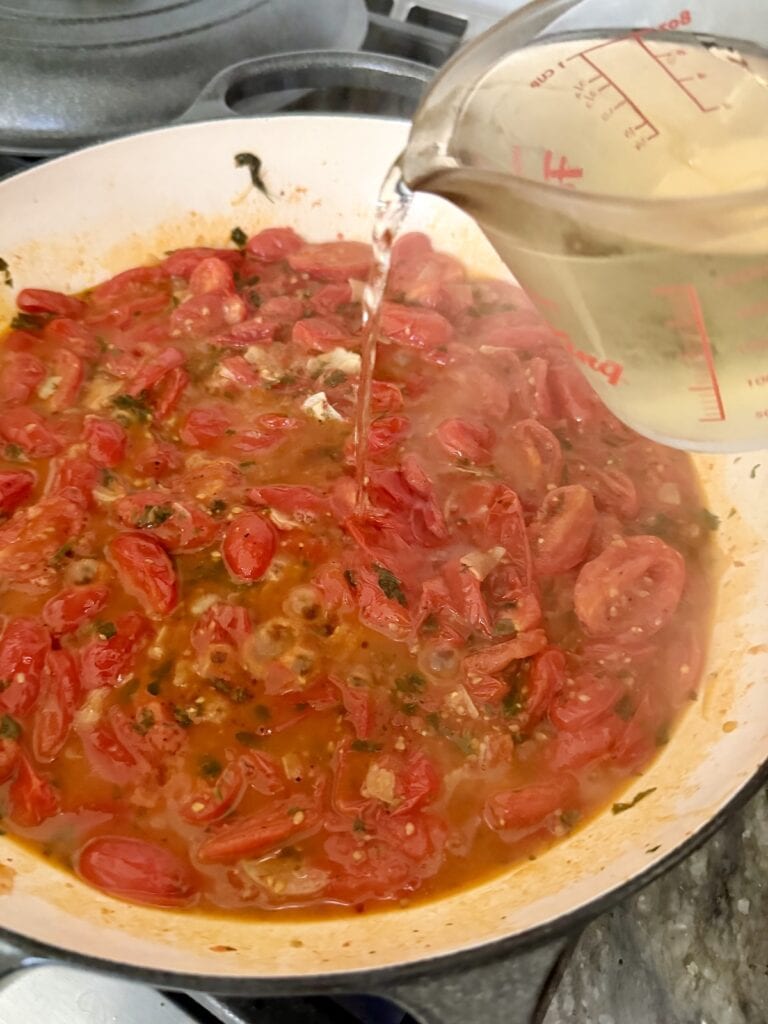
- Cook mussels. Add the cleaned mussels, cover and steam until fully cooked. Transfer them to a bowl, leaving all their flavorful cooking liquid in the pan. Discard any mussels that remain closed after cooking.
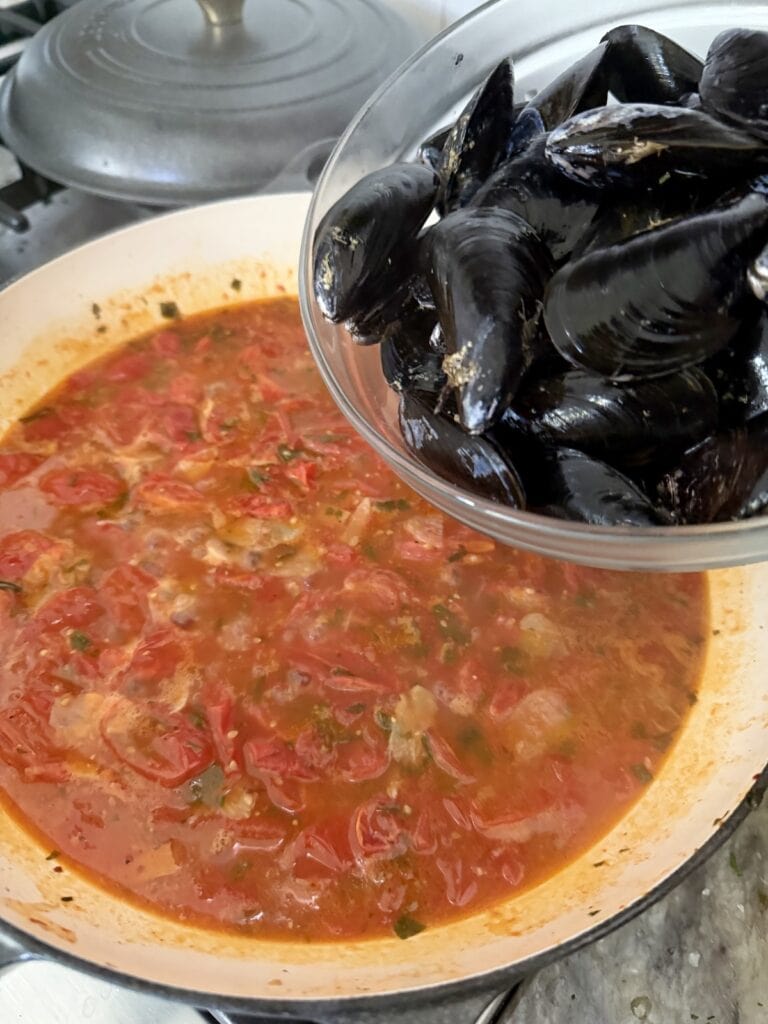
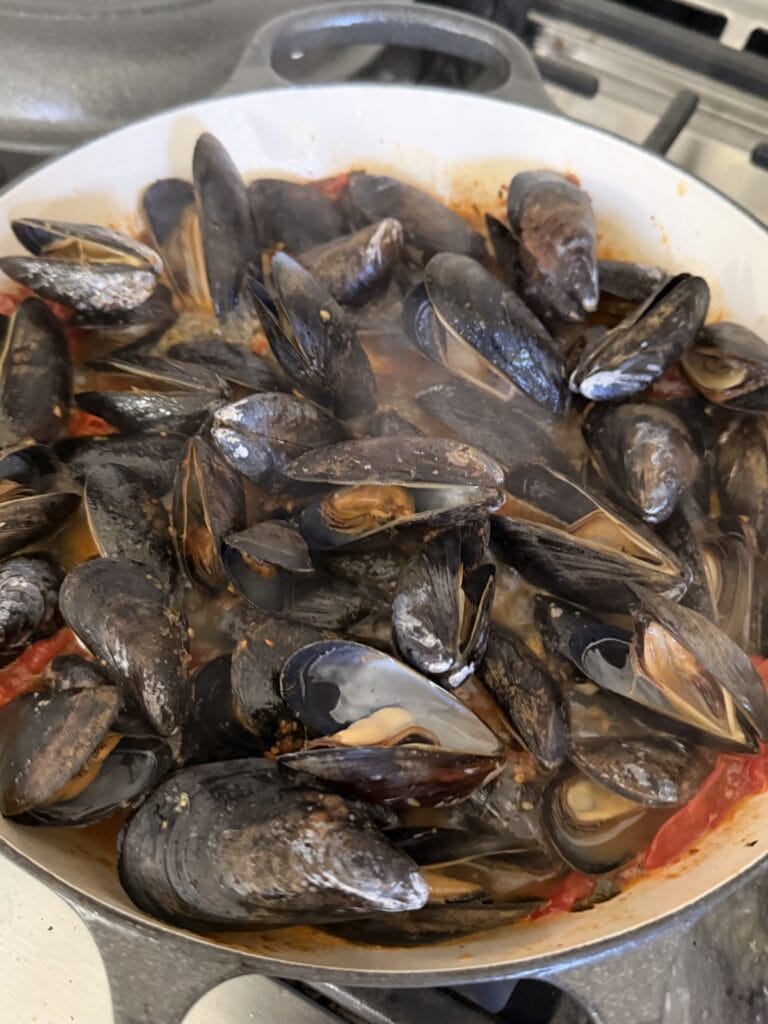
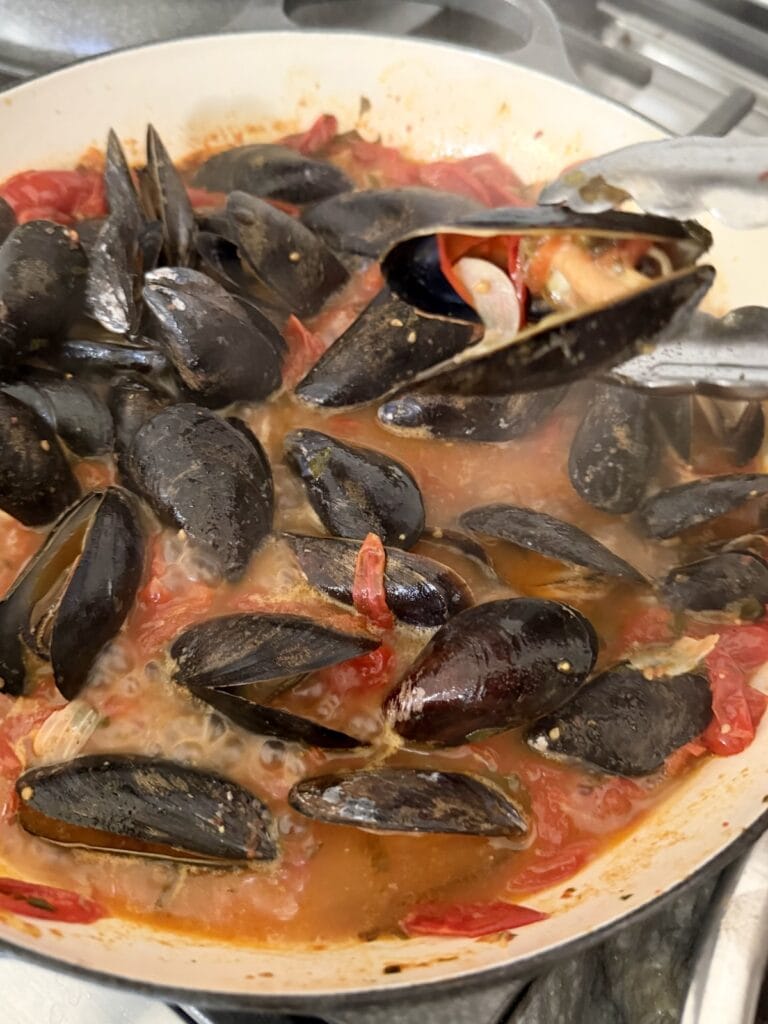
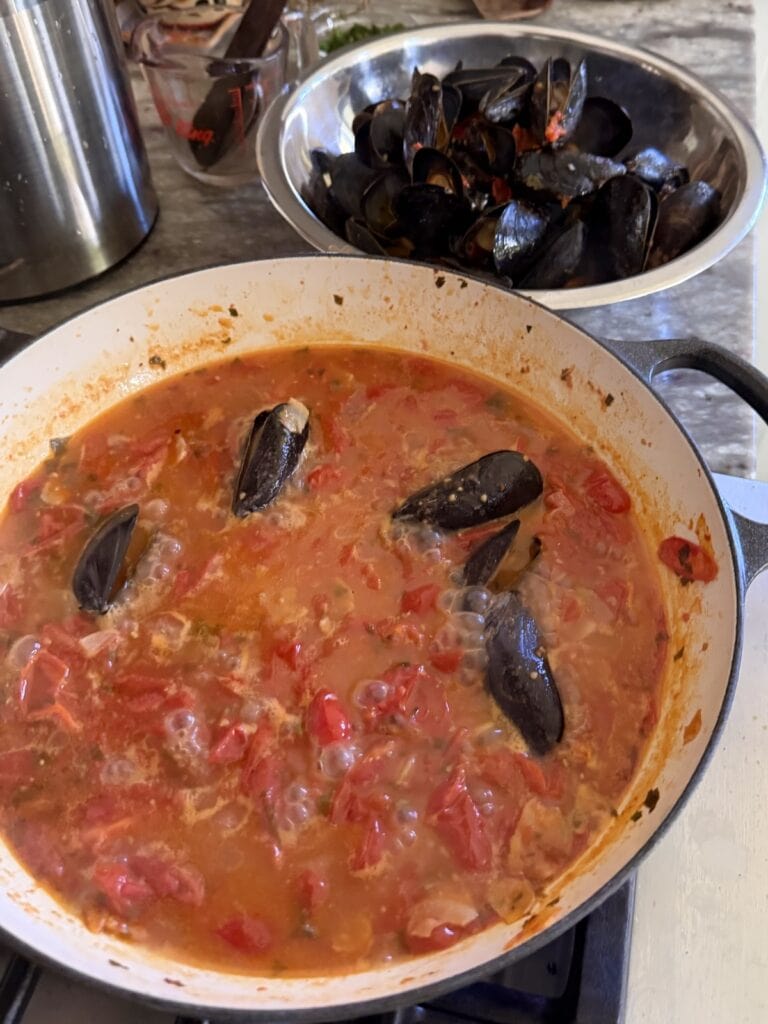
- Cook pasta and shell mussels. Cook the linguine until just short of al dente, reserving some starchy pasta water. Meanwhile, remove about ¾ of the mussels from their shells, leaving the rest intact for presentation.
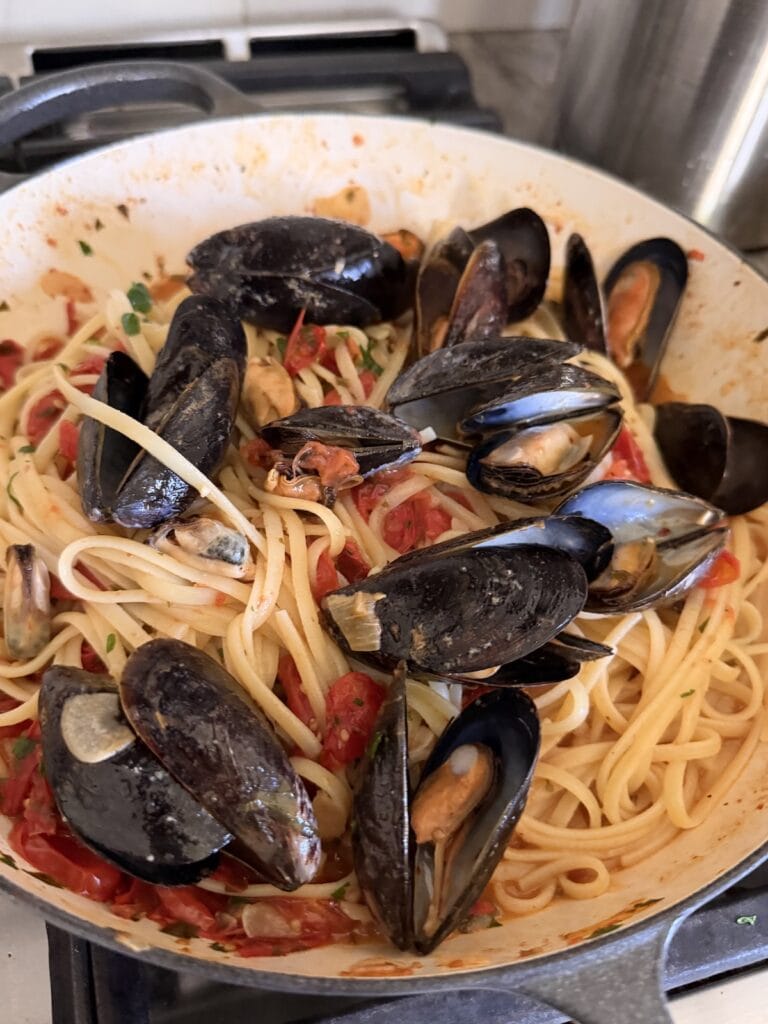
- Finish pasta in sauce. Transfer the slightly undercooked linguine to the simmering sauce with the reserved shelled mussels and a little reserved pasta water. Toss until the pasta is al dente and coated in the light, flavorful sauce, adding more pasta water only if needed.
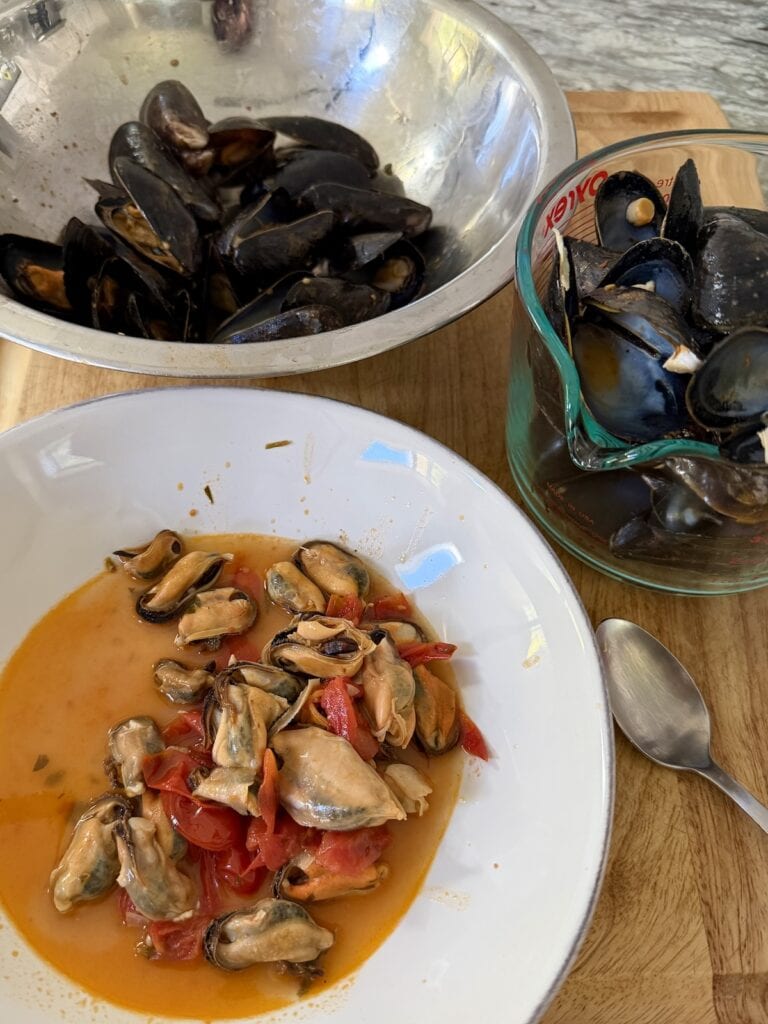
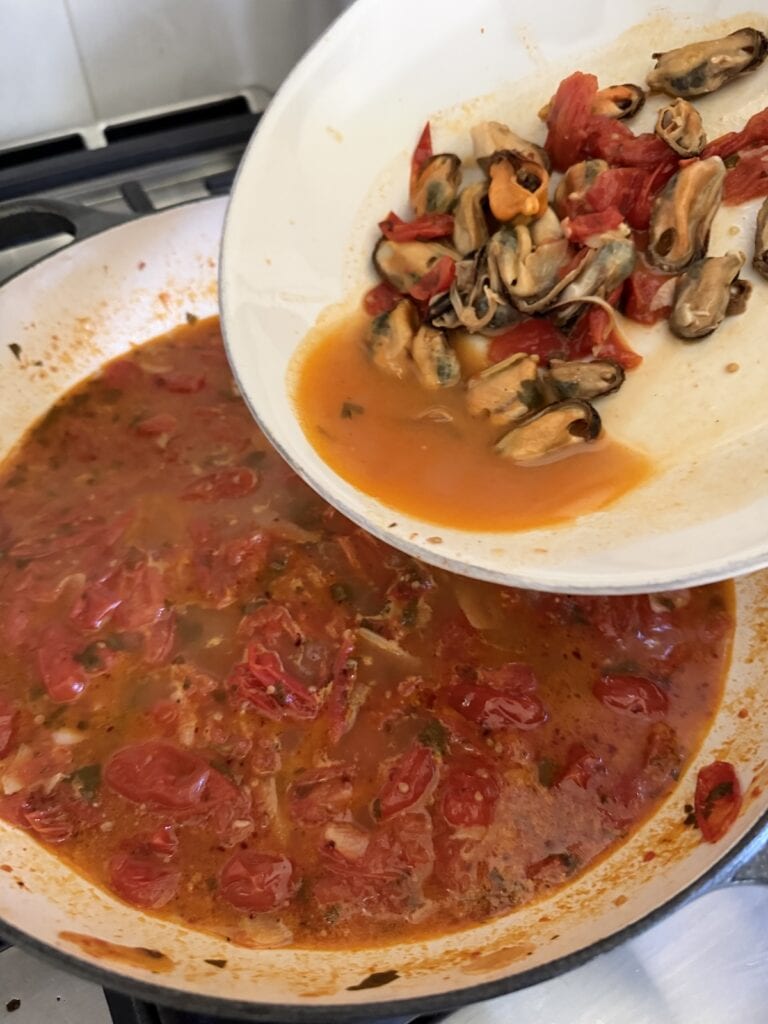
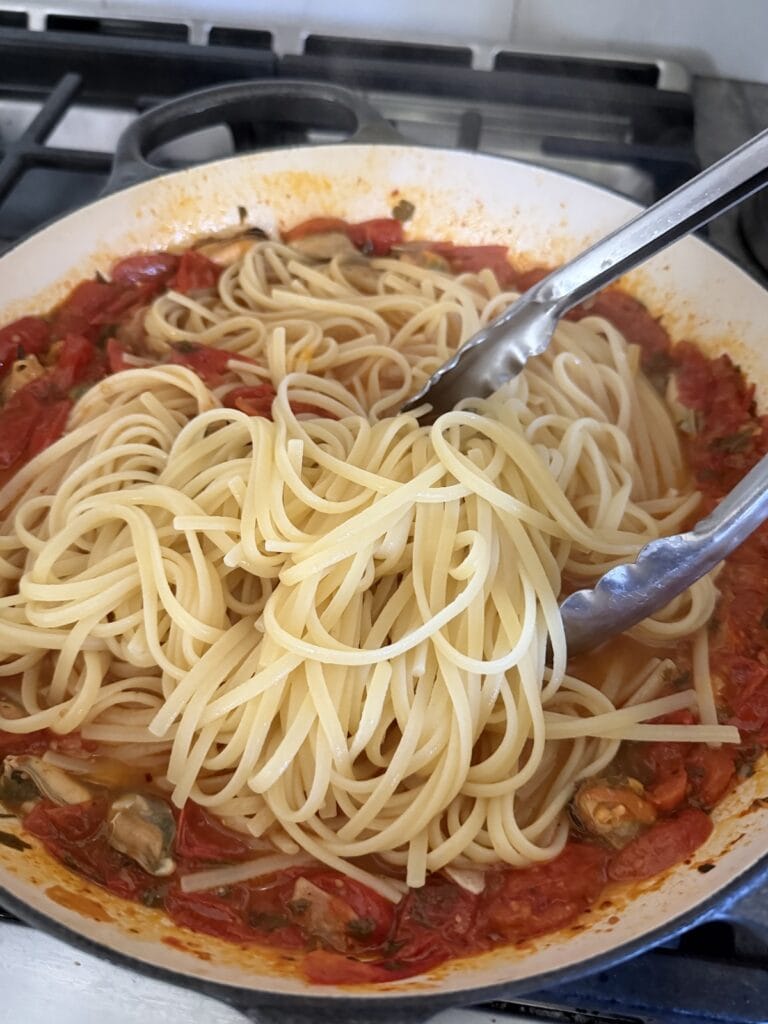
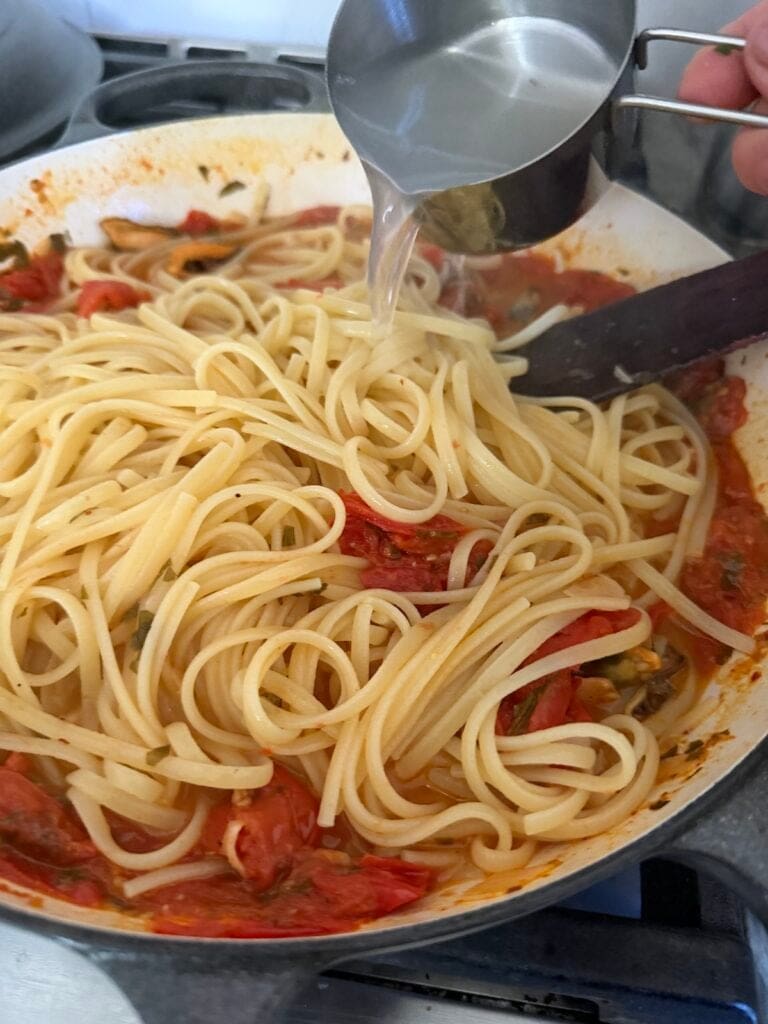
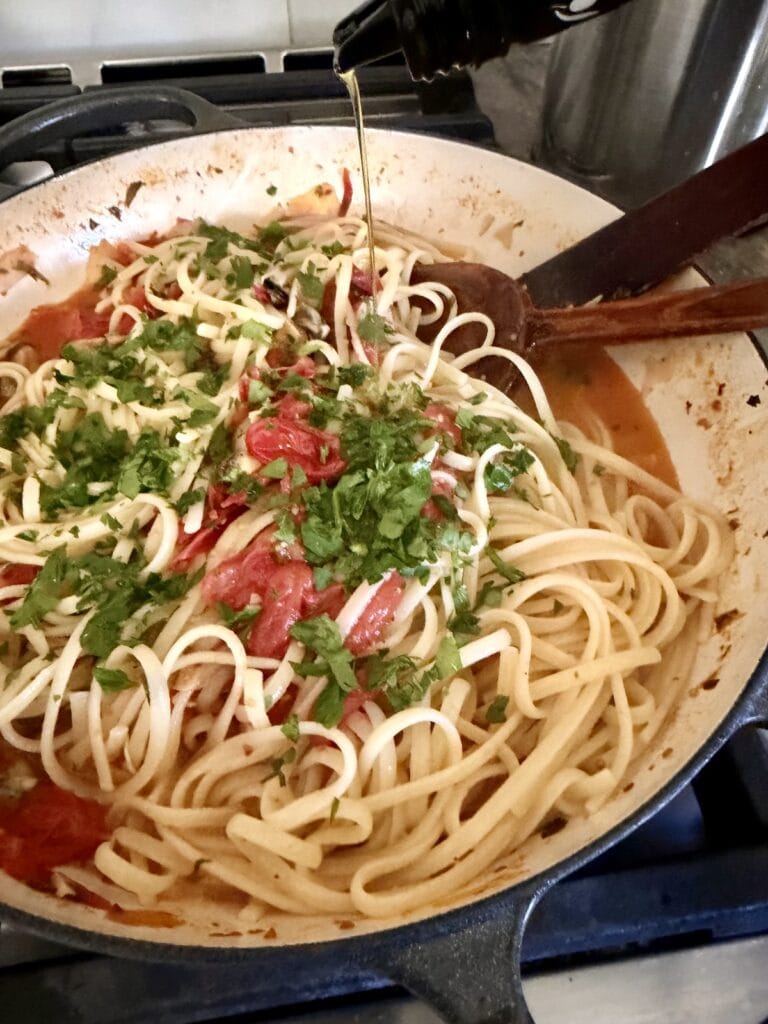
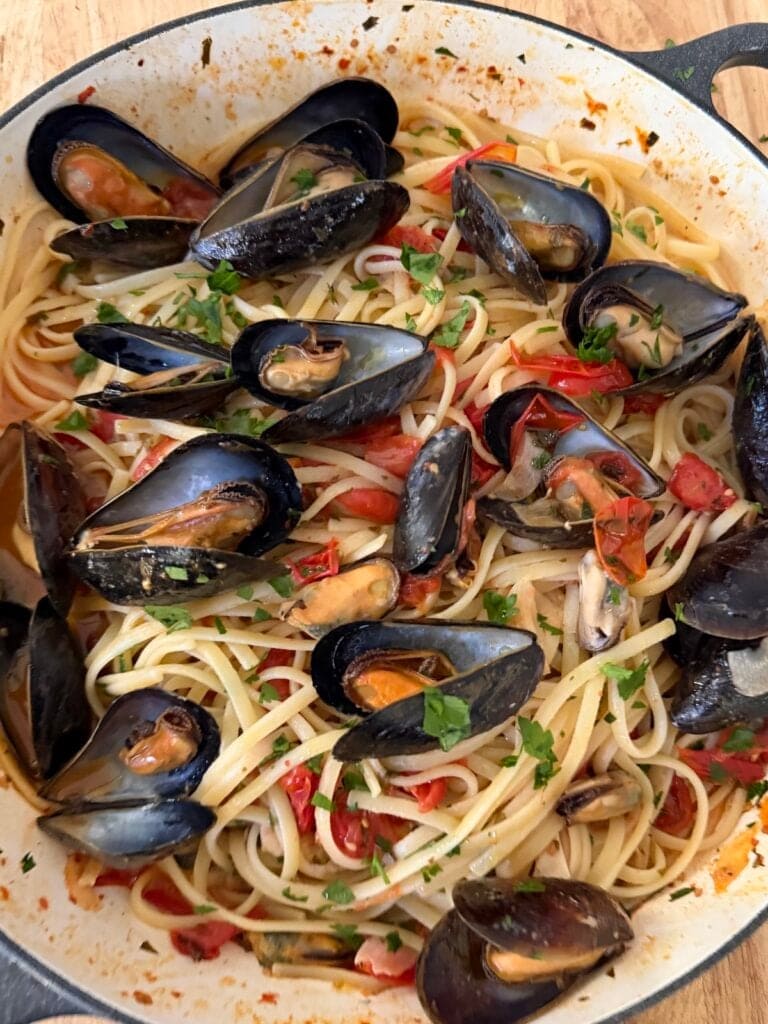
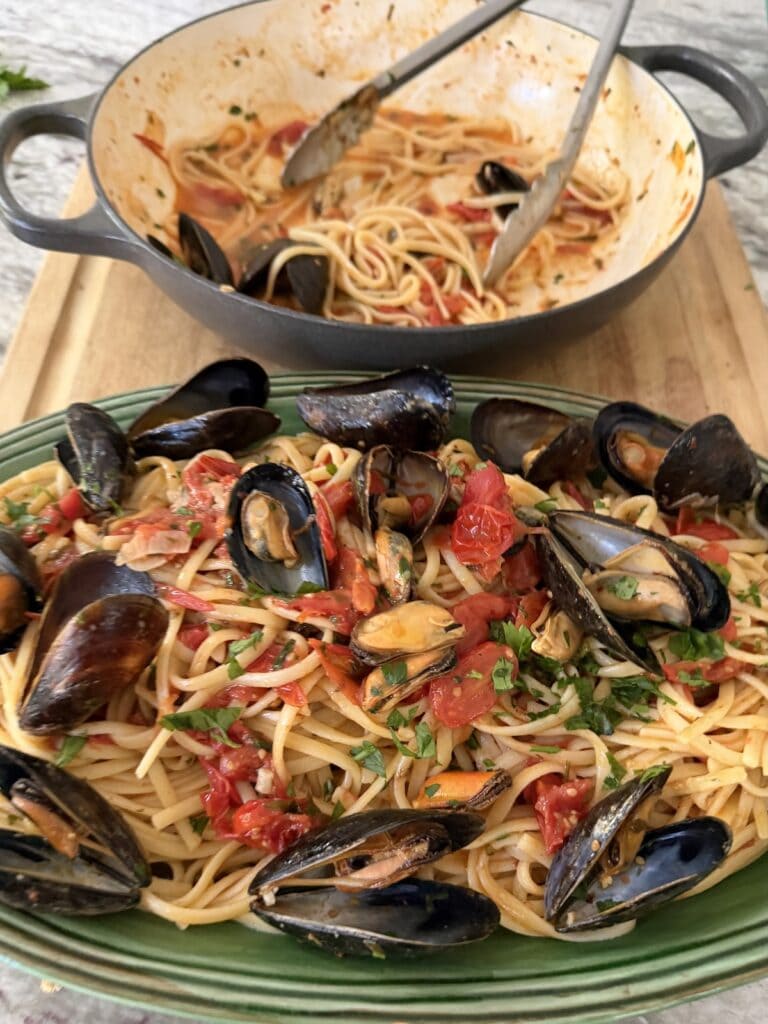
- Add remaining mussels and serve. Gently fold in the remaining parsley and extra virgin olive oil. Transfer to a serving platter, arrange the mussels still in their shells on top and serve immediately. Buon Appetito!
Recipe Substitutions and Variations
There are several delicious ways to change up this Linguine with Mussels recipe:
- Puttanesca It! Add capers, chopped oil-cured black olives and a pinch of dried oregano along with the garlic and parsley for a briny, puttanesca-inspired twist.
- Give It a Provençal Twist! Sauté about half a thinly sliced fennel bulb with the garlic and add a pinch of saffron with the tomatoes. The combination of fennel, saffron and seafood is wonderful!
- Make It Richer: Add 1–2 tablespoons softened, unsalted butter at the end for a silkier, slightly richer sauce.
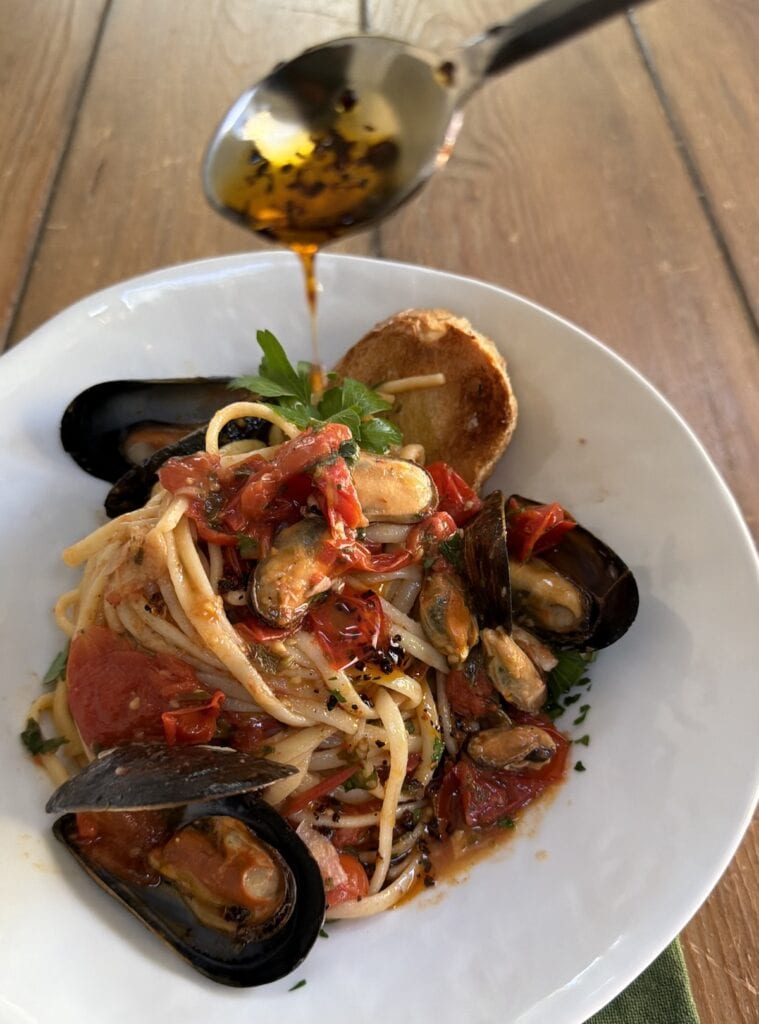
- Turn Up the Heat: Increase the crushed red pepper or add a little Calabrian chile paste with the garlic. You can also finish the pasta with some homemade spicy pepper oil.
- Add Clams: Replace about half the mussels with fresh littleneck clams. Since clams may take longer to cook, steam them first, remove them as they finish cooking, then add the mussels. Discard any clams that remain closed after cooking.
Frequently Asked Questions
Live mussels are best cooked the day you purchase them or within 1–2 days, following the package’s use-by date.
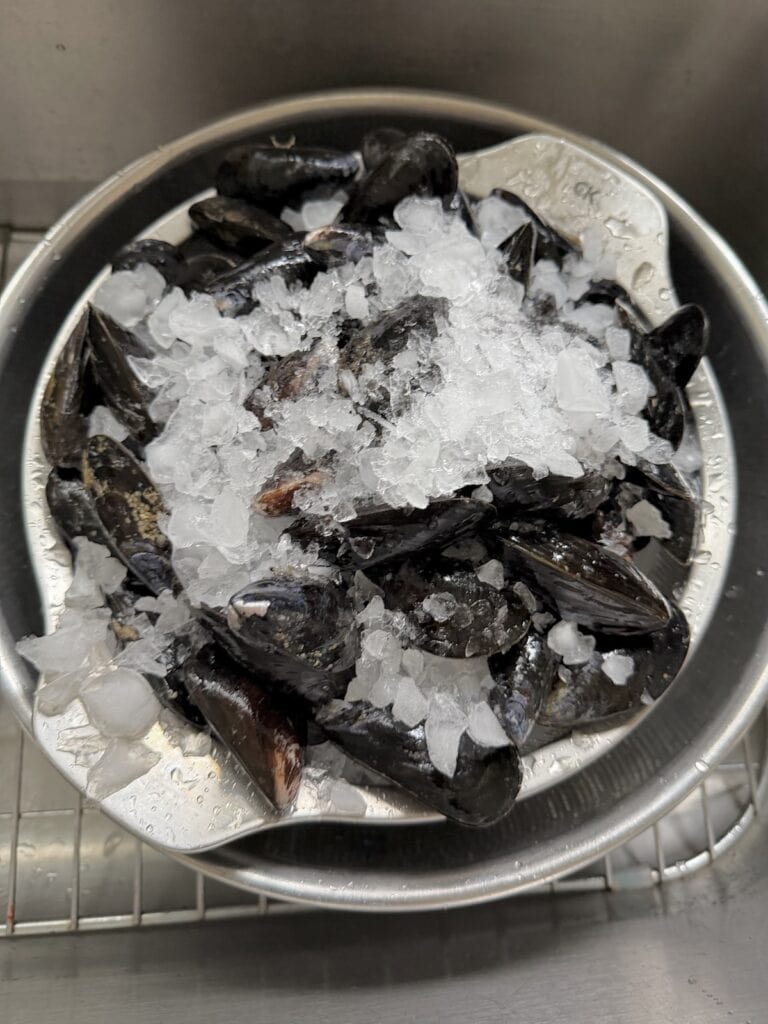
I like to store them in a colander set over a bowl, with ice arranged so the melting water drains away from the mussels. Cover loosely with a damp kitchen towel and refrigerate at 40°F or below, without allowing them to freeze.
You can also store them in a breathable mesh or perforated bag in the refrigerator.
Never store live mussels in a sealed plastic bag, airtight container or submerged in water, as they need to breathe.
And remember, mussels are sold live because they spoil quickly once they die.
Most commercially sold mussels are farm-raised and come fairly clean, so they generally don’t need to be purged like clams.
To clean them, inspect each mussel and remove any surface debris with your hands or a small brush. If you see a beard (the little hairy clump of fibers protruding from the shell), pull it toward the hinge or snip it off with kitchen scissors.
Discard mussels with cracked or broken shells or those that remain open after being tapped. Rinse under cold running water just before cooking.
Don’t soak live mussels in fresh water.
For more information, see this helpful guide to cleaning and debearding mussels from Epicurious.
That’s entirely up to you!
After years of serving this dish with all the mussels still in their shells, I’ve started removing about ¾ of them and mixing the mussel meat directly into the pasta and sauce.
I leave the remaining mussels in their shells for presentation. It makes the pasta so much easier to eat while still looking beautiful!
Mussels generally take about 5–10 minutes to steam in a covered pan, depending on their size and how crowded the pan is.
The shells should open and the mussel meat should be fully cooked. Remove the cooked mussels from the pan so they don’t become tough and rubbery and discard any that remain closed after cooking.
Absolutely! Although I love the lighter flavor and texture of fresh grape tomatoes in this recipe, canned tomatoes are a delicious alternative.
Substitute one (28-ounce) can of whole peeled tomatoes for the fresh tomatoes. Crush them by hand and let them simmer for approximately 10–15 minutes before adding the wine and proceeding with the recipe.
The finished sauce will be thicker and more tomato-forward, similar to a light marinara.
For other delicious seafood dishes featuring tomato sauce, check out my Mussels Marinara and Linguine in Red Clam Sauce.
Yes! If fresh mussels aren’t available, you can make a version of this dish with frozen mussels, either on their own or in combination with fresh ones.
I suggest starting with approximately 1 pound of frozen, shelled, cooked mussel meat, thawed in the refrigerator before using.
Be sure to check the package, as frozen mussels may be sold raw or already cooked. Precooked mussels only need to be heated through near the end of the recipe, rather than steamed with fresh mussels.
Since they won’t release the same amount of cooking liquid as fresh mussels, I also suggest adding approximately ¼–⅓ cup clam juice along with the wine for additional seafood flavor.
For sure! Simply omit the tomatoes for a delicious white wine, garlic and olive oil-based pasta with mussels.
You may need to add additional pasta water while finishing the linguine to create enough sauce.
This dish is best enjoyed immediately after it’s prepared, when the linguine is perfectly al dente and the mussels are tender.
However, you can chop the garlic and parsley and halve the tomatoes ahead of time, keeping everything refrigerated until you’re ready to cook.
I recommend cleaning the mussels shortly before cooking and preparing the pasta and sauce just before serving.
More Italian Seafood Pasta Recipes
Seafood and pasta go together like tomato and basil. Here are some of my other favorite combinations:
- Spaghetti and Crabs
- Calamari Ragù Fra Diavolo with Bucatini
- Shrimp Scampi Pasta with Arugula
- Squid Ink Pasta with Seafood
- Scungilli Pasta in Spicy Marinara
- Pasta with Lump Crabmeat (Quick and Easy)
Linguine with Mussels
Video
Equipment
- Dutch oven with lid or large, deep skillet or sauté pan
Ingredients
- 3 Tbsp olive oil
- 3-4 Tbsp chopped or thinly sliced garlic
- 3 anchovy fillets or 2-3 tsp anchovy paste, (can use some anchovy oil in place of olive oil)
- ¼ tsp crushed red pepper, (optional, use as much as you’d like!)
- ⅓ cup chopped flat-leaf parsley leaves, divided
- 2 dry pints grape or cherry tomatoes, halved lengthwise (about 1¼ pounds)
- 1 cup dry white wine such as Pinot Grigio
- ¼ tsp ground black pepper
- 3 pounds fresh live mussels (up to 4 pounds, if desired), cleaned and debearded (See cleaning details below.)
- Salt to taste
- 1 pound linguine , or other long pasta + salt for pasta water
- Extra virgin olive oil, for finishing
- (Optional) 1–2 Tbsp softened, unsalted butter , (for finishing)
Instructions
- Prep and gather all ingredients according to the specifications above. Fill a large pot with water for the pasta and bring it to a boil while preparing the sauce. Once boiling, lower the heat as needed to hold the water at a gentle simmer until you're ready to cook the linguine.(Please see the section above in the blog post for Step-By-Step instructions with photos.)
- Clean mussels: Inspect each mussel, remove any obvious surface debris with your hands or a potato brush, and pull out any “beards” (small hairy mass) that you see between the shells. (Use a paper towel or cloth if necessary to grab hold of the beard.) Discard any mussels that are cracked or don't close when tapped. Rinse them under cold water. (See Notes below for additional mussel info.)3 pounds fresh live mussels (up to 4 pounds, if desired)
- Cook aromatics. Combine the olive oil, garlic, anchovies and red pepper flakes in a large skillet or Dutch oven over medium low heat and cook until the garlic starts to soften and turn lightly golden and the anchovies have dissolved, about 3-5 minutes. Be sure to break up the anchovies with a wooden utensil as they cook. Stir in half the chopped parsley after a couple minutes.NOTE: You can use some anchovy oil here, if desired.3 Tbsp olive oil, 3-4 Tbsp chopped or thinly sliced garlic, 3 anchovy fillets or 2-3 tsp anchovy paste, ¼ tsp crushed red pepper
- Cook tomatoes. Next, add the tomatoes and increase the heat to medium. Cook another 5-8 minutes, partially covered, or until the tomatoes begin to break down a bit, stirring a few times. (You can help this along by gently crushing some tomatoes with a large fork or potato masher. Don’t overcrush them, though, as some chunky pieces adds great texture to the final dish.)2 dry pints grape or cherry tomatoes
- Deglaze. Then, pour the wine in the pan and scrape up any brown bits. Add the black pepper. Bring the wine to a light simmer and simmer until the wine has reduced slightly and the flavors have mellowed, about 3-5 minutes.1 cup dry white wine such as Pinot Grigio, ¼ tsp ground black pepper
- Cook mussels. Carefully add the cleaned mussels to the simmering sauce. Stir gently and distribute them evenly across the surface of the pan. Cover, lower the heat to medium-low and let them steam, shaking the pan and gently stirring a few times as they cook.NOTE: Depending on the size of your pan, you may need to cook the mussels in batches, as 3 pounds may be too much to accommodate at once.
- As the mussels open, check that the meat is opaque and firm but still tender. Then transfer them to a bowl with tongs one-by-one. Replace the cover and continue cooking the remaining mussels until done, about 5–10 minutes total, depending on their size and the heat level. Discard any mussels that remain closed after cooking.Be sure to leave all that delicious mussel cooking liquid in the pan! It adds incredible flavor to the sauce.
- Cook pasta. Once the mussels have finished cooking, add salt and the linguine to the boiling water, stirring frequently. Cook the pasta for approximately 2 minutes less than the package directions, or until just short of al dente. Be sure to reserve at least 1½ cups of the starchy pasta water before draining. (You may not need it all.)1 pound linguine
- Shell mussels. While the pasta is cooking, remove approximately ¾ of the cooked mussels from their shells, leaving the rest intact for presentation. Set all the mussels aside until you're ready to finish the pasta. (See Notes below regarding serving the mussels in their shells.)
- Finish sauce. While the linguine is cooking, return the sauce to a gentle simmer over medium-low heat. Taste and adjust the seasonings, adding salt only if necessary. Keep the shelled mussels aside for now so they don't overcook.
- Combine pasta with sauce. When the pasta is ready, transfer it to the simmering tomato and mussel sauce along with the shelled mussels and about ½ cup of the reserved starchy pasta water (to start). Increase the heat to medium, if necessary, to maintain a gentle simmer. Toss well to combine and let the pasta finish cooking in the sauce, absorbing all those wonderful flavors! Add additional pasta water as needed to keep the sauce loose and silky.
- Finish pasta and serve. Once the linguine is al dente, turn off the heat, fold in the remaining parsley and drizzle a healthy glug of high-quality olive oil over everything and stir. Toss gently, taste and adjust seasonings if necessary, then transfer to a serving platter. Arrange the reserved mussels in their shells on top and serve immediately. Buon Appetito!NOTE: If you’d like more of a silky, restaurant-style finish, add a couple pats softened, room temperature butter and mix in. Note that the dish will no longer be dairy-free if you do this.
Notes
- Mussel Quantity: I recommend 3 pounds of mussels for this recipe, which makes six generous servings. However, since mussels are often sold in 2-pound bags, feel free to use 4 pounds if you’d prefer not to have an extra pound left over–or if you just love lots of mussels like I do! There’s no need to increase the other ingredients. Just be sure to use a large enough pan to accommodate all the mussels without overcrowding, or cook them in batches if necessary. The cooking time may increase slightly, especially if cooking in batches. Since additional mussels will release more liquid, adjust the amount of reserved pasta water you add when finishing the dish.
- Selecting: Choose fresh, live mussels with intact shells and a fresh, clean ocean smell. At the grocery store or fish market, look for mussels that are properly refrigerated or displayed on ice. Avoid mussels with cracked or broken shells. If any are open, gently tap them and discard those that don’t close.
- Storing: Ideally, cook live mussels the day you purchase them or within 1–2 days, following the package’s use-by date. If you’re not cooking them immediately, place them in a colander set over a bowl with ice underneath and, if desired, some ice on top. This allows any melting ice to drain away so the mussels aren’t sitting in water. Cover loosely with a damp kitchen towel and refrigerate at 40°F or below, without allowing them to freeze. Never store live mussels in an airtight container or submerged in water, as they need to breathe.
- Cleaning: Most commercially sold mussels are farm-raised and arrive fairly clean. Inspect them, scrub away any debris and remove any beards before rinsing under cold running water. There’s generally no need to purge farm-raised mussels as you would clams. (See Frequently Asked Questions above for more details.)
- Cooking: Steam the mussels in the covered pan for approximately 5-10 minutes, or until the shells open and the mussels are fully cooked. Remove them as they finish cooking to prevent overcooking, and discard any that remain closed after cooking.
- Serving: Removing the mussels from their shells before combining them with the pasta is a personal decision. After years of serving this dish with all the mussels still in their shells, I now remove about ¾ of them and mix the mussel meat directly into the sauce, leaving the rest in their shells for presentation. It makes the dish so much easier to eat!
- Use a large pot with 5–6 quarts of water for 1 pound of pasta. Bring the water to a boil before adding salt. Salt the pasta water a little less generously than usual, since the mussels and anchovies will add plenty of flavor and saltiness to the sauce.
- The pasta water is key! Add it to the sauce along with the pasta for the additional moisture needed to finish cooking the pasta.
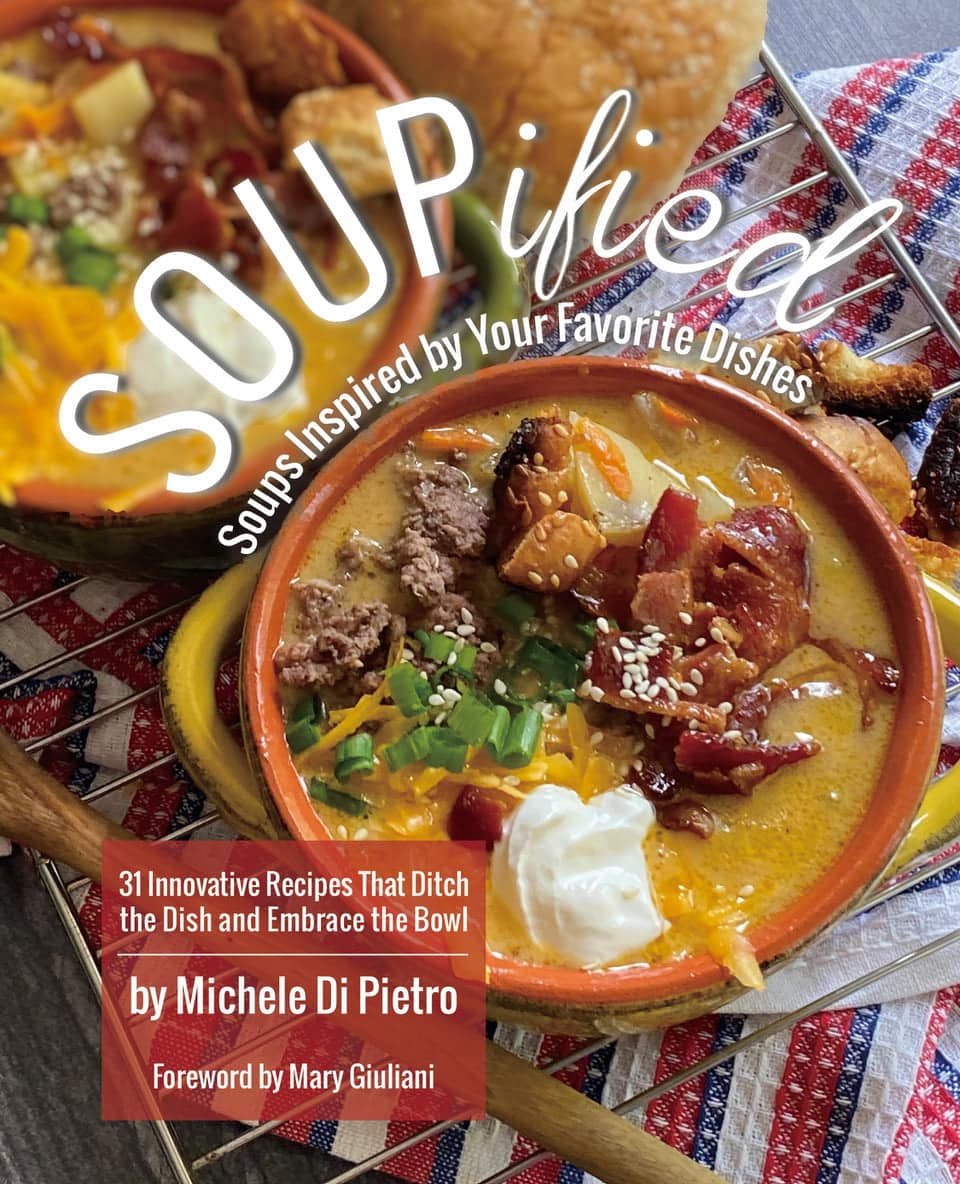
love soup?
Get My Cookbook!
Ditch the dish and embrace the bowl with Soupified: Soups Inspired by Your Favorite Dishes!
Available in ebook, paperback and hardcover.
Mussels in White Wine Sauce
Video
Equipment
- Dutch oven or large, deep skillet or sauté pan
Ingredients
- 2 Tbsp butter
- 2 Tbsp olive oil
- ½ cup thinly-sliced shallots
- 3-4 Tbsp chopped or thinly sliced garlic
- ¼ tsp crushed red pepper, (optional, use as much as you’d like!)
- ⅓ cup chopped flat-leaf parsley leaves, divided
- 1½ cups dry white wine such as Pinot Grigio
- 2 pounds mussels, cleaned; see below.
- ⅓ cup heavy cream
- ¼ tsp ground black pepper
- 1-2 Tbsp fresh lemon juice
- 1-2 tsp lemon zest, (Be sure to zest lemons first!)
- Salt to taste
Instructions
- Prep and gather all ingredients according to specifications above. Be sure to zest the lemon(s) before juicing!(Please see the section above in the blog post for Step-By-Step instructions with photos.)1-2 Tbsp fresh lemon juice, 1-2 tsp lemon zest
- Clean mussels: Inspect each mussel, remove any obvious surface debris with your hands or a potato brush, and pull out any “beards” (small hairy mass) that you see between the shells. (Use a paper towel or cloth if necessary to grab hold of the beard.) Discard any mussels that are cracked or don't close when tapped. Rinse them under cold water.(See Notes below for additional mussel info.)2 pounds mussels
- Cook aromatics. Combine the butter and olive oil in a large skillet over medium-low to low heat. Once the butter melts, add the shallots, garlic and crushed red pepper and cook until the garlic and shallots are very soft but not browned, about 8-10 minutes. Add half the chopped parsley after two minutes. Stir occasionally.NOTE: Keep the pan at a low heat as you don’t want to brown/caramelize the garlic and shallots, but rather slowly cook and soften them. Cover the pan to speed up this process, if desired.2 Tbsp butter, 2 Tbsp olive oil, ½ cup thinly-sliced shallots, 3-4 Tbsp chopped or thinly sliced garlic, ¼ tsp crushed red pepper, ⅓ cup chopped flat-leaf parsley leaves
- Add wine. Pour the wine into the pan and increase the heat to medium or medium-high. Bring to a steady simmer and cook, uncovered, until the wine has reduced by approximately one-third and its sharp, raw alcohol aroma has mellowed, about 5–7 minutes. The exact time will depend on the size of your pan.1½ cups dry white wine such as Pinot Grigio
- Cook mussels. Carefully add the cleaned mussels to the simmering sauce and distribute them evenly across the pan. Cover, lower the heat to medium-low and let them steam, shaking the pan occasionally and gently stirring as needed.NOTE: Be sure to have a bowl nearby for the cooked mussels.
- As the mussels open, check that the meat is opaque and firm but still tender, then transfer them to a bowl with tongs one-by-one. Replace the cover and continue cooking the remaining mussels until done, about 5–10 minutes total, depending on their size and the heat level. Discard any mussels that remain closed after cooking.
- Cover the bowl of cooked mussels loosely to keep them warm while you finish the sauce.
- Add cream. Once all the mussels have cooked and have been removed from the pan, add the heavy cream and black pepper and stir. Bring to a gentle simmer and cook, uncovered, for about 3–5 minutes, or until the sauce has reduced slightly and is silky and lightly coats the back of a spoon. It should still be loose enough for dipping bread.⅓ cup heavy cream, ¼ tsp ground black pepper
- Finish sauce. Then, stir in the remaining parsley along with 1 Tbsp lemon juice and 1 tsp lemon zest. Add salt and additional lemon juice and zest to taste.
- Combine mussels and sauce. Return all the cooked mussels to the pan and gently stir a few times to disperse the sauce throughout and reheat the mussels.
- Serve immediately with some crusty bread to sop up all the wonderful sauce and juices! As mussels are a fun interactive meal, consider serving them family-style right in the pot or pan in which they were cooked. Don’t forget to serve with a small bowl for discarded shells. Buon Appetito!
Notes
- Use black mussels without any cracks in the shell.
- Most mussels that are sold commercially are cultivated/farmed and therefore are much easier to clean.
- Mussels are sold live because once they die, they spoil very quickly.
- At the grocery store or fish market, look for mussels that are sold on ice and that have wet-looking, shiny shells.
- Storing Live Mussels:
- It’s best to cook live mussels the day you purchase them, but they can generally be refrigerated for 1–2 days if properly stored and still fresh.
- I like to place them in a colander set over a bowl with ice underneath to keep them cold. Cover the mussels loosely with a clean, damp kitchen towel and refrigerate.
- Make sure the mussels don’t sit in melted ice water, and never store them submerged in fresh water or in an airtight container, as they need to breathe.
- Always follow the package’s use-by date, and clean the mussels just before cooking.
- If you prefer not to use alcohol, substitute a light vegetable, chicken or seafood broth or clam juice for the wine. Keep in mind that broth and clam juice may already contain salt, so taste before seasoning. A little extra fresh lemon juice at the end can help replace some of the acidity you’d otherwise get from the wine.
love soup?
Get My Cookbook!
Ditch the dish and embrace the bowl with Soupified: Soups Inspired by Your Favorite Dishes!
Available in ebook, paperback and hardcover.

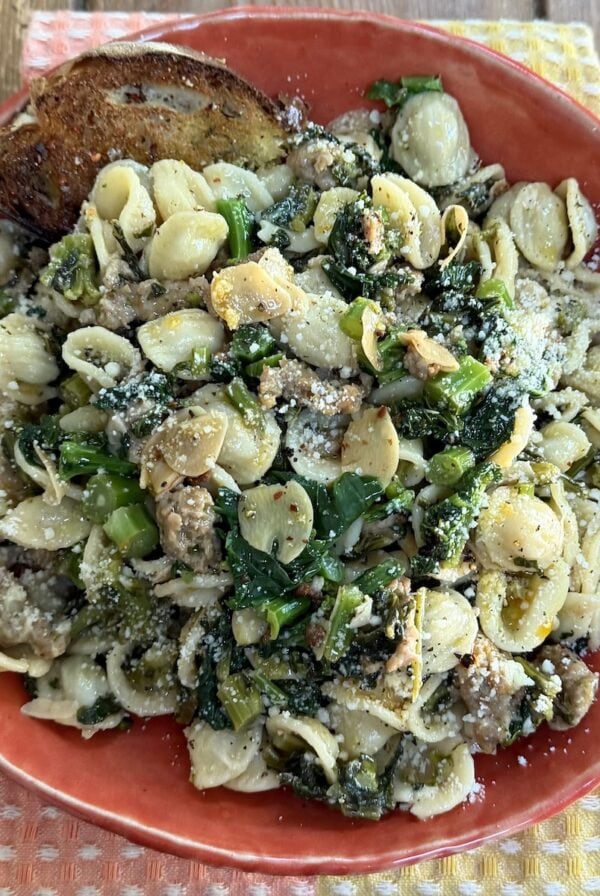
I love making this dish – the briny sauce is amazingly delicious!