
This post may contain affiliate links or sponsored content. That means if you click on my link and buy something, I will earn a small commission from the advertiser at no additional cost to you. For more information, see our disclosure policy.
Learn the right way to make authentic Spaghetti alla Nerano–creamy without cream! Made with fried zucchini, fresh basil, garlic, and two types of cheeses, this southern Italian pasta has a short ingredient list and is ALL about technique! Try it once and love it forever. Read on for more!
Keep In Mind Before You Start . . .
- Fried zucchini must rest before making the sauce.
- Reserve more pasta water than you think you’ll need.
- Turn the heat off before adding the cheese.
- This recipe becomes silky and creamy without cream through a traditional Italian emulsification technique.
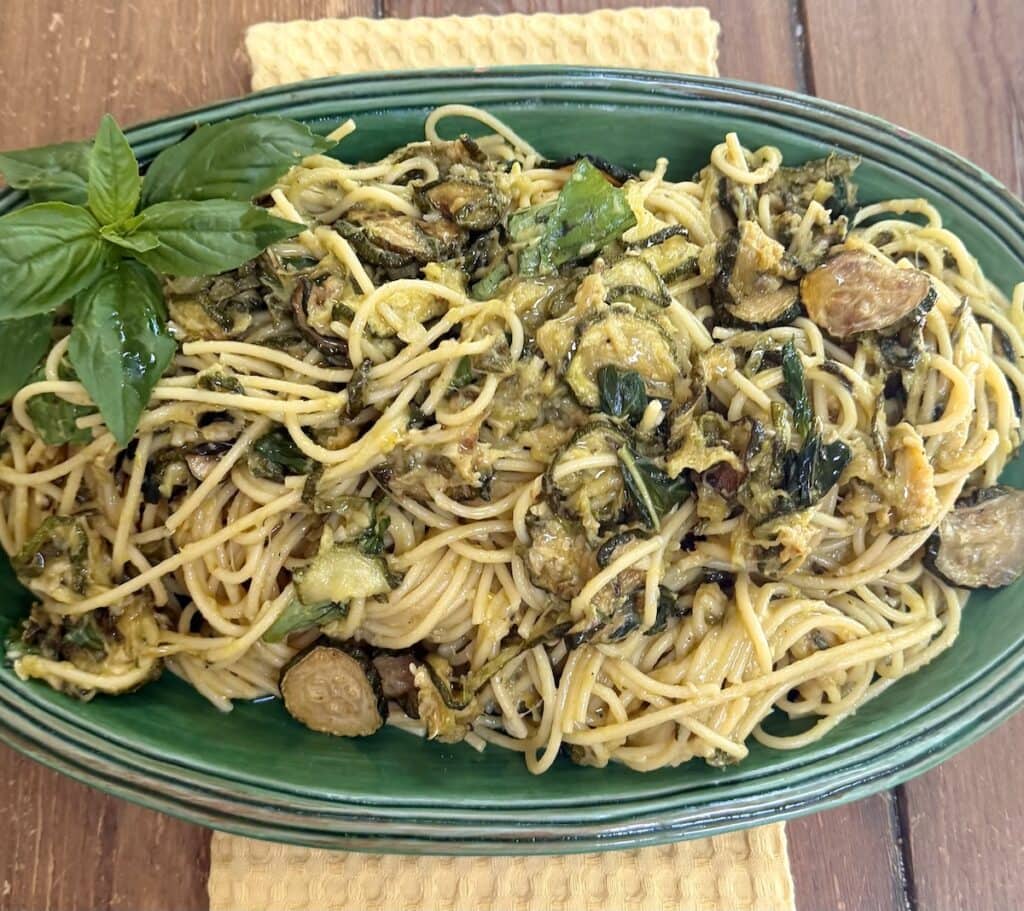
Hailing from southern Italy’s Amalfi Coast on the Mediterranean (a small town called Nerano, specifically, where zucchini is everywhere in the summer), Spaghetti alla Nerano is a great example of what Italian cooking is all about. Meaning, it’s not about adding more–it’s about doing a few things just right and its deep respect for fresh, simple ingredients.
I was turned on to this pasta a long time ago during my first trip to Napoli. Like most people, I expected to be completely taken by the pizza there–and I was–but what surprised me was how much this simple zucchini pasta stood out alongside it.
Years later, I was thrilled to see Pasta alla Nerano finally get the attention it deserves in the U.S. after Stanley Tucci featured it on Searching for Italy.
It’s a great summer pasta! Especially when you have way too much zucchini on hand from your backyard garden (or your gardening enthusiast neighbor)!
For a richer and more Italian-American style of zucchini pasta with cream, check out my Creamy Zucchini Pasta recipe.
Table of Contents
- Keep In Mind Before You Start . . .
- What is Spaghetti alla Nerano?
- My Italian-American Take on Nerano
- Why This Recipe Works
- Techniques for Perfect Spaghetti alla Nerano
- What Nerano Should Taste Like
- What’s the Best Cheese for Nerano?
- How Long To Let the Fried Zucchini Rest
- Why Isn’t Traditional Nerano Made with Cream?
- Common Mistakes
- Frequently Asked Questions
- More Recipes with Zucchini
- Serving Suggestions
- Why Spaghetti alla Nerano Is More Than Just Zucchini Pasta
- Spaghetti alla Nerano (Creamy Italian Zucchini Pasta Without Cream) Recipe
What is Spaghetti alla Nerano?
A super-simple pasta recipe that’s traditionally made with:
- Fried zucchini (plain–not breaded, battered or salted);
- Fresh basil;
- Cheese (traditionally Provolone del Monaco, a local semi-hard aged cow’s milk cheese produced near Naples with a rich, spicy and slightly piquant flavor; in my version, I use a blend of Pecorino Romano and Parmigiano-Reggiano);
- Pasta
If this pasta has you craving more zucchini dishes, you’ll love my collection of Italian zucchini recipes. And, for more tips on prepping and cooking zucchini in general, check out my How to Cook Zucchini guide.
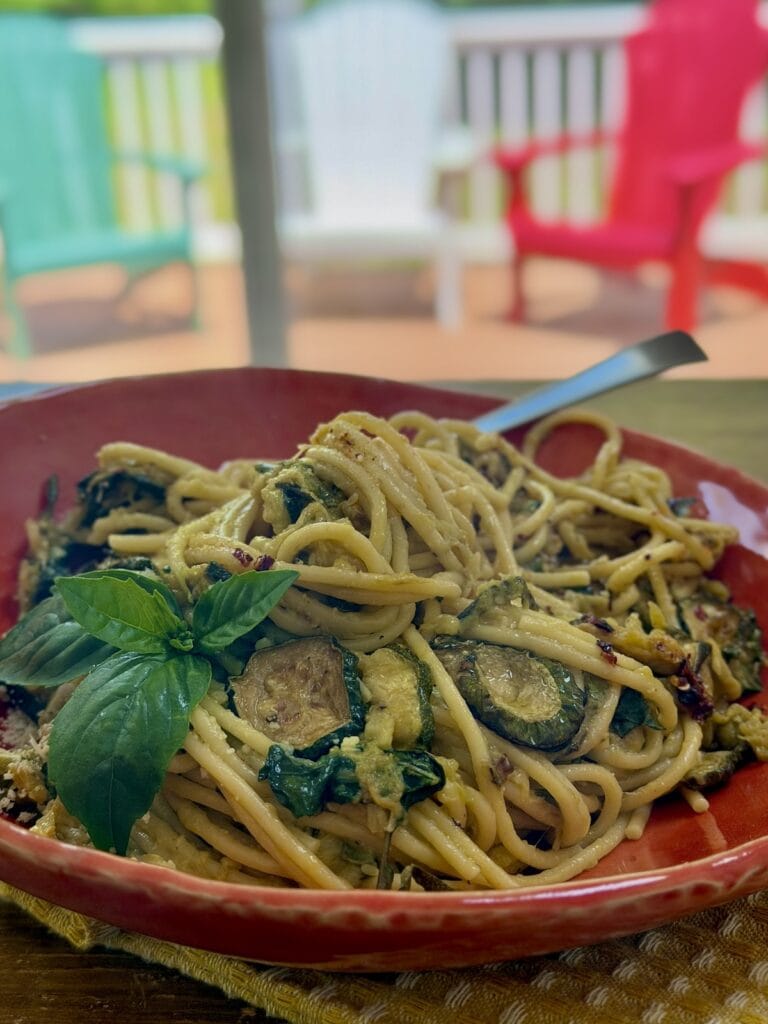
My Italian-American Take on Nerano
My Italian American-inspired version of Nerano pasta calls for a blend of the more readily available Pecorino Romano and Parmigiano-Reggiano cheeses that add sharp, rich, savory and earthy notes.
- Plus, I include my beloved garlic and also a dab of butter (both non-traditional) at the end to assist in emulsification and add a bit more texture and richness.
- I also use a much larger amount of zucchini here than you’ll find in almost every other nerano recipe: four pounds to one pound pasta. (Zucchini reduces by more than half once cooked!) I feel it makes all the difference and really confirms that this recipe is for all the true zucchini lovers out there!
- I tested this recipe out many times with smaller amounts of zucchini, like what is common in most other recipes. But, I just wasn’t satisfied with it and felt it lacked enough zucchini flavor!
- Also, more cheese is used here than you may be used to, as it’s an important element of the sauce itself as opposed to just a flavoring at the end, similar to a classic Roman cacio e pepe.
But that’s it! This really is a very basic list of ingredients.
What makes this recipe unique is HOW these ingredients come together to create a silky sauce without using cream, a light tasting pasta despite its main ingredient being fried, and a flavor and texture like no other.
Why This Recipe Works
This isn’t just tossing zucchini into pasta. The texture and flavor come from a few key things:
- Frying the zucchini builds deep zucchini flavor;
- Resting the zucchini softens and concentrates its flavor and creates natural creaminess as the base of the sauce;
- An abundant amount of zucchini that’s mashed into a creamy, delicious sauce–enough to coat every forkful of pasta!
- Pasta water + cheese = a proper emulsion, not a shortcut;
- Pasta water also provides starch and texture;
- Cheese melts into a silky coating and sauce (not clumpy);
- Frying oil: yes, it matters! The oil ends up being a major component of the sauce’s flavor. I use olive oil here and am not sorry about it. It’s the little ingredient choices like this that make an exceptional dish.
- The zucchini almost melts into the pasta if you treat it right.
With so few ingredients, this is very much a technique-driven pasta, not just another pasta recipe.
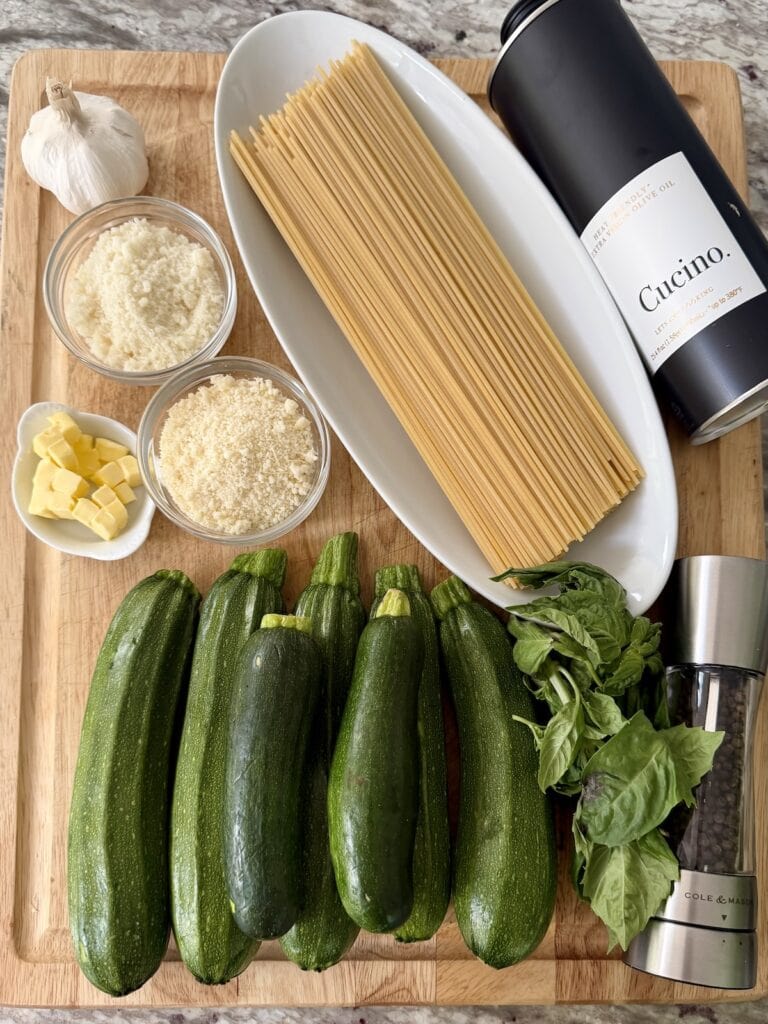
Techniques for Perfect Spaghetti alla Nerano
– Selecting and Prepping Zucchini
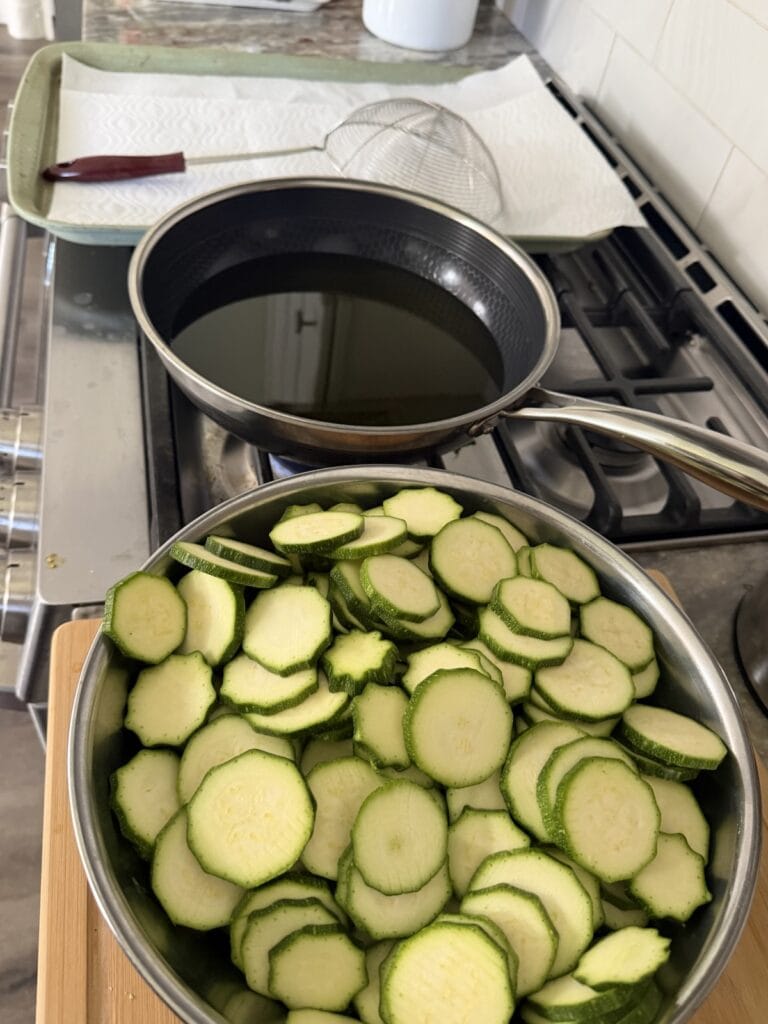
- Small to medium-sized zucchini are used as they tend to have less seeds and are sweeter.
- Zucchini is sliced into uniform rounds ¼” thick, which results in the right amount of fleshiness/creamy interior to mash the fried zucchini into a smooth and silky paste for the pasta sauce.
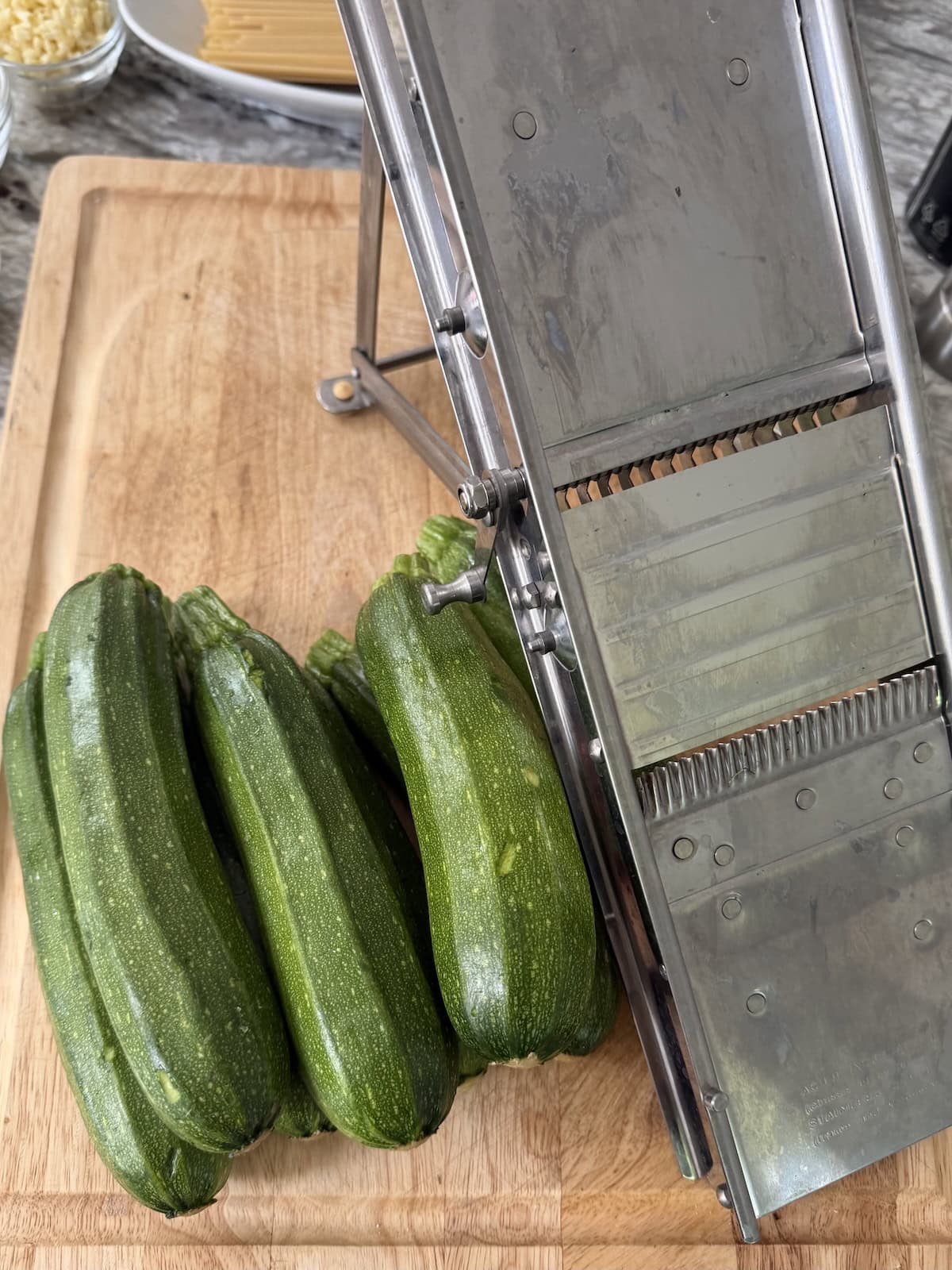
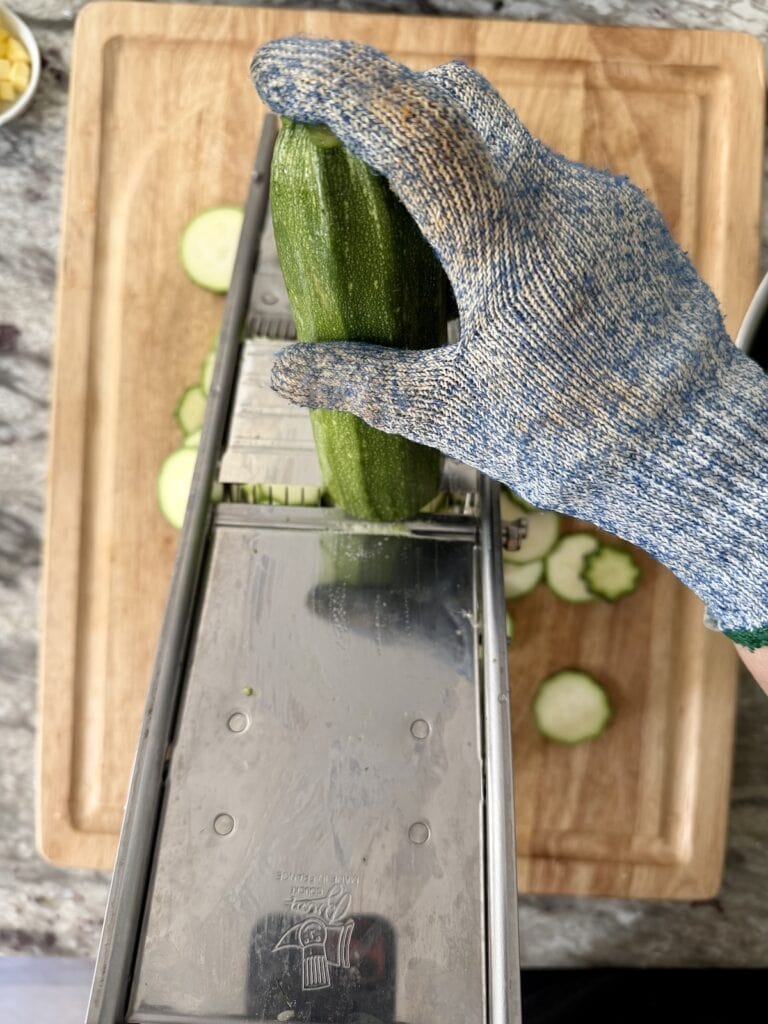
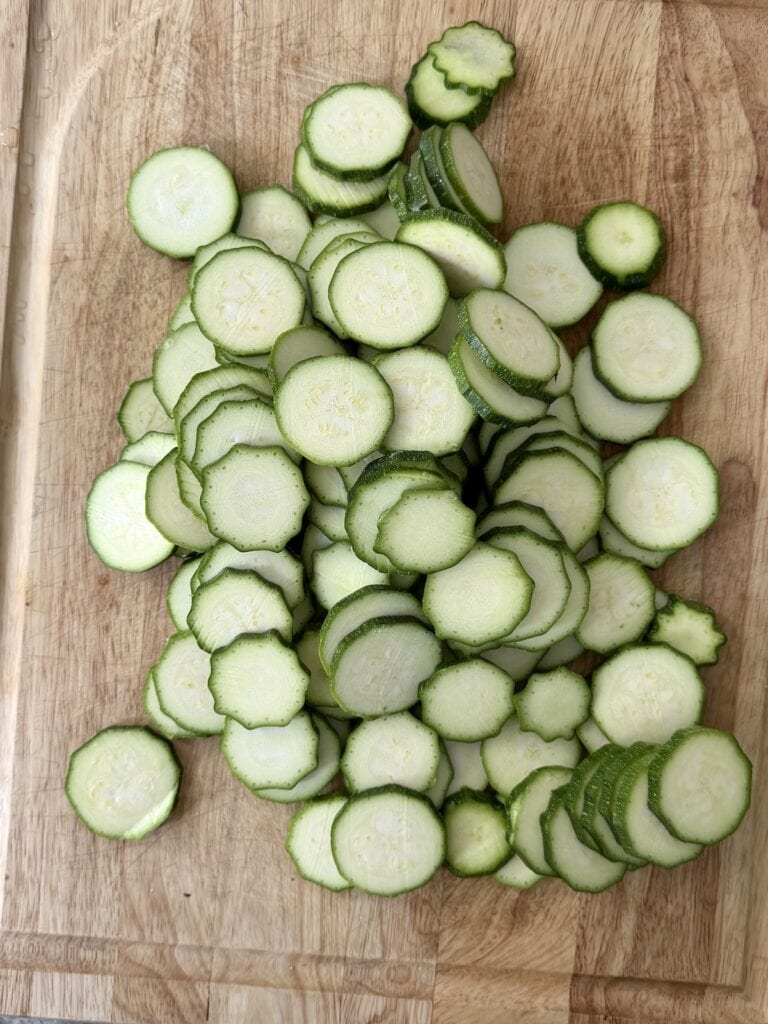
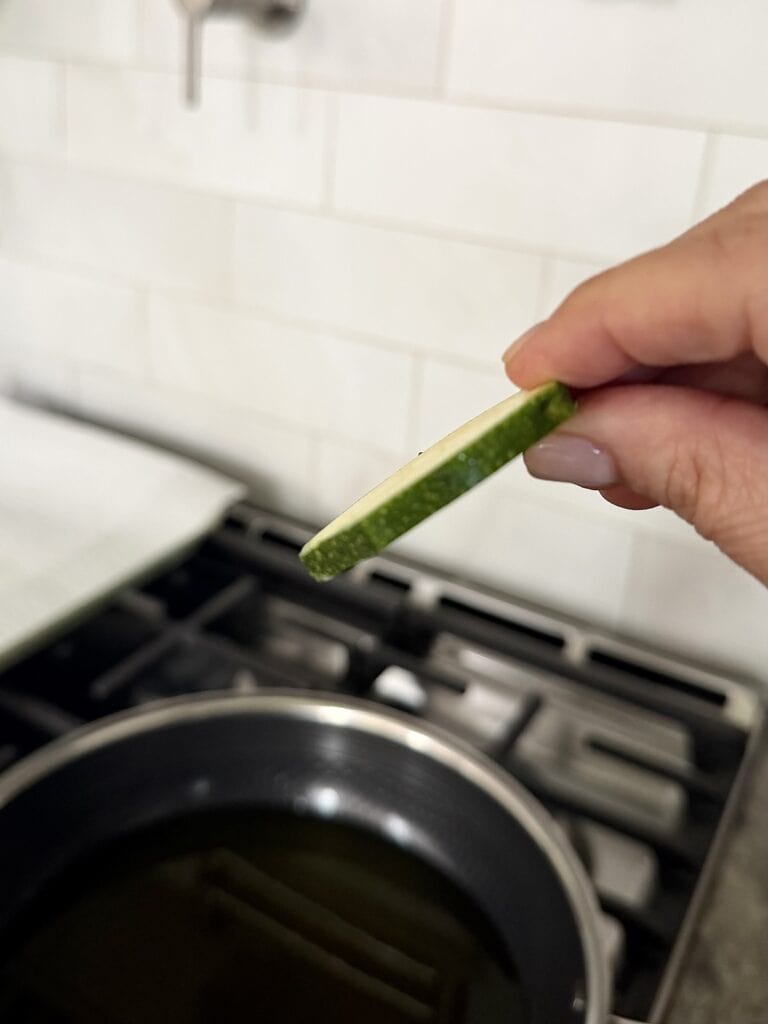
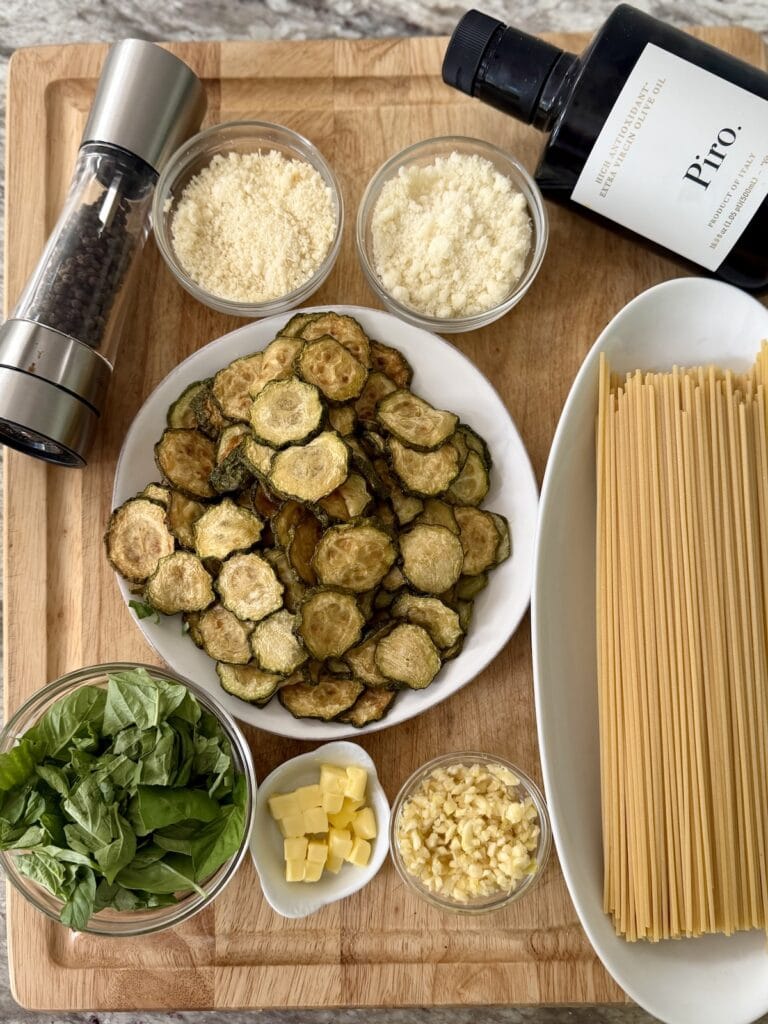
– Fry the Zucchini
- While “soft and oily” may not sound like the goal when cooking zucchini, it is in this recipe!
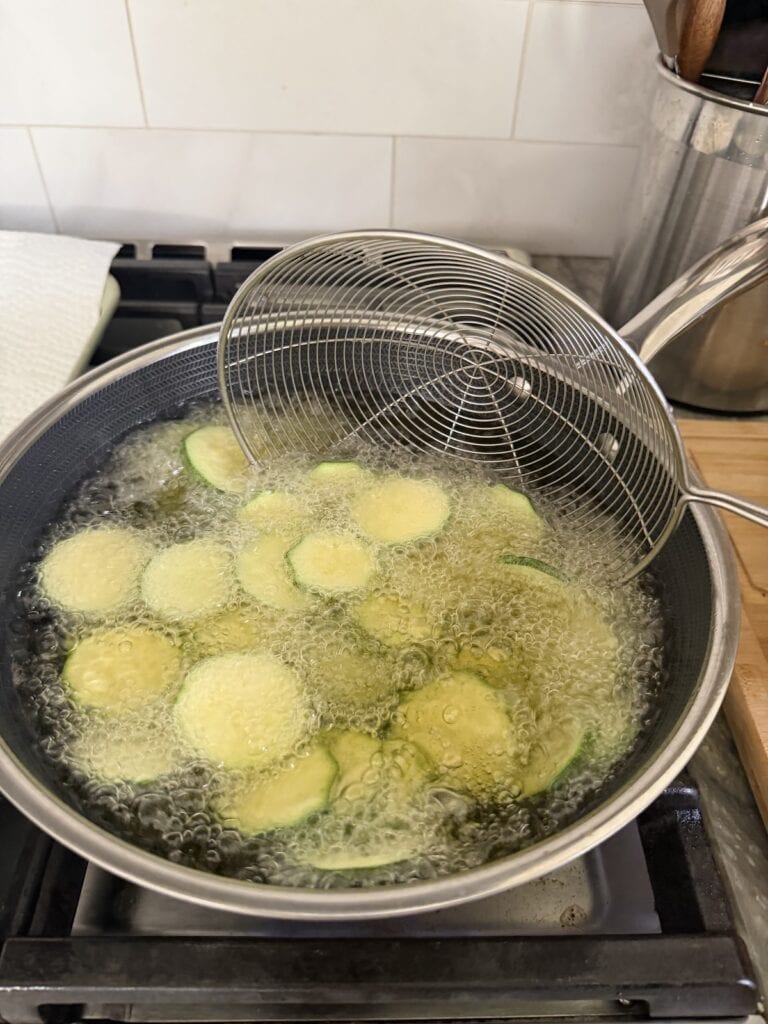
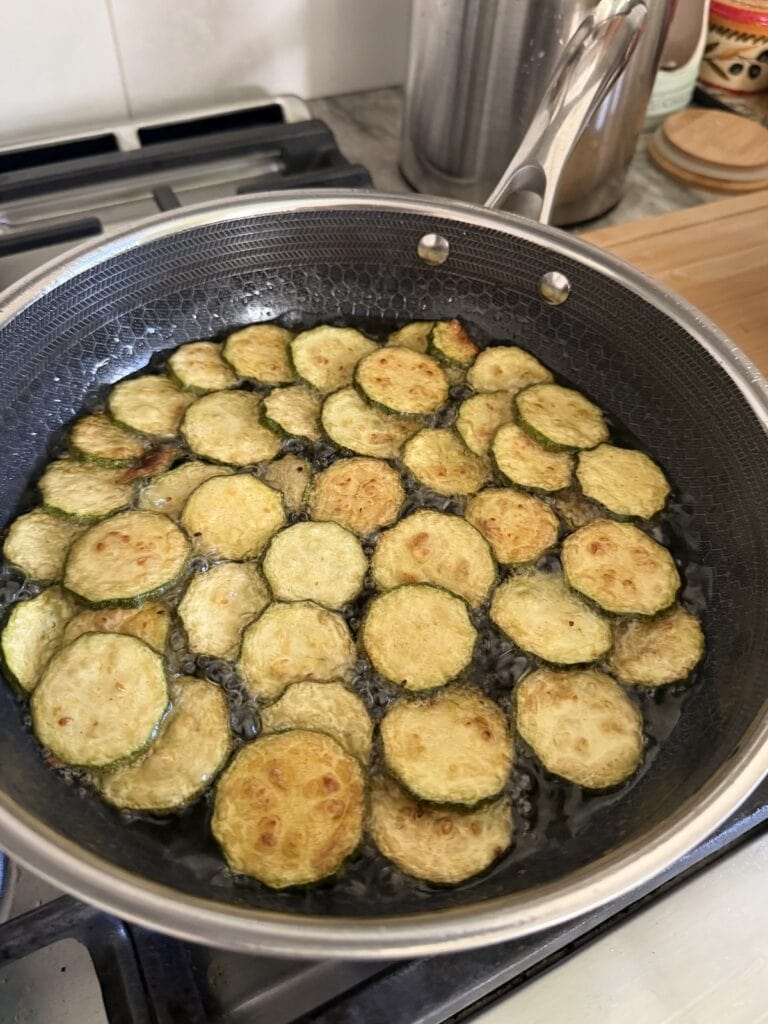
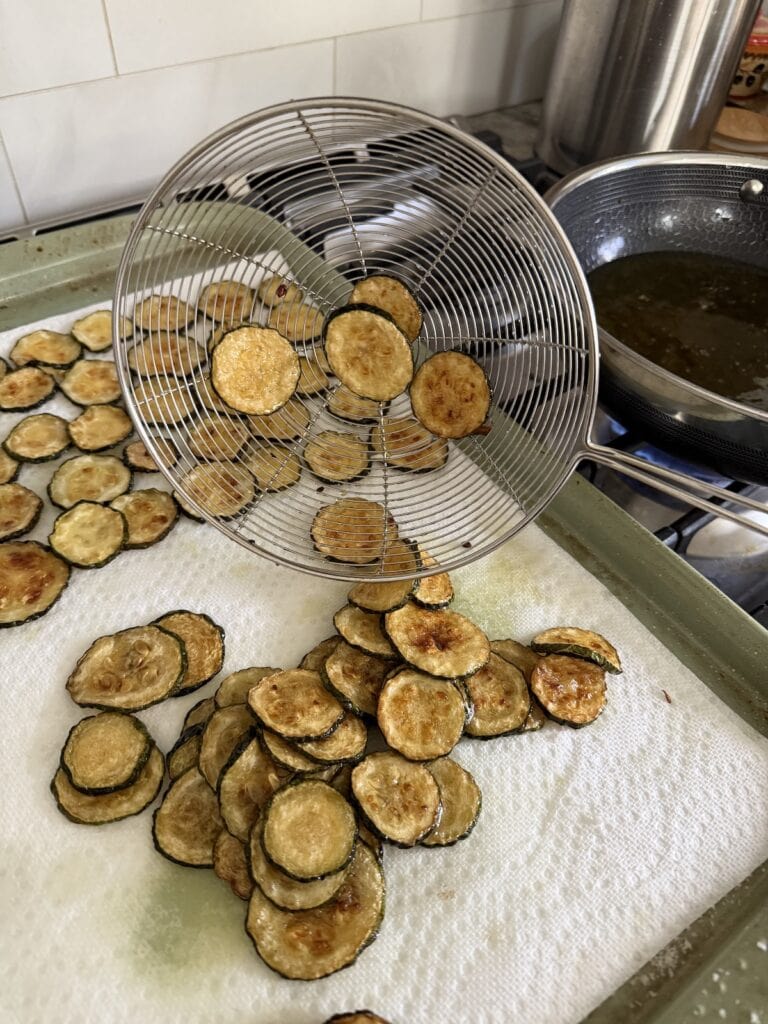
- Zucchini is fried in hot oil unadorned (no salt, batter or breading) until it turns light brown.
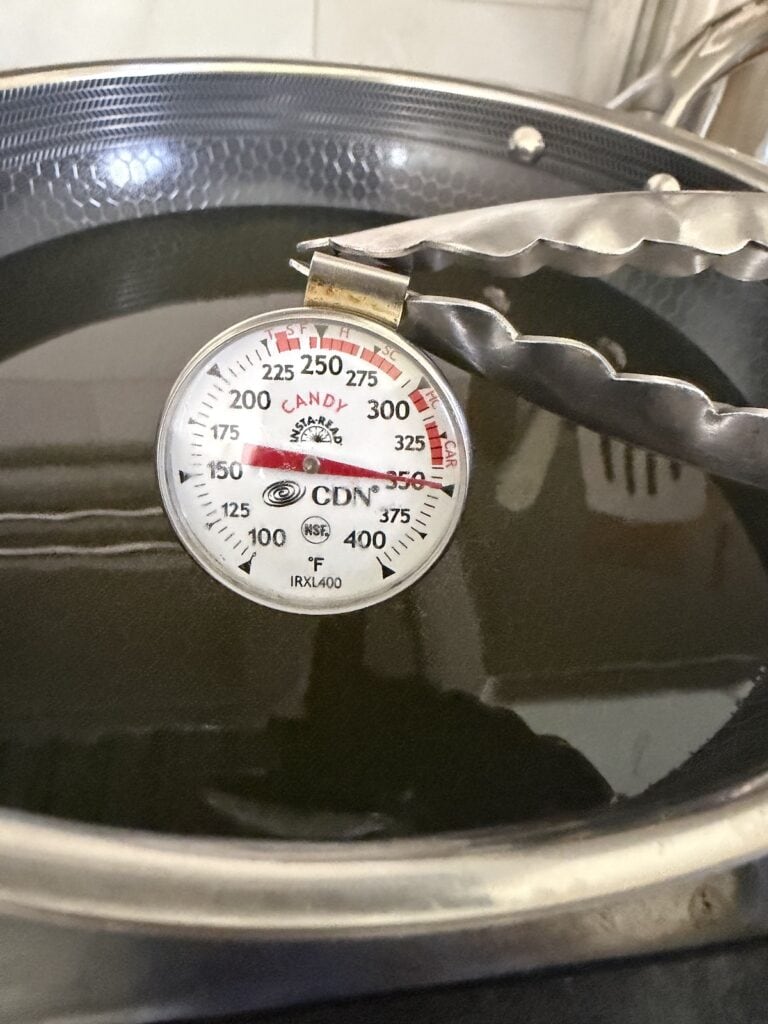
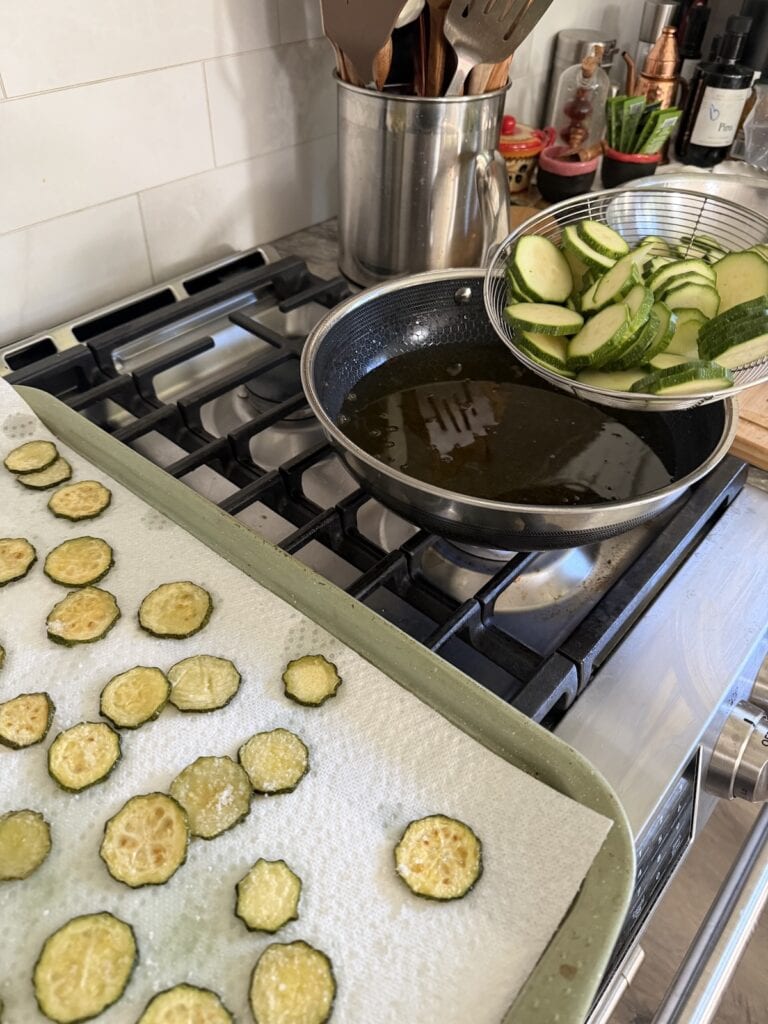
- The oil must be hot (350°F) and brought back up to temperature in between batches.
- You must work in batches! If you overcrowd the frying pan and put too much zucchini in at one time, it will lower the temperature of the oil and be quite challenging to brown the zucchini properly.
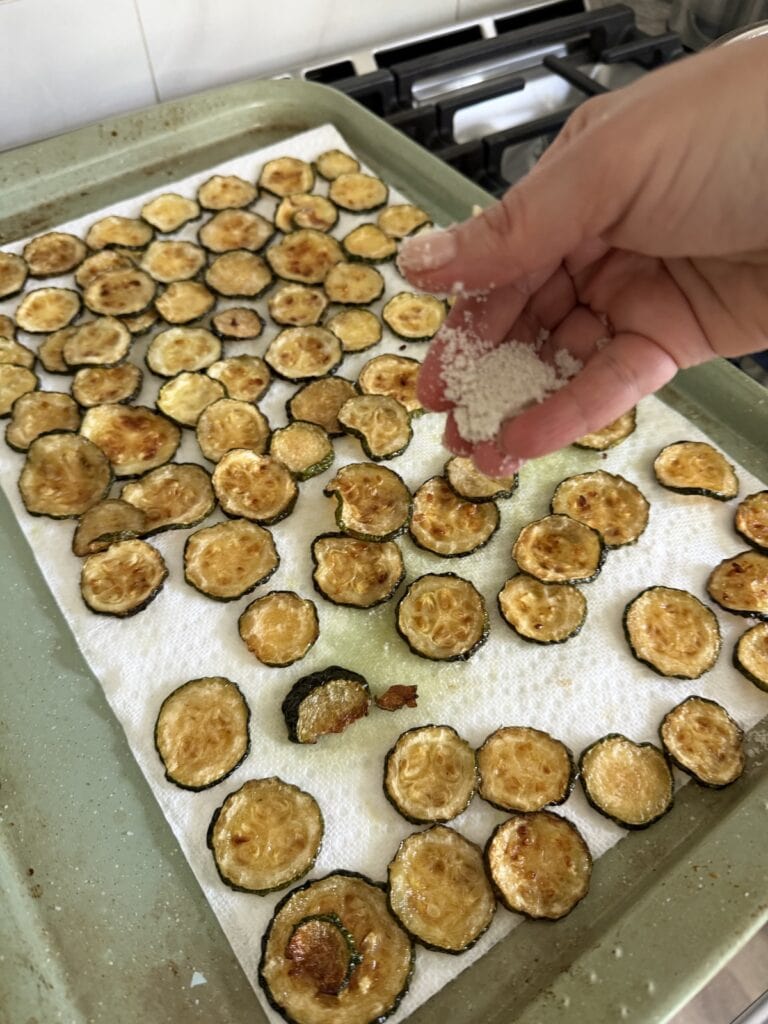
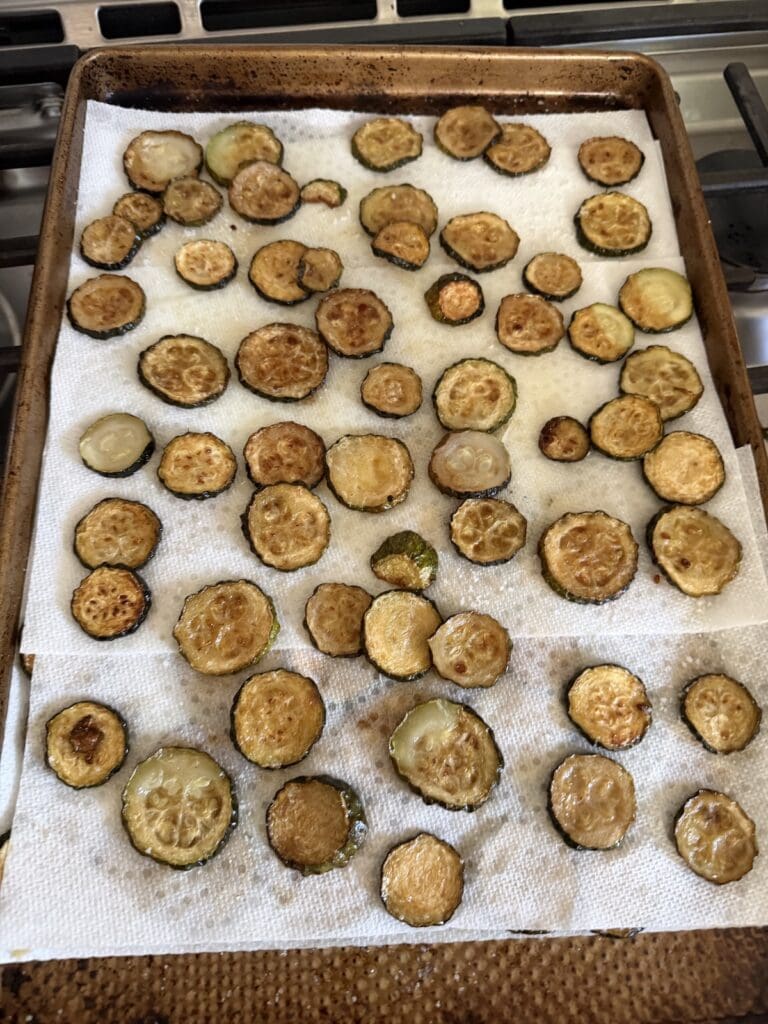
- Then it’s transferred to paper towels (to absorb excess oil) and lightly salted.
– Rest the Fried Zucchini
- Then, the zucchini rests. This develops flavor, texture and creaminess.
- As the zucchini sits, it softens and breaks down, releasing excess moisture.
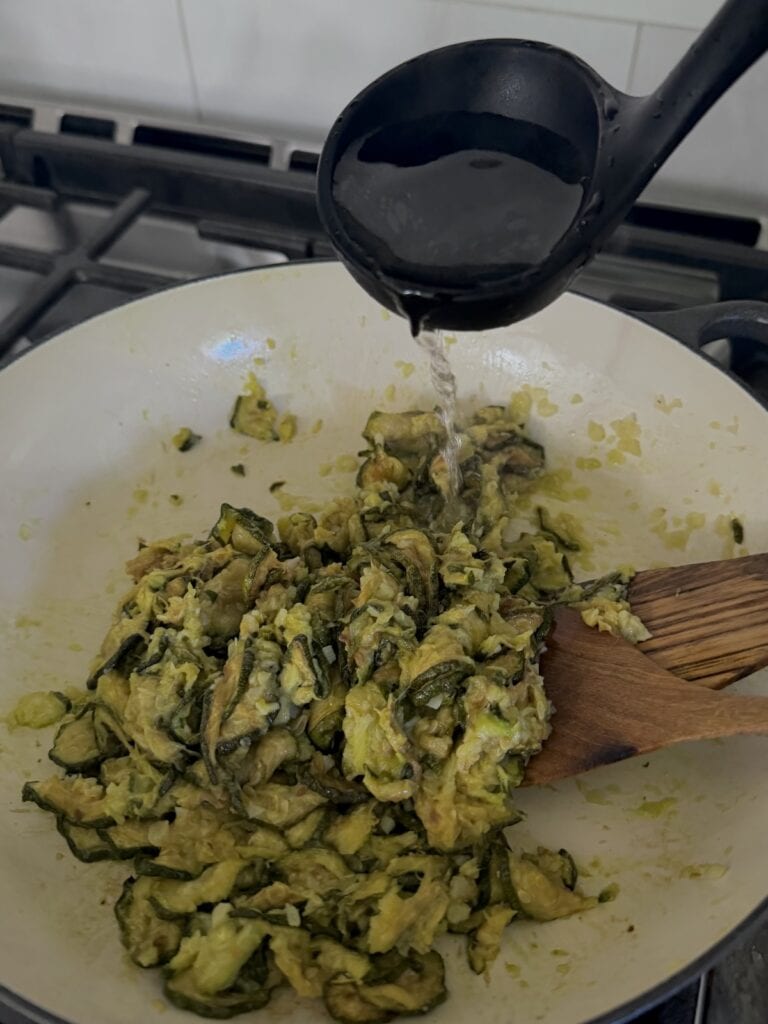
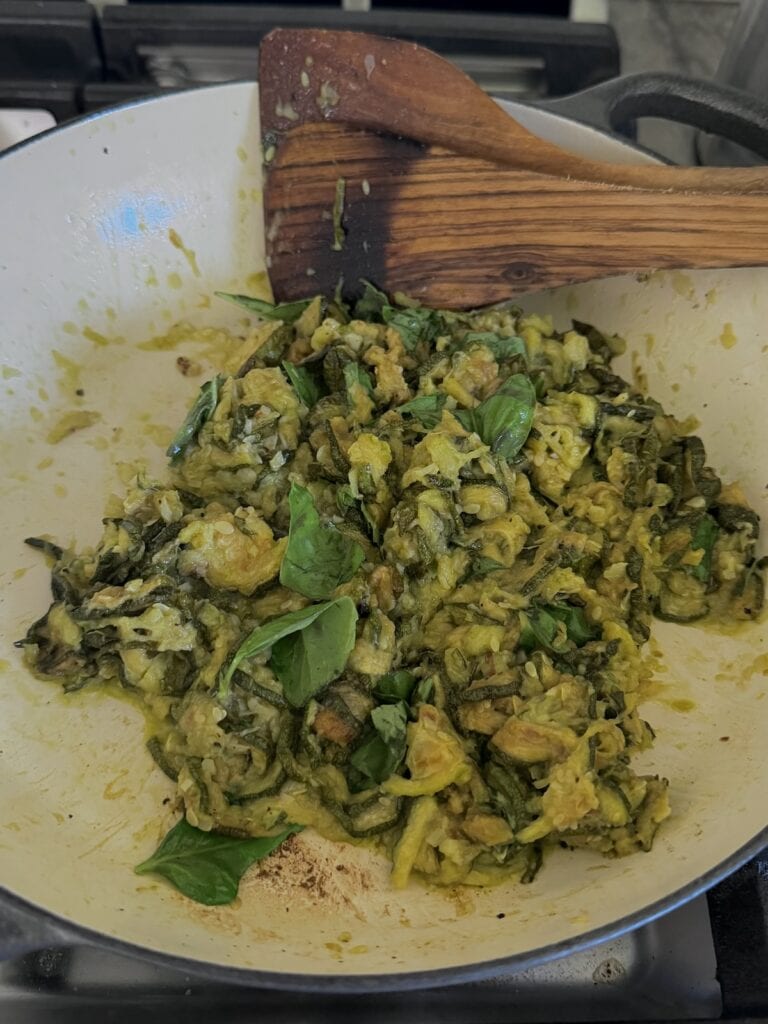
- When you later cook and mash the zucchini in the pan with pasta water, these softened pieces melt effortlessly to create a cohesive creamy sauce.
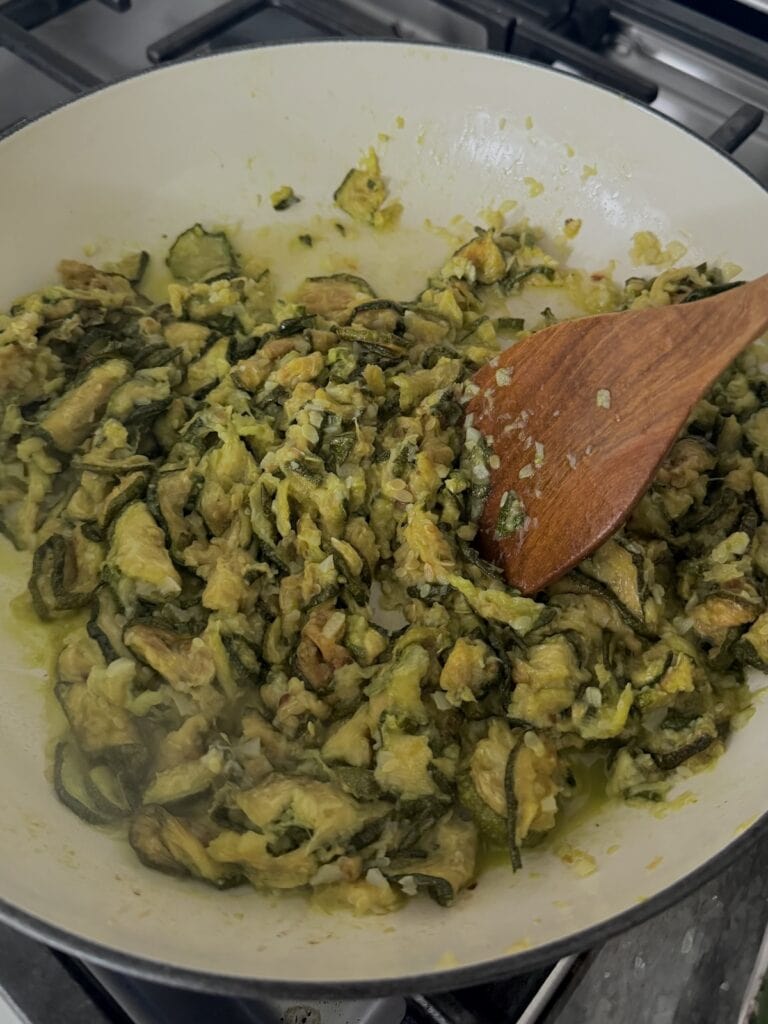
– Smash the Fried Zucchini into a Sauce with Pasta Water
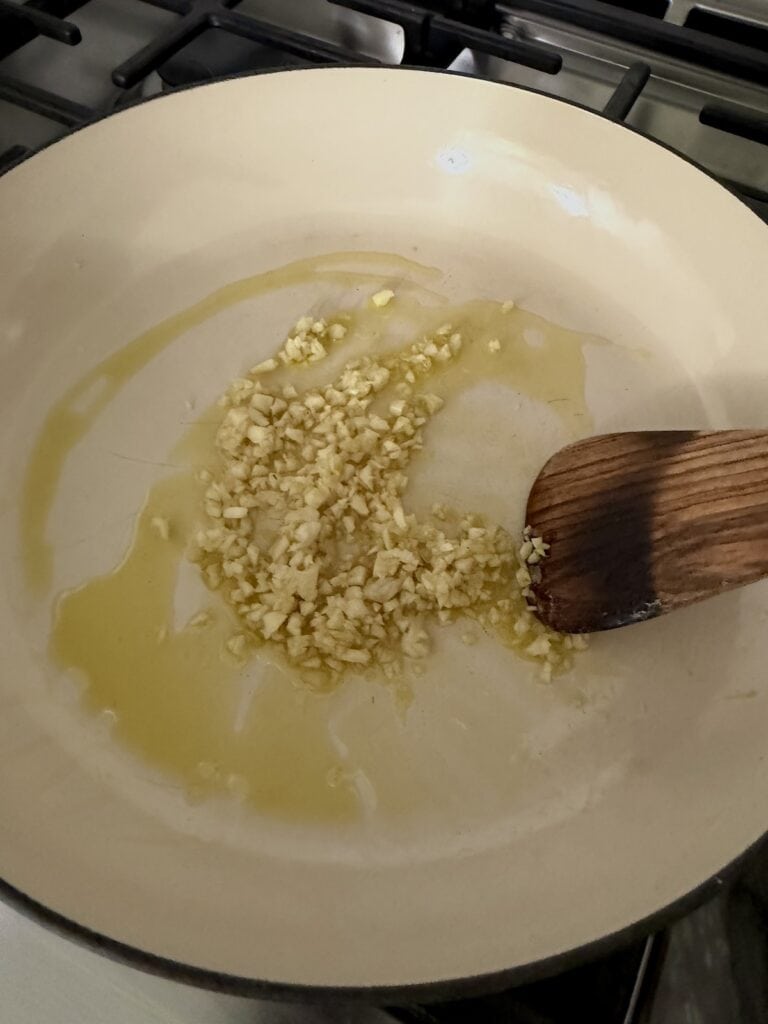
- After sautéing garlic.
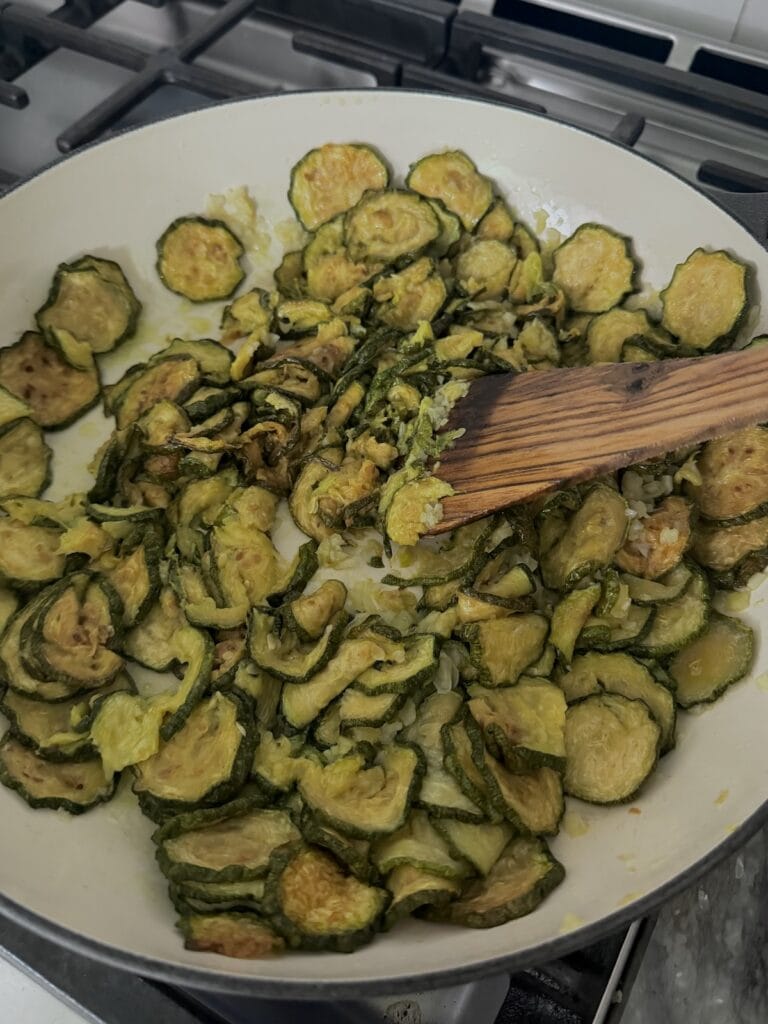
- Hold back some pieces to fold in at the end for a textural contrast. (A key step!)
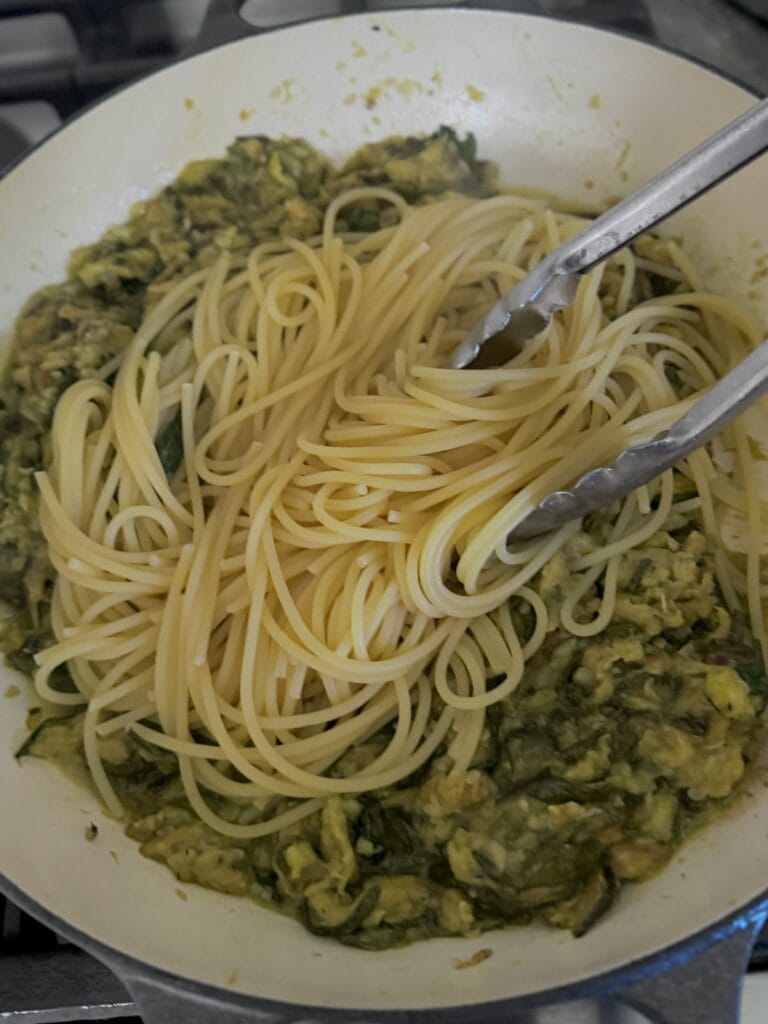
– Undercook the Pasta
- Let it finish cooking in the zucchini sauce and absorb all its wonderful flavors.
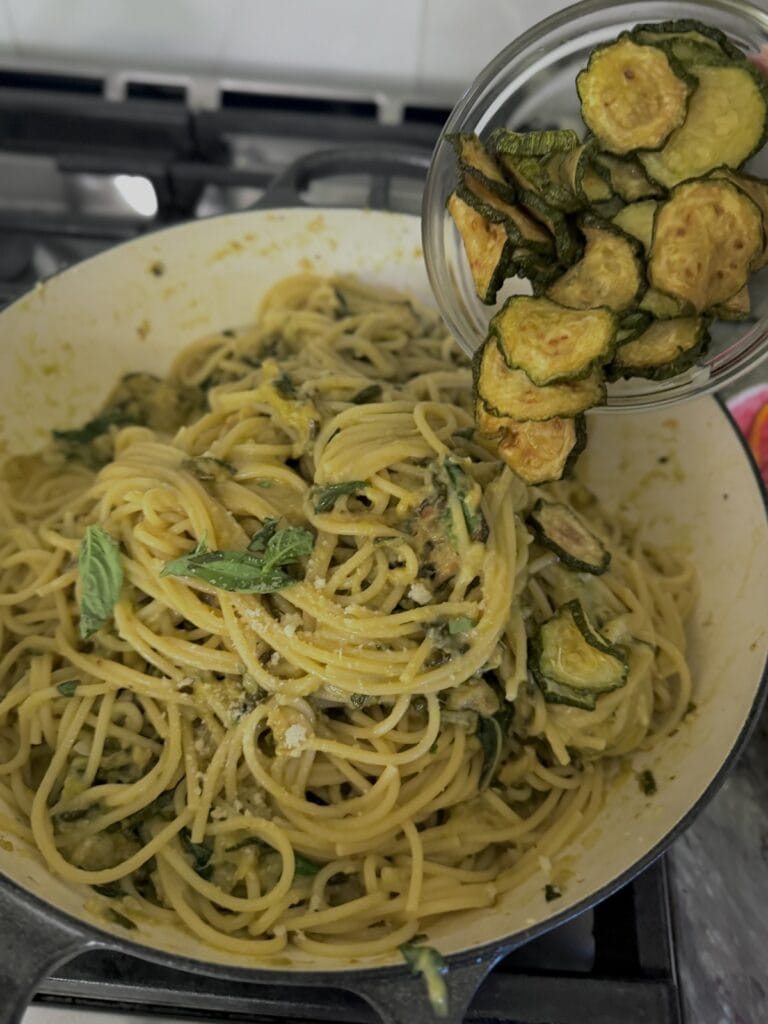
– Add Starchy Briny Pasta Water to Pasta and Sauce a Little at a Time
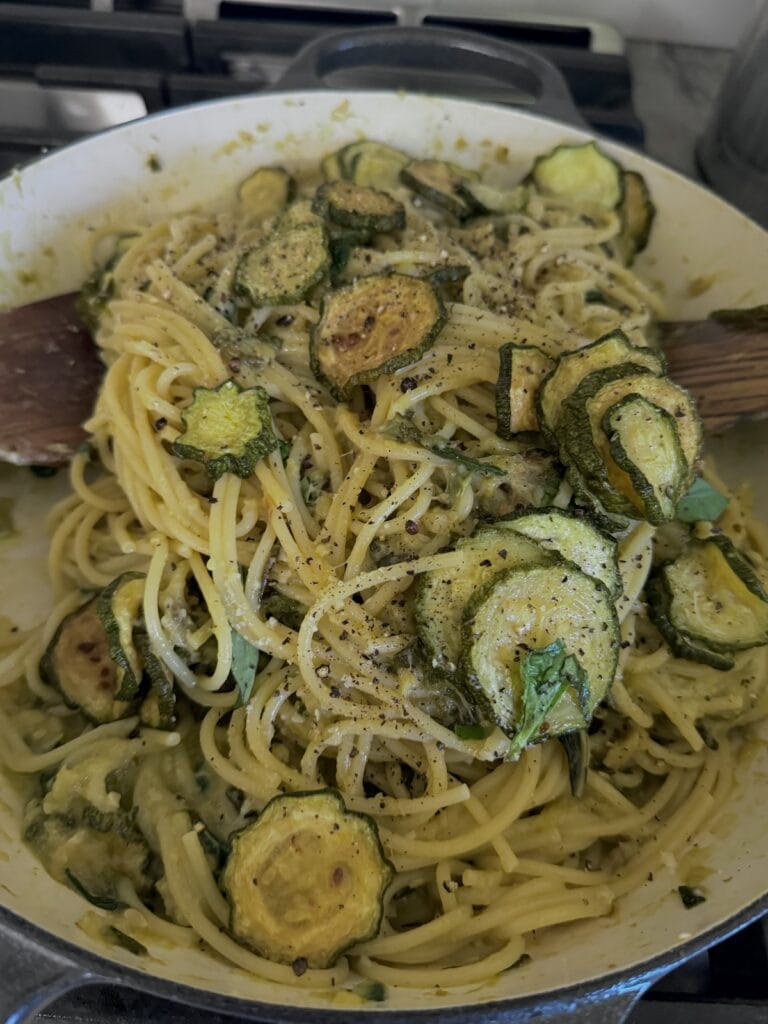
- And add back the reserved fried zucchini slices for a great chunky texture.
– Turn Heat Off Before Adding Cheese
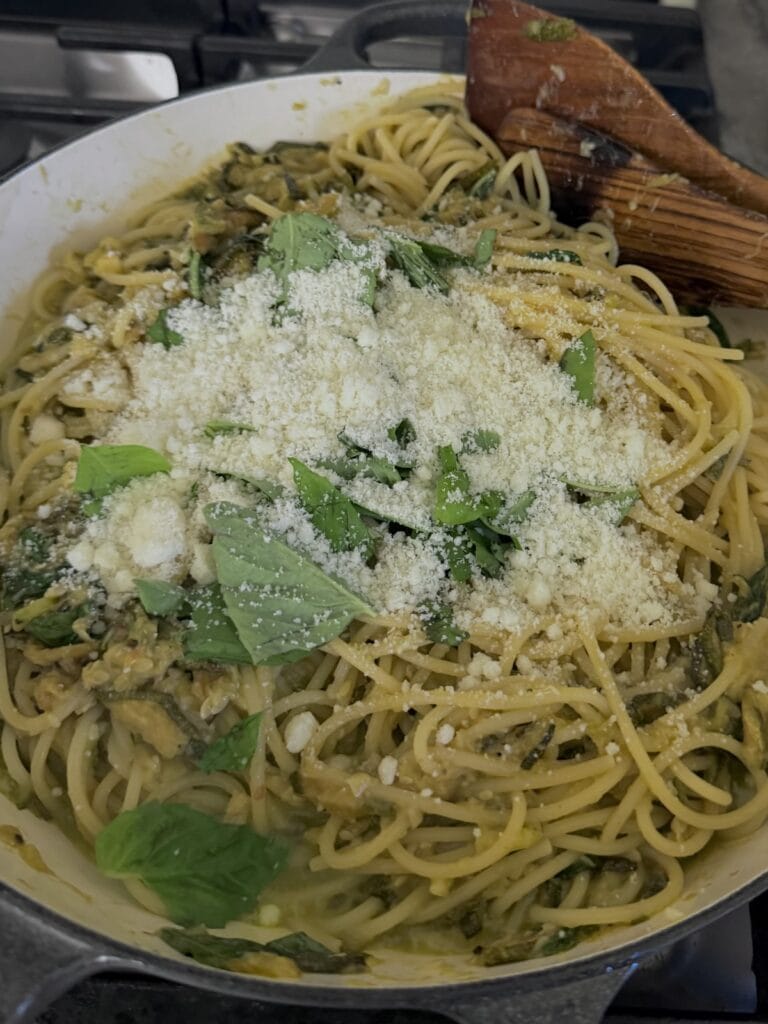
- Then toss quickly and vigorously to emulsify pasta, sauce and cheese together
- This process is known as mantecatura in Italian and is used to some extent in so many pasta recipes here at Mangia With Michele. It’s a “magical combination of starchy pasta water, fat and cheese energetically mixed to create as sauce”.
– Serve Immediately and Enjoy!
What Nerano Should Taste Like
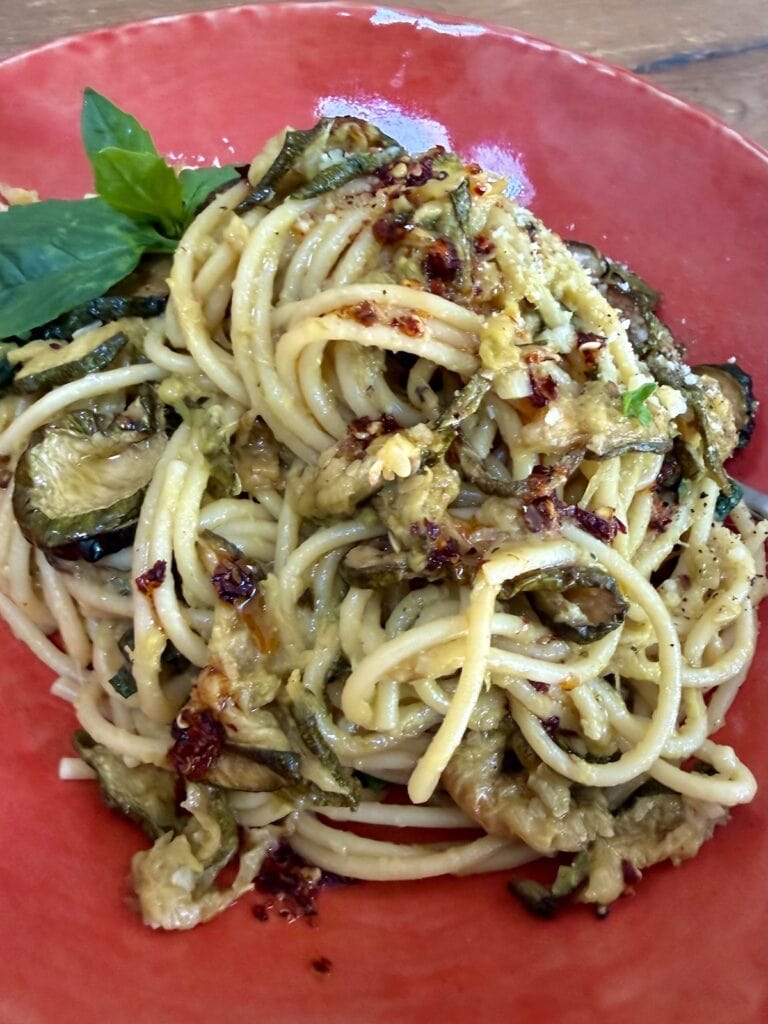
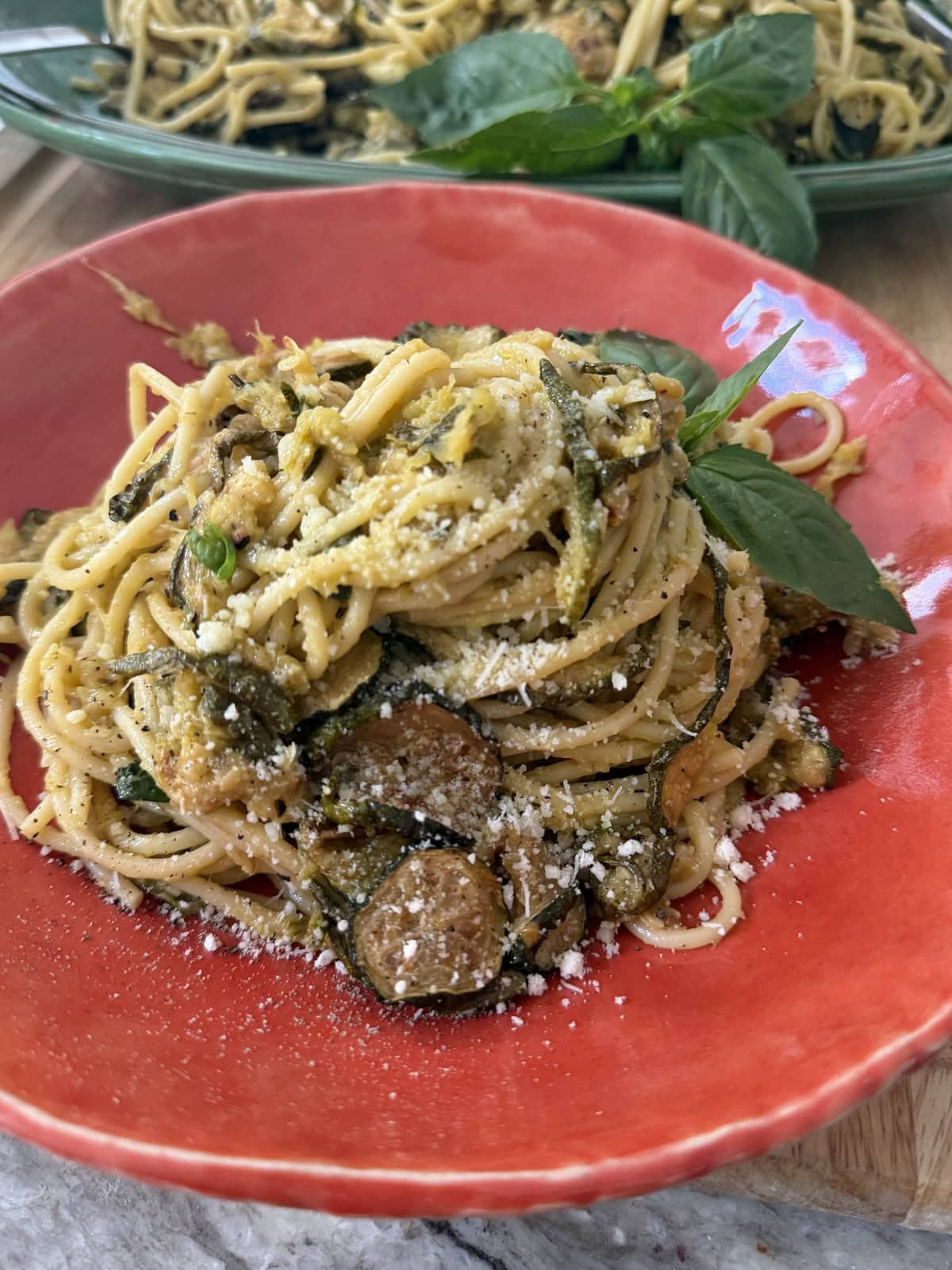
- Creamy, but not heavy.
- Concentrated, savory and slightly sweet zucchini flavor with a deep richness.
- Balanced cheese flavor that is not overpowering.
- Freshness from lots of basil.
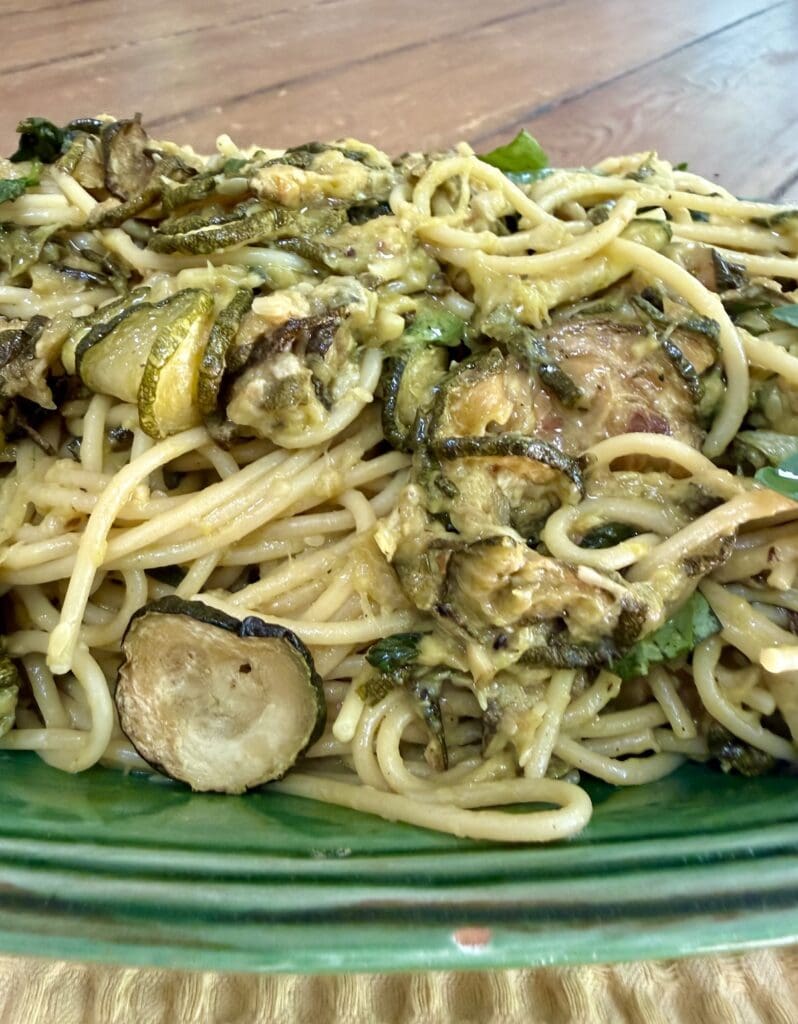
- The zucchini texture is soft and almost melted into the pasta.
It’s one of those dishes where people ask, “Wait…there’s no cream in this?”
What’s the Best Cheese for Nerano?
- The original pasta nerano in Italy and how it’s made there today is with a local (to the area outside Naples) cow’s milk cheese called Provolone del Monaco that has a rich, spicy and slightly piquant flavor. It’s a difficult cheese to find in the U.S. and other places outside Italy, though.
- So, you’ll find caciocavallo used in many other nerano recipes here in the U.S.
- But I prefer to use a blend of grated Pecorino Romano and Parmigiano-Reggiano cheese. Together, these cheeses are sharp, rich, savory and earthy and are also so easy to emulsify into the pasta and sauce.
How Long To Let the Fried Zucchini Rest
There are two main methods for resting:
- The Quick Method: Let it rest at room temperature for 30 minutes to 2 hours. This works well if you’re making the dish for a quick weeknight meal.
- The Traditional Method: (What I Do) Let the zucchini cool to room temperature, then cover and refrigerate for 8 hours to overnight. This overnight method allows the flavors to concentrate completely and yields the silkiest possible sauce.
- I’ve actually kept the fried zucchini up to three days in the refrigerator prior to making the pasta. It’s a great way to break up the tasks of the recipe, but also serves to create the sweetest and mostn savory zucchini flavor.
Why Isn’t Traditional Nerano Made with Cream?
One of the biggest misconceptions about pasta alla Nerano is that it contains cream. Traditional versions do not.
The silky texture comes from emulsifying cheese, pasta water, oil and softened zucchini together into a sauce. In fact, adding cream would mask much of the delicate zucchini flavor that makes the dish unique.
If done properly, pasta alla Nerano becomes creamy without cream–a perfect example of the magic of Italian pasta techniques.
Common Mistakes
- Slicing the zucchini too thin
- Not frying the zucchini properly.
- Make sure oil is hot enough (350°F) before adding zucchini.
- Work in batches and do not overcrowd the pan while frying.
- Make sure oil gets back up to 350°F in between frying batches.
- Do not salt the zucchini prior to frying (draws out water and prevents browning)
- The zucchini should be lightly browned after frying. If it’s pale, you’re missing flavor.
- Skipping the zucchini resting step
- This helps build the sauce. Don’t rush it.
- Overcooking the pasta
- Remove the pasta from the boiling water 2-3 minutes before it’s al dente (or 2-3 minutes before the time on the package) so it can properly finish cooking in the sauce and absorb all its wonderful flavors
- Adding cheese to pasta over high heat.
- This causes clumping instead of creaminess.
- The heat should be turned off before adding the grated cheese.
- Not using enough pasta water.
Frequently Asked Questions
Heat wasn’t turned off prior to adding the cheese or not enough starch from the pasta water.
Too much liquid or poor emulsification.
Of course, but the finished dish will not be the same richness or texture. It will still be a very flavorful zucchini pasta, but it will not be pasta alla Nerano.
No, not in this recipe, and there’s really no need to. If done correctly, the sauce becomes naturally creamy from the emulsified cheese, pasta water, butter and oil present in the fried zucchini.
Heavy cream will change this dish entirely. And, with the amount of oil already in the sauce from the fried zucchini, it really will be unappetizing.
For a richer and more Italian-American style of zucchini pasta with cream, check out my Creamy Zucchini Pasta recipe.
Spaghetti is traditional (and what I used here). But other long pastas will work. I would stay away from cappellini (angel hair pasta) for this dish as I don’t believe it’s firm enough to hold up to the final emulsification step.
However, do not use fresh pasta for this dish. Dried pasta is preferred because its sturdy structure and porous surface hold up perfectly to the rich, creamy and oily zucchini and cheese sauce without absorbing it into the core.
In contrast, fresh egg pasta is soft and highly absorptive throughout its entire structure and the dough acts like a sponge. In a dish with a lot of oil like Nerano, fresh pasta drinks up the fats too quickly, making the noodle itself heavy and greasy rather than beautifully coated.
More Recipes with Zucchini
- Zucchini Fritters with Lemon and Basil
- Stuffed Zucchini (vegetarian)
- Zucchini A Scapece with Mint and Vinegar
- Zucchini Pesto Bruschetta with Lemon (No Cook)
- Panko-Crusted Baked Zucchini
- Zucchini Parm
- Zucchini Soup with Chickpeas
- Turkey Zucchini Meatballs
Serving Suggestions
Spaghetti alla Nerano can be a first course, side dish or accompaniment for your favorite protein. This recipe pairs well with:
- Simple proteins, like Italian sausage, chicken cutlets, turkey meatballs, grilled shrimp or fish;
- Fresh tomato dishes like Italian marinated tomatoes, bruschetta alla pomodoro or cucumber tomato salad;
- Light vegetable sides, like sautéed broccoli rabe, roasted broccoli or a big green salad.
Why Spaghetti alla Nerano Is More Than Just Zucchini Pasta
At first glance, pasta alla Nerano may seem like a simple zucchini pasta. But it’s really a lesson in what makes Italian cooking so special.
With only a handful of ingredients, every step matters. The zucchini is fried and rested. The pasta is finished in the sauce. The cheese and pasta water are carefully emulsified into a silky coating.
Nothing is hidden behind cream, extra ingredients or shortcuts.
It’s a dish built on restraint, technique and respect for good ingredients–qualities that define so much of the cooking of Italy.
And perhaps that’s why this humble pasta from a small town on the Amalfi Coast continues to captivate people decades later, from local trattorias in Nerano to viewers discovering it through Stanley Tucci’s Searching for Italy.
Simple on paper. Extraordinary when done right.
Mangia bene!
Spaghetti alla Nerano (Creamy Italian Zucchini Pasta Without Cream)
Video
Equipment
- Mandoline (optional)
- Cut Resistant Glove (optional)
- Cheese grater (optional)
- Frying Pan or Dutch Oven
Ingredients
- 4 pounds zucchini
- Oil for frying, (See Notes.)
- Salt
- 1-2 Tbsp olive oil
- 3-4 Tbsp chopped or thinly-sliced garlic
- Large handful fresh basil leaves, hand torn, divided
- Freshly ground black pepper
- 1 pound spaghetti, + salt for pasta water
- ½ cup grated Pecorino Romano cheese , (about 1½ ounces)
- ½ cup grated Parmigiano-Reggiano cheese , (about 1½ ounces)
- 1-2 Tbsp butter, at room temperature, cut into small cubes
- Extra virgin olive oil, for finishing (optional)
Instructions
- PREP ZUCCHINI:Slice off and discard the ends of each zucchini. Then, using either a knife, mandoline or food processor with a slicing disc, slice the zucchini into uniform ¼” thick rounds.(NOTE: I always wear a cut-resistant glove when working with my mandoline. It’s total optional, but safer!)(Please see the section above in the blog post for Step-By-Step instructions with photos.)4 pounds zucchini
- HEAT OIL:While you’re prepping the zucchini and chopping the garlic, place oil about 1” deep into a frying pan with high sides and bring it up to 350°F. Use a frying/candy thermometer to monitor the temperature.
- SET UP STATION:Once the oil is heated and the zucchini are sliced, set up your frying station. Line 1-2 sheet pans with a couple layers of paper towels and have it near the fry pan. Have the sliced zucchini in a bowl on the other side of the fry pan and have a spider or hand strainer ready as well.
- FRY ZUCCHINI:Working in batches, carefully transfer some sliced zucchini to the hot oil. Use a spider to move it around a few times while frying. Fry for 6-8 minutes or until the zucchini slices turn a light golden brown. They should not get too dark or crispy but rather should maintain a soft interior. They should also not be pale.NOTE: You must work in batches! FYI, I broke up the frying into 5-6 batches, but this will depend on the size of your fry pan. If you overcrowd the frying pan and put too much zucchini in at one time, it will lower the temperature of the oil and be quite challenging to brown the zucchini properly.
- Once light brown, use a spider to carefully transfer the fried zucchini to the paper towel-lined sheet pan to absorb excess oil. As soon as the zucchini is cool enough to handle, separate the pieces into a single layer on the paper towels and lightly sprinkle them with salt.
- Then, make sure the oil comes back up to temperature (350°F) before starting with a second batch.
- Continue until all zucchini are fried. You can use either multiple paper-towel line sheet pans as needed or, alternatively, layer more paper towels on top of the separated and salted fried zucchini slices and continue that way. Be sure to lightly salt each batch of sliced zucchini after frying.
- REST THE FRIED ZUCCHINI:Let the salted, fried zucchini rest at room temperature for a minimum of 30 minutes or up to 2 hours.Alternatively, you can fry the zucchini up to 3 days in advance of making the finished pasta (which is what I did). Layer the seasoned, fried zucchini on a dish or in a container in a single layer, separated by layer of paper towels, cover it and refrigerate. (See Notes below for more information.)
- COOK PASTA & MAKE SAUCE:When ready to make the pasta, put a large pot of water on to boil.
- Meanwhile, combine the chopped garlic and 1-2 Tbsp olive oil (or as little as needed to cook the garlic) in a skillet over medium-low. Cook until soft and only lightly browned. NOTE: Since there is so much oil in the fried zucchini, using as little oil here as possible is the best choice.You can add a couple splashes of water to the pan and cover it to help the garlic cooking process if you want.1-2 Tbsp olive oil, 3-4 Tbsp chopped or thinly-sliced garlic
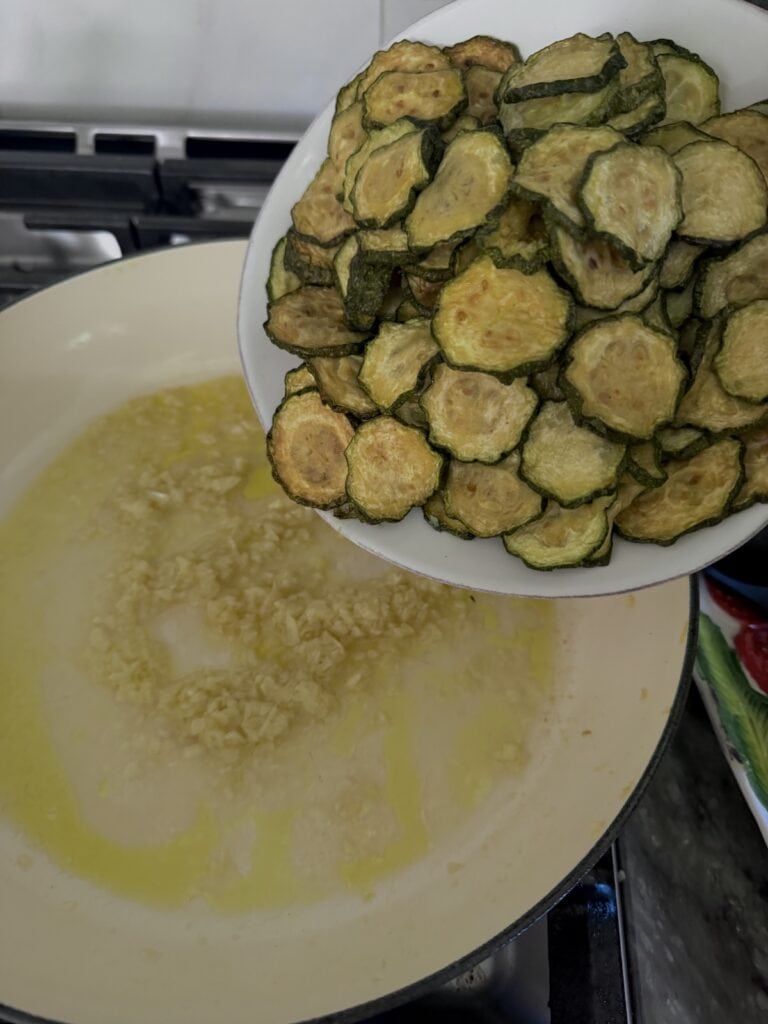
- Then, add half the basil and about ¾ of the rested and seasoned, fried zucchini slices to the pan, holding back about ¼ to fold into the pasta at the end.Large handful fresh basil leaves
- Using 2 wooden spoons, break up the zucchini as it heats, creating a creamy, chunky mixture. Add some pasta water to the pan to help this process along. (See photo above.)
- Season with freshly ground black pepper. Add more pasta water as needed to create a saucy texture. Hold the sauce on low/warm until the pasta is ready.
- Once the water comes to a boil, add salt, then the pasta, stirring frequently. Cook the pasta for 2-3 minutes less than the package directions, or about 2-3 minutes before you think it is al dente. (Be sure to reserve at least 2 cups of the starchy pasta water.)1 pound spaghetti
- ADD PASTA & EMULSIFY:Next, transfer the undercooked pasta to the zucchini sauce along with some of the starchy pasta water and the reserved fried zucchini slices. Toss continuously to fully combine all ingredients and let the pasta finish cooking in the sauce and absorb all of those wonderful flavors! If the sauce gets too dry and tight, just loosen it with a bit more pasta water.
- ADD CHEESE (OFF THE HEAT)Once the pasta is al dente, turn off the heat and sprinkle in half the grated cheese, butter and remaining basil while tossing. Stir quickly and vigorously so that the cheese emulsifies into the sauce. Add more pasta water as needed until a silky coating forms from the sauce.½ cup grated Pecorino Romano cheese , ½ cup grated Parmigiano-Reggiano cheese , 1-2 Tbsp butter
- Add the remaining cheese and continue mixing. Taste and adjust seasonings, adding salt if needed.
- FINISH:Drizzle with a little extra virgin olive oil for some additional richness and silkiness (optional).Then serve immediately for best enjoyment. Buon Appetito!
Notes
- Recipe Time: Total recipe time does not include resting time fyi since it can vary. You can rest the zucchini for as little as 30 minutes or up to 3 days covered in the refrigerator. (This is what I did).
- Selecting Zucchini:
- Select small to medium-sized zucchini (6-8” in length, 2” or less in diameter) if possible as they tend to have less seeds and are sweeter.
- Zucchini should have shiny, bright green skin, be firm and feel heavy for its size.
- Minor, superficial scratches or bruises are common and perfectly fine.
- Avoid zucchini with pitted skin, spongy texture or soft or wrinkled ends.
- Prepping Zucchini:
- Zucchini slices should be about ¼-3/8” thick.
- This thickness results in the right amount of fleshiness/creamy interior to mash the fried zucchini into a smooth and silky paste for the pasta sauce.
- If the zucchini is sliced too thin, then it will become crispy when fried and will not be able to be mashed into a sauce.
- Uniform slices ensure even cooking.
- Frying oil: Yes, it matters! The oil ends up being a major component of the sauce’s flavor. I used a heat-friendly extra virgin olive oil here and am not sorry about it. It’s the little ingredient choices like this that make an exceptional dish.
- Pure or virgin (i.e., not extra-virgin) olive oil is a great option here. You can also use avocado oil which has a neutral flavor.
- Frying Technique:
- Make sure to use enough oil (about 1” deep into a frying pan with high sides) and heat it to 350° Use a frying/candy thermometer to monitor the temperature.
- You must work in batches!
- FYI, I broke up the frying into 5-6 batches, but this will depend on the size of your fry pan.
- If you overcrowd the frying pan and put too much zucchini in at one time, it will lower the temperature of the oil and be quite challenging to brown the zucchini properly. You will end up steaming the zucchini and that is not what you want.
-
- Fry the zucchini until a light golden brown. They should not be pale, but they should also not be too dark brown.
- Resting the Fried Zucchini: This is a critical step that develops flavor, texture and creaminess.
- As the zucchini sits, it softens and breaks down, releasing excess moisture.
- When you later cook and mash the zucchini in the pan with pasta water, these softened pieces melt effortlessly to create a cohesive creamy sauce.
- The Quick Method: Let it rest at room temperature for 30 minutes to 2 hours. This works well if you’re making the dish for a quick weeknight meal.
- The Traditional Method: (What I Do) Let the zucchini cool to room temperature, then cover and refrigerate for 8 hours to overnight. This overnight method allows the flavors to concentrate completely and yields the silkiest possible sauce.
- I’ve actually kept the fried zucchini up to three days in the refrigerator prior to making the pasta. It’s a great way to break up the tasks of the recipe, but also serves to create the sweetest and mostn savory zucchini flavor.
- Cooking the Pasta: Undercook the Pasta and let it finish cooking in the zucchini sauce and absorb all its wonderful flavors.
- Pasta Water: The pasta water is the key to creating a silky, emulsified sauce! Add it a little at a time and mix well.
- Turn Heat Off before adding grated cheese, then toss quickly and vigorously to emulsify pasta, sauce and cheese together.
- If the heat is on when the cheese is added, it may clump the cheese.
- With the heat controlled and turned off, you should create a light silky coating for the pasta.
- Cheese: Grana Padano can be substituted for Parmigiano-Reggiano.
- Pasta:
- Spaghetti is traditional (and what I used here). But other long pastas will work.
- I would stay away from cappellini (angel hair pasta) for this dish as I don’t believe it’s firm enough to hold up to the final emulsification step.
- However, do not use fresh pasta for this dish. Dried pasta is preferred because its sturdy structure and porous surface hold up perfectly to the rich, creamy and oily zucchini and cheese sauce without absorbing it into the core.
- In contrast, fresh egg pasta is soft and highly absorptive throughout its entire structure and the dough acts like a sponge. In a dish with a lot of oil like Nerano, fresh pasta drinks up the fats too quickly, making the noodle itself heavy and greasy rather than beautifully coated.
- Leftovers can be stored in an airtight container in the refrigerator for up to 3 days. Reheat them, covered, in a small skillet over medium low heat with a little bit of water until heated through.
- How to discard of all the used oil:
- The best way to discard of used frying oil is to let it cool completely, then transfer it into a sealable, non-breakable container (like an empty milk jug or peanut butter jar) and throw it in the regular trash.
- Never pour cooking oil or grease down your kitchen sink or toilet, as it may solidify and cause severe plumbing blockages.
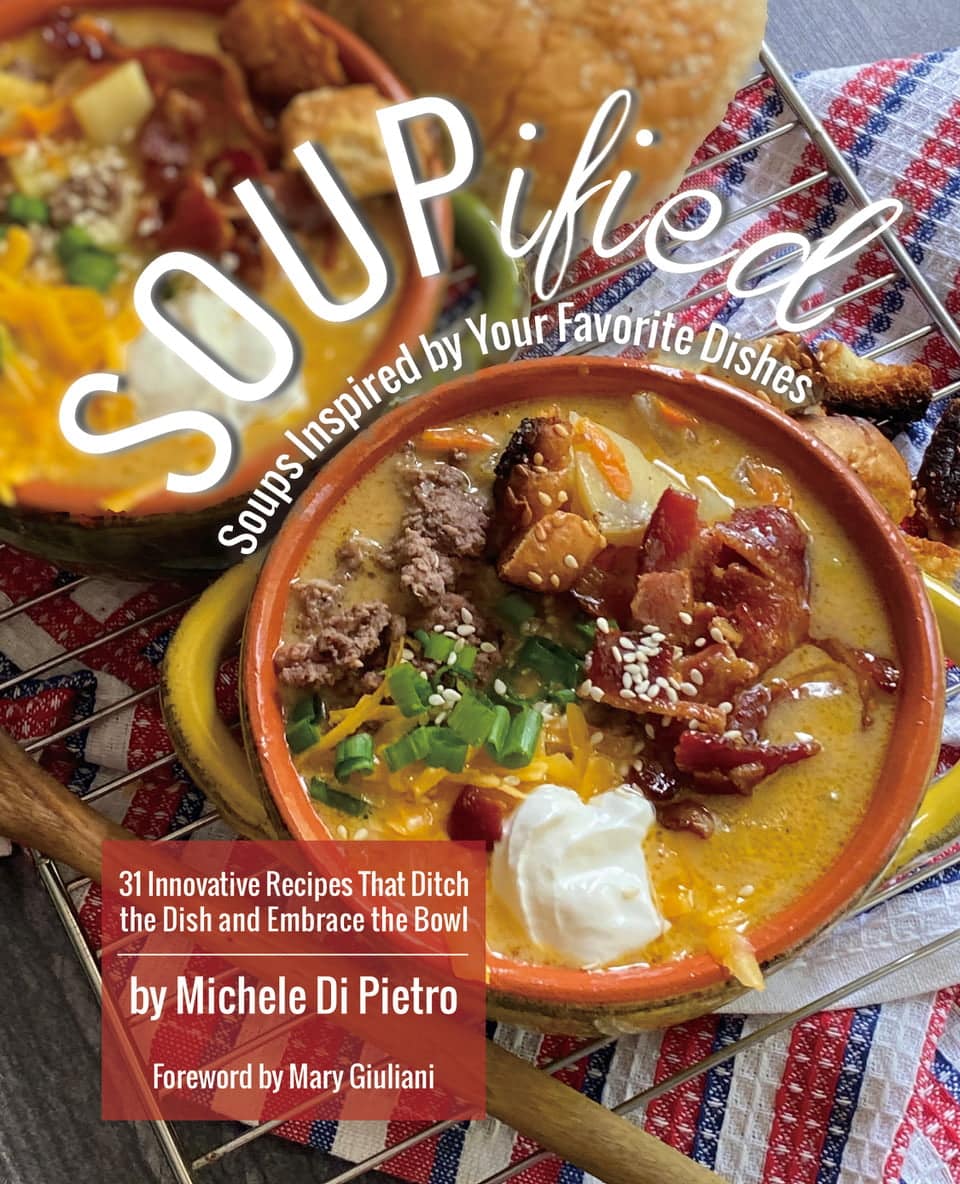
love soup?
Get My Cookbook!
Ditch the dish and embrace the bowl with Soupified: Soups Inspired by Your Favorite Dishes!
Available in ebook, paperback and hardcover.

This might just be the best way to eat zucchini!